


This article was automatically translated from the original Turkish version.
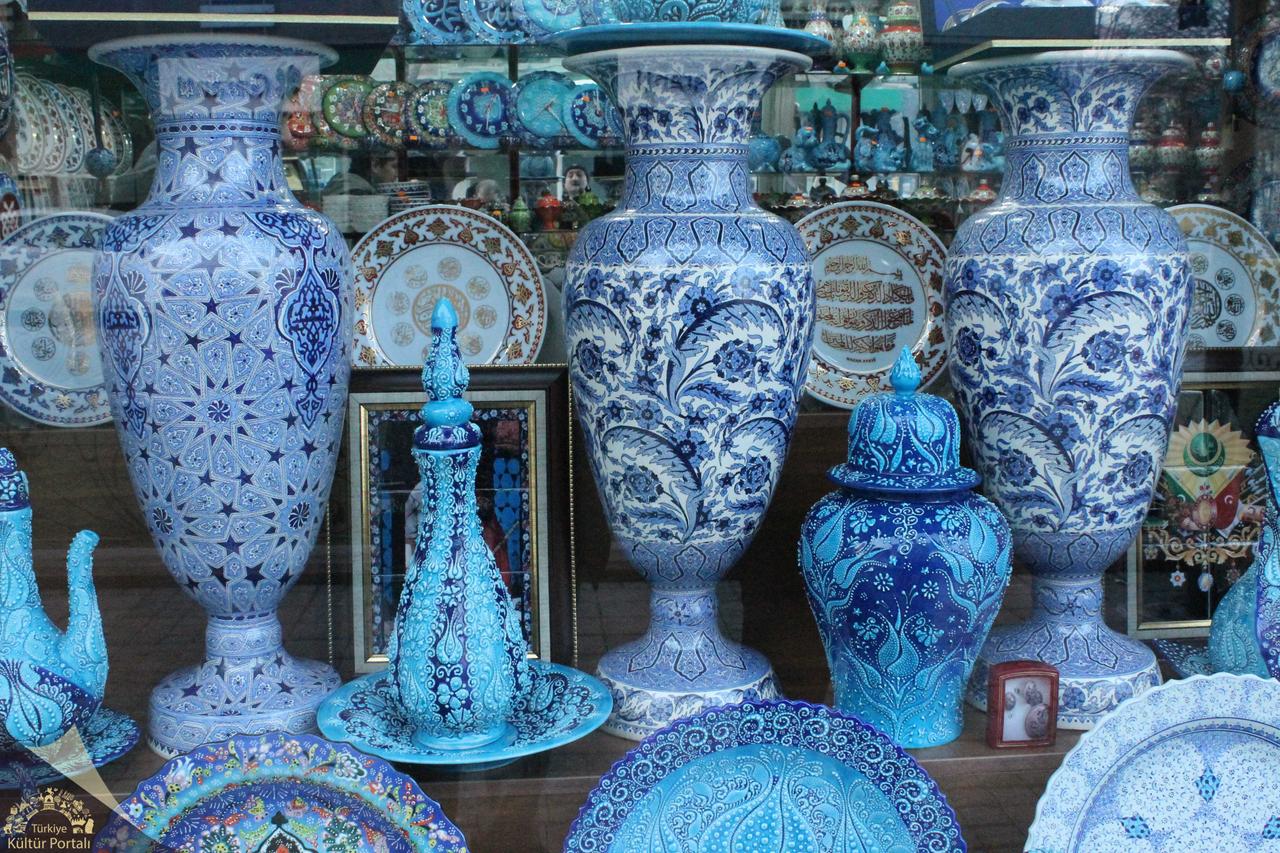
Kütahya Ceramics
Production Site | Kütahya | ||||||||
|---|---|---|---|---|---|---|---|---|---|
Application Area | Architectural decoration Collection Souvenir item | ||||||||
Material | Quartz Glaze Clay | ||||||||
Status | UNESCO Creative Cities Network (2023) | ||||||||
Kütahya ceramics is a traditional craft with a long production history, occupying a significant place among Türkiye’s heritage of ceramic arts. Ceramic activities in the region are defined by their historical continuity, production techniques, and decorative repertoire, and are used in various architectural and decorative contexts.
Ceramic production in Kütahya is believed to have begun in the 14th century. Kütahya emerged as an important production center during the Ottoman period, second only to Iznik, and became particularly renowned from the 17th century onward for its ceramic production destined for mosques, tombs, and palaces. During this period, ceramic craftsmanship in the city diversified both technically and visually.
Kütahya ceramics are produced by shaping clay using traditional methods, applying hand-painted designs, and firing at high temperatures. The clay, made from a mixture of quartz, clay, and various minerals, is treated using underglaze and overglaze techniques. The production process consists of shaping, drying, first firing, painting, and glazing stages.

Çini Sanatıyla İşlenen Vazo (Kültür Portalı)
The ceramics predominantly feature floral motifs such as tulips, hyacinths, and carnations, geometric patterns, and elements of calligraphic art. The most prominent colors used are cobalt blue, turquoise, red, and green. Designs are applied in original ways by artisans without strict adherence to fixed templates.

Traditional Tile Art and Tile Shop Practiced in Kütahya (AA)
Kütahya ceramics is not only a production sector contributing to local employment but is also recognized as an intangible cultural heritage element of the region. Production in ceramic workshops is transmitted from generation to generation through the master-apprentice relationship and is sustained through educational institutions, museums, and workshops. In recent years, the growing number of female producers has expanded the social reach of ceramic craftsmanship.
Kütahya ceramics is regarded as a significant craft tradition representing Türkiye’s cultural identity, promoted at various international fairs and used as a decorative element in public buildings. Its inclusion in the UNESCO Creative Cities Network in 2023 under the category of “crafts and folk arts” has significantly enhanced its international recognition.
Anadolu Ajansı. "Kütahya Çinileri Yurt Dışında da Camileri Süslemeye Devam Ediyor." AA, 2018.
Anadolu Ajansı. "Kütahyalı Çini Ustası Ameli İsmail, Eserlerinde Sümerlerden Bugüne Köprü Kuruyor." AA, 2024.
Anadolu Ajansı. "Osmanlı Çinilerinin Benzerleri Kütahya’da Özel Tekniklerle Üretiliyor." AA, 2023.
Anadolu Ajansı. "İlkokul Gezisinde Gördüğü Çini Sanatının Ustası Oldu." AA, 2024.
Erbaş, Ertuğrul. "Kütahya Çinileri Üzerine Tarihsel ve Teknik Bir Değerlendirme." Zeugma Akademik 5, no. 10 (2021): 513–530.
Kütahya İl Kültür ve Turizm Müdürlüğü. "Geleneksel Sanatlar – Zanaatlar." T.C. Kültür ve Turizm Bakanlığı.
T.C. Kültür ve Turizm Bakanlığı. "Kütahya Çinisi." Kültür Portalı.
T.C. Kütahya Valiliği. "Kütahya Çinisi UNESCO’da Tanıtıldı."

Kütahya Ceramics
Production Site | Kütahya | ||||||||
|---|---|---|---|---|---|---|---|---|---|
Application Area | Architectural decoration Collection Souvenir item | ||||||||
Material | Quartz Glaze Clay | ||||||||
Status | UNESCO Creative Cities Network (2023) | ||||||||
Historical Development
Production Process and Technical Features
Patterns and Color Usage
Economic and Cultural Function
International Recognition and Registration Process