

This article was automatically translated from the original Turkish version.
Type of Geographical İndication | Mahreç Sign | ||||||||
|---|---|---|---|---|---|---|---|---|---|
Application Date | 13.03.2020 | ||||||||
Registration Number | 597 | ||||||||
Registration Date | 20.11.2020 | ||||||||
Product / Product Group(s) | Bakery and confectionery products sweets dough products | ||||||||
Applicant/Registrant(s) | Kütahya Chamber of Commerce | ||||||||
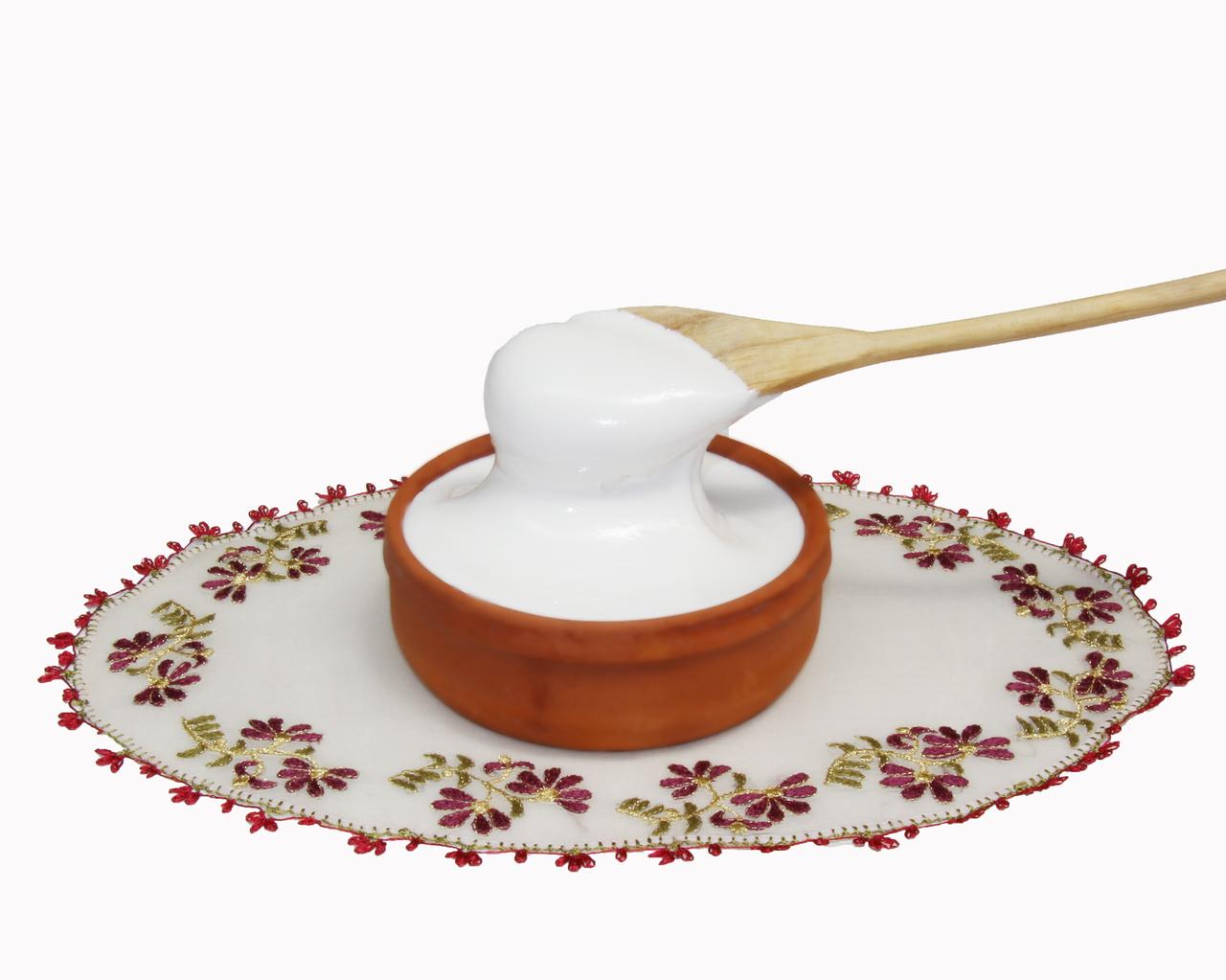
Kütahya Foam Halva is a traditional dessert unique to the province of Kütahya, passed down from generation to generation since the Ottoman period. This halva is made using sugar, water, çöven herb extract, and lemon salt (citric acid), and is recognized for its bright white color, foamy texture, and semi-fluid consistency. It was officially registered as a geographical indication on 20 November 2020 by the Kütahya Chamber of Commerce. The production process relies on traditional methods requiring skill and experience, and all stages are carried out within the boundaries of Kütahya province.
Although consumption increases particularly during autumn and winter months, it is enjoyed throughout the year. A common tradition is to consume it with tahini, which enhances its flavor. The halva’s distinctive taste and texture are shaped by the artisans’ craftsmanship and the transmitted knowledge passed down through generations.
The production of Kütahya Foam Halva consists of two main stages: mixing and boiling, followed by whipping. The ingredients and their proportions are as follows:
Sugar, water, and lemon salt are mixed and boiled in specially resistant copper cauldrons. The syrup is boiled for approximately 45 to 50 minutes until it reaches a temperature of 125–130°C. Artisans determine whether the syrup has reached the correct consistency through manual and visual inspection. During this check, a few drops of syrup are taken with a wooden ladle and dripped between the thumb and forefinger to assess its structure. This stage is a critical indicator of the artisan’s skill and determines the halva’s quality.
Once boiling is complete, 1% çöven juice is added to the syrup, the copper cauldron is covered, and the whipping process begins. Çöven juice is the essential component that gives the halva its characteristic white color, foamy texture, and flavor. The whipping process lasts about one hour, during which the temperature is maintained between 55–62°C. Readiness is determined by placing 500 grams of the product into a 1000-gram plastic container and checking its volume. If the product completely fills the container, sufficient foaming has been achieved; otherwise, whipping continues. Additionally, when the container is inverted, the halva does not flow immediately—a key indicator of the correct consistency.
Kütahya Foam Halva is packaged in specific weights in plastic containers approved by the Ministry of Agriculture and Forestry for food contact. It is recommended to store it in cool, dry, and light-free environments. No additives such as pectin, gelatin, thickening agents, colorants, or sweeteners are used in production other than lemon salt; the halva’s quality depends entirely on traditional methods and artisanal skill.
Kütahya Foam Halva stands out for its bright white color and foamy, semi-fluid texture. The use of çöven herb extract imparts a unique texture and flavor. The manual and visual inspections during production are performed based on the artisans’ experience and are among the most important factors in maintaining the halva’s standard quality. This dessert, closely associated with Kütahya, is widely appreciated by both local residents and visitors as a regional delicacy.
Kütahya Foam Halva has been registered as a geographical indication under Law No. 6769 on Industrial Property by the Kütahya Chamber of Commerce (Registration No: 597, Date: 20.11.2020). The ingredients, production stages, and use of the geographical indication emblem are annually monitored by a four-member inspection body coordinated by the Kütahya Chamber of Commerce, consisting of two representatives from the Kütahya Provincial Directorate of Agriculture and Forestry and two from the Chamber. Additional inspections are carried out upon complaint or need. The inspection body may seek expert support from public or private institutions when necessary.
The designation “Kütahya Foam Halva” and the geographical indication emblem appear on the product itself or its packaging. If this is not feasible, they are displayed in a clearly visible location within the production facility. This emphasizes the halva’s geographical indication status and its unique identity tied to Kütahya.
Turkish Patent and Trademark Office. "Kütahya Köpük Helvası Coğrafi İşaret Tescil Belgesi." Accessed August 16, 2025. https://ci.turkpatent.gov.tr/Files/GeographicalSigns/1c41ea1d-16a0-4f0a-b81c-accfba75b207.pdf
Türk Patent ve Marka Kurumu. “Kütahya Köpük Helvası.” Coğrafi İşaretler Portalı. Accessed August 16, 2025. https://ci.turkpatent.gov.tr/cografi-isaretler/detay/1823.

Type of Geographical İndication | Mahreç Sign | ||||||||
|---|---|---|---|---|---|---|---|---|---|
Application Date | 13.03.2020 | ||||||||
Registration Number | 597 | ||||||||
Registration Date | 20.11.2020 | ||||||||
Product / Product Group(s) | Bakery and confectionery products sweets dough products | ||||||||
Applicant/Registrant(s) | Kütahya Chamber of Commerce | ||||||||
Cultural Significance
Production Process
1. Mixing and Boiling
2. Whipping
Packaging and Storage
Distinctive Features
Monitoring and Registration
Usage