This article was automatically translated from the original Turkish version.
+2 More
Location | Germiyan Mahallesi Türkiye Kütahya Kütahya Merkez | ||||||||
|---|---|---|---|---|---|---|---|---|---|
Year of Establishment | 1999 | ||||||||
Building Location | Vacidiye Medresesi (1314) | ||||||||
Theme(s) | Tile Art and History | ||||||||
Collection Content | Tile Works, Panels and Decorations from the 18th Century to the Present | ||||||||
Affiliated Institution | Anatolian Seljuk | ||||||||
Architectural Style(s) | Kütahya Museum Directorate | ||||||||
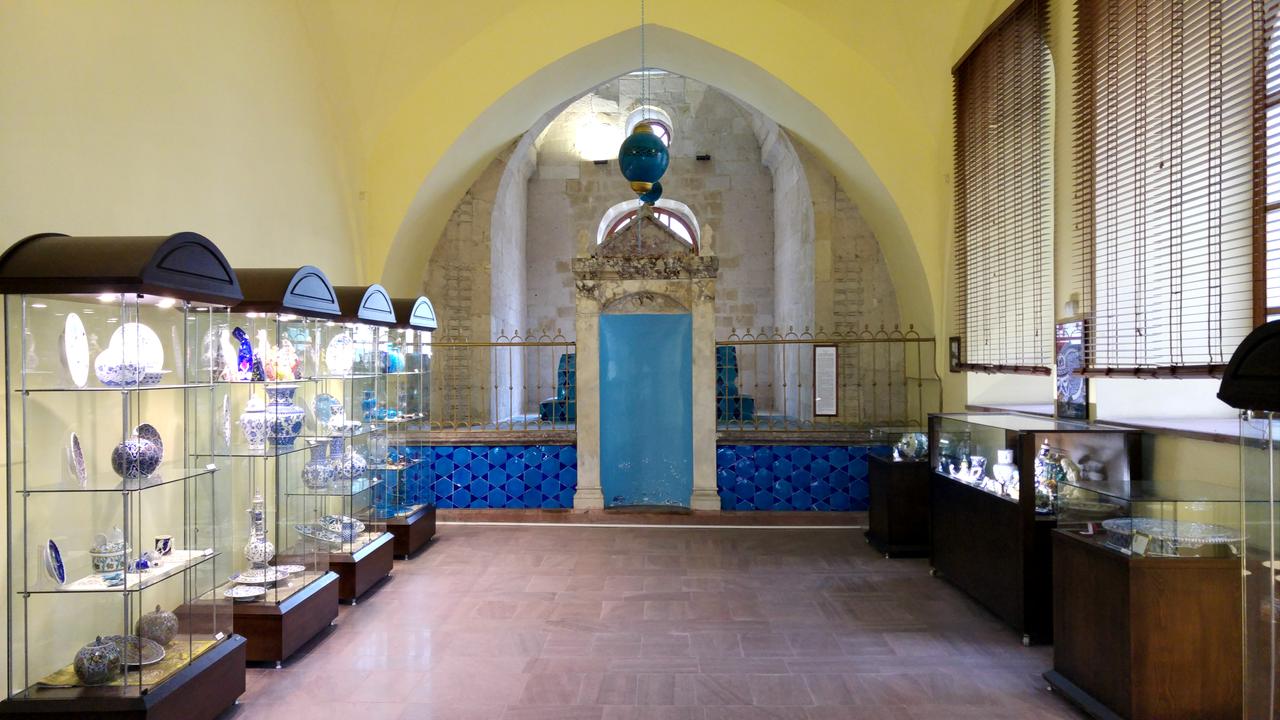
Kütahya Tile Museum is one of the important institutions reflecting Türkiye’s deep-rooted tradition in tile art. Opened to the public in 1999, this museum houses a rare collection documenting Kütahya’s centuries-old tile-making heritage through examples from both the Ottoman and Republican periods. The museum is located in the city center of Kütahya within the boundaries of Germiyan Neighborhood and operates in the historic building of the Vacidiye Medresesi, a complex dated to the 14th century.
The Vacidiye Medresesi, which houses the Kütahya Tile Museum, was constructed in 1314 during the reign of Anatolian Seljuk Sultan II. Yakub. The structure exhibits distinctive features of Seljuk architecture and is built of cut stone with an open courtyard, arcaded layout, and single-story plan. An inscription above the entrance door states that the building was commissioned by Vacid ibn Mehmed, the physician and astronomer of the period. Used for educational and religious purposes since the 14th century, the medrese served various functions during the Republican era and was restored in 1999 to become the Tile Museum.
The Kütahya Tile Museum showcases a rich array of artifacts that illuminate Kütahya’s vibrant tile-making history. The collection spans a broad chronological range from the 18th century to the present. Among the exhibited pieces are tiles used for plates, vases, panels, pitchers, lamps, and decorative elements for mosques and other religious buildings.
The museum also features explanatory panels and visual materials detailing the production techniques and motif diversity of Kütahya tile art. These elements provide visitors with insights into the historical development and technical processes of the craft. Particularly in works dominated by blue and white, green and yellow, navy and red tones, floral ornamentation, geometric patterns, and traditional Turkish motifs take center stage.

Kütahya Tile Museum (Ministry of Culture and Tourism of the Republic of Türkiye)
Kütahya is one of Türkiye’s most significant centers of tile production. Tile making began to flourish in this region from the 14th century and reached its peak during the Ottoman period. Following Iznik tiles, Kütahya tiles became the dominant artistic production from the 17th century onward. Tile production served both domestic markets and imperial palace and mosque decoration, gradually developing a distinctive stylistic identity. Today, tile making continues to hold importance for the city’s economy and cultural identity.
The Kütahya Tile Museum is not merely an exhibition space but also a vital center for education and cultural awareness, promoting local crafts and ensuring their transmission to future generations. The museum offers artists, researchers, students, and visitors a rich visual and historical resource on tile art. This cultural heritage has played a major role in Kütahya’s inclusion in UNESCO’s Creative Cities Network under the category of “crafts and folk arts.”
Başak, Oktay. “Kütahya Çini Müzesi.” *Türkiye Turizm Ansiklopedisi*. 2019. Accessed June 25, 2025. https://turkiyeturizmansiklopedisi.com/kutahya-cini-muzesi.
Culture and Museums General Directorate. "Kütahya Müze Directorate." Accessed June 25, 2025. https://kvmgm.ktb.gov.tr/TR-44119/kutahya-muze-mudurlugu.html.
Kütahya Valiliği. "Müzelerimiz." Accessed June 25, 2025. http://www.kutahya.gov.tr/muzelerimiz.
Kütahya İl Directorate of Culture and Tourism. "Çini Müzesi." Accessed June 25, 2025. https://kutahya.ktb.gov.tr/TR-69423/cini-muzesi.html.
Ministry of Culture and Tourism. "Çini Müzesi." *Kültür Portalı*. Accessed June 25, 2025. https://www.kulturportali.gov.tr/turkiye/kutahya/gezilecekyer/cn-muzes

Location | Germiyan Mahallesi Türkiye Kütahya Kütahya Merkez | ||||||||
|---|---|---|---|---|---|---|---|---|---|
Year of Establishment | 1999 | ||||||||
Building Location | Vacidiye Medresesi (1314) | ||||||||
Theme(s) | Tile Art and History | ||||||||
Collection Content | Tile Works, Panels and Decorations from the 18th Century to the Present | ||||||||
Affiliated Institution | Anatolian Seljuk | ||||||||
Architectural Style(s) | Kütahya Museum Directorate | ||||||||
No Discussion Added Yet
Start discussion for "Kütahya Tile Museum" article
Historic Structure: Vacidiye Medresesi
Museum Collection and Sections
The Place of Tile Making in Kütahya
Cultural Heritage and Education