


This article was automatically translated from the original Turkish version.
+1 More
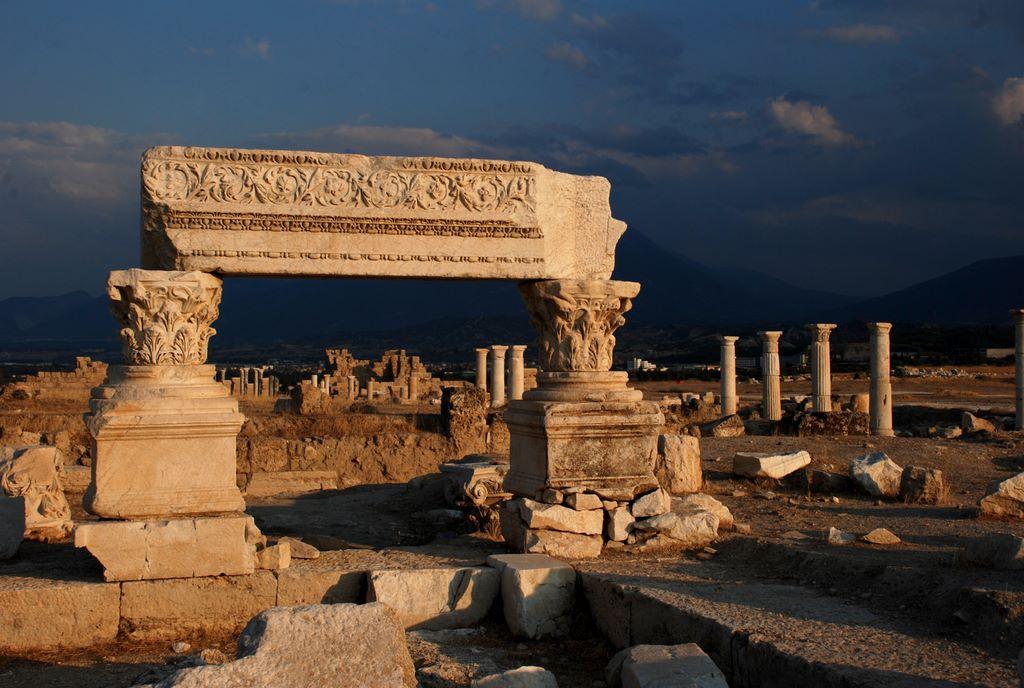
Laodicea Ancient City
Foundation Date | 261-251 BCE (Hellenistic Period) | ||||||||
|---|---|---|---|---|---|---|---|---|---|
Founder(s) | King Seleucus II Antiochus | ||||||||
Person After Whom It Is Named | Queen Laodike | ||||||||
Location | Denizli Türkiye | ||||||||
Religious Significance | One of the Seven Churches mentioned in the Bible is located here; it is one of the important centers of Christianity. | ||||||||
Laodicea Ancient City is located 6 km northeast of the modern-day Denizli province, at the western edge of the ancient region of Phrygia. Strategically situated in the middle of the Lykos (Çürüksu) Valley, the city was founded in the 3rd century BCE by Seleucid King Antiochus II in the name of his wife Laodice. According to ancient sources, the city was built on the sites of earlier sacred settlements known as Diospolis and Rhoas.
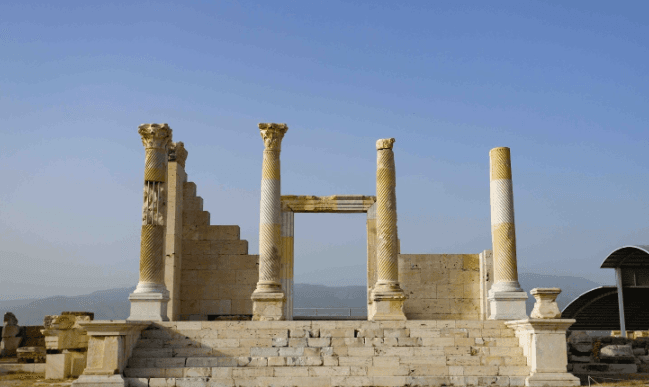
Laodicea Ancient City (Cultural Portal)
Excavations on Asopos Hill to the west of the city have revealed settlement traces dating to the Late Chalcolithic period (3500 BCE) and the Early Bronze Age (3000 BCE), demonstrating that human occupation in the region predates the founding of Laodicea.
Laodicea was founded by the Seleucids in the 3rd century BCE and later came under the control of the Kingdom of Pergamon and subsequently the Roman Republic. In its early period, trade—particularly textile production and wool commerce—emerged as a major economic activity.
From the 1st century BCE onward, Laodicea became a major center of trade and administration. During the Roman era, extensive urban development brought the city to its golden age; even after a major earthquake in 60 CE, it rebuilt itself without Roman assistance. This period saw significant growth in the textile industry, leading the city to be known as Trimitaria.
From the 4th century CE onward, with the adoption of Christianity, Laodicea became an important religious center and acquired the title of Metropolitan of Phrygia. It was one of the Seven Churches of Asia, which led to its mention in the Bible. The Church of Laodicea, constructed after Emperor Constantine’s Edict of Milan, is among the most significant structures of this era.
Large earthquakes in 494 CE and the 7th century, combined with Arab raids and the destruction of waterways, led to the abandonment of the city. The population migrated to the areas of present-day Denizli-Kaleiçi and the foothills of Babadağ.
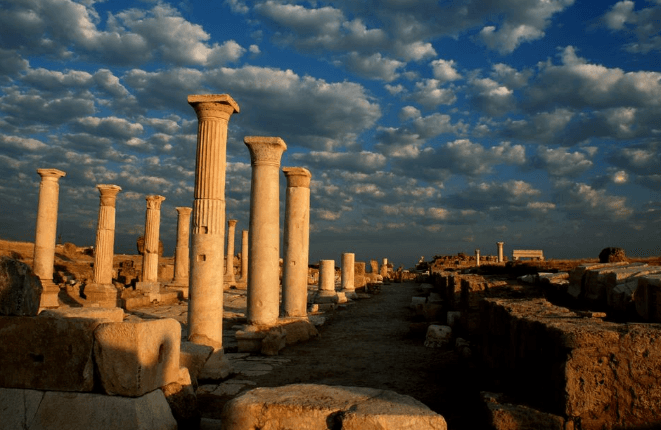
Laodicea Ancient City (Cultural Portal)
Laodicea was planned according to the Hippodamian (grid) system and built on a platform surrounded by rivers on three sides. The city was encircled by four large necropolis areas. The main structures within the city include:
Two theaters: The Hellenistic Western Theater and the Northern Theater, constructed in the 2nd century CE
Stadium: Measuring 285 by 70 meters, one of the largest in Anatolia
Bath-gymnasium complexes: Social and educational buildings
Temple A: Dedicated to Apollo, Artemis, and the Imperial Cult
Church of Laodicea: A unique multi-apsidal basilical structure.

Temple (Denizli Ministry of Culture and Tourism)
Excavations at Laodicea have been conducted since 2003 under the leadership of Professor Dr. Celal Şimşek. Excavation and restoration work proceed simultaneously at the site:
Areas such as the Syria Street, Temple A, Church of Laodicea, and the Eastern Byzantine Gate have been successfully restored. The North (Sacred) Agora, along with surrounding temple remains, is being restored as a major sacred precinct. The anastylosis method is employed in the restoration of structures, preserving the marks left by earthquakes. A living archaeology park has been established within the city to provide educational, exhibition, and experiential spaces for local residents and visitors.
Through ongoing excavations and restorations supported by Pamukkale University, Laodicea has been transformed into a modern archaeological park and added to UNESCO’s Tentative List of World Heritage Sites. Live excavation broadcasts are conducted via MOBESE cameras, and tourism infrastructure including visitor centers, restrooms, kiosks, and ticket offices has been established.
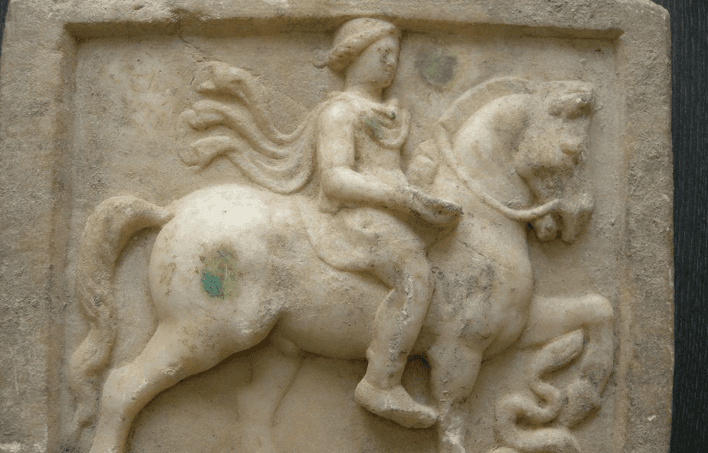
Historical Artifact Located in Laodicea (Denizli Ministry of Culture and Tourism)

Historical Monument in Laodicea (Denizli Ministry of Culture and Tourism)
Ministry of Culture and Tourism. "Laodikeia Ancient City." *Turkey Culture Portal*. Accessed April 25, 2025. https://www.kulturportali.gov.tr/turkiye/denizli/gezilecekyer/laodikya-antik-kenti.
Ministry of Culture and Tourism. "Laodikeia." *Denizli İl Kültür veTurizm Müdürlüğü. Accessed April 25, 2025. https://denizli.ktb.gov.tr/TR-211744/laodikeia.html.
Pamukkale Üniversitesi. "Laodikeia Kazısı Resmî Web Sitesi." Pamukkale University. Accessed April 25, 2025. https://laodikeia.pau.edu.tr/.
Şimşek, Celal. “Laodikeia Antik Kenti’nde Yapılan Çalışmalar.” Colloquium Anatolicum 12 (June 1, 2013): 15–36. https://dergipark.org.tr/tr/pub/collan/issue/61598/919804

Laodicea Ancient City
Foundation Date | 261-251 BCE (Hellenistic Period) | ||||||||
|---|---|---|---|---|---|---|---|---|---|
Founder(s) | King Seleucus II Antiochus | ||||||||
Person After Whom It Is Named | Queen Laodike | ||||||||
Location | Denizli Türkiye | ||||||||
Religious Significance | One of the Seven Churches mentioned in the Bible is located here; it is one of the important centers of Christianity. | ||||||||
No Discussion Added Yet
Start discussion for "Laodicea Ancient City" article
Prior to Foundation
Hellenistic Period
Roman Period
Byzantine and Christian Period
Decline Period
Urban Plan and Architecture
Excavation and Restoration Works
Laodicea Today