This article was automatically translated from the original Turkish version.
+1 More
Author(s) | Ahmet Altan | ||||||||
|---|---|---|---|---|---|---|---|---|---|
Genre | Novel | ||||||||
Publisher(s) | Everest Yayınları | ||||||||
Number of Pages | 416 | ||||||||
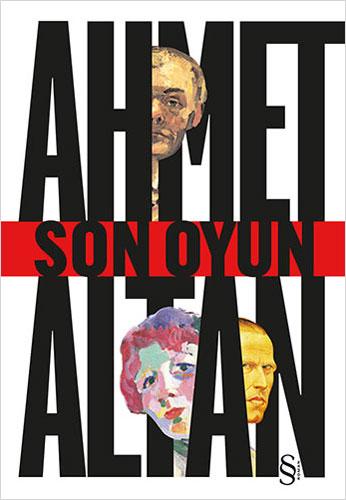
Last Game is one of Ahmet Altan’s novels that focus on the inner conflicts of the individual, as well as the dynamics of love and power. The novel narrates the process leading to a murder through the eyes of a writer who, after losing his family in a traffic accident, moves to a small town. The work is built more around the psychological states of its characters, their conflicts, and resolutions than around its plot.
The novel begins with a writer, whose books sell poorly and who questions his connection to life, relocating to a small town after the loss of his family. There, he meets a woman named Zuhal and falls in love with her. However, Zuhal’s affections belong to the mayor, Mustafa. This situation triggers a process of jealousy and inner collapse within the writer. His interactions with other townspeople—particularly the town’s life force, Sümbül, and a pharmacist who challenges moral norms—force him to confront the harsh realities beneath the town’s surface tranquility.
The events unfold over the course of a single night, framed as a moral reckoning in which the writer confronts his past. During this night, the writer stands alone with the responsibility for a murder committed in the town. The novel explores themes of individual isolation, the confrontation with God, and the power dynamics inherent in male-female relationships.
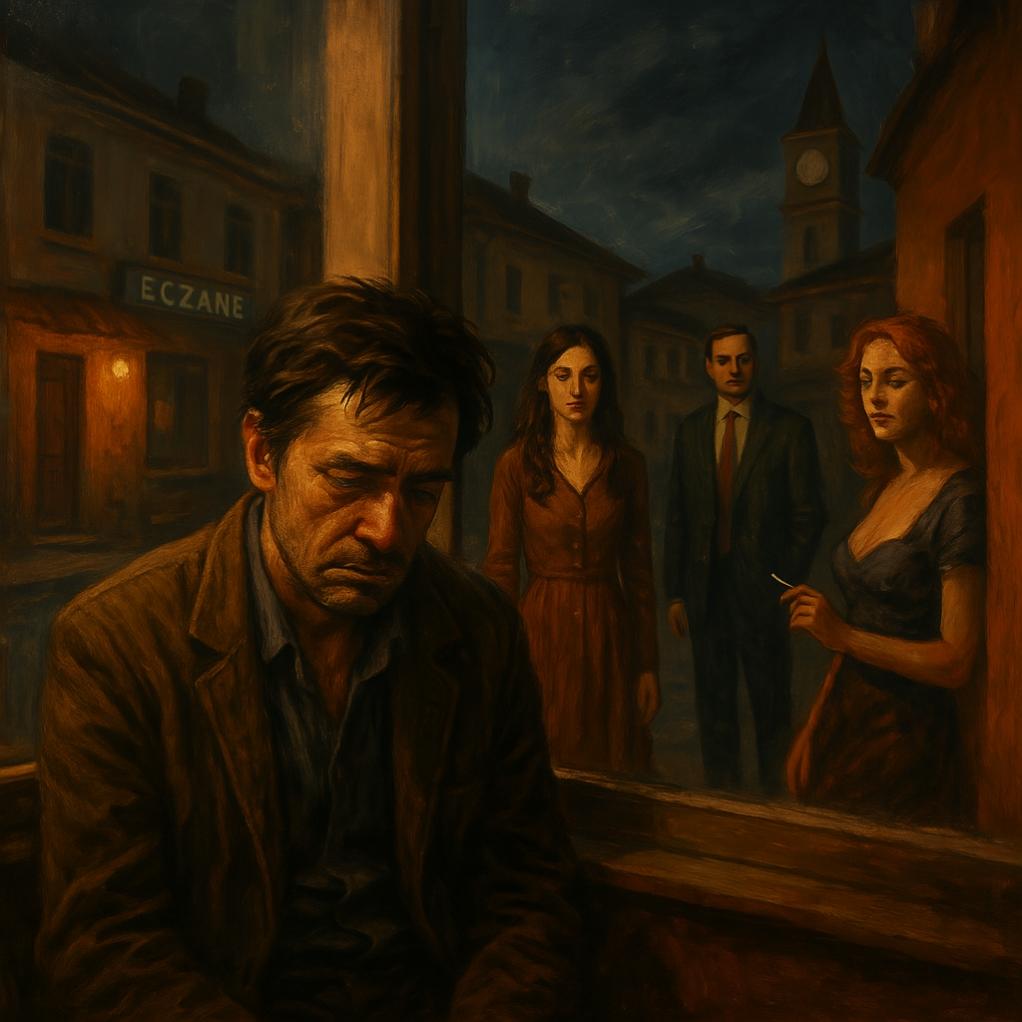
Mustafa, Sümbül and Zuhal (Generated by Artificial Intelligence)
The Writer: The novel’s central character. After losing his family, he suffers a profound psychological collapse. His reasons for moving to the town are both escape and the desire to restart his writing. His inner turmoil deepens along the axes of love, jealousy, guilt, and conscience. He is the one who commits the murder.
Zuhal: A beautiful, distant, and compelling woman. She does not reciprocate the writer’s love; her heart belongs to Mustafa. In the novel, she symbolizes passion and unattainability.
Mustafa: The mayor. A powerful and respected figure within the community. He has won Zuhal’s attention and is one of the central figures in the town’s power dynamics.
Sümbül: The town’s life force. Though marginalized by society, she holds firm to her own values. A brief intimacy develops between her and the writer.
The Pharmacist: One of the town’s most surprising characters. He represents the town’s hidden face through his unconventional habits, such as partner swapping.
Loneliness and Trauma: The writer’s isolation following the loss of his family, and the psychological collapse it produces, form the novel’s fundamental psychological foundation.
Male-Female Relationships: All relationships in the novel are woven into love triangles caught between power and passion. Zuhal, Sümbül, and other female characters leave deep impressions on the writer’s inner world.
Power and Conflict: The town’s seemingly tranquil structure is shaped by underlying struggles for power. Mustafa’s political authority stands in stark contrast to the writer’s psychological disintegration.
Conscience and Guilt: The shadow of a murder lingers throughout the novel. The writer questions himself in the face of this crime, confronts God, and faces his own conscience.
Altan, Ahmet. *Son Oyun.* Everest Yayınları, 2013. https://www.everestyayinlari.com/kitap/son-oyun-ahmet-altan/10583

Author(s) | Ahmet Altan | ||||||||
|---|---|---|---|---|---|---|---|---|---|
Genre | Novel | ||||||||
Publisher(s) | Everest Yayınları | ||||||||
Number of Pages | 416 | ||||||||
Plot
Characters
Themes