This article was automatically translated from the original Turkish version.
+1 More
Lead Soldier
Author(s) | Hans Christian Andersen | ||||||||
|---|---|---|---|---|---|---|---|---|---|
Number of Pages | 64 | ||||||||
Original Title | Den Standhaftige Tinsoldat | ||||||||
Type(s) | Literary fairy tale | ||||||||
First Publication Date(s) | 1838 | ||||||||
Publisher(s) | Özyürek Yayınevi | ||||||||
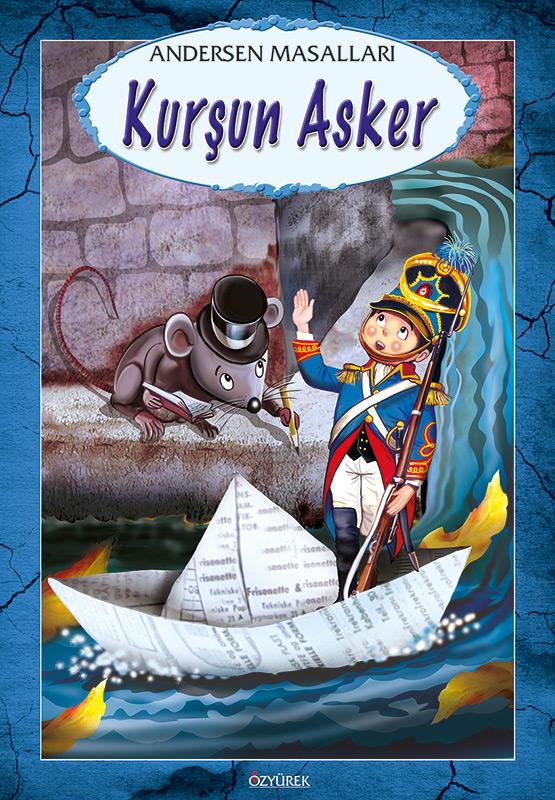
The Steadfast Tin Soldier, a literary fairy tale written by Danish author Hans Christian Andersen and first published in 1838, tells the story of an impossible love between a one-legged tin soldier, cast from an incomplete mold, and a delicate paper ballerina.
As a birthday gift, a child receives 25 tin soldiers, all cast from the same mold. However, one soldier is missing a leg due to an imperfection in the mold. Standing on the table, this soldier falls in love with a graceful paper ballerina, who also stands on one leg. That night, the toys come to life; but a jealous jack-in-the-box leaps from its box and warns the soldier not to look at the ballerina. The soldier ignores the warning.
The next day, the tin soldier falls from the windowsill into the street. Two children find him and place him in a paper boat, setting it adrift in a gutter. The boat enters a sewer system, where a rat demands a toll for passage. After a stormy journey, the soldier is swallowed by a fish. One day, the fish is caught, cut open, and the soldier finds himself once again facing the ballerina, inside the house.
Finally, in a mysterious turn, the child throws the tin soldier into the fireplace. At the same moment, a gust of wind blows the ballerina into the fire as well. The two toys burn together. The next morning, the servant cleaning the hearth finds only a small tin heart and a charred scrap of the ballerina’s dress remaining.
The Steadfast Tin Soldier explores themes of loyalty, love, fate, resilience, and tragic devotion. The tin soldier remains faithful to his love from beginning to end, enduring every hardship without complaint. Their joint destruction in the fire symbolizes the destructive yet enduring nature of love. The tin heart left behind at the tale’s end represents the permanence of this love and the emotional intensity at the story’s core.
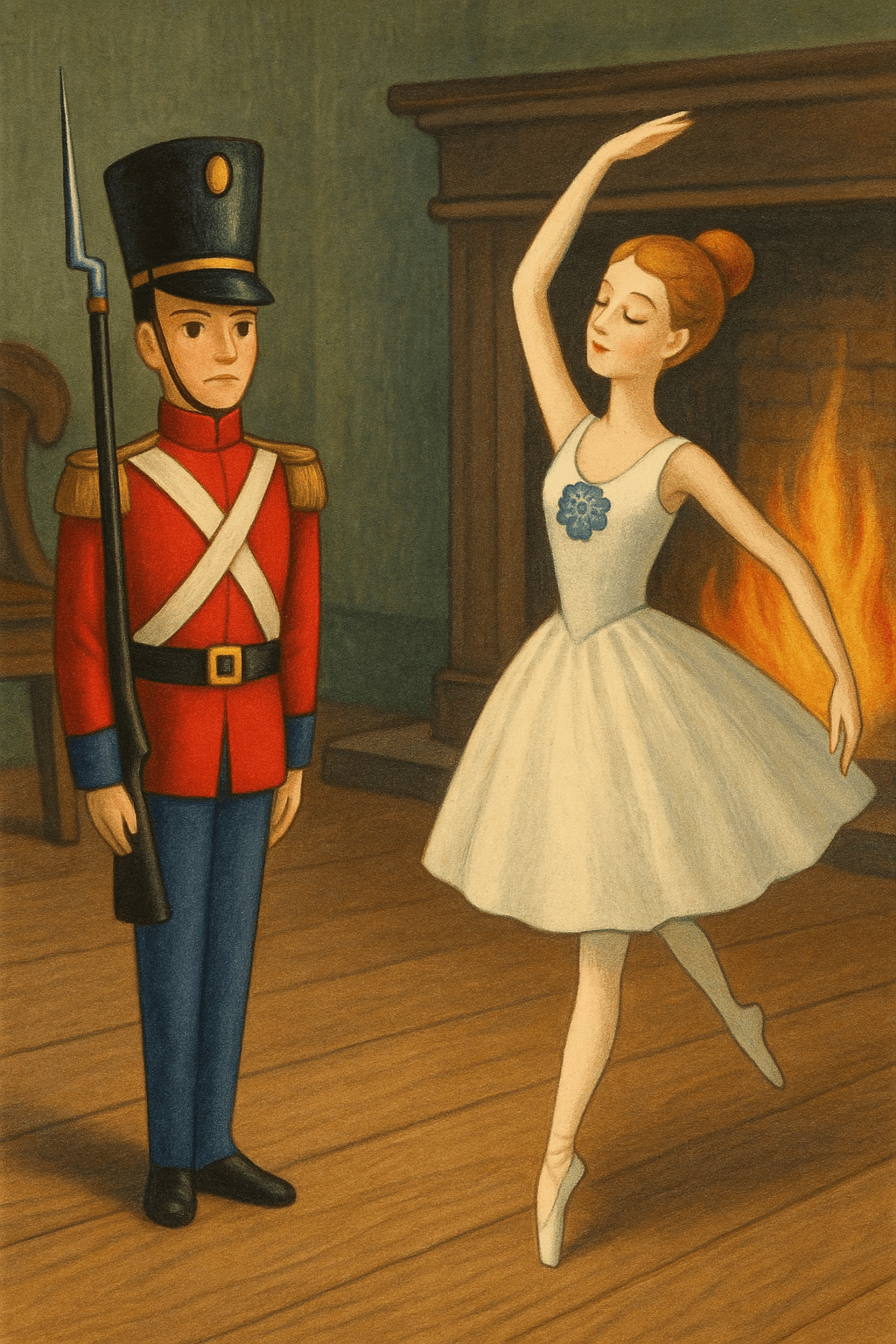
The Steadfast Tin Soldier and the Ballerina. (Generated by Artificial Intelligence.)
The Tin Soldier: His physical deficiency makes him vulnerable to exclusion, yet it does not diminish his strength or determination. Throughout the tale, his emotions remain unchanged. His love for the ballerina and devotion to her never waver. Though he appears to submit passively to the events befalling him, this is in fact a testament to the purity of his resolve and love. He falls, is swept away by water, swallowed by a fish, and finally cast into the fire—yet his spirit remains unbroken. The soldier, with his rigid stance, embodies the individual who stands firm against societal judgments and remains faithful to his love. His transformation into a heart through burning symbolizes the nobility of that love.
The Ballerina: The ballerina is physically delicate and fragile. Yet in the soldier’s eyes, she represents ideal beauty and love. Like the tin soldier, she has no active role in the tale. However, her being swept into the fire at the end signifies the merging of their fates. The ballerina is the physical manifestation of the soldier’s desires and ideals. She represents the aesthetic dimension of love, and her destruction alongside him symbolizes the complete yet tragic nature of their love.
Jack-in-the-box (Zıp zıp kukla / Goblin): Clearly portrayed as the villain of the tale, the jack-in-the-box threatens the soldier, is consumed by jealousy, and indirectly contributes to his misfortunes. His interest in the ballerina provokes his hostility toward the soldier. The jack-in-the-box embodies negative emotions such as envy, destruction, and opposition to love, purity, and resilience.
The Child and Other Figures:
The Child is the person who receives the toys at the beginning of the tale but remains a passive figure. His act of throwing the tin soldier into the fireplace marks the dramatic climax of the story. It is unclear whether he does this knowingly, but the action symbolizes the elevation of love through its destruction.
The Servant appears only at the end of the tale, discovering the remnants of the heart and the charred scrap of the ballerina. This scene completes the tale’s dramatic and symbolic impact.
Andersen, Christian, Hans. Andersen Masalları Kurşun Asker. Özyürek Yayınevi.
Andersen, Hans Christian. 2011. *Kurşun Asker*. Özyürek Yayınevi. ISBN 978-9754768824. Accessed June 28, 2025. https://www.ozyurekyayinevi.com.tr/kitap/kursun-asker

Lead Soldier
Author(s) | Hans Christian Andersen | ||||||||
|---|---|---|---|---|---|---|---|---|---|
Number of Pages | 64 | ||||||||
Original Title | Den Standhaftige Tinsoldat | ||||||||
Type(s) | Literary fairy tale | ||||||||
First Publication Date(s) | 1838 | ||||||||
Publisher(s) | Özyürek Yayınevi | ||||||||
No Discussion Added Yet
Start discussion for "Lead Soldier (Book)" article
Plot
Themes
Character Analysis