This article was automatically translated from the original Turkish version.
+1 More
Type of Geographical İndication | Signpost | ||||||||
|---|---|---|---|---|---|---|---|---|---|
Application Date | 05.12.2023 | ||||||||
Registration Number | 1659 | ||||||||
Registration Date | 07.11.2024 | ||||||||
Product / Product Group(s) | Textiles | ||||||||
Province(s) | Bilecik | ||||||||
Applicant/Registrant(s) | Osmaneli Municipality | ||||||||
Lefke Bezi is a traditional fabric woven from 100% cotton yarn using conventional methods in the Osmaneli district of Bilecik province and officially registered as a geographical indication. Registered on 7 November 2024, this weaving is one of the traditional handicrafts that carry a “certified geographical indication,” meaning its reputation is exclusively tied to the geographic area where it is produced.
The Osmaneli district has historically been known as Lefke and has served as an important transit point since the Byzantine era. This historical legacy, from which Lefke Bezi derives its name, imbues the fabric with cultural value beyond its physical form. The skilled production techniques have been passed down from generation to generation through local craftsmanship and have survived to the present day.
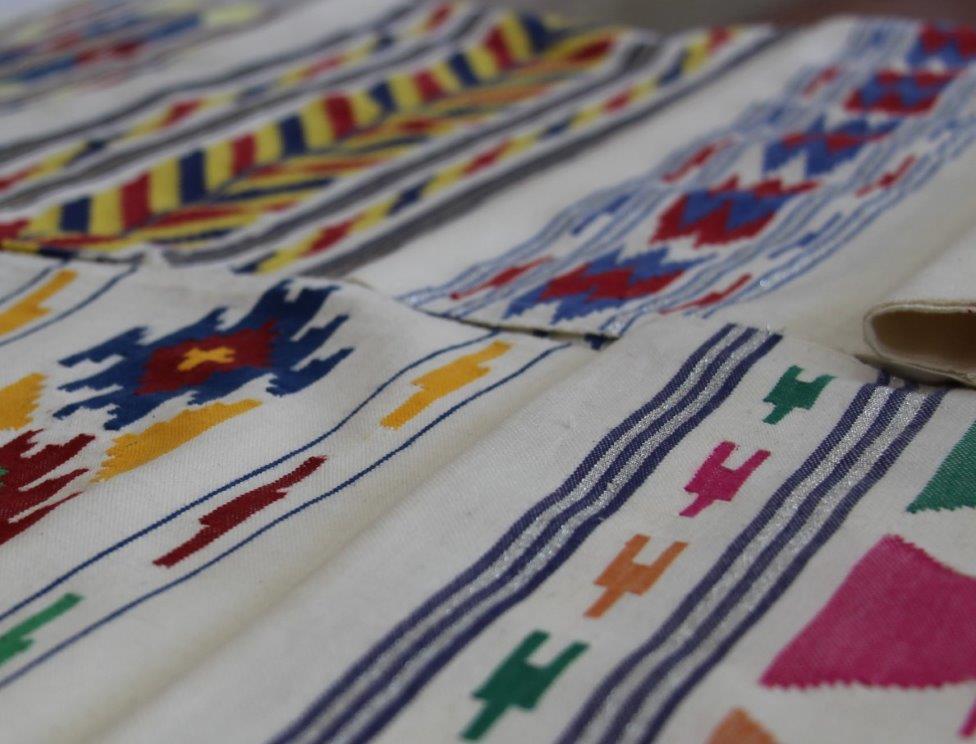
Lefke Bezi is produced on shuttle and bobbin looms using the bezayağı weaving technique. During weaving, geometric, botanical and animal figures as well as regional motifs are embellished with techniques such as needle lace and embroidery. It is commonly used for headscarves, bags, peshtamals, tablecloths and home décor items.
Fabric Dimensions: Width ranges from 29 to 99 cm and length does not exceed 2 metres, depending on the product type.
Ground Color: Cream is the preferred base color. Motifs prominently feature red, orange, burgundy, green, blue and brown.
Yarn and Reed: 20/2 Ne cotton yarn is used. Reeds with a size of 100/1 and a width of 45–90 cm are preferred. An average of 900 warp threads are employed.
Pattern Layout: Fine stripe patterns are placed at the beginning and end; the central area is woven either plain or with motifs.
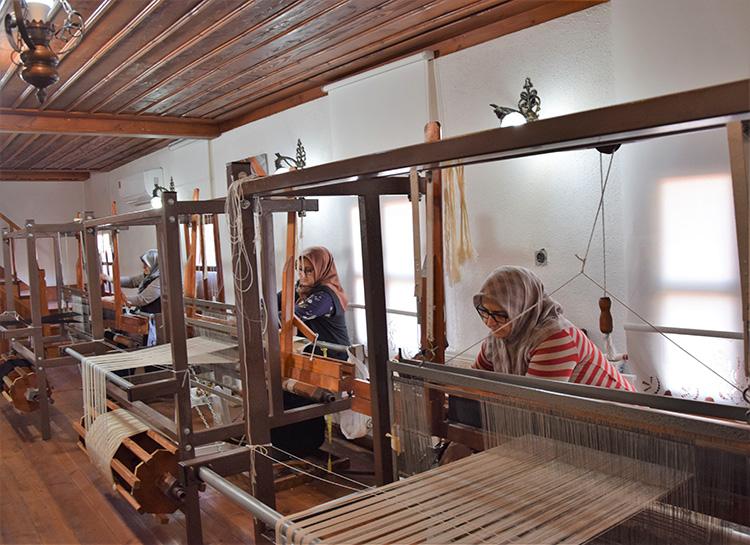
Lefke Bezi Production Loom (Anadolu Agency)
Preparation: Warp threads are prepared on the warp beam. During this process, the threads are threaded sequentially through a reed. Using the weaving plan, the threads are positioned with the warp and reed heddles.
Transferring to the Loom: The warp threads are transferred to the loom using the warp and winding mechanisms. On two-shaft looms, the threads are threaded and arranged according to the weave pattern.
Weaving: The shed is opened using pedals; the shuttle moves left and right by pulling the bobbin. The pattern is formed according to the choice of plain or patterned weaving.
Motifs and Embellishments: Motifs are either woven during the process or added afterward. Needle lace is commonly preferred for smaller items such as bags.
Tassel Binding: The loose ends of the fabric are secured at the edges using techniques such as “tirnak bag,” “antique fringe tassel,” or “hook work.”
The original motifs reflecting the cultural fabric of Lefke Bezi include:
Shadow Reflection, Holiday Candy, Infinity Symbol, Hıdırellez, Quince Flower, Lantern Flower, Necla Hanım Rüstem Paşa Mosque Ceiling, Silkworm, Dane Dane, Hourglass, Eli Belinde, Lightning Strike, Clover, Sakarya River, Lefke Bridge, Lefke Stone, Lefke Shuttle, Mushroom, Stone Mill. These motifs convey not only aesthetic value but also cultural narratives that deepen the meaning of the fabric.
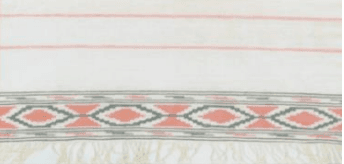
Lefke Stone Motif (Turkish Patent)
The entire production process must take place exclusively within the boundaries of the Osmaneli district. This is because the skilled traditional methods rely on knowledge and manual expertise passed down through generations in this specific region. Oversight activities are conducted by a three-member committee coordinated by the Osmaneli Municipality, with participation from experts appointed by the Osmaneli District Governorate and the Osmaneli Community Education Center. All aspects of production—from technique to motif usage—are inspected at least once a year according to established criteria.
Anadolu Ajansı. “Bilecik'te dokunan 'Lefke bezi' kültürel miras ulusal envanterinde yerini aldı.” Anadolu Ajansı, May 7, 2023. Accessed July 3, 2025. https://www.aa.com.tr/tr/kultur/bilecikte-dokunan-lefke-bezi-kulturel-miras-ulusal-envanterinde-yerini-aldi/2891190.
Turk Patent and Trademark Office. "Lefke Bezi." Geographical Indications Portal. Accessed July 3, 2025. https://ci.turkpatent.gov.tr/cografi-isaretler/detay/10702.

Type of Geographical İndication | Signpost | ||||||||
|---|---|---|---|---|---|---|---|---|---|
Application Date | 05.12.2023 | ||||||||
Registration Number | 1659 | ||||||||
Registration Date | 07.11.2024 | ||||||||
Product / Product Group(s) | Textiles | ||||||||
Province(s) | Bilecik | ||||||||
Applicant/Registrant(s) | Osmaneli Municipality | ||||||||
Historical and Cultural Context
Technical Characteristics and Production Process
Production Stages
Motifs and Symbolic Meanings
Geographically Restricted Production and Oversight