


This article was automatically translated from the original Turkish version.
+1 More
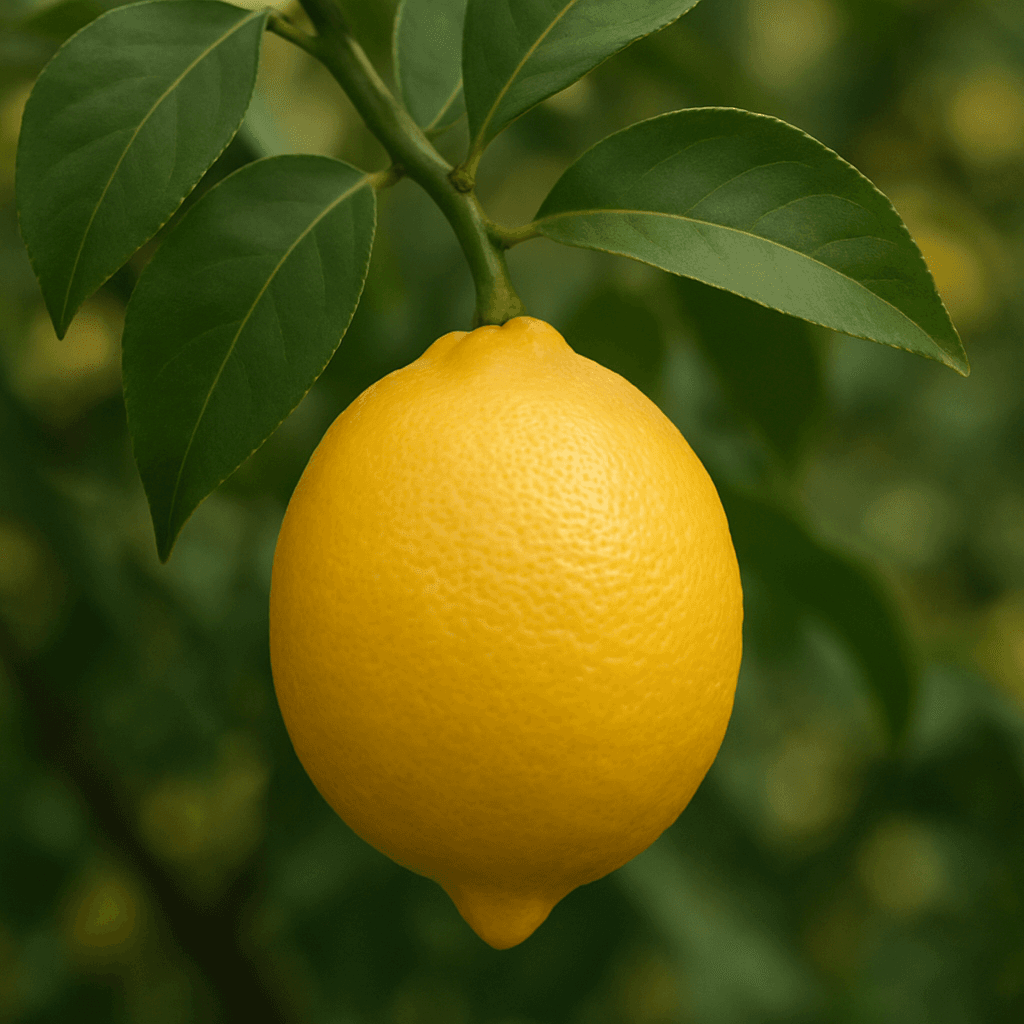
Lemon (Citrus limonum)
Kingdom (Regnum) | Plantae (Plants) | ||||||||
|---|---|---|---|---|---|---|---|---|---|
Division (Divisio) | Magnoliophyta (Flowering Plants) | ||||||||
Class (Classis) | Magnoliopsida (Dicotyledons) | ||||||||
Order (Ordo) | Sapindales (Sapindales Order) | ||||||||
Family (Familia) | Rutaceae (Rutaceae Family) | ||||||||
Genus (Genus) | Citrus (Citrus) | ||||||||
Species (Species) | Citrus limonum (Lemon) | ||||||||
Lemon is a citrus fruit belonging to the Rutaceae family. This widely consumed fruit worldwide is used in the food industry, cosmetic industry, and for medical purposes. Lemon is among the most nutrient-rich fruits known, particularly high in vitamin C. Additionally, due to its acidic structure, it serves as an important ingredient in the food industry as an acidulant, flavor enhancer, and preservative.
Lemon is an evergreen tree that can grow up to 2–5 meters tall, with scattered leaves. Its leaves are typically oval and pale green in color, with serrated edges. The flowers display colors ranging from white to pale purple and have a distinctive sharp fragrance. The lemon fruit is round or oval in shape and may be yellowish or greenish in color. The peel is thin, and the fruit has an acidic structure, which gives it a unique sour taste and aroma.
Lemon thrives best in subtropical and tropical climates. It grows rapidly and yields more efficiently in regions where temperatures range between 20°C and 30°C. It generally prefers well-drained, slightly acidic soils. Lemon trees require abundant sunlight and regular watering but are sensitive to overwatering and low temperatures. In areas with insufficient water or sunlight, the tree produces less fruit and becomes more susceptible to diseases.

Lemon Tree (generated with artificial intelligence assistance)
The growth cycle of the lemon tree is significantly influenced by environmental factors such as temperature, humidity, rainfall, and soil properties. Therefore, the impact of climate change on citrus cultivation is an important area of research for the agricultural industry.
Lemon is a fruit of considerable economic value, especially due to its high vitamin C content, making it widely used in the food and pharmaceutical industries. Lemon juice, peel, oil, and extract are also in demand in the cosmetic and perfume industries. Furthermore, the fruit is a common ingredient in the production of lemonade and various beverages.
Lemon is also an important source of agricultural income. Lemon cultivation creates a major economic activity in regions such as the Mediterranean, Southeast Asia, Latin America, and California. From this perspective, it holds a significant position in agricultural exports.
Lemon is associated with healthy living due to its content of ascorbic acid (vitamin C) and various antioxidant compounds. Its rich vitamin C profile may play a role in processes related to immune system function. Components of lemon have been reported in some studies to have regulatory effects on the digestive system and to be linked to skin health. Additionally, the presence of flavonoids with antioxidant properties may help reduce the effects of free radicals. However, the extent of these effects can vary depending on the method of use, quantity, and individual health conditions. Therefore, its use for health purposes should be conducted under medical supervision.
In conclusion, lemon is a plant of great ecological and economic importance. Due to its health benefits, use in the food industry, and economic contributions, it is cultivated widely around the world. The development of the lemon tree is largely dependent on environmental conditions, and external factors such as climate change can create challenges for its cultivation.
Warning: The content in this article is provided solely for general encyclopedic informational purposes. The information here should not be used for diagnosis, treatment, or medical advice. Before making any decisions regarding health, you must consult a physician or qualified healthcare professional. The author of this article and KÜRE Encyclopedia assume no responsibility for any consequences arising from the use of this information for diagnosis or treatment purposes.
Avcıoğlu, N. H., G. Sahal, and I. S. Bilkay. “Antibiofilm Effects of Citrus limonum and Zingiber officinale Oils on Biofilm Formation of Klebsiella ornithinolytica, Klebsiella oxytoca and Klebsiella terrigena Species.” Asian Journal of Traditional Medicines 13, no. 6 (2016): 10–16. Accessed May 18, 2025. https://openaccess.hacettepe.edu.tr/xmlui/handle/11655/19421.
Morton, J. F. *Lemon.* In *Fruits of Warm Climates*, 160–168. Miami, FL: Julia F. Morton, 1987. Accessed May 18, 2025. https://hort.purdue.edu/newcrop/morton/lemon.html.

Lemon (Citrus limonum)
Kingdom (Regnum) | Plantae (Plants) | ||||||||
|---|---|---|---|---|---|---|---|---|---|
Division (Divisio) | Magnoliophyta (Flowering Plants) | ||||||||
Class (Classis) | Magnoliopsida (Dicotyledons) | ||||||||
Order (Ordo) | Sapindales (Sapindales Order) | ||||||||
Family (Familia) | Rutaceae (Rutaceae Family) | ||||||||
Genus (Genus) | Citrus (Citrus) | ||||||||
Species (Species) | Citrus limonum (Lemon) | ||||||||
No Discussion Added Yet
Start discussion for "Lemon (Citrus limonum)" article
Botanical Characteristics
Growth Conditions
Economic Value
Health Effects