badge icon

This article was automatically translated from the original Turkish version.

Article

Lenin (Nuclear Icebreaker)

996069_original-scaled-1.jpg
Icebreaker Lenin
Length
134 m
Width
27.6 m
Side height
16.1 m
Main engine power
44000 hp
Speed in open water
19.6 knot ~36.9 km/h

The nuclear icebreaker Lenin (Russian: Ленин) is a landmark in the maritime history of not only the Soviet Union but the entire world. Launched into service in 1959, it was the first vessel to use nuclear energy for civilian maritime purposes and enabled navigation through the harsh ice conditions of the North Pole for decades. Lenin was presented as a triumph of Soviet engineering and became a symbol of the technological competition during the Cold War.


Historical Background and Construction

  • Arctic Needs and Strategic Importance: In the mid-20th century, the Soviet Union identified control over its vast Arctic territories and the potential sea routes of the Arctic Ocean as a strategic objective. The Northern Sea Route (NSR) offered the shortest maritime connection between European Russia and the Far East, but its navigation was severely hindered by thick ice for much of the year 【1】. Existing diesel-electric icebreakers lacked the range and power to ensure year-round operational use of the NSR.


  • The Appeal of Nuclear Power: The nearly unlimited range and high power output provided by nuclear reactors were seen as an ideal solution for icebreakers 【2】. This technology eliminated the need for frequent port calls for refueling, enabling continuous operations in the Arctic.


  • Design and Construction: The design of Lenin was completed between 1953 and 1955. Construction began in 1956 at the Admiralty Shipyard in Leningrad (now St. Petersburg). Launched on 5 December 1957, the vessel commenced sea trials in the autumn of 1959 after installation of its equipment and nuclear reactors, and was officially commissioned into the Soviet civil fleet on 3 December 1959 【3】.

Technical Specifications and Nuclear Propulsion System

  • Dimensions and Capacity: Lenin measured approximately 134 meters in length, 27.6 meters in width, and had a displacement of 19,200 tons. Its reinforced hull was designed to break through thick Arctic ice 【4】.


  • Original Nuclear Reactors (OK-150): The vessel was initially equipped with three OK-150 pressurized water reactors (PWR), each generating 90 MW of thermal power. These reactors drove four steam turbines connected to three propeller shafts, producing a total shaft power of 44,000 horsepower (approximately 32.4 MW) 【5】. This power enabled the ship to break through thick ice and maneuver in extreme conditions.


  • Upgraded Nuclear Reactors (OK-900): Following serious incidents in the mid-1960s, the entire nuclear section of the vessel was completely replaced between 1967 and 1970. The original three reactors were replaced by two OK-900 reactors, each more secure and advanced, producing 171 MW of thermal power each 【6】. This new system was used for the remainder of the vessel’s operational life.


  • Advantages of Nuclear Propulsion: Nuclear propulsion granted Lenin the theoretical ability to remain at sea for years without refueling. Its independence from frequent fuel resupply made it ideal for long-duration missions in remote Arctic regions. Additionally, its high and continuous power output allowed it to operate effectively even under the most severe ice conditions 【7】.

Operational Career and Service Duration

  • Backbone of the Northern Sea Route: From its commissioning in 1959 until its decommissioning, Lenin served for approximately 30 years on the Northern Sea Route. Its primary mission was to clear paths through ice for cargo ships and other vessels, ensuring the commercial and strategic viability of the NSR.


  • Impressive Performance: Over its operational lifetime, Lenin traveled hundreds of thousands of nautical miles and escorted thousands of vessels. It significantly extended the navigation season of the NSR, supporting the Soviet Union’s economic and military activities in the Arctic. The vessel was also used for Arctic research missions and transporting supplies to polar stations.


  • International Recognition: Lenin attracted considerable attention not only within the Soviet Union but internationally. It was promoted as an example of the peaceful use of nuclear energy and served as a showcase of Soviet technological achievement 【8】.


Accidents and Incidents

Nuclear Safety Concerns: The operational history of Lenin, particularly in its early years, included several serious nuclear safety incidents. The two most well-known are:


      Information Secrecy: These accidents were concealed from the public for decades due to Cold War secrecy policies. Details only emerged after the dissolution of the Soviet Union, particularly through investigations by organizations such as the Bellona Foundation 【9】. These events underscore the risks of early nuclear reactor technology and the critical importance of safety culture.

      Decommissioning and Preservation as a Museum Ship

      • End of Service: After approximately 30 years of successful service, Lenin was decommissioned in 1989. The primary reason for retirement was not the nuclear system itself but hull degradation and metal fatigue caused by decades of icebreaking operations. The introduction of newer and more powerful Arktika-class nuclear icebreakers also contributed to its retirement.


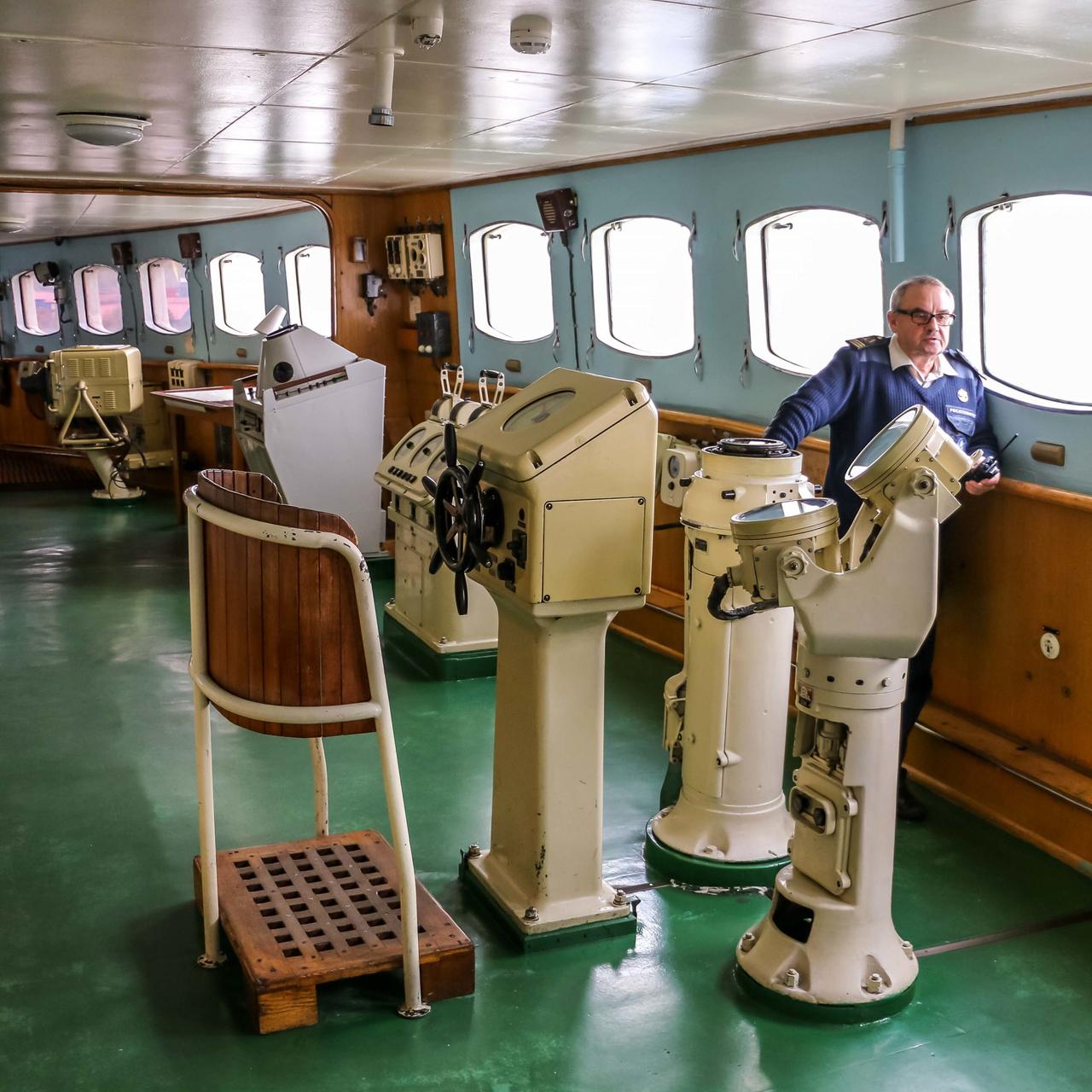
      • Museum Ship: Due to its historical significance, it was decided to preserve the vessel rather than scrap it. After an extensive decontamination and radiation cleanup process, Lenin was permanently moored in the port of Murmansk with its nuclear fuel removed. In 2005, it was opened to the public as a museum ship operated by Atomflot, the state-owned company managing Russia’s nuclear icebreaker fleet. Today, the vessel serves both as a technological monument and as a vital part of Arctic exploration history, welcoming visitors.

      Significance and Legacy

      • Technological Pioneer: Lenin was the first vessel to demonstrate the feasibility of nuclear power for civilian ships. This technology was revolutionary for icebreakers, which require long range and high power. The success of Lenin paved the way for the Soviet Union (and later Russia) to build more advanced nuclear icebreaker fleets, including the Arktika, Taymyr, and Yamal classes.


      • Strategic Asset: In the context of the Cold War, Lenin was a crucial strategic asset that reinforced Soviet dominance in the Arctic. By enabling more efficient use of the NSR, it contributed to the development of the economic and military potential of the northern regions.


      • Enduring Symbol: Lenin is not only an engineering marvel but also a symbol of the political and technological ambitions of its era. Its continued existence as a museum ship provides an important educational resource on the history of nuclear technology, Arctic exploration, and the Cold War.


      Citations

      • [1]

        Armstrong, T. E. (1972). The Northern Sea Route: Soviet Exploitation of the North East Passage. Cambridge University Press.

      • [2]

        Reistad, O., & Ølgaard, P. L. (2006). Russian Nuclear Power Plants for Marine Applications. Norwegian Institute of International Affairs (NUPI).

      • [3]

        Rosatomflot Resmi Web Sitesi. (Atomflot.ru)

      • [4]

        Rosatomflot Resmi Web Sitesi. (Atomflot.ru)

      • [5]

        Bukharin, O., Handler, J., & Von Hippel, F. (2004). Russian Nuclear Naval Propulsion. Program on Science and Global Security, Princeton University.

      • [6]

        The Russian Northern Fleet: Sources of Radioactive Contamination

      • [7]

        Brigham, L. W. (Ed.). (2000). The Soviet Maritime Arctic. Belhaven Press.

      • [8]

        Trakhtenberg, A. M. (1997). Atomnyy Ledokol "Lenin". Sudostroyeniye Publishing.

      • [9]

        Bellona Foundation Reports.

      Author Information

      Avatar
      AuthorCaner Sefa KoçyiğitDecember 9, 2025 at 6:27 AM

      Discussions

      No Discussion Added Yet

      Start discussion for "Lenin (Nuclear Icebreaker)" article

      View Discussions

      Contents

      • Historical Background and Construction

      • Technical Specifications and Nuclear Propulsion System

      • Operational Career and Service Duration

      • Accidents and Incidents

      • Decommissioning and Preservation as a Museum Ship

      • Significance and Legacy

      Ask to Küre