


This article was automatically translated from the original Turkish version.
+2 More
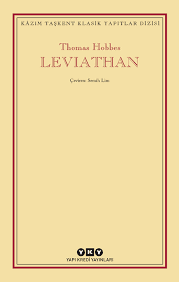
Author(s) | Thomas Hobbes | ||||||||
|---|---|---|---|---|---|---|---|---|---|
Genre | Review | ||||||||
Original Language | Latin English | ||||||||
First Publication Date | 1651 | ||||||||
The English philosopher Thomas Hobbes published Leviathan in 1651, and it is regarded as one of the foundational texts of modern political philosophy. The full title of the work is Leviathan, or The Matter, Forme and Power of a Common-wealth Ecclesiasticall and Civil, and it presents a comprehensive theory of politics, beginning with human life in the state of nature and extending to the nature of the state and the legitimacy of political authority.
According to Hobbes, human beings are by nature selfish and self-interested entities; as a result, the state of nature is dominated by “the war of every man against every man” (bellum omnium contra omnes). To escape this chaotic condition, individuals enter into a social contract, transferring their authority to a sovereign power. This sovereign power, the “Leviathan,” is responsible for establishing peace and order.
Leviathan was written against the backdrop of the civil wars, fragmentation of political authority, and religious conflicts in 17th-century England. In this sense, it serves both as a response to the intellectual climate of the time and as a theoretical proposal to counter political instability. Hobbes’s work was met with considerable interest by political philosophers, jurists, and public administration experts. Today, Leviathan is taught as one of the core texts in political science and philosophy departments and is frequently cited by academic circles working on authority, sovereignty, security, and the relationship between the individual and the state.
Hobbes’s Leviathan has generated serious debates among both his contemporaries and later thinkers. The absolute sovereignty advocated in the work has been criticized by liberal and democratic circles as laying the groundwork for authoritarianism. For instance, John Locke developed his own theory by arguing that Hobbes marginalized individual rights and placed property rights at the center of his framework.
Jean-Jacques Rousseau found Hobbes’s conception of the social contract insufficient because it was based solely on security; he instead developed a new theory of the social contract grounded in popular sovereignty. In contrast, Hobbes’s derivation of the necessity of the state from human nature has established him as the pioneer of the “realist” approach in political theory. His views are also frequently referenced in international relations theory.
Political Theory (The School of Life
Thomas Hobbes (1588–1679) was an English thinker, political theorist, and mathematician. He received a classical and scientific education at the University of Oxford and later engaged with the intellectual circles of Europe. He was particularly influenced by scientists such as Galileo and Descartes and sought to apply the mechanistic understanding of the universe to human nature. Hobbes’s political philosophy is notable for its pursuit of mathematical precision and systematic structure.
In addition to Leviathan, he authored other works including De Cive, De Corpore, and Behemoth. He spent the final years of his life defending his ideas against criticism.
Hobbes, Thomas. Leviathan, or The Matter, Forme and Power of a Common-wealth Ecclesiasticall and Civil. London: Andrew Crooke, 1651.
Skinner, Quentin. Reason and Rhetoric in the Philosophy of Hobbes. Cambridge: Cambridge University Press, 1996.
Strauss, Leo. Natural Right and History. Chicago: University of Chicago Press, 1953.
The School of Life. "SİYASET TEORİSİ - Thomas Hobbes." The School ofLife Youtube Channel. Accessed April 25, 2025. https://www.youtube.com/watch?v=9i4jb5XBX5s
Tuck, Richard. Hobbes: A Very Short Introduction. Oxford: Oxford University Press, 1989.

Author(s) | Thomas Hobbes | ||||||||
|---|---|---|---|---|---|---|---|---|---|
Genre | Review | ||||||||
Original Language | Latin English | ||||||||
First Publication Date | 1651 | ||||||||
Context of Address
Commentaries on the Book
Brief Biography of the Author