


This article was automatically translated from the original Turkish version.
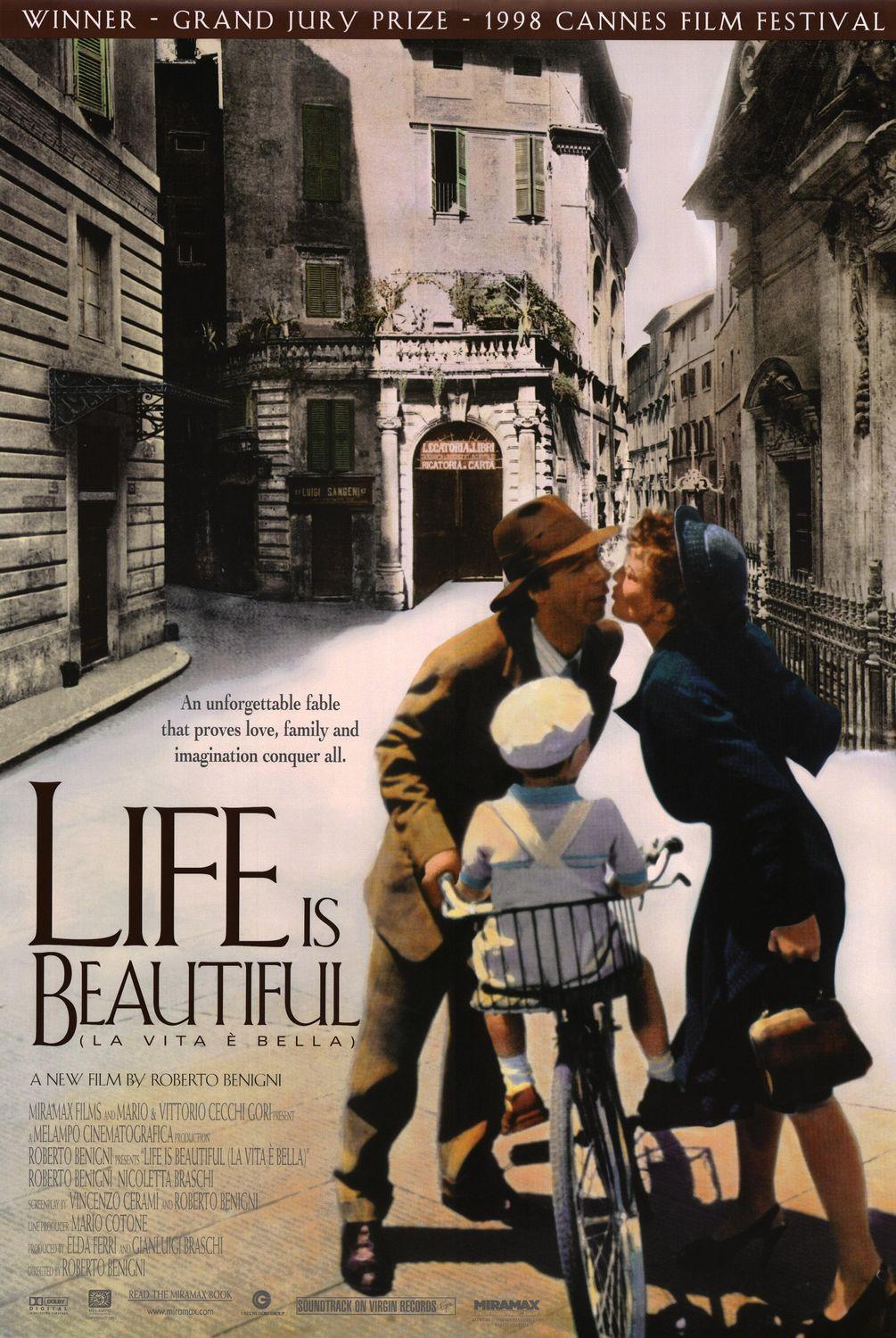
Life Is Beautiful
Original Name(s) | La vita e bella | ||||||||
|---|---|---|---|---|---|---|---|---|---|
Director(s) | Roberto Benigni | ||||||||
Screenplay(s) | Roberto Benigni Vincenzo Cerami | ||||||||
Genre | Drama War Comedy | ||||||||
Production Year | 1997 | ||||||||
Duration | 116 minutes | ||||||||
IMDb Rating | 8.6 | ||||||||
Actors | Sergio Bustric (Ferruccio) Giustino Durano (Uncle Eliseo) Giorgio Cantarini (Giosué Orefice) Nicoletta Braschi (Dora) Roberto Benigni (Guido Orefice) | ||||||||
Roberto Benigni’s Life Is Beautiful, which he directed and starred in, centers on a Jewish family living in Italy during World War II. The story’s protagonist, Guido Orefice (Roberto Benigni), is a cheerful, optimistic man with a strong sense of humor who owns a bookstore. Guido marries his lifelong love Dora (Nicoletta Braschi) and they have a son named Giosué.
However, because they are Jewish, Guido and his son Giosué are sent to a Nazi concentration camp. Dora, though not Jewish, chooses to join them in the camp rather than be separated from her family. To protect his son from the camp’s brutal reality, Guido transforms the entire experience into an elaborate game. He tells Giosué that the camp is actually a competition, and the prize for winning is a real tank. In this way, he preserves his son’s innocence.
Film blends tragedy and comedy to offer a humanistic and sensitive perspective on the realities of war.
One of the film’s strongest themes is Guido’s struggle to protect his son’s childhood innocence. Guido’s creative humor prevents his son from experiencing fear and despair, demonstrating to the audience that even in humanity’s darkest moments, innocence can be preserved.
Throughout the film, Guido’s love for his family forms the core dramatic element. His devotion to Dora and Giosué transcends personal sacrifice and deeply moves the viewer.
The film shows how humor can serve as a tool of resilience even under the most horrific conditions. Guido’s cheerful and comedic personality becomes a means of survival for both himself and his family.
The film addresses the horrors of World War II and the Holocaust from a unique perspective. Despite the inhumane conditions, it offers a powerful affirmation that people can endure through hope and love.

Scene from Life Is Beautiful –MUBI
Roberto Benigni wrote the screenplay, directed the film, and played the lead role. The filming locations in Arezzo, Italy, particularly the concentration camp scenes, create a realistic and harrowing atmosphere. Director masterfully combines the painful realities of war with elements of humor, resulting in an unconventional yet powerful narrative style.
The film became one of the greatest international successes of Italian cinema and established Benigni’s global reputation as both a director and actor.
Roberto Benigni delivers an unforgettable performance as Guido, perfectly balancing humor and pathos. He won the Academy Award for Best Actor for this role. Nicoletta Braschi brings emotional depth to the film with a heartfelt and moving portrayal of Dora.
Giorgio Cantarini draws attention with his authentic and compelling performance as Giosué.
Life Is Beautiful gained worldwide acclaim for its unconventional approach to the Holocaust, creating a new cinematic narrative by portraying one of history’s most tragic events through humor. The film leaves a lasting impression on viewers through its emotional depth and the power of comedy, securing a unique place in cinema history.
Best Actor – Roberto Benigni
Best Foreign Language Film
Best Original Musical Score – Nicola Piovani
Best Picture
Best Director – Roberto Benigni
Best Original Screenplay
Best Film Editing
Grand Prize – Won
Best Actor – Roberto Benigni (Won)
Best Film Not in the English Language (Nominated)
Best Foreign Language Film (Nominated)
Best Actor in a Motion Picture – Musical or Comedy – Roberto Benigni (Nominated)
Beyazperde. “Hayat Güzeldir (1997).” Accessed March 26, 2025. Link.
IMDb. “Life is Beautiful (1997).” Accessed March 26, 2025.
Mubi. "Hayat Güzeldir." Accessed March 26, 2025.
Roger Ebert. “Life is Beautiful (1998).” Link. Accessed March 26, 2025.
Sinemalar. "Hayat Güzeldir (1997)." Link. Accessed March 26, 2025.

Life Is Beautiful
Original Name(s) | La vita e bella | ||||||||
|---|---|---|---|---|---|---|---|---|---|
Director(s) | Roberto Benigni | ||||||||
Screenplay(s) | Roberto Benigni Vincenzo Cerami | ||||||||
Genre | Drama War Comedy | ||||||||
Production Year | 1997 | ||||||||
Duration | 116 minutes | ||||||||
IMDb Rating | 8.6 | ||||||||
Actors | Sergio Bustric (Ferruccio) Giustino Durano (Uncle Eliseo) Giorgio Cantarini (Giosué Orefice) Nicoletta Braschi (Dora) Roberto Benigni (Guido Orefice) | ||||||||
No Discussion Added Yet
Start discussion for "Life Is Beautiful (Film)" article
Themes and Analysis
1. Preservation of Innocence
2. Love and Sacrifice
3. The Power of Humor and Resistance
4. War and Humanity
Production Process and Technical Features
Performances
Awards and Nominations
Academy Awards (Oscars, 1999)
Wins:
Nominations:
Cannes Film Festival (1998)
BAFTA Awards (1999)
Golden Globe Awards (1999)