
AA
Lionel Messi
Full Name | Luis Lionel Andres Messi Cuccittini | ||||||||
|---|---|---|---|---|---|---|---|---|---|
Date of Birth | 24 June 1987 | ||||||||
Place of Birth | Rosario, Santa Fe, Argentina | ||||||||
Height | 1.70 m | ||||||||
Weight | 72 kg | ||||||||
Nationality | Argentina | ||||||||
Current Club | Inter Miami CF | ||||||||
Position | Forward Right Wing Playmaker (Number 10) False Nine | ||||||||
Father | Jorge Messi | ||||||||
Mother | Celia Cuccittini | ||||||||
Spouse | Antonella Roccuzzo | ||||||||
Children | Thiago Mateo Ciro | ||||||||
Club Career | Barcelona 2003-2021 PSG 2021-2023 Inter Miami 2023- | ||||||||
Individual Achievements | Ballon d'Or 8 times European Golden Shoe 6 times FIFA World Player of the Year 4 times FIFA World Cup Best Player 2 times La Liga Top Scorer 8 times | ||||||||
Luis Lionel Andres Messi Cuccittini (commonly known as Lionel Messi), born on 24 June 1987 in Rosario, a city in the Santa Fe province of Argentina, spent the majority of his professional career with Spain’s FC Barcelona before playing for Paris Saint-Germain and Inter Miami CF. Throughout his career, he won the Ballon d’Or eight times, setting a record in the category, and led the Argentina national team to victory in the 2022 FIFA World Cup.
Lionel Messi was born as the third child of a middle-class family. His father, Jorge Messi, worked as a supervisor at a steel manufacturing plant (Acindar), while his mother, Celia, worked in a workshop specializing in magnetic coils. Lionel has two older brothers, Rodrigo and Matias, and a younger sister named Maria-Sol. Messi spent his childhood in a modest two-story house on Lavalleja Street in southern Rosario, where he developed his passion for football by playing on the streets and in parks with his brothers and cousins Maximiliano and Emanuel Biancucchi, who would later become professional footballers.
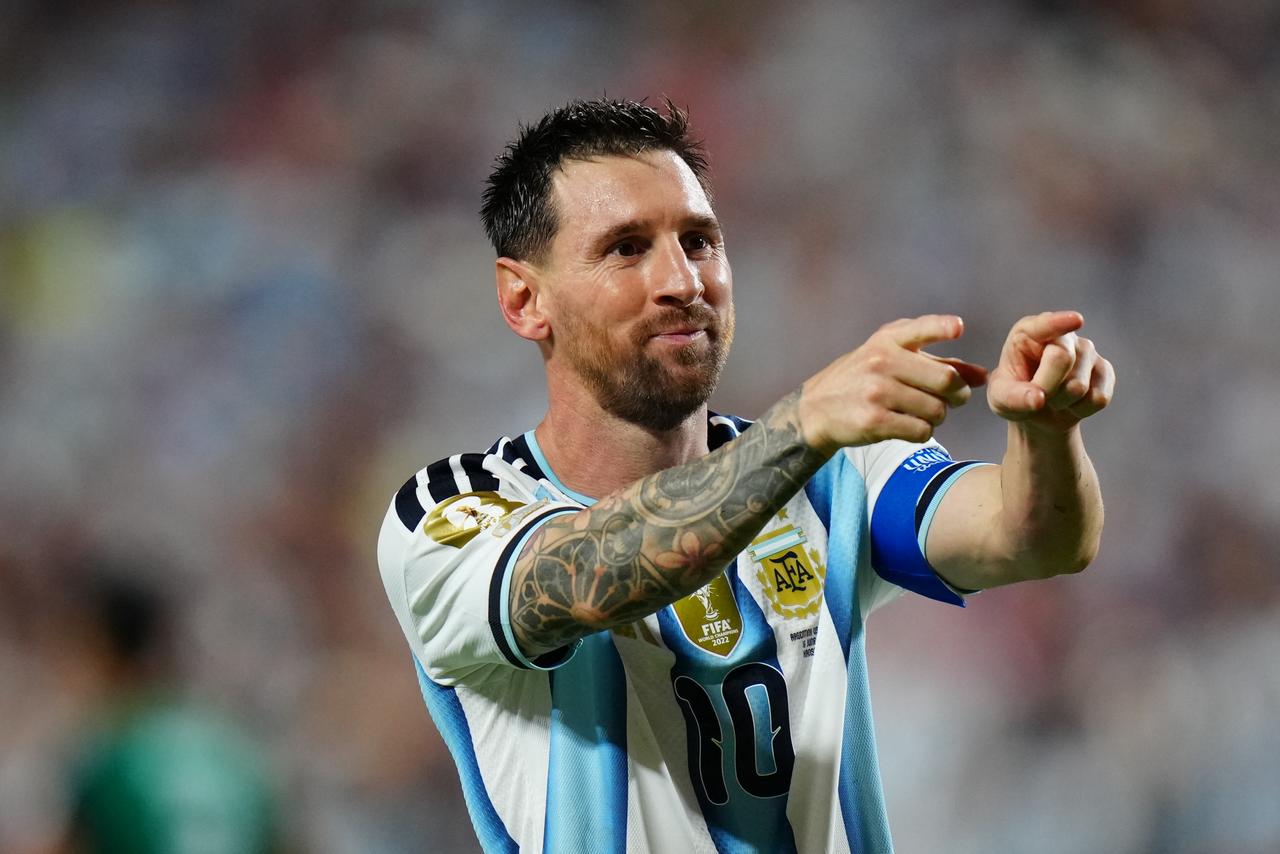
The greatest encouragement for Messi to pursue football at a club level came from his grandmother, Celia, who shared his name. His iconic goal celebration—raising two fingers to the sky—was a tribute to this beloved grandmother, who was his most important supporter.
At the age of four or five, Messi joined the local amateur team Grandoli, located just a few blocks from his home. His first coach was Salvador Aparicio. During a match in the seven-year-old category, when the team was short a player, the five-year-old Messi was brought onto the pitch at his grandmother’s insistence. He impressed everyone with exceptional ball control and balance against older children, successfully passing his first official evaluation. In the following season, his father Jorge became the coach of the team; Messi helped Grandoli win nearly every match and claimed his first titles.
At age eight, Messi joined the youth academy of Newell’s Old Boys, one of Rosario’s most established professional clubs. He became a key member of the famed “87 Machine” (Máquina del 87), an undefeated generation of players all born in 1987. During this period, he competed with his team in the international Cantolao Academy tournament in Peru and won the title. In his early years, his training emphasized tactical discipline and team play.
Messi’s noticeably short stature compared to his peers was noticed by club coaches, and at age ten he was referred by the club’s doctors to pediatric endocrinologist Dr. Diego Schwarztein. Tests confirmed a growth hormone deficiency that was stunting his development. A treatment regimen involving daily injections of growth hormone into his legs, costing approximately $1,000 per month, was initiated.
The first two years of treatment costs were jointly covered by Argentina’s social security system, mutual insurance companies, and the foundation of his father’s workplace (Acindar). However, after Argentina plunged into a deep economic crisis, these funds were cut and the family struggled to afford the treatment. The family appealed to Newell’s Old Boys for support, but the club failed to provide consistent financial assistance. As a result, at age 12, Messi was taken to Buenos Aires to trial with River Plate, one of Argentina’s largest clubs. Although River Plate was impressed by his talent, they were unwilling to assume the financial risk of such a high medical investment for a child so young and did not wish to face legal complications with Newell’s. With no viable solution within Argentina, the family turned their attention to Europe.
Video footage of Messi playing in Newell’s youth academy was passed on to FC Barcelona in Spain through Argentine agent Horacio Gaggioli and influential football representative Josep Maria Minguella, who had previously played a role in Diego Maradona’s transfer to Barcelona. After reviewing the footage, the club offered Messi a two-week trial in September 2000.
Thirteen-year-old Messi traveled to Barcelona with his father and trained with the academy team (La Masia). His extraordinary skill on the pitch impressed everyone, including future teammates Cesc Fàbregas and Gerard Piqué. However, Barcelona’s board hesitated for a long time to offer a formal contract, viewing the transfer of a foreign 13-year-old boy—and the additional costs of medical treatment and family relocation—as an unprecedented financial risk. Fearing the family might leave for other clubs such as Real Madrid, then-sporting director Charly Rexach took initiative. On 14 December 2000, at the Pompeya Tennis Club, an informal, handwritten agreement on a napkin was signed, in which Barcelona pledged to cover Messi’s medical expenses, provide housing for his family, and arrange a job for his father Jorge.
Following this agreement, Jorge, Celia, and the Messi family—comprising three sons and one daughter—moved permanently to Barcelona. However, the initial period was extremely difficult. Due to his foreign status, Messi was not permitted to play in official league matches for months. During only his second unofficial match, he broke his leg and missed the rest of the season. His sister Maria-Sol and mother Celia, struggling to adapt to the new culture and Catalan language and suffering from homesickness, returned to Argentina, splitting the family; young Lionel and his father Jorge remained alone in Spain. Despite all these hardships, administrative delays at the club, and intense homesickness, Messi demonstrated the determination to stay in Spain and pursue his dream of becoming a professional footballer.
Lionel Messi, who moved to Spain at age 13 and joined FC Barcelona’s La Masia academy in the U-14 team, showed extraordinary development across age groups. Despite his young age, he rapidly rose through the club’s youth ranks, playing for five different Barcelona teams in a single season—a feat unmatched in the club’s history.
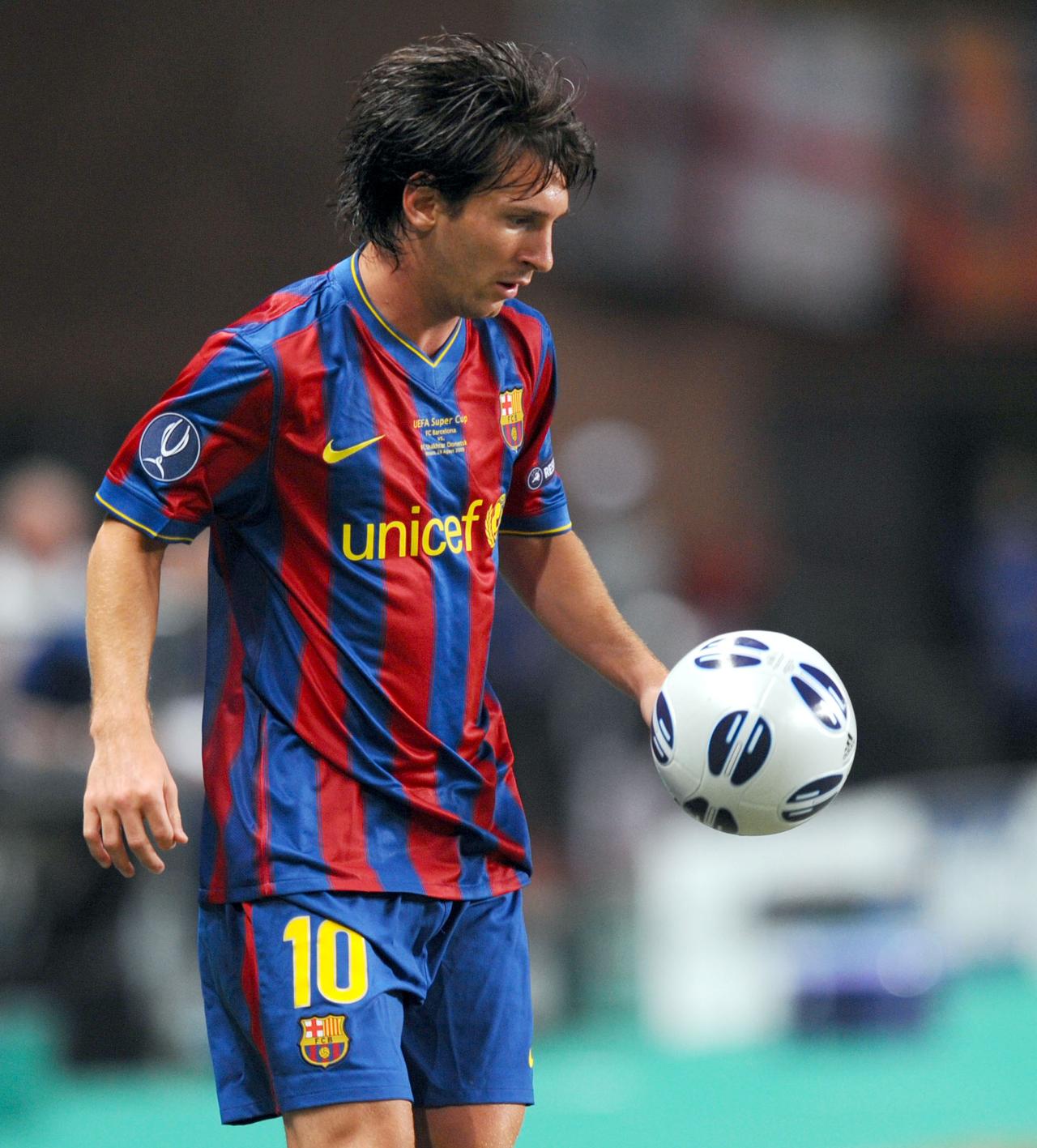
Lionel Messi, 2009 (AA)
Following this remarkable progress, first-team manager Frank Rijkaard included the then 16-year-old Messi in the squad for a friendly match against Porto at the Estádio do Dragão in November 2003. He made his official La Liga debut on 16 October 2004 in a derby against Espanyol, becoming the youngest player ever to appear for Barcelona in an official match at 17 years, 3 months, and 22 days old. He scored his first official goal for the first team in May 2005 against Albacete. The assist for that first goal came from the club’s star player Ronaldinho, who lifted the young player onto his shoulders during the celebration and took on a big-brother role in helping Messi adapt to the team.
During his early years in the first team, Messi frequently suffered from muscle injuries, partly due to his incomplete physical development. These recurring injuries were largely traced to a poor diet heavy in junk food. In response, Messi and his advisors adopted a strict diet plan, incorporating fruits and vegetables, and developed specialized training programs to strengthen his injury-prone muscles. Witnessing Ronaldinho’s nightlife and lack of discipline, Messi adopted an introverted, home-centered lifestyle, focusing entirely on training and physical endurance. Thanks to this personal discipline, he achieved the physical stamina to play at least 30 league matches per season starting in 2008.
Messi first gained widespread international recognition at the 2005 FIFA World Youth Championship (U-20), held in the Netherlands during the summer. As the most important attacking force for Argentina’s U-20 national team, he scored a goal and provided an assist against Spain in the quarterfinal and netted a long-range goal against Brazil in the semifinal. In the final against Nigeria, which Argentina won 2-1, he scored both goals from penalties to secure the championship. He was awarded both the Golden Ball as the tournament’s best player and the Golden Boot as top scorer.
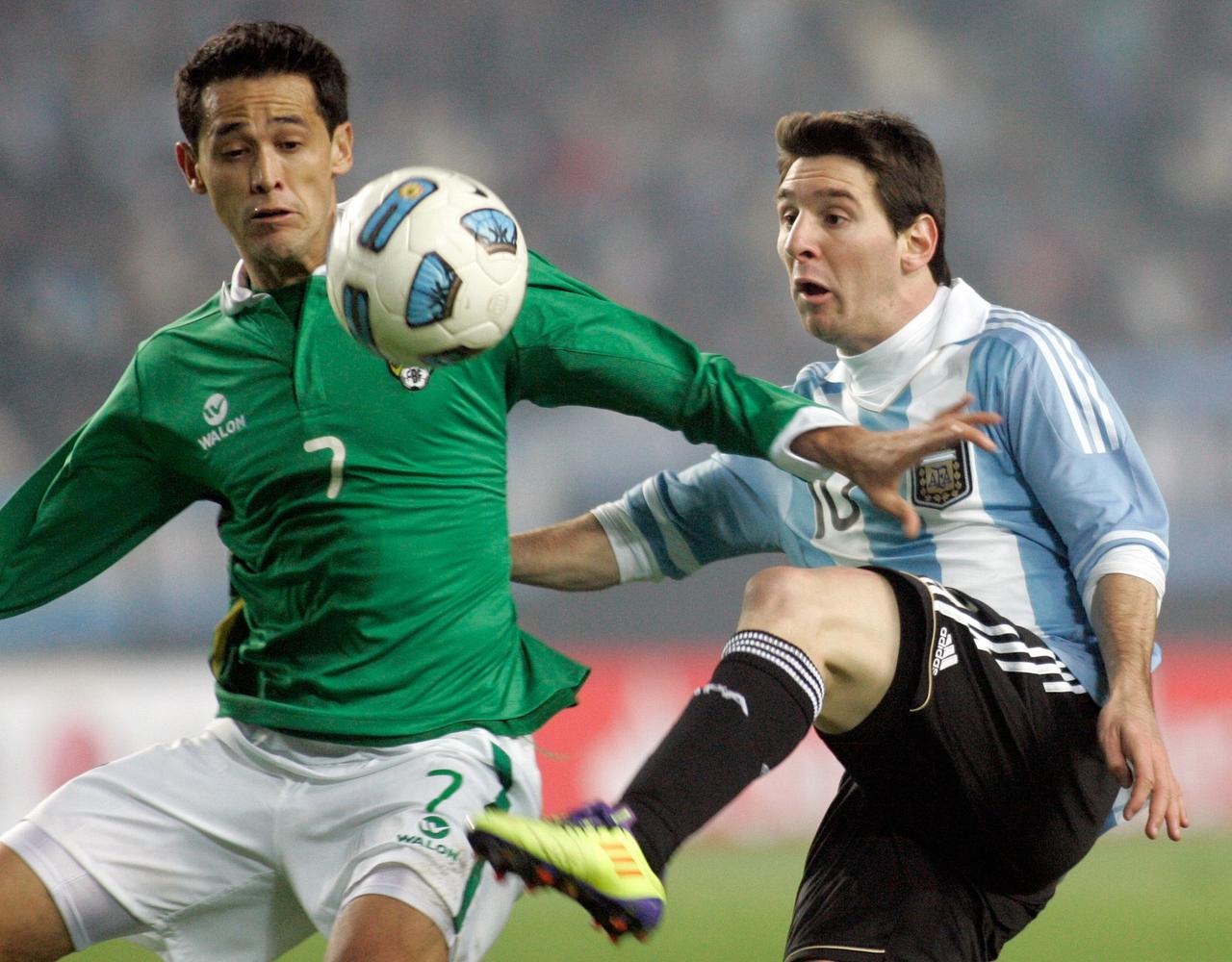
Lionel Messi, 2011 (AA)
Shortly after this success, at age 18, Messi was called up to the Argentina senior national team. He made his debut on 17 August 2005 in a friendly against Hungary, coming on in the 63rd minute. However, just two minutes after entering the match, he was sent off with a red card for elbowing opponent Vilmos Vanczak, marking a disastrous start to his international career. Nevertheless, he was selected for the 2006 FIFA World Cup squad in Germany under coach Jose Pekerman. At 18 years and 358 days old, he became the youngest player ever to represent Argentina in a World Cup match, appearing against Serbia and Montenegro. He also became the sixth youngest goalscorer in World Cup history, scoring a goal and providing an assist in that same match.
Having overcome his physical issues and increasingly assuming a central role in the team, Messi delivered one of the most important performances of his career in March 2007. In the El Clásico match against Real Madrid at Camp Nou, which ended 3-3, Barcelona played with only 10 men for most of the game. Messi scored three consecutive goals (a hat-trick) to secure the draw for his team. His third goal, assisted by Ronaldinho in the 91st minute, was widely regarded as proof that the 19-year-old had reached elite status in world football. In April of the same year, he scored a solo goal against Getafe that was compared directly to Diego Maradona’s legendary goal against England in the 1986 World Cup, showcasing to the world the full extent of his playing ability.
With Ronaldinho’s departure from the team in 2008, Lionel Messi became the undisputed focal point of Barcelona’s attack. The appointment of club legend Pep Guardiola as head coach for the 2008–2009 season marked the beginning of a transformative phase in Messi’s career. In May 2009, during the historic 6-2 away victory over Real Madrid, Guardiola moved Messi from his traditional right-wing position to the center, deploying him as a “false nine.” Messi’s movement into midfield, behind the defensive line alongside Xavi, Andrés Iniesta, and Sergio Busquets, completely altered the team’s playing style.
With this system, Messi achieved unprecedented momentum, finishing the 2008–2009 season with 38 goals and 19 assists in 51 matches. At the end of the season, Barcelona won the La Liga, Copa del Rey, and UEFA Champions League titles, achieving a historic treble. In the Champions League final in Rome’s Olympic Stadium, where Barcelona defeated Manchester United 2-0, Messi scored with his head and finished the tournament as the top scorer.
Following his extraordinary performance in 2009, Messi won his first Ballon d’Or. Not content with this achievement, the Argentine player won the Ballon d’Or four years in a row from 2009 to 2012, establishing an unprecedented dominance in world football history. In the 2009–2010 season, he became the only player ever to win the Ballon d’Or, FIFA World Player of the Year, La Liga top scorer, and European Golden Shoe awards simultaneously.
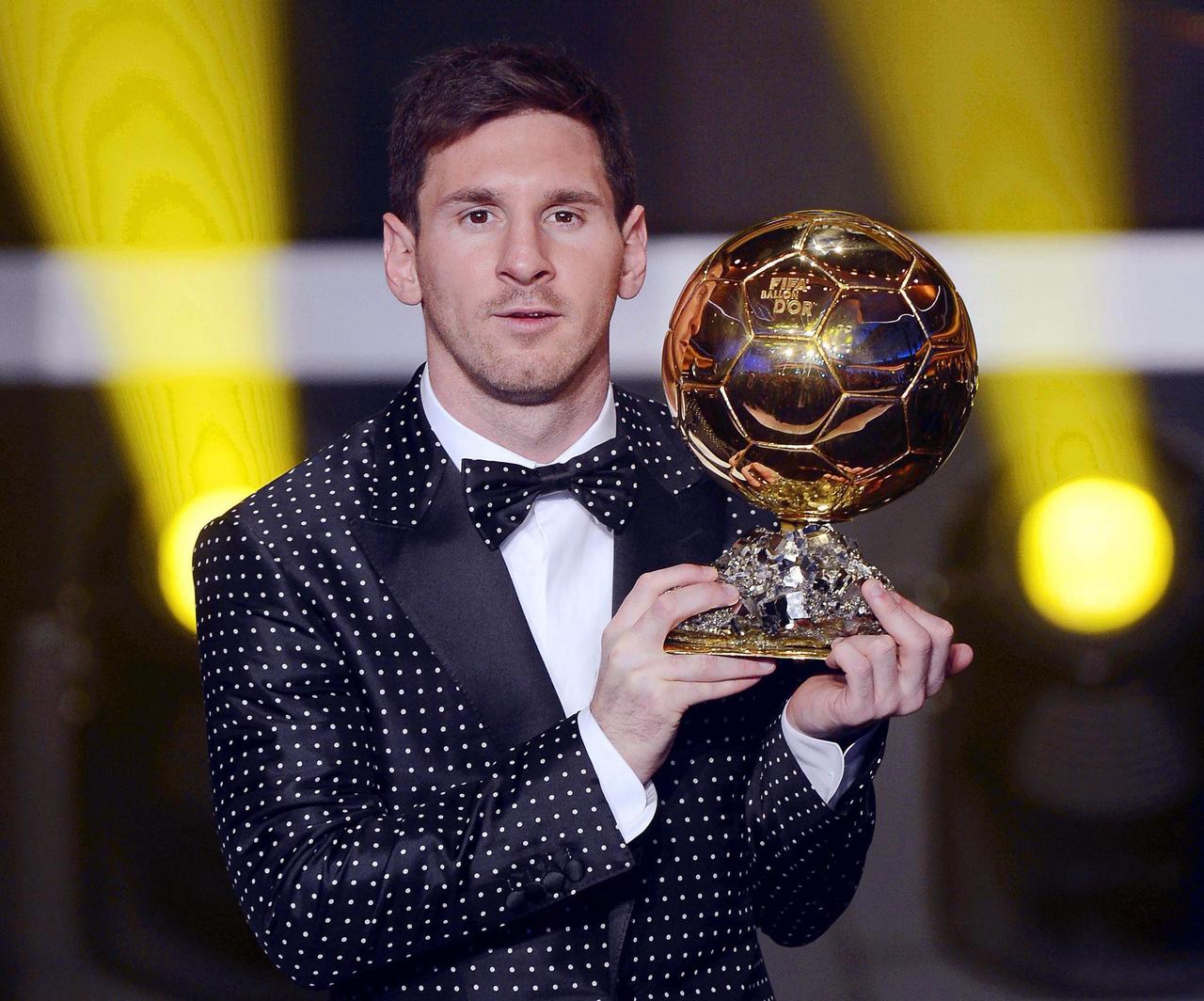
Lionel Messi, 2013 (AA)
By overcoming his physical weaknesses through strict diet and specialized training, Messi reached a level of physical endurance by 2008 that allowed him to appear in at least 30 league matches and over 50 official games per season. This consistency led to the breaking of seemingly unbreakable goal records. In March 2012, at just 24 years old, he surpassed César Rodríguez’s record of 232 goals to become FC Barcelona’s all-time top scorer.
In the same year (2012), he broke German striker Gerd Müller’s long-standing record of 85 goals in a calendar year by scoring 91 goals, etching his name into history. In La Liga, he surpassed another extraordinary milestone by scoring 50 goals in a single season. The record-breaking streak continued in November 2014, when his hat-trick against Sevilla allowed him to surpass Telmo Zarra’s record of 251 goals and become La Liga’s all-time top scorer.
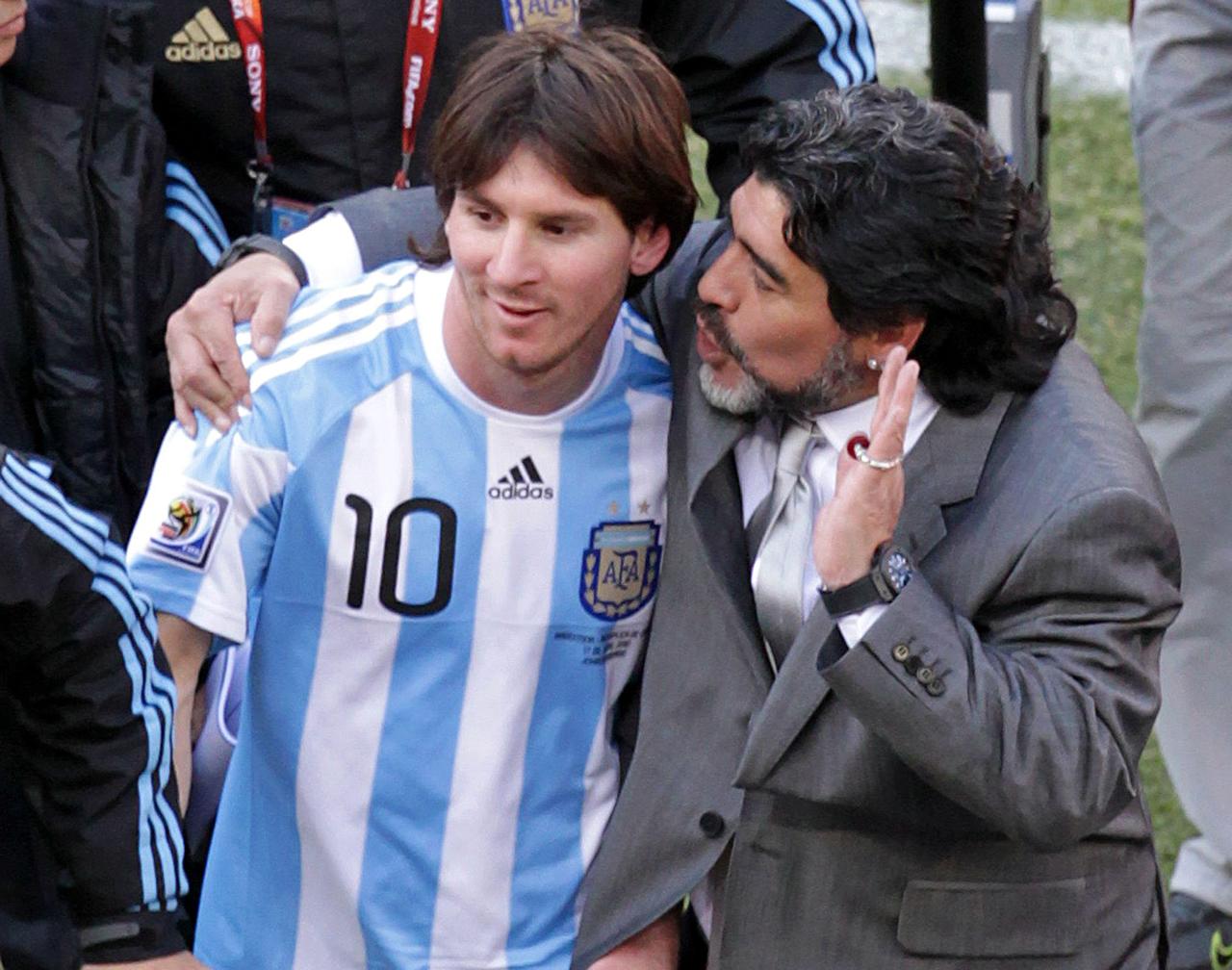
Lionel Messi (left) and Maradona (right), 2010 (AA)
Messi’s success during this period was shaped not only by his natural talent but also by his relentless drive for self-improvement. Early in his career, Messi was not known as a free-kick specialist. In 2009, at the suggestion of then Argentina national team coach Diego Maradona, he underwent a major transformation in this area. He studied Maradona’s advice to keep his foot in contact with the ball longer during free kicks and avoid false or uncontrolled strikes, practicing for hours daily. As a result, he became as effective from set pieces as his former teammate Ronaldinho. He even replicated Ronaldinho’s famous 2006 free-kick goal against Werder Bremen, scoring similar goals against Girona and the Uruguay national team, expanding his repertoire. Using both the inside and outside of his left foot with perfect balance, Messi left opponents helpless and evolved from the “false nine” into a deeper-lying playmaker (number 10), becoming a constant threat across every area of the pitch.
Messi’s ascent coincided with the summer 2009 transfer of Portuguese star Cristiano Ronaldo from England to Real Madrid, transforming their rivalry into one of the greatest in sports history. Both players consistently surpassed the 40-goal mark each season from 2010 onward, pushing each other to ever higher statistical heights. One of the most symbolic moments of this rivalry occurred in October 2012 during the El Clásico at Camp Nou, which ended 2-2; two goals came from Messi and two from Ronaldo. Although Messi himself never viewed the rivalry as hostility, it is widely acknowledged that this historic competition played a major role in maintaining his exceptionally high standards over the years.
At the 2014 FIFA World Cup in Brazil, Lionel Messi led Argentina to the final but lost 1-0 to Germany in extra time, finishing as runners-up. Despite the defeat, his performance earned him the Golden Ball as the tournament’s best player. In 2015, he won La Liga, Copa del Rey, and the UEFA Champions League with FC Barcelona, achieving his second career treble, and was awarded the Ballon d’Or for the fifth time.
On the international stage, disappointments continued. Argentina lost both the 2015 and 2016 Copa América finals to Chile. In the 2016 final, Messi missed a penalty in the shootout and announced his retirement from international football immediately after the match. However, following public appeals from Argentine President Mauricio Macri and Buenos Aires Mayor Horacio Rodríguez Larreta, and massive nationwide support campaigns, Messi reversed his decision, stating that his love for his country and its jersey was too great, and returned to the national team.
In July 2016, Lionel Messi and his father Jorge were found guilty of tax evasion in a Spanish court. According to court records, between 2007 and 2009, over €4 million in image rights income was funneled through offshore companies in Uruguay, Belize, the UK, and Switzerland to evade taxes. During the four-day trial, Messi claimed he was unaware of any financial dealings or tax irregularities, stating he focused solely on playing football and signed contracts trusting his father. Both were sentenced to 21-month suspended prison terms; Lionel Messi was fined €2 million and his father €1.5 million. Under Spanish law, first-time offenses under two years are suspended, so neither served actual jail time.
After Argentina’s 4-3 elimination by France in the 2018 FIFA World Cup round of 16, Messi received a red card in the 37th minute of the third-place match at the 2019 Copa América. His public criticism of referees and pitch conditions, followed by his refusal to accept the bronze medal, led to a three-month international suspension and a $50,000 fine from CONMEBOL. At the club level, in 2019, Messi won his sixth Ballon d’Or, surpassing Cristiano Ronaldo and setting a new record in the category.
The historic 8-2 defeat to Bayern Munich in the Champions League quarterfinal in August 2020 marked the peak of a turbulent season and one of the heaviest losses in Barcelona’s history. On 5 August 2021, FC Barcelona officially announced that due to severe financial constraints and strict La Liga financial regulations, they could not renew Messi’s contract. Although he had previously expressed his desire to leave the club, he bid farewell in an emotional press conference, ending his 17-year career at the club. Additionally, due to salary deferrals he accepted in 2020 and 2021 to help alleviate the club’s financial crisis, Barcelona was required to continue paying him until 2025.
Four days after leaving Barcelona, in August 2021, Messi signed a two-year contract with France’s Paris Saint-Germain (PSG), with an option for a third year. This transfer reunited him with former teammate Neymar and talented French player Kylian Mbappé. In his first season, adapting to a new league, coach, and teammates, he played 34 official matches, scoring 11 goals and providing 15 assists. In his second season, he improved his statistics, contributing a total of 41 goals and assists across all competitions in 40 appearances.
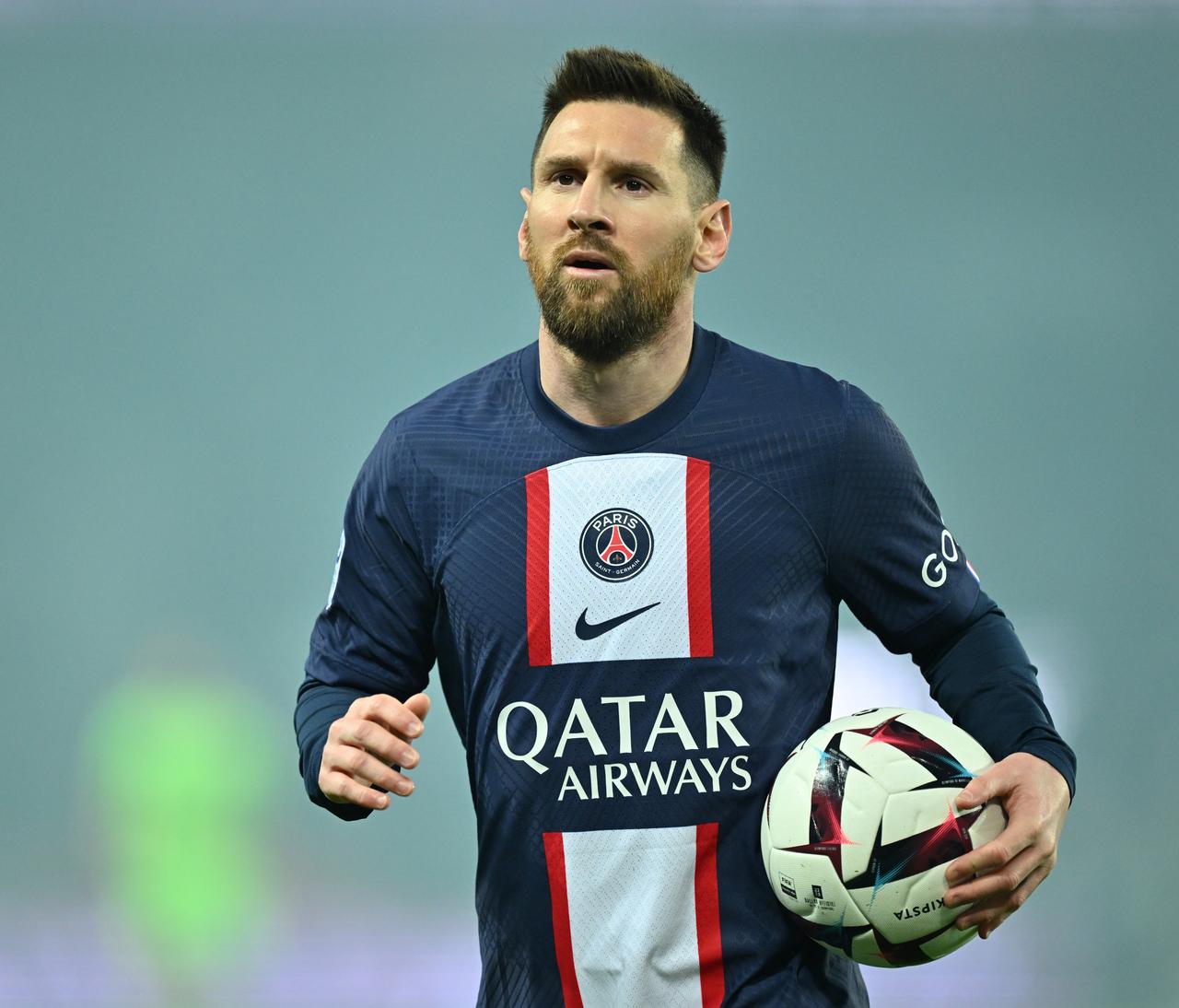
Lionel Messi, 2023 (AA)
Messi won Ligue 1 titles in both seasons with PSG and also claimed the French Super Cup (Trophée des Champions) in the 2022/23 season. However, in both seasons, PSG was eliminated in the Champions League round of 16, failing to achieve their primary objective.
In early 2023, PSG suspended Messi and fined him for traveling to Saudi Arabia on a commercial trip to promote tourism without the club’s permission and missing a training session. The incident severely damaged his relationship with the club’s fans; Messi became the center of criticism that PSG prioritized star names over loyalty, and he was booed by some of his own supporters during matches. Messi played his final match for PSG on 3 June 2023 and left the club as a free agent after the club announced it would not extend his contract. He completed his French career with 72 appearances, 32 goals, and 34 assists, while also becoming the all-time top scorer in Europe’s top five leagues with 496 goals.
The international tournament failures long seen as the greatest gap in Messi’s career were replaced by historic triumphs in its final phase. After winning the 2021 Copa América, Messi achieved his greatest ambition with the Argentina national team at the 2022 FIFA World Cup in Qatar. Scoring seven goals in total and delivering an extraordinary individual performance, he lifted the World Cup trophy after a thrilling final against France that went to extra time and penalties.
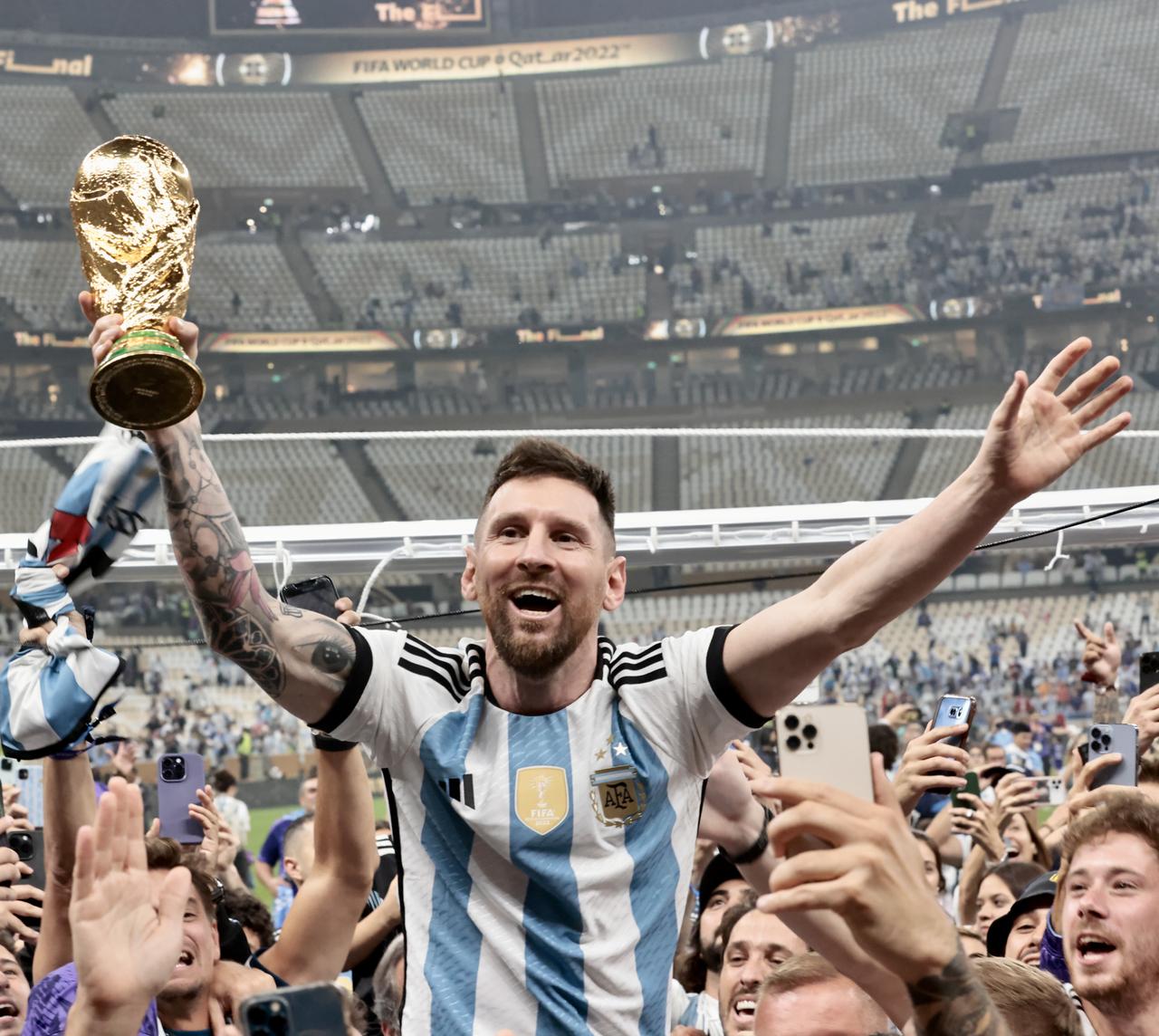
Lionel Messi, 2022 (AA)
Numerous records were set during this tournament. Messi became the first player ever to score in the group stage, round of 16, quarterfinal, semifinal, and final of a single World Cup. With 26 World Cup appearances, he became the player with the most World Cup matches played in history and won the Golden Ball for the second time, making him the only player ever to achieve this feat.
After his contract with PSG expired, Messi transferred in July 2023 to Inter Miami CF, a Major League Soccer (MLS) club partially owned by former footballer David Beckham. Although he initially considered a massive offer from Saudi Arabia, Messi ultimately signed a contract worth approximately $150 million, valid until the end of the 2025 season, granting him equity in the club and a share of media revenues.
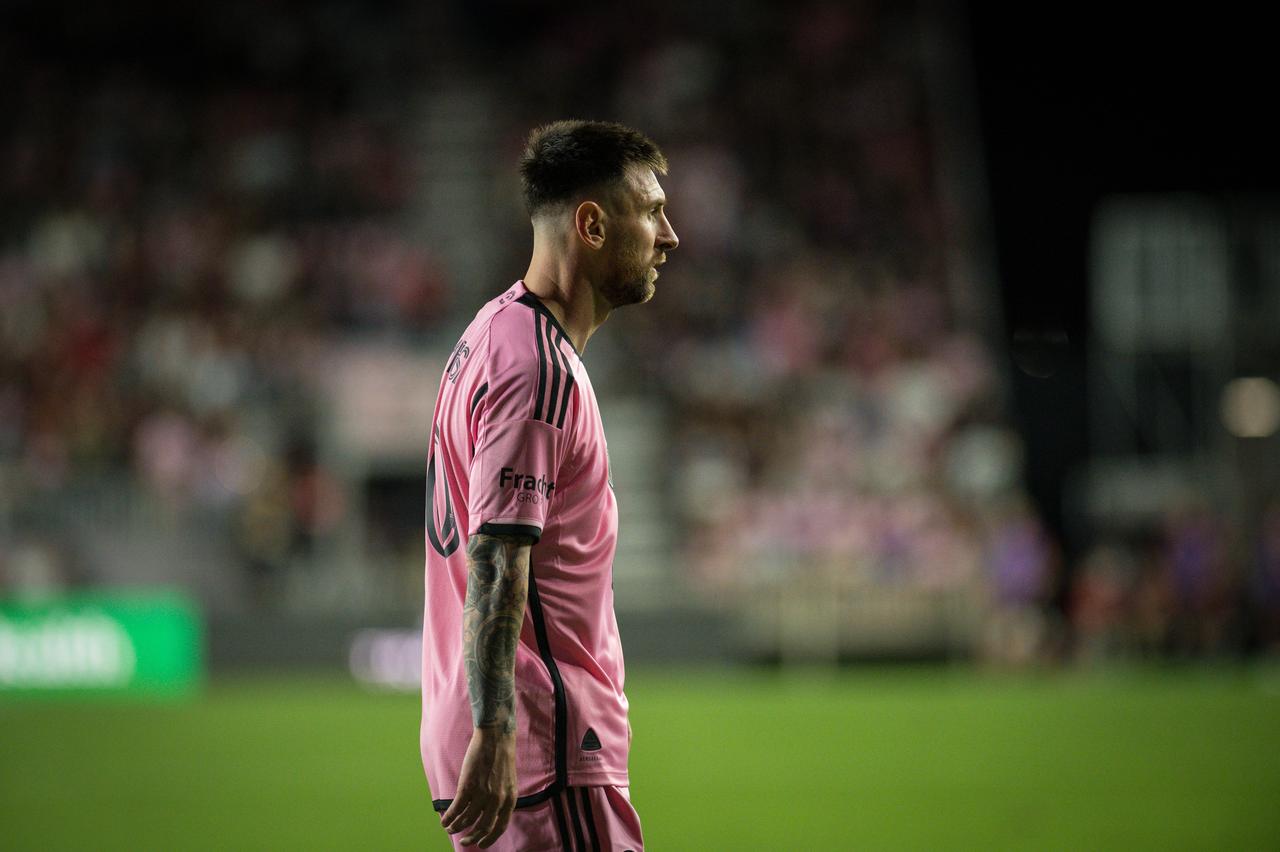
Lionel Messi, 2024 (AA)
Messi began his career in the United States with an unprecedented start, scoring 10 goals in his first seven matches with the team, leading Inter Miami to their first trophy, the Leagues Cup, and securing his 44th career team trophy. His impact extended far beyond the pitch: MLS media viewership, ticket prices, and ticket sales shattered all-time records. He became the first player in MLS history to win the Landon Donovan MLS Most Valuable Player (MVP) award in consecutive years, in 2024 and 2025. On 6 December 2025, in the MLS Cup final, he helped Inter Miami defeat Vancouver Whitecaps FC 3-1, delivering the club’s first league title. He recorded two assists in the final and was named the “Most Valuable Player.” Following this major success, he signed a new contract extending his stay with the club until the end of the 2028 season.
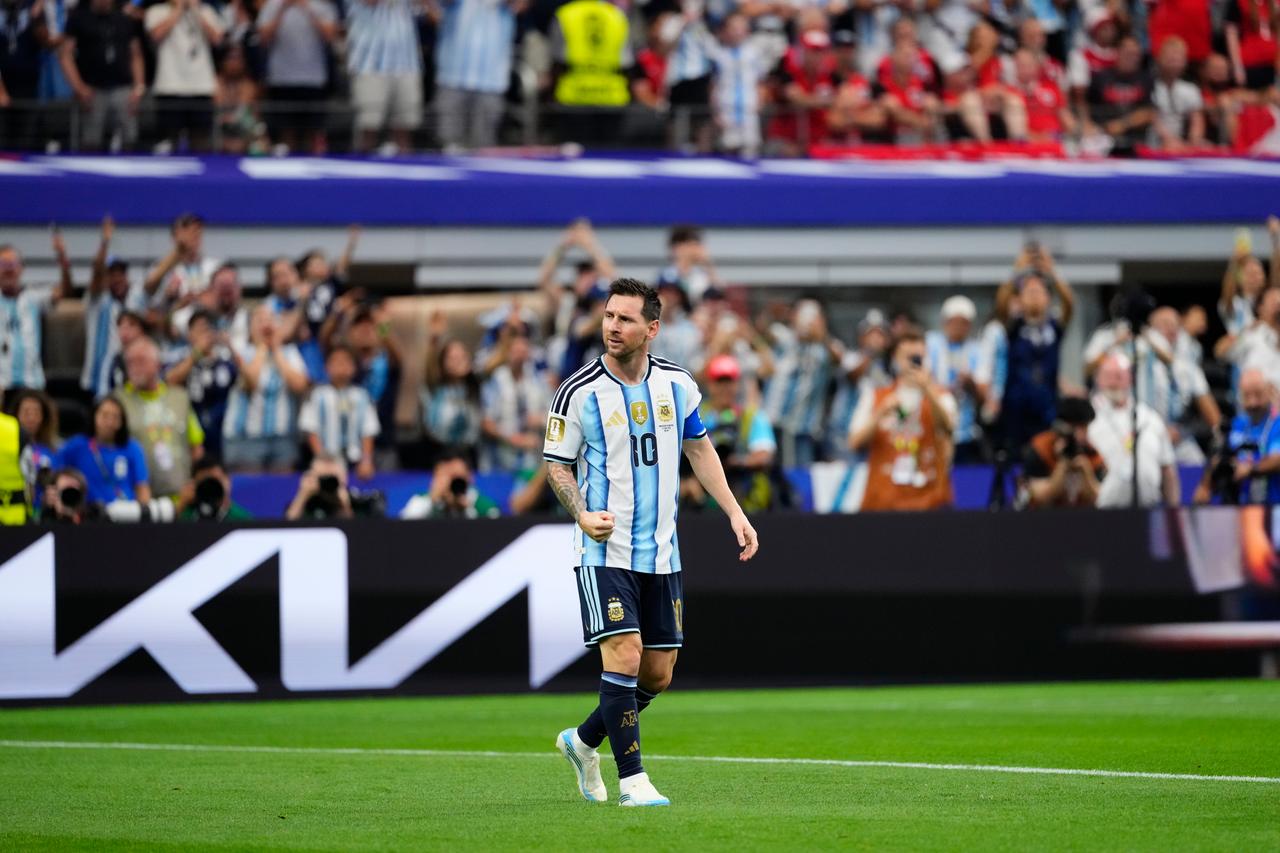
Lionel Messi, 2026 (AA)
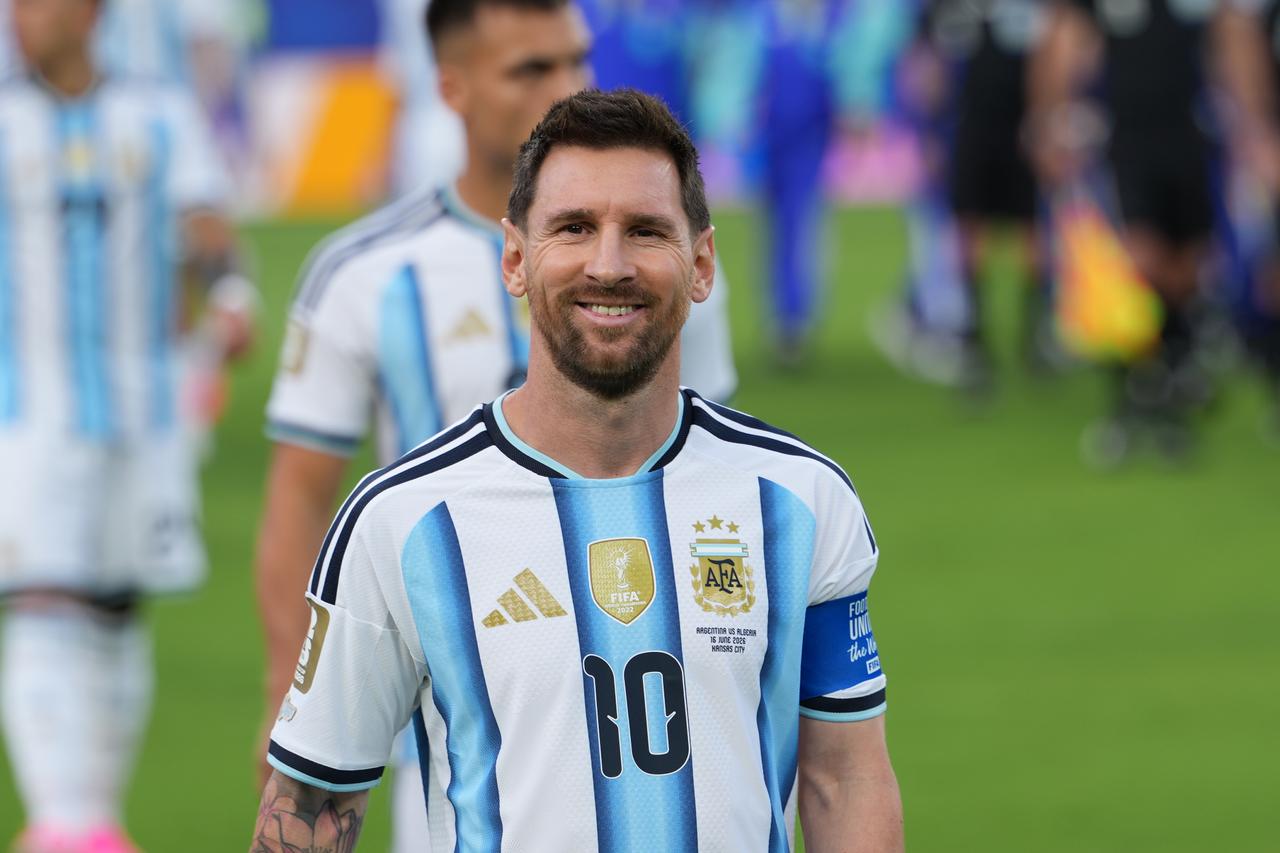
At the 2026 FIFA World Cup, co-hosted by the United States, Canada, and Mexico, Messi—alongside Portuguese Cristiano Ronaldo—became one of the first male footballers to appear in six different World Cups. In Argentina’s opening match of Group J against Algeria on 16 June 2026, Messi scored a hat-trick in a 3-0 victory, tying Miroslav Klose’s record of 17 World Cup goals. Later, in Dallas against Austria, he missed an early penalty but scored in the 38th minute from outside the box and again in stoppage time (90+1) to secure a 2-0 win, bringing his total to 18 goals and becoming the sole all-time top scorer in World Cup history. These goals also marked Messi’s 122nd international goal for Argentina.
Messi prefers to keep his personal life private and out of the public eye. He has directed his wealth and fame toward social responsibility initiatives. In 2007, he founded the Leo Messi Foundation to provide opportunities for disadvantaged youth. In 2010, he was appointed a UNICEF Goodwill Ambassador, supporting global children’s rights efforts. On 30 June 2017, he married Antonella Roccuzzo, his childhood sweetheart from Rosario. The couple has three children: Thiago, Mateo, and Ciro.
Anadolu Ajansı. "Dünya Kupası'nın en çok forma giyen oyuncusu Lionel Messi." Accessed June 23, 2026. https://www.aa.com.tr/tr/spor/dunya-kupasinin-en-cok-forma-giyen-oyuncusu-lionel-messi/3950228
CNN. "Lionel Messi 20 moments that defined Barcelona maestro." Accessed June 23, 2026. https://edition.cnn.com/interactive/2020/08/sport/lionel-messi-career-barcelona-spt-intl/
Castañer, Marta, Daniel Barreira, Oleguer Camerino, M. Teresa Anguera, Albert Canton, and Raúl Hileno. "Goal Scoring in Soccer: A Polar Coordinate Analysis of Motor Skills Used by Lionel Messi." *Frontiers in Psychology* 7, no. 806 (2016). https://www.frontiersin.org/journals/psychology/articles/10.3389/fpsyg.2016.00806/full
Donica, Adrienne, and Tyler Piccotti. "Lionel Messi." Biography. Accessed June 23, 2026. https://www.biography.com/athletes/lionel-messi
ESPN. "Lionel Messi breaks record for most World Cup goals with Austria double." Accessed June 23, 2026. https://www.espn.com/soccer/story/_/id/49140402/lionel-messi-world-cup-record-goals-miroslav-klose-all
FC Barcelona. "Leo Messi." Accessed June 23, 2026. https://www.fcbarcelona.com/en/card/2214377/leo-messi
FIFA. "Back 26 Superstars: Lionel Messi." Accessed June 23, 2026. https://www.fifa.com/en/tournaments/mens/worldcup/canadamexicousa2026/articles/lionel-messi-argentina-quotes-records
GQ. "Lionel Messi’s Barcelona Career Is the History of Modern Soccer." Accessed June 23, 2026. https://www.gq.com/story/lionel-messi-barcelona-retrospective
Messi.com. "Honours and Achievements." Accessed June 23, 2026. https://messi.com/en/honours-and-achievements/
Messi.com. "Messi Biography." Accessed June 23, 2026. https://messi.com/en/biography/
The Athletic. "Lionel Messi: The life and times of the Barcelona, Paris Saint-Germain, Inter Miami and Argentina legend." Accessed June 23, 2026. https://www.nytimes.com/athletic/4783674/2023/08/18/lionel-messi-profile-soccer/
The Guardian. "Argentinian national treasure Lionel Messi stands alone at goalscoring pinnacle." Accessed June 23, 2026. https://www.theguardian.com/football/2026/jun/22/argentinian-national-treasure-lionel-messi-world-cup-goal-record
Trejo, Fernando Segura Millan, and John Williams. "‘One hell of a player’ the social construction of the early career of Lionel Messi: towards a sociological analysis." *Soccer & Society* 21, no. 3 (2020): 356-370. https://academia.edu/resource/work/41802310
West, Andy. *Lionel Messi and the Art of Living*. Pitch Publishing, 2018. Accessed June 23, 2026. https://www.pitchpublishing.co.uk/sites/default/files/associated_downloads/Lionel%20Messi%20and%20the%20Art%20of%20Living%20sample.pdf
[1]
Donica, Adrienne and Tyler Piccotti. "Lionel Messi." Biography.com. Accessed 23 June 2026. https://www.biography.com/athletes/lionel-messi

AA
Lionel Messi
Full Name | Luis Lionel Andres Messi Cuccittini | ||||||||
|---|---|---|---|---|---|---|---|---|---|
Date of Birth | 24 June 1987 | ||||||||
Place of Birth | Rosario, Santa Fe, Argentina | ||||||||
Height | 1.70 m | ||||||||
Weight | 72 kg | ||||||||
Nationality | Argentina | ||||||||
Current Club | Inter Miami CF | ||||||||
Position | Forward Right Wing Playmaker (Number 10) False Nine | ||||||||
Father | Jorge Messi | ||||||||
Mother | Celia Cuccittini | ||||||||
Spouse | Antonella Roccuzzo | ||||||||
Children | Thiago Mateo Ciro | ||||||||
Club Career | Barcelona 2003-2021 PSG 2021-2023 Inter Miami 2023- | ||||||||
Individual Achievements | Ballon d'Or 8 times European Golden Shoe 6 times FIFA World Player of the Year 4 times FIFA World Cup Best Player 2 times La Liga Top Scorer 8 times | ||||||||
Family Background and Childhood Years
Early Club Experiences: Grandoli and Newell’s Old Boys
Diagnosis and Treatment of Growth Hormone Deficiency
Move to FC Barcelona
Rise Through Barcelona’s Academy and Promotion to the First Team
Injuries, Nutrition, and Transition to Professionalism
First International Successes with Argentina and Debut for the Senior National Team
Hat-Trick in El Clásico and Rise to Stardom (2007)
The Pep Guardiola Era and the “False Nine” Role
Ballon d’Or Dominance and Record-Breaking Achievements
Development in Free Kicks and Football Intelligence
Rivalry with Cristiano Ronaldo
2014 World Cup, Copa América Finals, and Decision to Leave the National Team
Tax Evasion Case【1】
Final Years at Barcelona and Departure Process
Paris Saint-Germain (PSG) Career
2022 FIFA World Cup Victory and Historic Achievements
Transfer to Inter Miami CF and Career in the United States
2026 FIFA World Cup and the Title of All-Time Top Scorer
Off-Field Life, Social Responsibility, and Career Legacy