


This article was automatically translated from the original Turkish version.
+1 More
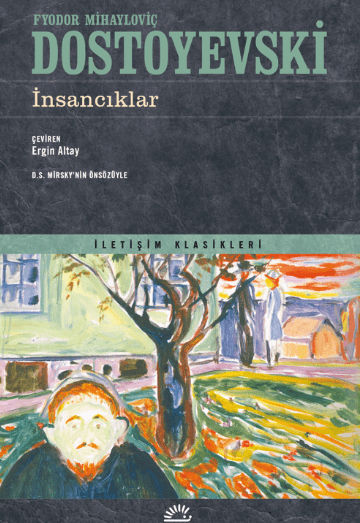
Author(s) | Fyodor Mikhailovich Dostoyevski | ||||||||
|---|---|---|---|---|---|---|---|---|---|
Publisher(s) | İletişim Yayınları | ||||||||
Translator(s) | Ergin Altay | ||||||||
Number of Pages | 178 | ||||||||
Type(s) | Classic World Literature | ||||||||
Poor Folk (Bednye Lyudi) is the first novel by Russian author Fyodor Mikhailovich Dostoevsky, published in 1846. Written when the author was only 24 years old, this work is regarded as one of the pioneers of the “social novel” in Russian literature. Upon its release, the novel received high praise from critic Vissarion Belinsky and marked a significant turning point in Dostoevsky’s literary career.
Poor Folk centers on the relationship between two impoverished individuals in mid-19th century St. Petersburg: the middle-aged government clerk Makar Alekseyevich Devushkin and the young woman Varvara Alekseyevna Dobroselova, whose bond develops through an exchange of letters. The novel unfolds entirely through their mutual correspondence.
Makar harbors deep affection and a protective instinct toward Varvara; in return, Varvara feels respect and gratitude toward Makar. However, their material hardships and social pressures complicate their relationship. When Varvara decides to marry a wealthy man in hopes of a better life, Makar is profoundly shaken, and the novel concludes with an emotional letter he writes to her.
The novel explores central themes of poverty, compassion, social injustice, and solidarity among individuals. Through the material struggles and social marginalization experienced by its characters, Dostoevsky examines the class divisions in 19th-century Russian society and the psychological impact of such conditions on ordinary people. Additionally, the relationship formed through letter-writing brings to the fore themes of human emotional needs and loneliness.
Poor Folk is written in the epistolary novel form. The narrative consists entirely of the alternating letters exchanged between Makar and Varvara. This structure provides readers with direct access to the characters’ inner worlds and enables a deeper understanding of their emotional states. The epistolary format enriches the narration with intimate and heartfelt expressions, enhancing the emotional impact of the work.
Poor Folk represents the beginning of Dostoevsky’s literary career and foreshadows the themes he would further develop in his later works. The novel’s focus on poverty, compassion, and the exploration of the human soul’s depths continues and evolves in his subsequent novels. Recognized as one of the first works in Russian literature to center on the lives and emotions of ordinary people, it is regarded as a precursor to social realism.
Dostoyevski, Fyodor Mihayloviç. İnsancıklar. Çev. Ergin Atalay. İstanbul: İletişim Yayınları, 2003

Author(s) | Fyodor Mikhailovich Dostoyevski | ||||||||
|---|---|---|---|---|---|---|---|---|---|
Publisher(s) | İletişim Yayınları | ||||||||
Translator(s) | Ergin Altay | ||||||||
Number of Pages | 178 | ||||||||
Type(s) | Classic World Literature | ||||||||
No Discussion Added Yet
Start discussion for "Little Humans (Book)" article
Themes
Structure and Form
Literary Significance