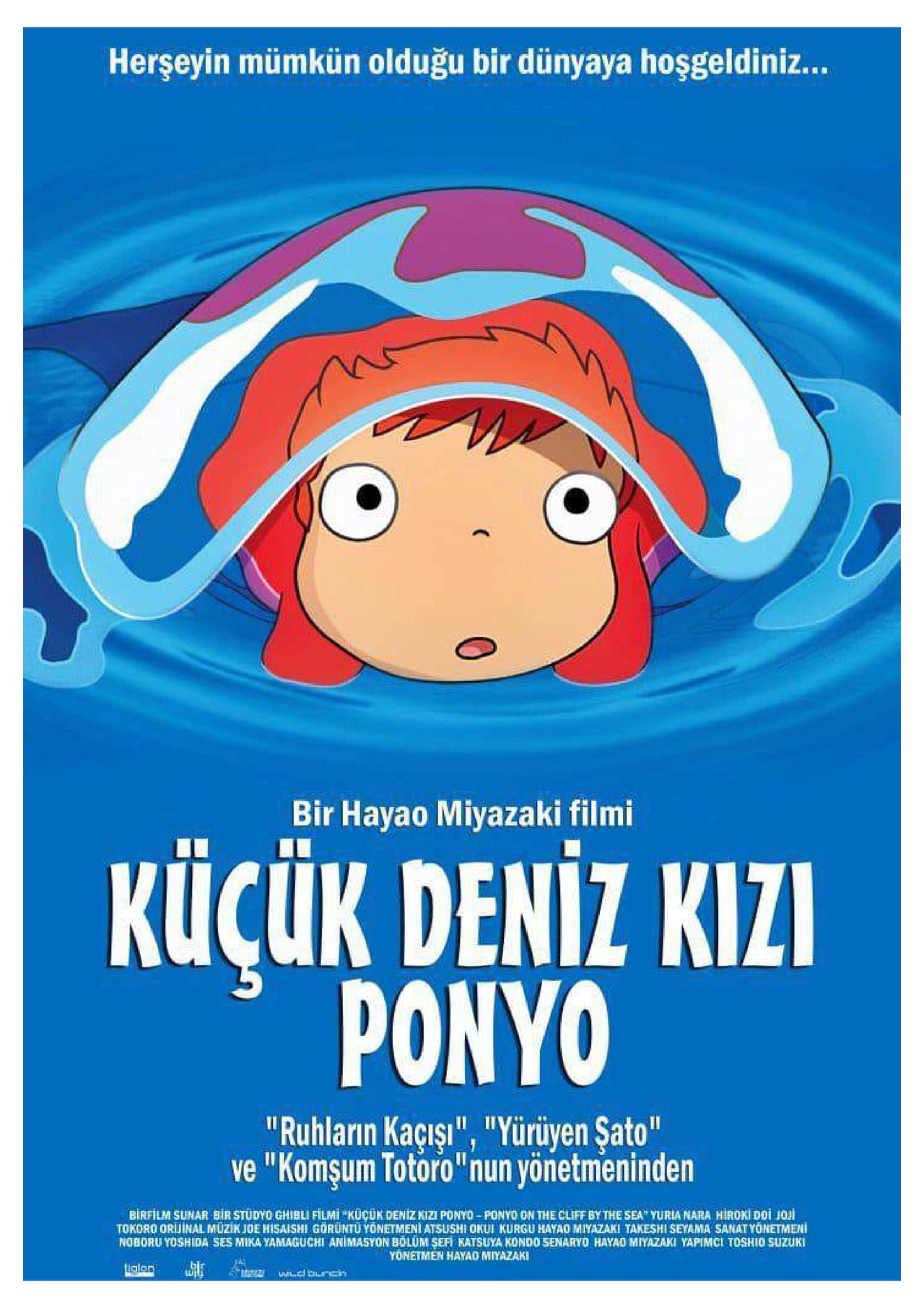
This article was automatically translated from the original Turkish version.
Original Name(s) | Ponyo on the Cliff by the Sea | ||||||||
|---|---|---|---|---|---|---|---|---|---|
Director(s) | Hayao Miyazaki | ||||||||
Studio | Studio Ghibli | ||||||||
Genre | Fantasy Family Animation | ||||||||
Duration | 101 minutes | ||||||||
Language(s) | Japanese | ||||||||
Release Date(s) | 19 July 2008 | ||||||||
Characters and Voice Actors | Risa: Tomoko Yamaguchi Granmamare: Yūki Amami Fujimoto: George Tokoro Sōsuke: Hiroki Doi Ponyo (Brunhilde): Yuria Nara | ||||||||
Ponyo (Japanese: 崖の上のポニョ, Gake no Ue no Ponyo) is a 2008 Japanese animated film written and directed by Hayao Miyazaki and produced by Studio Ghibli. Inspired by Hans Christian Andersen’s fairy tale The Little Mermaid, the film tells the story of Ponyo, a fish girl who desires to become human and forms a deep friendship with a five-year-old boy named Sosuke. Released in Japan on 19 July 2008, Ponyo received widespread critical acclaim and reached a broad global audience.
Ponyo Film Trailer (YouTube)
Ponyo tells the story of Ponyo, a fish girl who lives in the depths of the sea. Her father, Fujimoto, is a wizard who seeks to maintain the balance between the ocean and the human world. One day, Ponyo becomes trapped on a shore and is rescued by Sosuke, a five-year-old boy. Sosuke names her Ponyo, and a strong bond of friendship forms between them.
Ponyo longs to become human and live on land with Sosuke. However, this desire disrupts the natural balance and triggers a massive storm. While Fujimoto attempts to return Ponyo to the sea, her mother Granmamare, the goddess of the ocean, supports her daughter’s choice. The film explores Ponyo’s journey to becoming human and her bond with Sosuke, while questioning the relationship between humanity and nature.
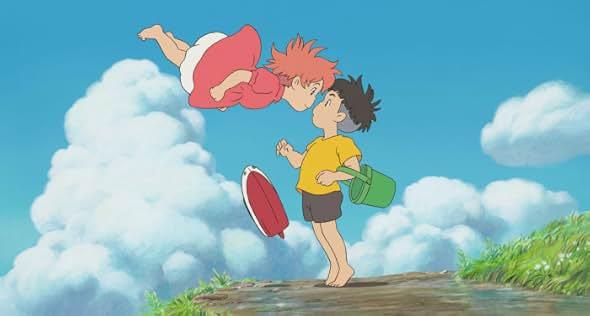
Scene from Ponyo (IMDb)
Ponyo centers on themes commonly found in Miyazaki’s works: nature, humanity, and the environment. The film examines the relationship between humans and nature, particularly how human activity affects the ocean. Ponyo’s curiosity about the human world symbolizes individual freedom and the search for identity, while the storm scenes represent nature’s response to human interference.
Love and friendship form the emotional core of the film; the pure bond between Ponyo and Sosuke bridges two different worlds. Family ties and responsibility are also significant themes. Rather than directly criticizing issues such as environmental pollution, Miyazaki conveys his message through visual metaphors and fantastical elements.
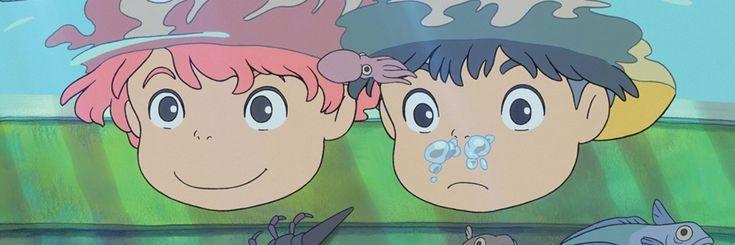
Scene from Ponyo (IMDb)
Ponyo premiered in Japan on 19 July 2008 and achieved significant commercial success. The film earned approximately 1.5 billion yen (about $153 million USD) in Japan, becoming one of the highest-grossing films of 2008. It was also successful in international markets, generating a total of $204 million USD worldwide. Released in the United States on 7 August 2009, the film earned over $15 million USD despite a limited theatrical release.
Ponyo was produced using Studio Ghibli’s traditional hand-drawn animation techniques. Hayao Miyazaki both wrote the screenplay and directed the film. The production process reflects Miyazaki’s deep interest in nature and the sea; the film’s water and wave animations are notable for their intricate, hand-drawn complexity.
The music was composed by Joe Hisaishi, Studio Ghibli’s long-time collaborator. Hisaishi’s melodies enhance the film’s emotional tone, and the theme song “Gake no Ue no Ponyo” became popular among audiences. The film was completed after a production process lasting approximately two years. The visual design was inspired by coastal towns Miyazaki visited during his childhood.
In character analysis, Ponyo’s innocence and determination represent the pursuit of individual freedom. Sosuke’s loyalty and courage strengthen the human-nature connection through childlike purity. Fujimoto serves as a warning figure against humanity’s harmful impact on nature, while Granmamare embodies nature’s forgiving and inclusive qualities. Risa provides balance as a resilient maternal figure in everyday life.
Ponyo has won and been nominated for numerous awards worldwide.
Box Office Mojo. "Ponyo." Box Office Mojo. Accessed June 30, 2025. https://www.boxofficemojo.com/title/tt0876563/
GKIDS Films. "Ponyo Fragmanı." YouTube. Accessed June 30, 2025. https://www.youtube.com/watch?v=h6XP82TyFWw
IMDb. "Plot Summary." Accessed June 30, 2025. https://www.imdb.com/title/tt0876563/plotsummary/?ref_=tt_stry_pl
IMDb. "Ponyo Görüntüleri." Accessed June 30, 2025. https://www.imdb.com/title/tt0876563/mediaviewer/rm1368465153/?ref_=tt_ov_i
IMDb. "Ponyo Görüntüleri." Accessed June 30, 2025. https://www.imdb.com/title/tt0876563/mediaviewer/rm1520218112/?ref_=ttmi_mi_5
IMDb. "Ponyo Görüntüleri." Accessed June 30, 2025. https://www.imdb.com/title/tt0876563/mediaviewer/rm2213709824/?ref_=ttmi_mi_21
IMDb. "Ponyo." Accessed June 30, 2025. https://www.imdb.com/title/tt0876563/
IMDb. “Awards.” IMDb. Erişim tarihi: 30 Haziran 2025. https://www.imdb.com/title/tt0876563/awards/?ref_=tt_awd

Original Name(s) | Ponyo on the Cliff by the Sea | ||||||||
|---|---|---|---|---|---|---|---|---|---|
Director(s) | Hayao Miyazaki | ||||||||
Studio | Studio Ghibli | ||||||||
Genre | Fantasy Family Animation | ||||||||
Duration | 101 minutes | ||||||||
Language(s) | Japanese | ||||||||
Release Date(s) | 19 July 2008 | ||||||||
Characters and Voice Actors | Risa: Tomoko Yamaguchi Granmamare: Yūki Amami Fujimoto: George Tokoro Sōsuke: Hiroki Doi Ponyo (Brunhilde): Yuria Nara | ||||||||
No Discussion Added Yet
Start discussion for "Little Mermaid Ponyo (Animation)" article
Plot
Themes
Box Office Performance
Production
Characters and Voice Cast
Awards and Nominations
Awards
Japan Academy Prize (2009)
Tokyo Anime Award (2009)
Asia Pacific Film Festival (2009)
Asian Film Awards (2009)
Mainichi Film Concours (2009)
Mimmo Rotella Foundation Award (2008)
Future Film Festival Digital Award – Special Mention (2008)
Nominations
Venice Film Festival (2008)
Annie Awards (2010)
Chicago Film Critics Association (2009)
Online Film Critics Society (2010)