
+1 More


The Little Penguin (Eudyptula minor) is the world's smallest penguin species, primarily found along the coastal regions of southern Australia and New Zealand (where it is known as the “Kororā”), particularly on offshore islands where it forms colonies. Unlike other penguins, they build their nests in deep burrows dug in coastal dunes, rock crevices, or sheltered shelters under dense vegetation. Although the total population was estimated to be between approximately 470,000 and 600,000 individuals at the beginning of the 21st century【1】 , local populations are threatened by pressure from invasive predators (foxes, cats, and dogs), habitat loss due to coastal development, marine pollution, and shifts in the food web linked to climate change.
Despite sudden declines observed particularly in mainland colonies, the species is currently listed as “Least Concern” (LC) on the IUCN Red List due to its wide distribution range. However, due to the risk of extinction faced by some isolated subpopulations, conservation strategies such as fencing off predators, providing artificial nesting boxes, and restricting tourist access during breeding seasons are crucial for the species' future.
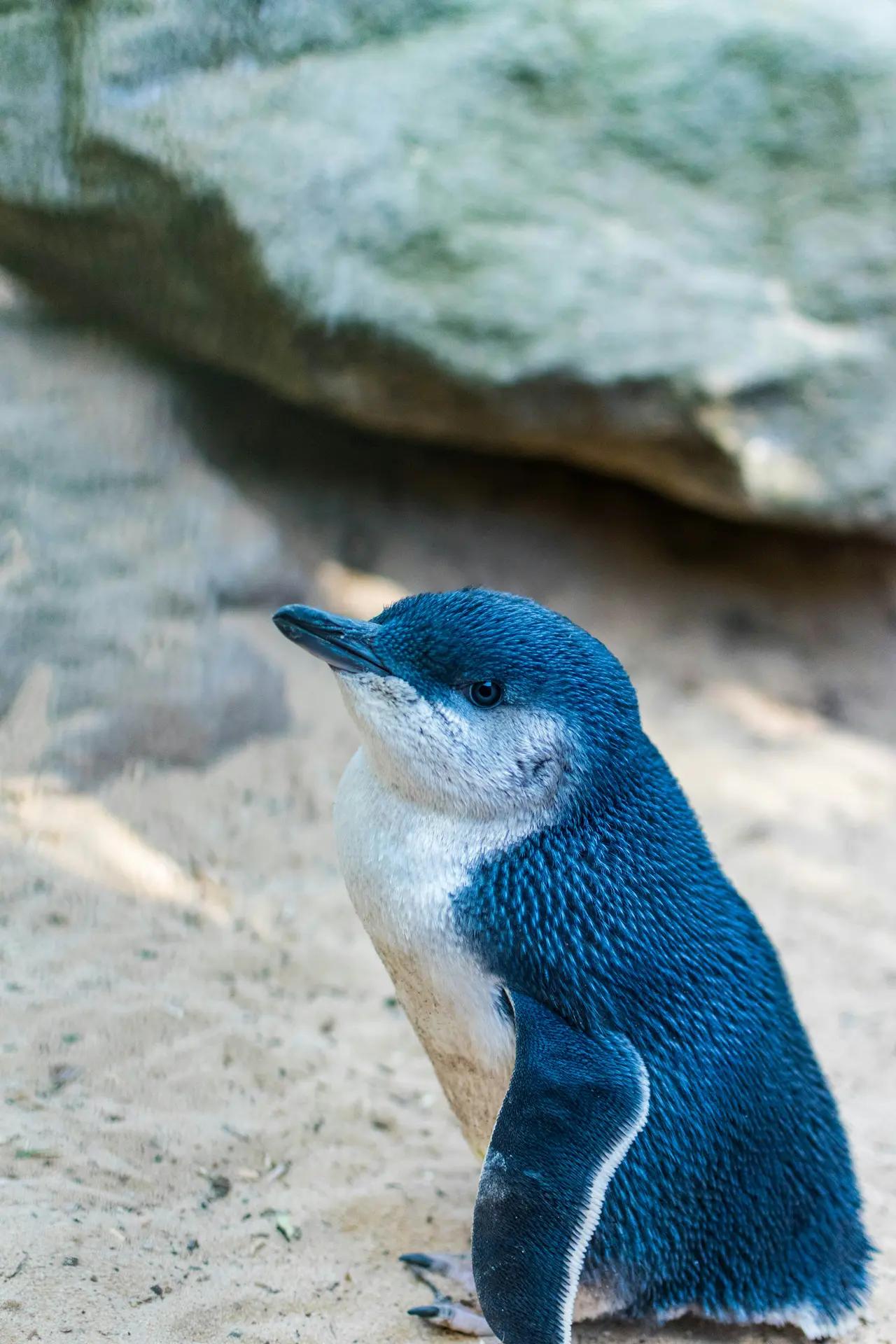
The Little Blue Penguin (Eudyptula minor) is the world's smallest penguin species, averaging 30–33 cm in length and weighing approximately 1–1.5 kg. Its plumage is a bright steel blue or indigo on the back, head, and upper wings, inspiring the species' English name, “Little Blue Penguin”; the throat and belly are covered in contrasting pure white feathers. Their eyes are usually silvery gray or ivory in color. Their beak is thin in proportion to their body, dark gray-black in color, and slightly hooked at the tip. Their feet are usually pale pink in color, with black soles and webbed feet for increased maneuverability in the water.
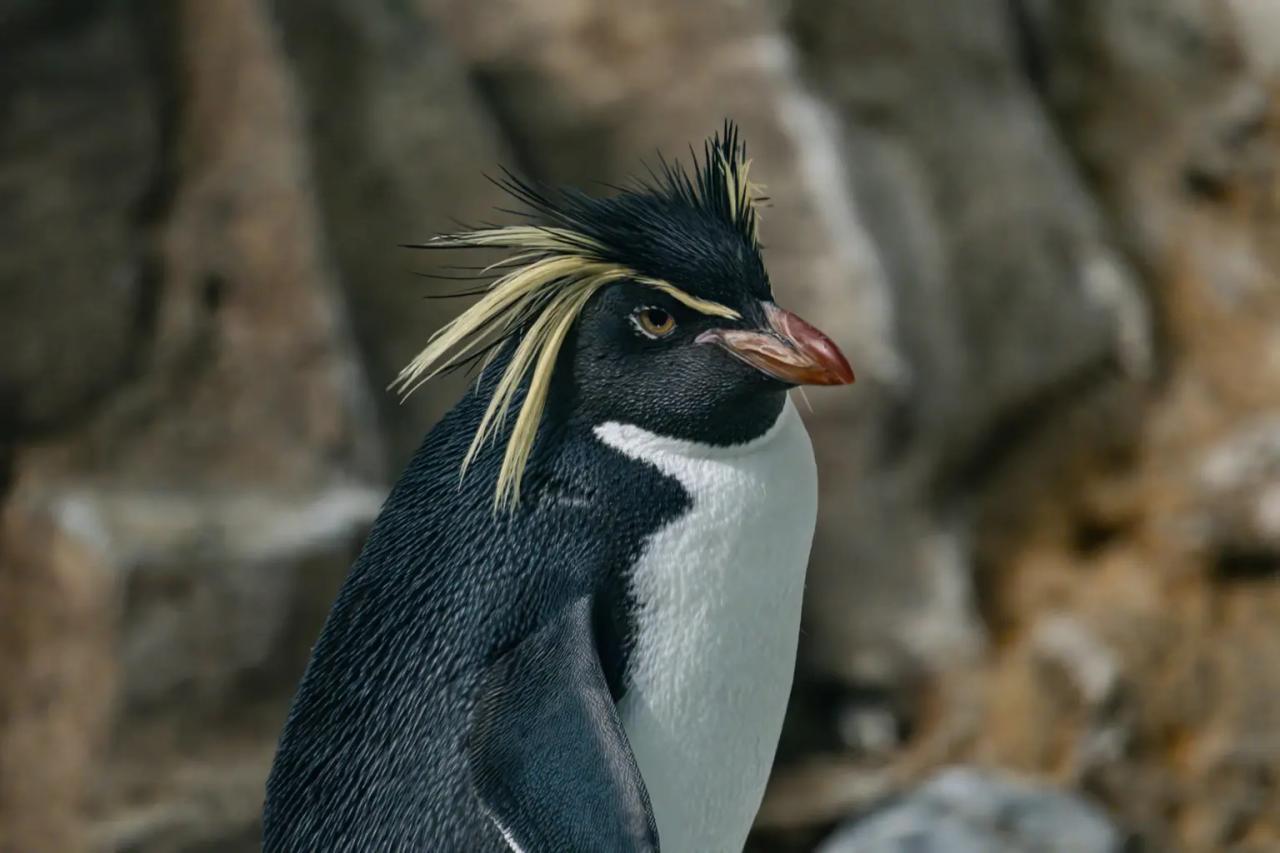
The yellow crest or decorative feather structures seen in other penguin species are absent in Little Penguins, giving them a simpler and more aerodynamic appearance. No significant sexual dimorphism is observed in this species; males and females are nearly identical in plumage color. However, males can generally be distinguished by being slightly heavier than females and having a deeper, coarser-textured beak. Their wings (flippers) provide excellent thermal insulation and waterproofing thanks to a dense layer of feathers, allowing them to remain in the cool waters of southern Australia and New Zealand for extended periods.
The genus Eudyptula is represented by the Little Penguin (Eudyptula minor), which is endemic to the coasts of New Zealand and Australia. Based on fossil data and molecular clock analyses, it is one of the oldest lineages to diverge from the common ancestor of living penguins approximately 15 to 20 million years ago【2】 . Modern phylogenetic studies based on mitochondrial DNA and nuclear gene sequences indicate that Eudyptula emerged during the Miocene epoch after the extinction of the giant penguins and is one of the most genetically isolated groups among all extant penguin genera. Genomic research conducted in recent years has identified a distinct genetic divergence between the “Kororā” population in New Zealand and populations in Australia; this has led some taxonomists to propose that the Australian group should be classified as a separate species, Eudyptula novaehollandiae.
The glacial cycles of the Pliocene and Pleistocene periods shaped the habitats of this species through changes in sea levels, but members of Eudyptula responded to these fluctuations by adapting to shallow coastal waters and sheltered nesting areas. Fossil records show that Eudyptula-like forms found in New Zealand's Pliocene sediments prove that this small-bodied structure has been optimized for ocean productivity for millions of years. Modern population genetics studies show that gene flow between colonies can be impeded by barriers between mainland and island groups, but the species' overall genetic diversity has maintained its resilience in coastal ecosystems despite thousands of years of environmental pressures.

Little Penguins (Unsplash)
Little Penguins (Eudyptula minor) establish colonies in various coastal habitats such as sandy beaches, rocky shorelines, and shallow bays; these areas are particularly widespread throughout South Australia and New Zealand. Nesting areas range from dunes a few meters above sea level to steep slopes covered with vegetation. During the breeding season, especially during incubation and chick feeding, parents typically follow a “central place foraging” strategy close to the shore. Although most individuals hunt in shallow shelf waters 10–30 km from the coast, they have been recorded traveling distances exceeding 100 km during periods of food scarcity or outside the breeding season【3】 .
The diving profiles of these penguins are generally limited to shallow waters; the vast majority of dives occur at depths of 10–20 meters, although they have occasionally been observed diving to depths of up to 60 meters. Dive durations are typically short and energetic bursts ranging from 20 to 60 seconds. Unlike the Fiordland penguin, their diet is based more on small schooling fish. Their menu consists mainly of fish species such as sardines, anchovies, and barracouta, supplemented by squid and various small crustaceans (krill). In New Zealand populations in particular, fish make up a much higher proportion of their diet than other marine animals.
Analysis of the stomach contents of little penguins, particularly during the post-guard feeding period, shows that a large part of their diet consists of small schooling fish. Unlike Fiordland penguins, in this species, fish can sometimes constitute 80 to 95 percent of the total mass. Studies conducted in areas such as Phillip Island in Australia and the Otago Peninsula in New Zealand confirm that oily fish such as anchovies (Engraulis australis), sardines (Sardinops sagax), and red cod (Pseudophycis bachus) are the primary energy source. Cuttlefish and other cephalopods are secondary components of the diet and generally increase their share during periods when fish availability declines.
Regional feeding preferences vary according to local marine productivity: while crustaceans (especially krill and larval crabs) are important in the diet of young penguins in some New Zealand colonies, colonies on the coast of Victoria (Australia) have been observed to focus almost entirely on pelagic fish.
In terms of hunting strategies, Little Penguins may exhibit more complex social behaviors than Fiordland penguins. Some studies suggest that Little Penguins can form small groups on the sea surface and perform synchronized dives, thereby increasing hunting efficiency by compressing fish schools (social hunting). This intra-group coordination functions as a mechanism that makes escape from predators difficult, particularly in shallow coastal waters. However, much of the existing literature still focuses on determining feeding areas based on individual diving profiles and GPS tracking data.

Little Penguins (Pexels)
Little Penguins typically form long-term monogamous bonds and return to the same nesting area each year, often to the same burrow or crevice they used the previous year. In colonies in Australia and New Zealand, males are usually the first to arrive at the site between May and June to repair and defend the nest. Females follow shortly after, and mating occurs. The female lays two white eggs, usually between August and November (this period may vary depending on regional climate conditions). Both parents take turns incubating the eggs for an average of 33–37 days, with shifts lasting 1 to 10 days.
For the first 2-3 weeks after the chicks hatch (the brooding phase), one parent stays in the nest constantly to keep the chicks warm and protect them from predators, while the other hunts at sea. When the chicks are about 18-20 days old, both parents go to sea at the same time to try to meet their increased food needs. Unlike other penguin species, Little Penguin chicks generally prefer to wait at their own nests or nest entrances rather than forming large, tight “creche” groups. After about 7-9 weeks (50-65 days), the chicks grow their adult feathers and venture out to sea completely independently.
Following the end of the breeding season, adults enter an intensive feeding period that increases their body weight by 25-50%. The subsequent molting process lasts approximately 2-3 weeks. During this critical period, penguins cannot enter the sea or hunt because they lose their waterproofing; they remain dependent on land and consume their fat reserves entirely. It is vital that they are not disturbed during this process to conserve energy.
The Little Penguin is classified as “Least Concern” (LC) on the IUCN Red List worldwide. The species' distribution range is extensive, covering the coasts of Australia and New Zealand, and the total population is estimated to consist of approximately 470,000 to 500,000 mature individuals, indicating that the species does not face a short-term risk of global extinction【4】 . However, this overall picture masks dramatic declines observed in local populations; mainland colonies in particular have declined to levels that could be considered “Vulnerable” (VU) or locally “Endangered” (EN) due to predation by mammals and coastal development.
Assessment reports emphasize that rising sea temperatures (such as during El Niño events) disrupt the food chain, reducing reproductive success, while side effects such as entanglement in fishing nets during fishing activities increase adult mortality. The decline observed in some subpopulations in New Zealand over the last three generations necessitates strict regional conservation measures to preserve the species' genetic diversity. Current conservation strategies focus on controlling invasive species (foxes and cats), expanding marine protected areas, and regulating tourism activities according to breeding seasons. These interventions are considered critical for the long-term stability of the Little Penguin.
[1]
BirdLife International. "Little Penguin Eudyptula minor." Datazone Birdlife. Accessed: 28 December 2025. https://datazone.birdlife.org/species/factsheet/little-penguin-eudyptula-minor
The IUCN Red List of Threatened Species “Little Penguin” iucnredlist Accessed: 28 December 2025 https://www.iucnredlist.org/species/22697805/202126091
[2]
Cole, T.L. Ksepka, D. T. Mitchell, K. J. Tennyson, A. J. D. Thomas, D. B. Pan, H. Zhang, G. Rawlence, N. J. Wood, J. R. Bover, P. Bouzat, J. L. Cooper, A. Fiddaman, S. R. Hart, T. Miller, G. Ryan, P. G. Shepherd, L. D. Wilmshurst, J. M. Waters, J. M. "Mitogenomes Uncover Extinct Blue Penguin Lineages and Reveal Trans-Tasman Colonisation." Molecular Phylogenetics and Evolution 131 (2019): 54–61. Accessed: 28 December 2025. https://pubmed.ncbi.nlm.nih.gov/30722030/
[3]
Preston, T. J. Ropert-Coudert, Y. Kato, A. Chiaradia, A. Kirkwood, R. Dann, D. Reina, R. D. "Foraging behaviour of little penguins Eudyptula minor in an artificially modified environment" Endangered Species Research 4,1 (2008) Accessed: 28 December 2025 https://www.researchgate.net/publication/47760449_Foraging_behaviour_of_little_penguins_Eudyptula_minor_in_an_artificially_modified_environment
McKenzie, F. R. K. "The Foraging Ecology of Little Penguin (Eudyptula minor) on Tiritiri Matangi Island." Master of Science in Conservation Biology Massey University, Auckland. (2011) Accessed: 28 December 2025 https://mro.massey.ac.nz/server/api/core/bitstreams/bb2aa77e-d35b-4fe5-aeed-569eb463374c/content
[4]
The IUCN Red List of Threatened Species “Little Penguin” iucnredlist Accessed: 28 December 2025 https://www.iucnredlist.org/species/22697805/202126091
BirdLife International. "Little Penguin Eudyptula minor." Datazone Birdlife. Accessed: 28 December 2025. https://datazone.birdlife.org/species/factsheet/little-penguin-eudyptula-minor
Department of Conservation (DOC). "Little Penguin/Kororā." Government of New Zealand. Accessed: 28 December 2025. https://www.doc.govt.nz/nature/native-animals/birds/birds-a-z/penguins/little-penguin-korora/

No Discussion Added Yet
Start discussion for "Little Penguin (Eudyptula Minor)" article
Morphological Characteristics and Systematic Position
Physical Description
Taxonomy and Evolution
Ecology, Behavior, and Life Cycle
Habitat and Distribution
Nutrition Ecology
Reproductive Biology
Conservation Status
This article was created with the support of artificial intelligence.