This article was automatically translated from the original Turkish version.
+2 More
Name(s) | Load Cell | ||||||||
|---|---|---|---|---|---|---|---|---|---|
Type(s) | Strain Gauge-Based Force Measurement Sensor Capacitive Pneumatic Hydraulic | ||||||||
Definition(s) | Device That Converts Applied Load Into an Electrical Signal | ||||||||
Working Principle | Strain Gauge-Based Deformation Detection | ||||||||
Application Area(s) | Weighing Systems Automation Testing Machines | ||||||||
The landing gear wheel spin-up system (English: Wheel Spin-Up System or Pre-Rotation System) is an auxiliary system that controls the rotation of landing gear wheels before they make contact with the runway. The primary purpose of this system is to reduce the speed differential by pre-rotating the wheels prior to touchdown, rather than allowing them to start rotating from rest upon contact with the runway. This minimizes structural stresses, tire wear, and loads on the braking system.
The function of the wheel spin-up system is to reduce the slip ratio between the aircraft’s landing gear wheels and the runway surface at the moment of touchdown. Under normal conditions, landing gear wheels are stationary when they contact the ground and must rapidly accelerate to match the runway’s speed. This speed difference causes high friction, sudden tire heating, and mechanical stress. The wheel spin-up system rotates the wheels to approximately the runway speed before the aircraft lands, thereby reducing this differential.
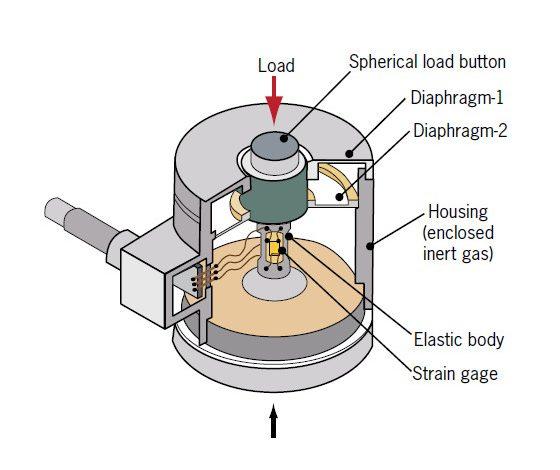
Load Cell (How Does a Load Cell Work? YouTube)
Wheel spin-up systems typically operate through the following mechanisms:
These systems are activated automatically or manually at a specific phase of landing, such as during descent or a predetermined time before touchdown.
The implementation of these systems involves certain technical and financial challenges. Factors such as added weight, maintenance costs, and ensuring system reliability can hinder widespread adoption. While some aircraft manufacturers do not offer this system as standard equipment, optional configurations and research-based applications are available.
Cranfield University. *Reducing Temperature, Drag Load, and Wear During Aircraft Tyre Spin-Up.* 2022. Federal Aviation Administration. *A Comparison of Aircraft Tire Skid with Initial Wheel Rotational Speed Using ANSYS Transient Simulation.* 2015. University of Sussex. *Reduction of Aircraft Tyre Wear by Pre-Rotating Wheel Using ANSYS Mechanical Transient Analysis.* 2016. https://www.researchgate.net/publication/304578284_Reduction_of_Aircraft_Tyre_Wear_by_Pre-Rotating_Wheel_Using_ANSYS_Mechanical_Transient SAE Aerospace Standards Committee. *SAE AIR5800: Tire Prerotation at Landing.* SAE International, rev. 2018. Federal Aviation Administration. *AC 23-19A: Airframe Guide for Certification of Part 23 Airplanes,* 2007.

Name(s) | Load Cell | ||||||||
|---|---|---|---|---|---|---|---|---|---|
Type(s) | Strain Gauge-Based Force Measurement Sensor Capacitive Pneumatic Hydraulic | ||||||||
Definition(s) | Device That Converts Applied Load Into an Electrical Signal | ||||||||
Working Principle | Strain Gauge-Based Deformation Detection | ||||||||
Application Area(s) | Weighing Systems Automation Testing Machines | ||||||||
Purpose and Function
Operating Principle
Advantages
Applications
Development Status and Challenges