


This article was automatically translated from the original Turkish version.
+2 More
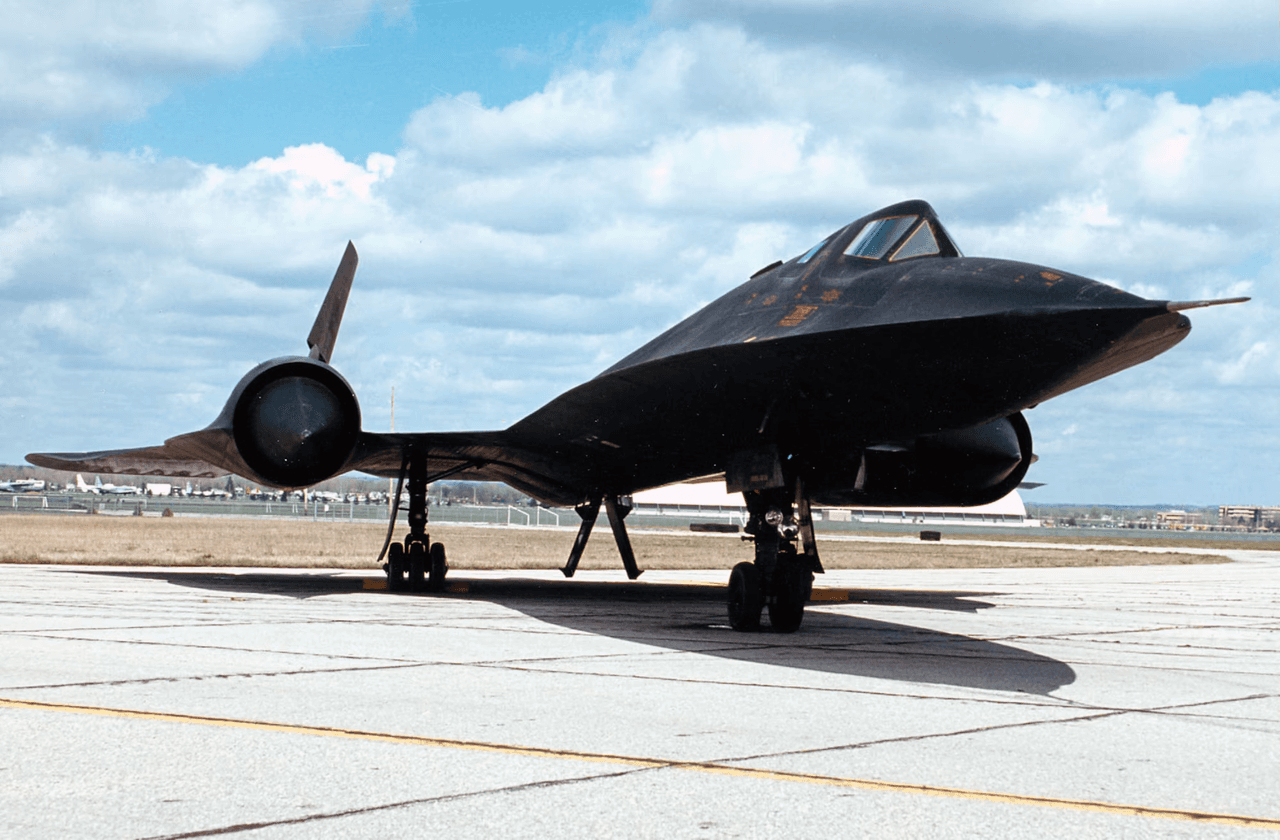
Lockheed SR-71 Blackbird
Producer(s) | Lockheed Skunk Works | ||||||||
|---|---|---|---|---|---|---|---|---|---|
First Flight(s) | 22 December 1964 | ||||||||
Entry into Service | January 1966 | ||||||||
Aircraft Type(s) | Long-range high-speed strategic reconnaissance aircraft high-altitude | ||||||||
Length(s) | 32.74 metres | ||||||||
Wingspan | 16.94 metres | ||||||||
Height(s) | 5.64 metres | ||||||||
Empty Weight | 27.216 kilograms | ||||||||
Maximum Takeoff Weight (MTOW) | 77.111 kilograms | ||||||||
Engine(s) | 2 × Pratt & Whitney J58-1 turboramjet | ||||||||
Maximum Speed | Mach 3.2 (3530 km/h) | ||||||||
Thrust | Each providing approximately 32,500 lbf (145 kN) thrust (in ramjet mode) | ||||||||
Airframe Material | Titanium alloy | ||||||||
Lockheed SR-71 Blackbird is a long-range, high-altitude, high-speed strategic reconnaissance aircraft used by the United States Air Force (USAF) and NASA during the Cold War. Renowned for its design and high performance, the SR-71 is known for a maximum speed exceeding Mach 3.2 and an operational altitude of 25,900 meters. The aircraft served between 1964 and 1999, undertaking various strategic reconnaissance missions and never being shot down by any enemy aircraft or missile during its service life. Its high speed and altitude provided a significant advantage against enemy air defense systems.

Lockheed SR-71 Blackbird (U.S. Air Force)
The development of the Lockheed SR-71 Blackbird can be traced back to the late 1950s. Advances in Soviet air defense technology increased the operational risks faced by existing American reconnaissance aircraft, prompting the need for a new reconnaissance platform capable of operating at higher speeds and altitudes.
The Advanced Development Projects division of Lockheed Martin, unofficially known as “Skunk Works,” initiated efforts under the leadership of engineer Clarence “Kelly” Johnson to meet this requirement. Various design concepts were developed under the codename “Archangel.” These efforts resulted in the A-12 reconnaissance aircraft, capable of speeds exceeding Mach 3. The A-12 served as the foundation for the SR-71 and was operated by the Central Intelligence Agency (CIA).
The development of the SR-71 progressed based on experience gained from the A-12 program and the distinct operational requirements of the United States Air Force. Compared to the A-12, the SR-71 featured a longer fuselage, a two-person cockpit for the pilot and Reconnaissance Systems Officer (RSO), enhanced sensor systems, and greater fuel capacity. The aircraft’s first flight took place on 22 December 1964, and it entered USAF service in January 1966.
Lockheed SR-71 Blackbird (Haci Productions)
The SR-71’s performance was achieved through a range of innovations and unique design elements developed within the technological limits of its era. The aircraft’s airframe was constructed primarily from titanium alloy due to its resistance to high temperatures. To maintain structural integrity under temperatures reaching 315 °C caused by aerodynamic friction during high-speed flight, special expansion joints were incorporated. The SR-71’s aerodynamic configuration was optimized for high-speed flight, featuring a delta wing design and nacelles integrated into the fuselage. The Pratt & Whitney J58-1 turboramjet engines provided the thrust necessary to achieve a maximum speed of Mach 3.2. These engines operated on turbojet principles at low speeds and switched to ramjet principles at high speeds to generate thrust. The aircraft’s fuel system was designed with special seals to prevent leaks caused by high temperatures and featured in-flight refueling capability to extend its operational range. Advanced cameras, radar systems, and electronic intelligence collection equipment were installed to support various reconnaissance missions.
Throughout its service life, the Lockheed SR-71 Blackbird was employed in key reconnaissance missions during the Cold War. Thanks to its high speed and altitude, it conducted numerous flights over regions including the Soviet Union, China, Vietnam, and the Middle East. SR-71 pilots and Reconnaissance Systems Officers (RSOs) gathered intelligence on strategic military installations, infrastructure, and troop movements by operating at altitudes and speeds that made interception by enemy air defenses extremely difficult. The aircraft was sometimes able to evade locked-on missiles through electronic warfare systems and evasive maneuvers. The high-resolution imagery and electronic data collected during SR-71 operations played a significant role in shaping United States foreign policy and military strategy. The SR-71, also known as “Sled” among operational personnel, became a well-known aircraft within its user community.
The end of the Cold War and advances in satellite-based reconnaissance technology gradually diminished the SR-71’s strategic necessity. High operational costs, particularly related to fuel consumption and maintenance, further complicated its continued service. In 1990, budget constraints led to the first retirement of the SR-71 fleet. However, due to ongoing strategic needs and public pressure, the aircraft briefly returned to service in 1995. Finally, it was permanently retired in 1999, with remaining aircraft transferred to various museums. The Lockheed SR-71 Blackbird holds a unique place in aviation history and is renowned for its unmatched speed and altitude capabilities. The speed and altitude records it achieved remain unbroken today and continue to serve as a benchmark for future aerospace designs.
Imperial War Museums. "SR-71 Blackbird." Accessed May 1, 2025. https://www.iwm.org.uk/history/sr-71-blackbird
Lockheed Martin. "Lockheed SR-71 Blackbird." Accessed May 1, 2025. https://www.lockheedmartin.com/en-us/news/features/history/blackbird.html
Museum of Flight. "Blackbird." Accessed May 1, 2025. https://www.museumofflight.org/exhibits-and-events/exhibits/blackbird
NASA. "FS-2003-09-030-LaRC." Accessed May 1, 2025. https://www.nasa.gov/wp-content/uploads/2021/09/495839main_fs-030_sr-71.pdf
National Museum of the U.S. Air Force. "Lockheed SR-71A." Accessed May 1, 2025. https://www.nationalmuseum.af.mil/Visit/Museum-Exhibits/Fact-Sheets/Display/Article/198054/lockheed-sr-71a/
Utah Air and Space Museum. "Lockheed SR-71C Blackbird." Accessed May 1, 2025. https://www.aerospaceutah.org/museum/our-collections/aircraft-collection/lockheed-sr-71c-blackbird/

Lockheed SR-71 Blackbird
Producer(s) | Lockheed Skunk Works | ||||||||
|---|---|---|---|---|---|---|---|---|---|
First Flight(s) | 22 December 1964 | ||||||||
Entry into Service | January 1966 | ||||||||
Aircraft Type(s) | Long-range high-speed strategic reconnaissance aircraft high-altitude | ||||||||
Length(s) | 32.74 metres | ||||||||
Wingspan | 16.94 metres | ||||||||
Height(s) | 5.64 metres | ||||||||
Empty Weight | 27.216 kilograms | ||||||||
Maximum Takeoff Weight (MTOW) | 77.111 kilograms | ||||||||
Engine(s) | 2 × Pratt & Whitney J58-1 turboramjet | ||||||||
Maximum Speed | Mach 3.2 (3530 km/h) | ||||||||
Thrust | Each providing approximately 32,500 lbf (145 kN) thrust (in ramjet mode) | ||||||||
Airframe Material | Titanium alloy | ||||||||
No Discussion Added Yet
Start discussion for "Lockheed SR-71 Blackbird" article
Development Process
Technological Innovations and Design Features
Operational History
Retirement and Legacy