



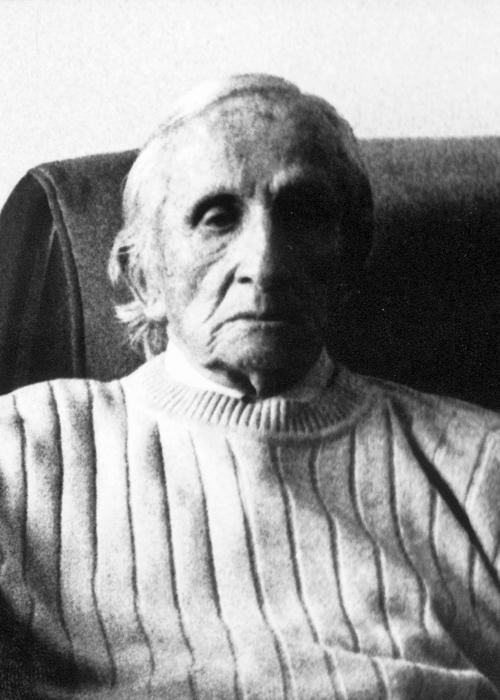
Babası | Şükrü Naili Gökberk | ||||||||
|---|---|---|---|---|---|---|---|---|---|
Annesi | Nazire Hanım | ||||||||
Yaş | 85 | ||||||||
Birth | 1908 | ||||||||
Ölüm tarihi | 1993-08-15 | ||||||||
Works | Ongoing Philosophy – Conversations with Philosophers from Antiquity to the Present Enlightenment Philosophy Revolutions and Atatürk A Changing Language A Changing World The Evolution of Philosophy Kant and Herder's Conceptions of History History of Philosophy | ||||||||
Macit Gökberk was born in 1908 in Thessaloniki within the Ottoman Empire. He received his education at Istanbul Boys’ High School. In the 1929–1930 academic year, he enrolled as a student in the Department of Philosophy at the Faculty of Letters of Istanbul University and, after graduating, became the department’s first assistant. He completed his doctorate in Germany with a thesis titled “The Concept of Society in Hegel and Auguste Comte,” under the supervision of Eduard Spranger. During his doctoral studies, he worked as an assistant to Wilhelm Dilthey alongside Spranger.
Gökberk served as a faculty member at the Faculty of Letters of Istanbul University and also worked at the University of Berlin. In 1935, he traveled to Germany to pursue his doctoral studies. He received his education at the University of Berlin and completed his doctoral thesis titled “The Concept of Society in Hegel and Auguste Comte” under the guidance of Eduard Spranger, one of the leading thinkers of the time.
In 1940, he returned to Türkiye. He was appointed associate professor in 1941 and full professor in 1949. He remained active at the Department of Philosophy, Faculty of Letters, Istanbul University until his retirement in 1978. During this period, he trained generations of students and played a leading role in the institutionalization of philosophy in Türkiye. Between 1952 and 1954, he served as Dean of the Faculty of Letters, and between 1954–1960 and 1969–1976, he held the position of President of the Turkish Language Association.
History of Philosophy: His most renowned work, History of Philosophy, is the first systematic history of philosophy written by a Turkish thinker. It presents a broad historical narrative beginning with Anatolian-Greek thought and extending through the Middle Ages, the Renaissance, the Enlightenment, and the founding figures of modern philosophy such as Kant and Hegel. This book remains a foundational text in many philosophy departments across Türkiye.
Language and Philosophy: In his book “Changing World, Changing Language,” he conducted an in-depth examination of the relationship between language, culture, and thought. According to him, there is a close connection between a nation’s mode of thinking and the language it uses. Therefore, he considered the simplification of Turkish and its transformation into a language suitable for philosophical discourse a conceptual necessity.
Enlightenment Thought and Modernity: Through his studies on Kant and Hegel, Gökberk placed special emphasis on Enlightenment philosophy. He argued that modernization is not merely a technical advancement but also a process of intellectual transformation. In this regard, he believed that philosophical thought is a prerequisite for social progress.
Macit Gökberk spent part of his life on Büyükada, and for this reason he is regarded as an Adalı. Today, his family continues to reside in their home on Büyükada. Macit Gökberk passed away in Istanbul on 15 August 1993 at the age of 85. He was buried at Edirnekapı Martyrs’ Cemetery.
Aydın, Hasan, and Merve Yüksel. “Macit Gökberk’te İnsan, Teknik ve Kültür.” Dört Öge, no. 24 (December 2023): Accessed May 28, 2025. https://dergipark.org.tr/en/download/article-file/3519690
Bulutoğlu, Seval. “Macit Gökberk’in Ardından.” Adalı Dergisi, Accessed May 28, 2025. https://adalidergisi.com/tum-sayilar/2023/haziran-sayi-216/macit-gokberkin-ardindan/
Felsefe.gen.tr. "Macit Gökberk." Visual. Accessed May 28, 2025. ://www.felsefe.gen.tr/wp-content/uploads/2019/11/Macit-Gokberk.jpg.
Yapı Kredi Yayınları. "Macit Gökberk." Accessed May 28, 2025. https://www.yapikrediyayinlari.com.tr/dosyalar/2017/03/Macit-Gokberk-4900-1.jpg.
Yıldırım, Ömer. “Macit Gökberk kimdir?” Felsefe hakkında her şey… 28 Mayıs 2025 https://www.felsefe.gen.tr/macit-gokberk-kimdir/

Babası | Şükrü Naili Gökberk | ||||||||
|---|---|---|---|---|---|---|---|---|---|
Annesi | Nazire Hanım | ||||||||
Yaş | 85 | ||||||||
Birth | 1908 | ||||||||
Ölüm tarihi | 1993-08-15 | ||||||||
Works | Ongoing Philosophy – Conversations with Philosophers from Antiquity to the Present Enlightenment Philosophy Revolutions and Atatürk A Changing Language A Changing World The Evolution of Philosophy Kant and Herder's Conceptions of History History of Philosophy | ||||||||
Career and Achievements
Key Ideas and Contributions
Personal Life and Legacy