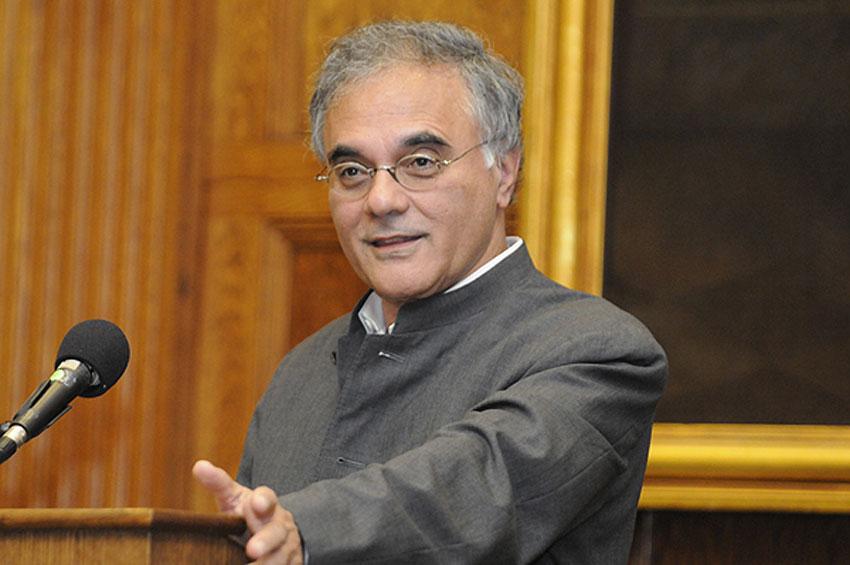



Date and Place of Birth | 23 April 1946 – Bombay (Mumbai), India | ||||||||
|---|---|---|---|---|---|---|---|---|---|
Education | Bachelor's: University of Pittsburgh (1967) Political Science PhD: Harvard University (1974) Government Master's: Fletcher School of Law and Diplomacy (1968–1969) | ||||||||
Academic Positions | University of Dar es Salaam Tanzania (1973–1979), Makerere University Uganda (1980–1993), University of Cape Town South Africa (1996–1999), Columbia University USA (1999–present), Herbert Lehman Professor of Government Director of the Institute of African Studies (1999–2004), Director of the Makerere Institute of Social Research (MISR) (2010–2022) | ||||||||
International Positions and Memberships | Chair of CODESRIA (Council for the Development of Social Science Research in Africa) (1998–2002) | ||||||||
Awards and Titles | Named one of the 'World's Top 20 Public Intellectuals' by Prospect and Foreign Policy in 2008, included in Prospect's 'World's Top 50 Thinkers' list in 2021, honorary doctorates from Addis Ababa University and University of Johannesburg (2010) | ||||||||
Areas of Work | Colonialism and postcolonial state, Civil wars and genocides, Political identity and citizenship, Knowledge production and academic freedom, Human rights and global politics | ||||||||
Selected Works | Citizen and Subject: Contemporary Africa and the Legacy of Late Colonialism (1996), When Victims Become Killers: Colonialism, Nativism, and the Genocide in Rwanda (2001), Good Muslim Bad Muslim: America the Cold War and the Roots of Terror (2004), Saviors and Survivors: Darfur Politics and the War on Terror (2009), Neither Settler Nor Native: The Making and Unmaking of Permanent Minorities (2020) | ||||||||
Family | Son: Zohran Kwame Mamdani (New York City Councilmember) Spouse: Mira Nair (film director) | ||||||||
Nationality and Citizenship | Ugandan citizen | ||||||||
Born in Bombay, India, in 1946, Mahmood Mamdani spent his childhood in Uganda. He completed his undergraduate studies in political science at the University of Pittsburgh in 1967, earned his master’s degrees from the Fletcher School of Law and Diplomacy, and received his PhD from Harvard University in 1974.
Mamdani began his academic career at the University of Dar es Salaam (1973–1979), followed by positions at Makerere University (1980–1993) and the University of Cape Town (1996–1999). From 2010 to 2022, he served as director of the Makerere Institute of Social Research (MISR), where he established an interdisciplinary doctoral program. He is currently the Herbert Lehman Professor of Government at Columbia University.
Between 1998 and 2002, Mamdani served as president of CODESRIA, an organization dedicated to advancing the social sciences in Africa. In 2008, he was named one of the “20 Most Influential Public Intellectuals in the World” by Foreign Policy (USA) and Prospect (UK), and in 2021, he was included in Prospect’s list of the “50 Best Thinkers in the World.”
Professor Mahmood Mamdani’s son, Zohran Kwame Mamdani, was born in 1991 from Mamdani’s marriage to Indian-American film director Mira Nair. Zohran Mamdani entered political life in 2020 when he was elected to the New York State Assembly.
Mahmood Mamdani’s academic work primarily focuses on colonialism, postcolonial state structures, knowledge production, and relations of political power. Zohran Mamdani’s political discourse centers on housing rights, migration policies, and economic inequality. Both engage in critical analyses of political and social structures, albeit at different levels of activity.
Mahmood Mamdani’s experiences with political repression, including the 1972 expulsion of Asians from Uganda, have been documented in public sources and are often referenced in discussions of the indirect influences on his son.
Zohran Mamdani developed his education and political orientation through a multicultural family background and a sensitivity to public policy. Points of convergence between his father’s academic interests and Zohran’s political agenda occasionally appear in his public statements.
Mahmood Mamdani has exerted a significant influence on the social sciences globally, not only in Africa, through his work on colonialism, citizenship, political identity, and knowledge production. The conceptual frameworks he developed during his academic career are widely referenced in analyses of state structures and forms of political violence in postcolonial societies.
One of Mamdani’s most influential works, Citizen and Subject: Contemporary Africa and the Legacy of Late Colonialism (1996), analyzes the relationship between contemporary African political structures and the legacy of late colonialism, making major contributions to academic literature through the concepts of “rural despotism” and “urban citizenship.” This book has also been used by scholars working on Latin America, South Asia, and the Middle East.
In his 2001 book When Victims Become Killers, Mamdani explains the Rwandan genocide not as a product of ethnic hatred alone, but as a consequence of political structures and identity politics inherited from the colonial era, offering an alternative approach to genocide studies.
Mamdani’s work critiques the Western-centric nature of knowledge production in the social sciences and advocates for the development of African-centered intellectual frameworks. To this end, through CODESRIA (Council for the Development of Social Science Research in Africa), which he led from 1998 to 2002, he promoted academic autonomy and diversity in knowledge production across the continent.
His writings serve as essential resources for intellectuals, human rights advocates, historians, and political theorists in the Global South. He is also frequently cited in debates on how academic production should be structured within postcolonial contexts.
His academic interests encompass postcolonial states, civil wars, genocides, human rights theory, and the relationships between knowledge and power. His most well-known works include:
Mahmood Mamdani is also recognized not only for his academic contributions but also for his efforts to democratize higher education in Africa and his proposals for institutional reform.
CODESRIA. “Pr. Mahmood Mamdani (1998–2002).” codesria.org. Accessed November 1, 2025. https://codesria.org/pr-mahmood-mamdani-1998-2002/
Columbia University Department of Anthropology. “Mahmood Mamdani.” anthropology.columbia.edu. Accessed November 1, 2025. https://anthropology.columbia.edu/content/mahmood-mamdani
NDTV. "Who Are New York Mayor Zohran Mamdani’s Parents? All About Mira Nair and Mahmood Mamdani." NDTV. Accessed November 1, 2025. https://www.ndtv.com/world-news/who-are-new-york-mayor-zohran-mamdani-parents-all-about-mira-nair-and-mahmood-mamdani-9578486
University World News. "Makerere's New MISR Model of the PhD Defended." Accessed November 1, 2025. https://www.universityworldnews.com/post.php?story=20130322131149861
Watchdog Uganda. “Meet Uganda's Most Iconic Academician Prof Mahmood Mamdani.” watchdoguganda.com. Accessed November 1, 2025. https://www.watchdoguganda.com/news/20220306/131449/meet-ugandas-most-iconic-academician-prof-mahmood-mamdani.html

Date and Place of Birth | 23 April 1946 – Bombay (Mumbai), India | ||||||||
|---|---|---|---|---|---|---|---|---|---|
Education | Bachelor's: University of Pittsburgh (1967) Political Science PhD: Harvard University (1974) Government Master's: Fletcher School of Law and Diplomacy (1968–1969) | ||||||||
Academic Positions | University of Dar es Salaam Tanzania (1973–1979), Makerere University Uganda (1980–1993), University of Cape Town South Africa (1996–1999), Columbia University USA (1999–present), Herbert Lehman Professor of Government Director of the Institute of African Studies (1999–2004), Director of the Makerere Institute of Social Research (MISR) (2010–2022) | ||||||||
International Positions and Memberships | Chair of CODESRIA (Council for the Development of Social Science Research in Africa) (1998–2002) | ||||||||
Awards and Titles | Named one of the 'World's Top 20 Public Intellectuals' by Prospect and Foreign Policy in 2008, included in Prospect's 'World's Top 50 Thinkers' list in 2021, honorary doctorates from Addis Ababa University and University of Johannesburg (2010) | ||||||||
Areas of Work | Colonialism and postcolonial state, Civil wars and genocides, Political identity and citizenship, Knowledge production and academic freedom, Human rights and global politics | ||||||||
Selected Works | Citizen and Subject: Contemporary Africa and the Legacy of Late Colonialism (1996), When Victims Become Killers: Colonialism, Nativism, and the Genocide in Rwanda (2001), Good Muslim Bad Muslim: America the Cold War and the Roots of Terror (2004), Saviors and Survivors: Darfur Politics and the War on Terror (2009), Neither Settler Nor Native: The Making and Unmaking of Permanent Minorities (2020) | ||||||||
Family | Son: Zohran Kwame Mamdani (New York City Councilmember) Spouse: Mira Nair (film director) | ||||||||
Nationality and Citizenship | Ugandan citizen | ||||||||
The Influence of Mahmood Mamdani on His Son
Mahmood Mamdani’s Global Intellectual Influence
His Works and Publications