This article was automatically translated from the original Turkish version.
+2 More
Registration Number | 267 | ||||||||
|---|---|---|---|---|---|---|---|---|---|
Registration Date | 08.12.2017 | ||||||||
Application Number | C2014/031 | ||||||||
Application Date | 30.04.2014 | ||||||||
Name of the Geographical Indication | 30.04.2014 | ||||||||
Name of the Product | Cherry | ||||||||
Type of Geographical Indication | Place of origin | ||||||||
Applicant/Registrant(s) | Yeşilyurt Municipality | ||||||||
Address of the Registrant | Karakavak Neighborhood, Turgut Özal Blvd., Opposite Maşti, No:12, Yeşilyurt, MALATYA | ||||||||
Geographical Boundary | Malatya Province | ||||||||
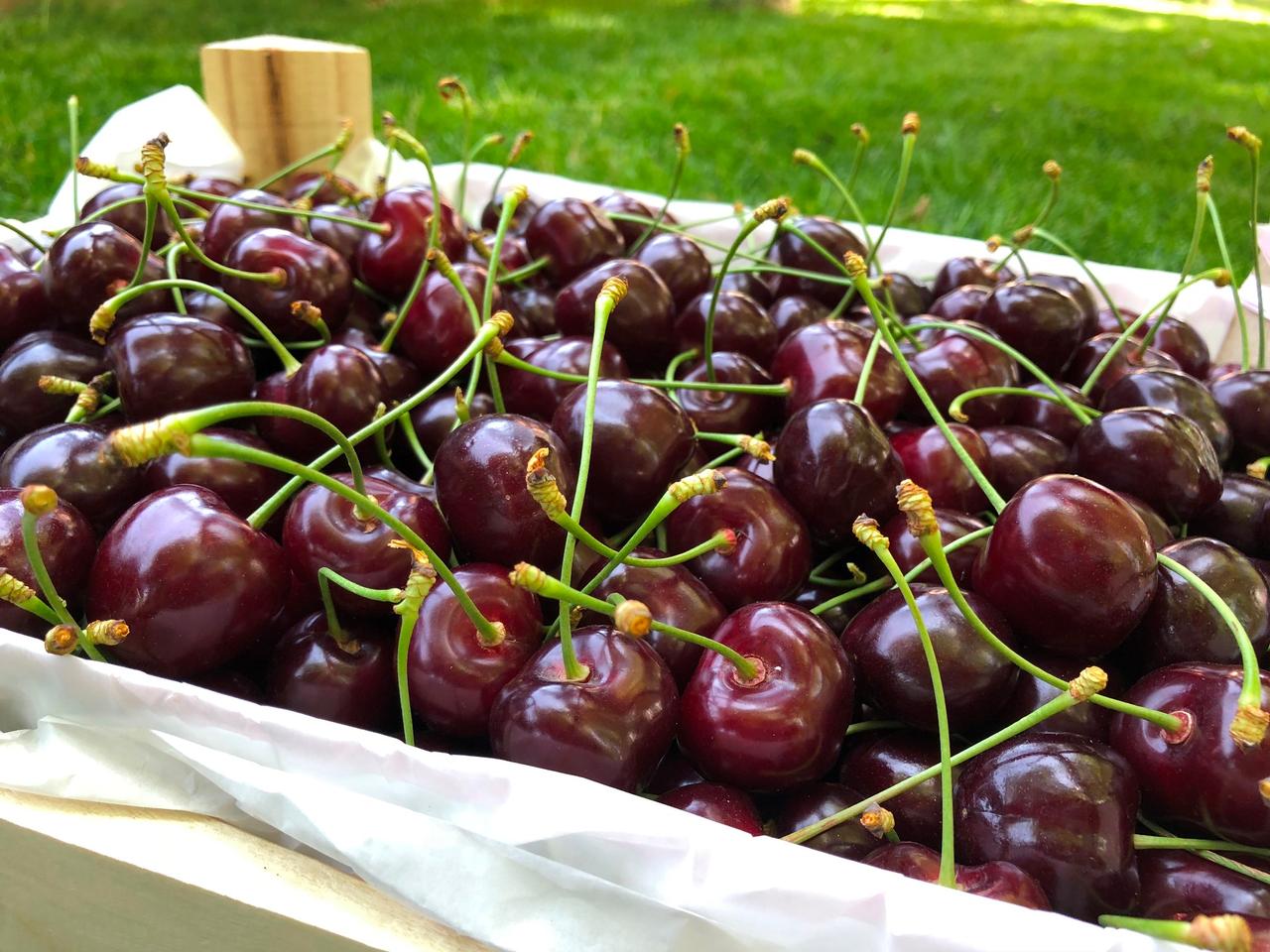
Malatya dalbastı kirazı is a cherry variety unique to Malatya province in Türkiye, registered with a geographical indication under its place of origin. This cherry belongs to the genus Prunus and the subgenus Cerasus, and is classified within the Bigarreau group. It is distinguished by its large, heart-shaped fruits. When ripe, the fruits develop a deep color ranging from red to black, weigh 8–10 grams, and possess a juicy, distinctive flavor. Due to the need to preserve genetic traits during propagation, this variety is propagated exclusively through grafting methods, as it flowers late.
The Malatya dalbastı cherry is part of the Bigarreau group of cherry varieties. The trees exhibit strong vegetative growth, with a broad branching structure and an upright growth habit. These trees have the potential to produce high-quality, consistent yields for approximately 40–50 years.
Flowering occurs late, which protects the variety from certain climatic risks. However, the Malatya dalbastı cherry is self-incompatible and requires cross-pollination with another pollinator variety to set fruit. The most suitable pollinator varieties for this purpose are Starks Gold, Bing, and Lambert. The fruits are large, broad, and heart-shaped. Upon ripening, they acquire a deep color transitioning from red to black. The flesh is juicy and has a pronounced flavor.
The physical characteristics of the fruit are detailed as follows:
The chemical composition of juice extracted from ripe fruits is as follows:
The Malatya dalbastı cherry is typically cultivated in mountainous regions. The absence of extreme high temperatures and the presence of cool climatic conditions in these areas prevent the formation of twin fruits, which reduce quality. Additionally, the region provides the chilling requirements necessary for the cherry, thereby eliminating fruit set problems.
The soil structure of the growing area is generally clay-loam, with good water retention capacity, making it suitable for cherry cultivation.
To preserve the genetic characteristics of the Malatya dalbastı cherry, vegetative propagation methods are preferred. Seed propagation is not used, as it leads to genetic variation. The most suitable propagation method is grafting. Grafting is carried out either at the end of August using dormant T-budding or at the beginning of spring using whip grafts.
The following rootstocks may be used:
When establishing an orchard, pollinator varieties must be planted at a minimum ratio of 1:9. Recommended planting spacings are as follows:
Planting is carried out from leaf fall in autumn until the onset of spring water movement. Prior to planting, pruning is performed on the saplings, which are planted at the same depth from which they were removed from the grafting block. After planting, irrigation is mandatory.
The Malatya dalbastı cherry is a tree type that forms a dense canopy. In production, the central leader system is preferred. In this system, the canopy is structured in layers to give the tree a form resembling a pine tree.
Soil aeration is carried out in spring and autumn to maximize the use of rainfall and irrigation water and to control weeds. The depth of soil work is limited to avoid damage to the root system. In areas with low slope, disc harrows may be used.
Drip irrigation and mini-sprinkler irrigation are the most suitable irrigation methods for the Malatya dalbastı cherry. If flood irrigation is used, care must be taken to ensure that water does not directly contact the root collar. Irrigation frequency is determined according to climatic conditions and rainfall amounts.
Fertilization practices are based on soil and leaf analyses. Phosphorus and potassium fertilizers are applied in autumn, while nitrogen-based fertilizers are applied in spring.
The harvest period coincides with mid-June, when fruits attain a deep red color and an average weight of 8–10 grams. Harvesting is conducted during the early hours of the day, and fruits are collected with their stalks intact. It is essential during harvesting to avoid damaging the fruit buds that will produce the next year’s crop. Harvested fruits are stored in shaded and cool environments.
The main diseases and pests affecting the Malatya dalbastı cherry are:
Control of these diseases and pests is carried out in accordance with technical guidelines issued by the Ministry of Agriculture and Forestry of the Republic of Türkiye.
To ensure the preservation of the technical characteristics of the Malatya dalbastı cherry and compliance with geographical indication standards, monitoring is conducted under the coordination of the Fırat Development Agency. The Monitoring Commission consists of at least three technical personnel from the Malatya Directorate of Food, Agriculture and Livestock, the Yeşilyurt District Directorate of Food, Agriculture and Livestock, and the Apricot Research Institute.
Monitoring is carried out twice annually as a routine procedure. Additionally, the frequency of monitoring may be increased in response to complaints or as deemed necessary. The Commission performs various tasks, including selection of orchards and producers, verification of production area suitability, and analysis of the plant, physical, and chemical properties of the fruit. Required analyses are conducted using the institutions’ own technical infrastructure.
The Monitoring Commission may delegate authority to experts or organizations from public or private institutions, review monitoring reports, make decisions regarding applications from producers, and has the authority to carry out administrative or legal procedures related to production processes.
Turkish Patent and Trademark Office. "Malatya Dalbastı Kirazı - Coğrafi İşaret Detay Sayfası." Accessed July 13, 2025. https://ci.turkpatent.gov.tr/cografi-isaretler/detay/38120.
Turkish Patent and Trademark Office. "Malatya Dalbastı Kirazı Coğrafi İşaret Tescil Belgesi (PDF)." Accessed July 13, 2025. https://ci.turkpatent.gov.tr/Files/GeographicalSigns/93748675-c68c-45cc-9cfa-adffd07e9022.pdf.

Registration Number | 267 | ||||||||
|---|---|---|---|---|---|---|---|---|---|
Registration Date | 08.12.2017 | ||||||||
Application Number | C2014/031 | ||||||||
Application Date | 30.04.2014 | ||||||||
Name of the Geographical Indication | 30.04.2014 | ||||||||
Name of the Product | Cherry | ||||||||
Type of Geographical Indication | Place of origin | ||||||||
Applicant/Registrant(s) | Yeşilyurt Municipality | ||||||||
Address of the Registrant | Karakavak Neighborhood, Turgut Özal Blvd., Opposite Maşti, No:12, Yeşilyurt, MALATYA | ||||||||
Geographical Boundary | Malatya Province | ||||||||
No Discussion Added Yet
Start discussion for "Malatya Dalbastı Cherry" article
Morphological and Pomological Characteristics
Growing Conditions and Geographic Factors
Cultivation Method
Orchard Establishment and Propagation
Annual Maintenance Practices
Pruning:
Soil Management:
Irrigation:
Fertilization:
Harvesting:
Plant Protection
Monitoring