

This article was automatically translated from the original Turkish version.
+1 More
Completion and Opening Date | December 2023 | ||||||||
|---|---|---|---|---|---|---|---|---|---|
Opened by | Mali Prime Minister Oumar Talam Uy and the then President of the Directorate of Religious Affairs Professor Dr. Mehmet Görmez | ||||||||
Project Manager | Turkish Diyanet Foundation (TDV) and Eyüp Muftiate | ||||||||
Funding | Donations from the Turkish people | ||||||||
Architectural Style(s) | Turk-Islamic/Ottoman Architecture | ||||||||
Capacity | Approximately 500 people | ||||||||
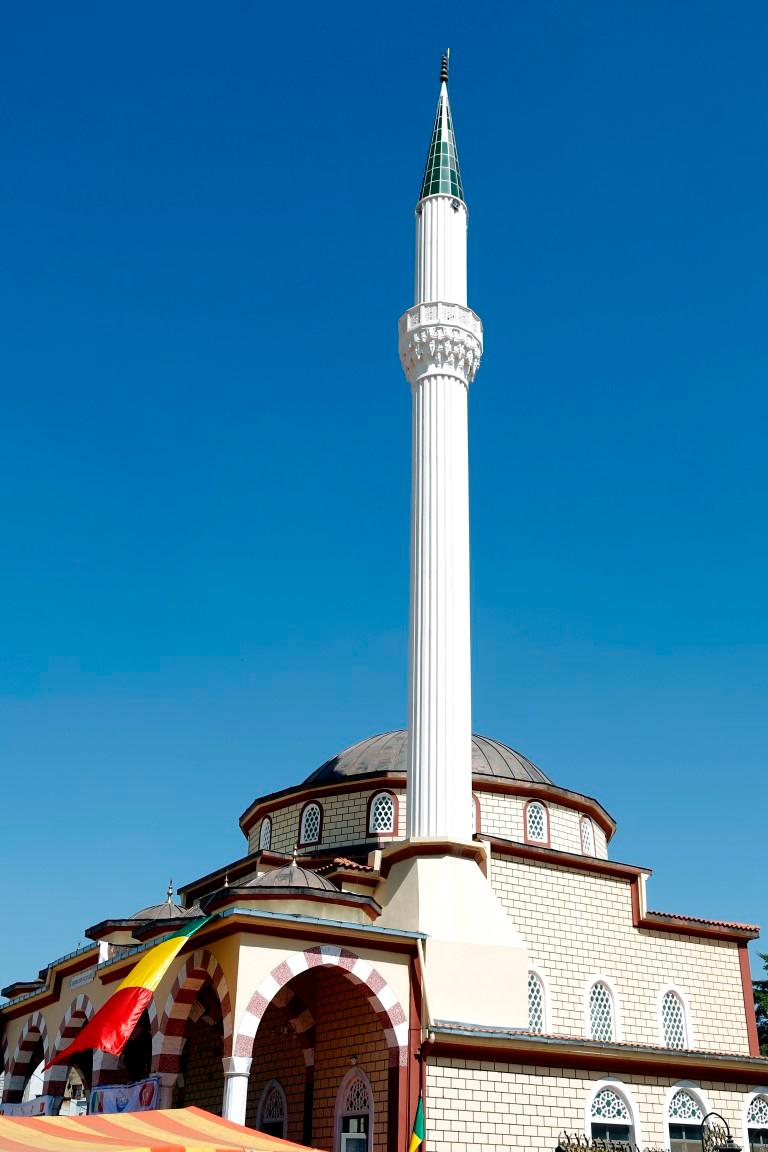
The Mali Bamako Eyüp Sultan Camii is a mosque complex constructed in Bamako, the capital of Mali, under the leadership of the Turkish Religious Foundation (TDV) and the Eyüp Muftiate, featuring characteristics of Turkish-Islamic architecture.
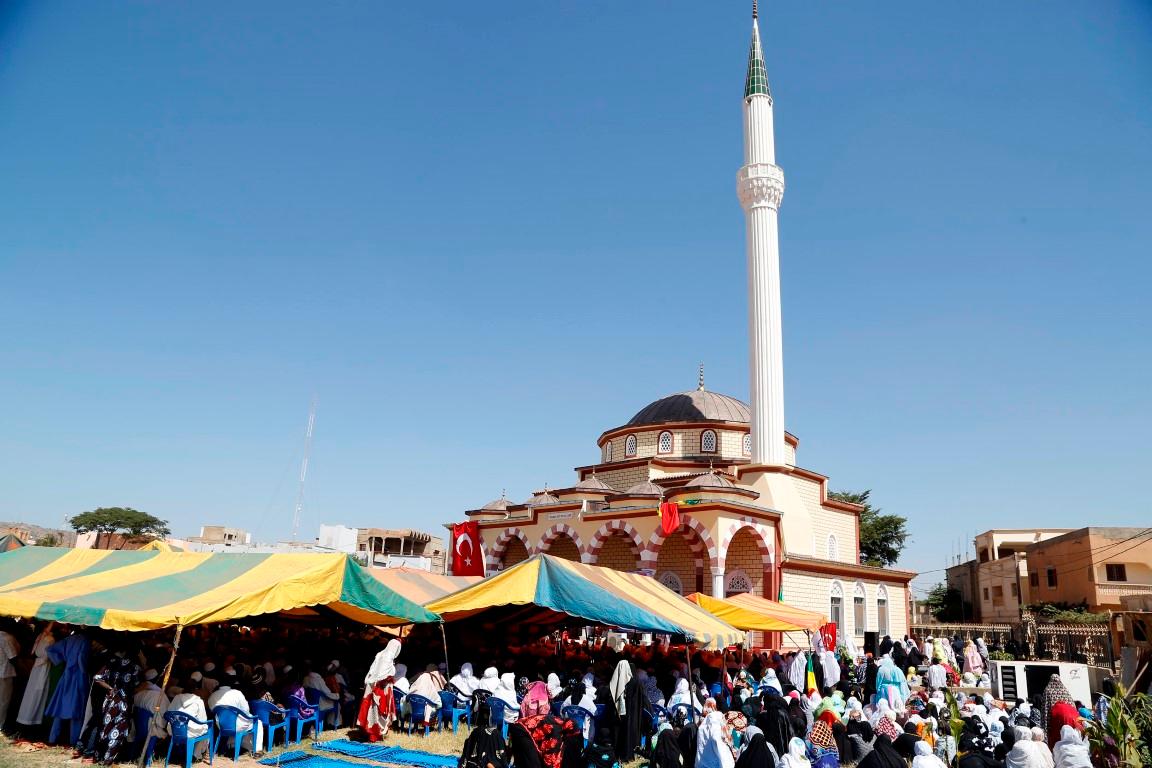
Mali Bamako Eyüp Sultan Camii (TDV)
Construction of the mosque began in December 2022 as part of a project that also included the declaration of Bamako and Eyüp as sister cities. The foundation stone was laid on 8 December 2012 during a ceremony attended by the Mufti of Istanbul, TDV officials, and the Imam of Eyüp Sultan Camii. The rough construction of the mosque was planned to be completed swiftly, and it was noted that construction progressed very rapidly. Significant contributions to the implementation of the project were made by Turkey’s Ambassador to Chad, Prof. Dr. Ahmet Kavas, and the District Mufti of Eyüp.
The mosque was completed approximately one year after construction began, in December 2023. The opening ceremony was attended by Mali’s Prime Minister Oumar Talam Uy and the then President of the Directorate of Religious Affairs, Prof. Dr. Mehmet Görmez. The ceremony began with recitations from the Qur’an, followed by speeches and the cutting of the ribbon, after which the mosque was opened for worship. Immediately after the opening, President Görmez led the first Friday prayer and delivered the sermon.
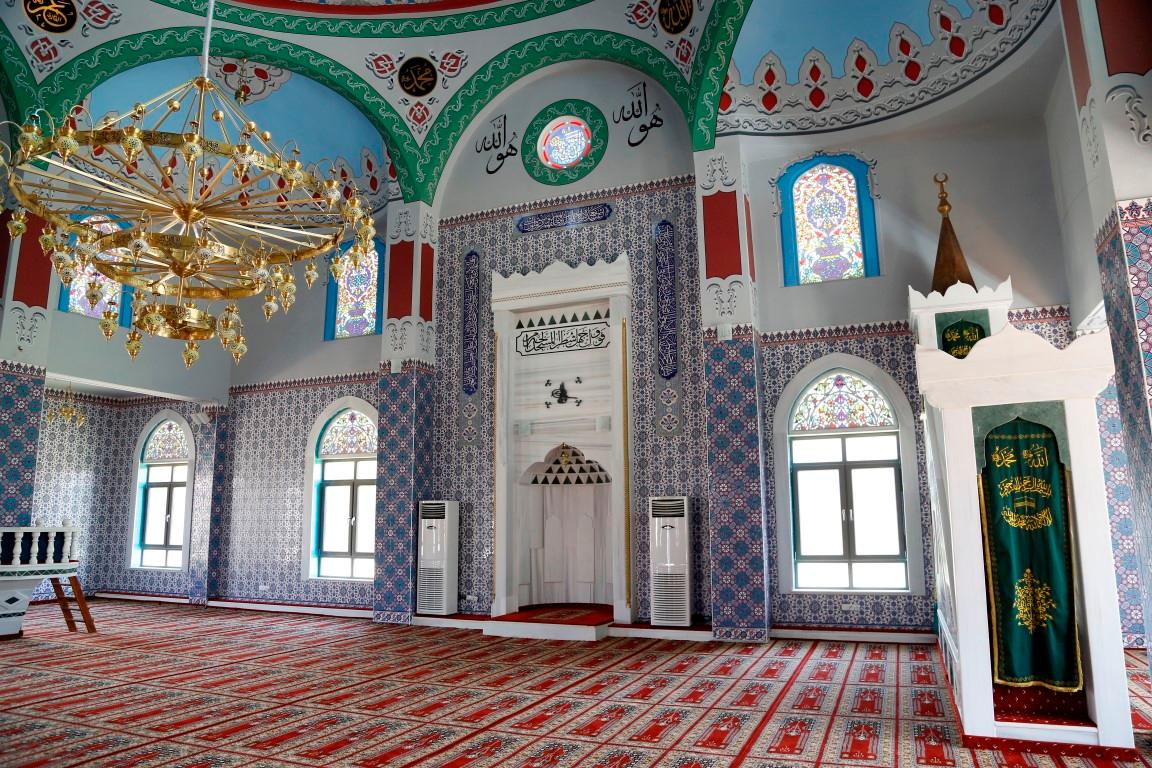
Interior of the Mali Bamako Eyüp Sultan Camii (TDV)
The mosque is the first example of Turkish architecture in West Africa. Alongside the mosque, a central building for the Islamic High Council, a Qur’an course center, a student dormitory, and a hospital were constructed on the same site. The tiles, marble, calligraphy, and other materials used in the construction were imported from Türkiye. The decorations and interior design were planned in accordance with Ottoman architectural style. The mosque features a minaret 33 meters in height, a fountain, and an Ottoman-style water fountain, along with a copper-clad dome. The mosque complex has a capacity to accommodate approximately 500 worshippers simultaneously.
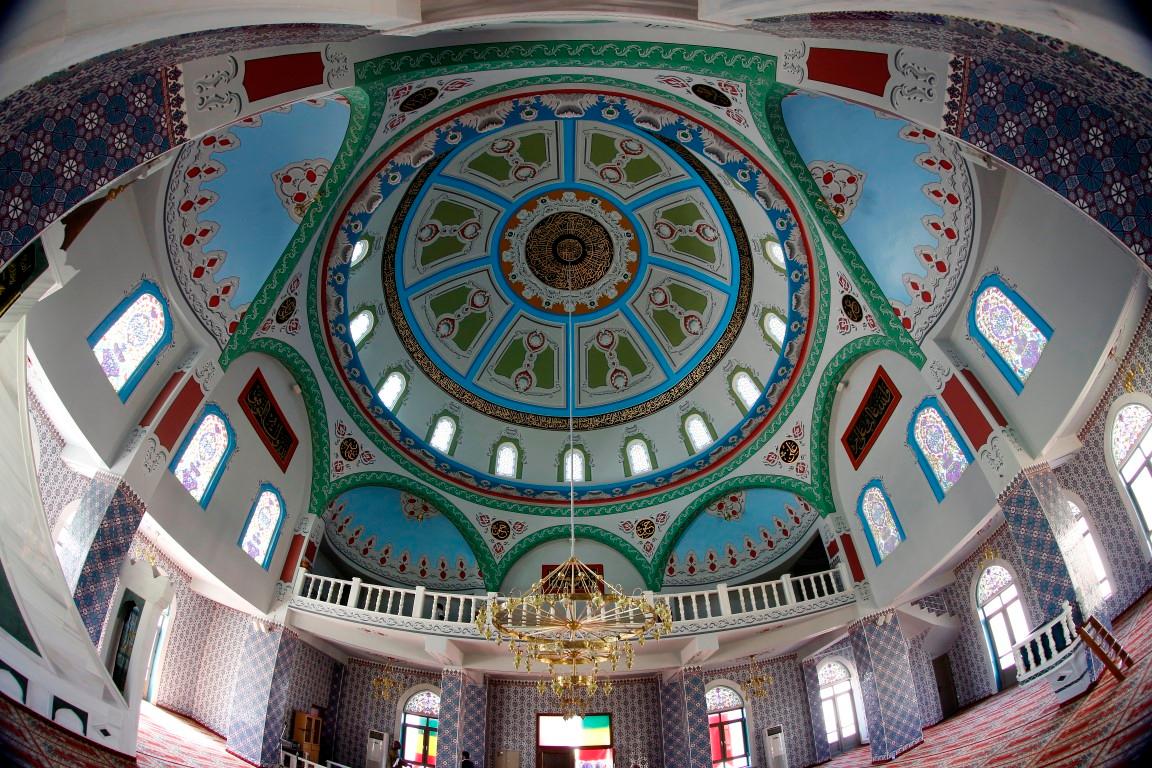
Dome Decorations of the Mosque (TDV)
The mosque was constructed through donations from the Turkish people. In a speech at the opening ceremony, Director of Religious Affairs Mehmet Görmez emphasized that the mosque is not merely a place of worship but also a space that builds souls and hearts. It was stated that the mosque serves as a bridge strengthening the fraternal ties between Türkiye and Mali. The project constitutes a significant example of Türkiye’s religious service activities directed toward Mali.
Abdoulaye Touré. *Mali’de Din Hizmetleri ve Dini Kurumlar.* (Afam Yayını). Accessed September 30, 2025. https://www.afam.org.tr/2/wp-content/uploads/2017/01/Mali’de-Din-Hizmetleri-ve-Dini-Kurumlar-1.pdf
Anadolu Ajansı. "Malide Eyüp Sultan Camisi Yapılıyor." Accessed September 30, 2025. https://www.aa.com.tr/tr/dunya/malide-eyup-sultan-camisi-yapiliyor/273587
Anadolu Ajansı. “Malide Eyüp Sultan Camii Açıldı.” Accessed September 30, 2025. https://www.aa.com.tr/tr/yasam/malide-eyup-sultan-camii-acildi/199398
Türkiye Diyanet Vakfı. “Mali Eyüp Sultan Camii.” Türkiye Diyanet Vakfı. Accessed September 30, 2025. https://tdv.org/tr-TR/proje/mali-eyup-sultan-camii/

Completion and Opening Date | December 2023 | ||||||||
|---|---|---|---|---|---|---|---|---|---|
Opened by | Mali Prime Minister Oumar Talam Uy and the then President of the Directorate of Religious Affairs Professor Dr. Mehmet Görmez | ||||||||
Project Manager | Turkish Diyanet Foundation (TDV) and Eyüp Muftiate | ||||||||
Funding | Donations from the Turkish people | ||||||||
Architectural Style(s) | Turk-Islamic/Ottoman Architecture | ||||||||
Capacity | Approximately 500 people | ||||||||
No Discussion Added Yet
Start discussion for "Mali Bamako Eyüp Sultan Camii" article
Construction Process and Opening
Architectural Features and Complex
Significance and Context of the Project