


This article was automatically translated from the original Turkish version.
Malnutrition is the condition in which the body does not receive adequate, balanced, or appropriate amounts of nutrients necessary for growth, development, and healthy functioning. To maintain optimal bodily functions, essential nutrients such as energy, protein, vitamins, minerals, and water must be consumed in correct proportions. Insufficient, imbalanced, or excessive nutrient intake can lead to malnutrition and cause various health problems.
Malnutrition can have significant effects not only on physical health but also on psychological and social well-being. Severe cases of malnutrition can result in irreversible damage to organ and system functions. Imbalances in protein and energy levels can lead to loss of muscle mass, stunted growth, and weakened immune function, thereby prolonging recovery from illness and increasing the risk of death.
Malnutrition can be classified according to specific characteristics. This classification is typically based on the duration, severity, and changes it causes in the body. The most common classification distinguishes between acute and chronic malnutrition.
Acute malnutrition is a condition characterized by the rapid loss of muscle and fat tissue due to the body’s inability to meet its energy and nutrient needs over a short period. It often arises from sudden events such as infections, illnesses, or accidents. This type of malnutrition can lead to rapid deterioration including fluid loss and electrolyte imbalances.
If not treated promptly, acute malnutrition can adversely affect vital organs such as the heart, kidneys, and respiratory system. Infections and chronic diseases are among the most common causes of acute malnutrition.
Chronic malnutrition develops due to prolonged and persistent nutrient deficiencies. In this condition, the body is deprived of essential nutrients required for growth and development over an extended period. This typically impairs the development of organs and bones, often accompanied by loss of muscle mass. Chronic malnutrition commonly manifests during childhood, leading to developmental issues such as short stature, cognitive delays, and loss of motor skills due to inadequate intake of energy and nutrients necessary for growth.
Acute and chronic malnutrition can occur together, describing a complex condition involving both short-term and long-term nutritional deficiencies. In such cases, individuals experience muscle loss as well as developmental delays in children. These cases are associated with more severe health complications.
Marasmus and Kwashiorkor are two common and severe forms of malnutrition. Both result from inadequate nutrition, but they differ in their pathophysiological mechanisms, symptoms, and treatment approaches.
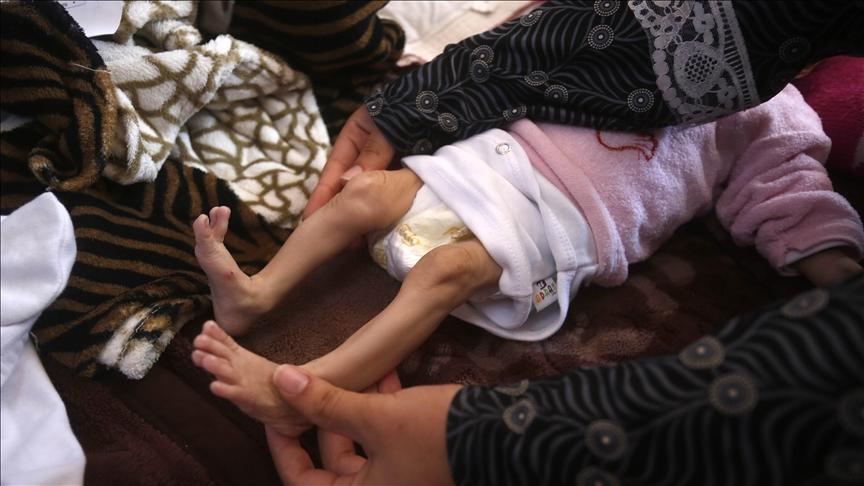
A Child with Malnutrition (Anadolu Agency)
Marasmus is an acute form of malnutrition caused by insufficient intake of both protein and energy (calories). It typically occurs when the body does not receive adequate calories, forcing it to break down muscle and fat tissue to meet energy demands.
Marasmus is most commonly observed in children, especially infants under one year of age. This condition leads to significant physical changes due to energy imbalance.
Kwashiorkor is a type of malnutrition primarily caused by protein deficiency. It typically occurs when calorie intake is sufficient but protein intake is inadequate. Kwashiorkor often develops in children after one year of age, particularly when breast milk—the primary source of nutrition—is discontinued.
Kwashiorkor is a condition that arises specifically from severe protein deficiency. It is characterized by swelling (edema) in various parts of the body, particularly the abdomen, legs, and feet. This swelling results from fluid retention due to insufficient protein levels in the body.
Malnutrition can arise from a combination of multiple factors. These include dietary habits, nutrient deficiencies, infections and chronic diseases, lack of education, environmental conditions, and socioeconomic status.
Malnutrition causes noticeable changes in the body that can lead to various health problems both in the short and long term.
In children, malnutrition leads to growth retardation and developmental problems. When children do not receive adequate nutrients, they experience stunted growth, weight loss, and muscle wasting. This results in physical development that deviates from normal patterns and causes children to lag behind their peers.
Inadequate nutrition negatively affects brain development. Deficiencies in protein, vitamins, and minerals can hinder the development of cognitive skills, leading to poor school performance and learning difficulties.
Nutrient deficiencies weaken the immune system, making the body more vulnerable to infections and reducing its ability to fight illness.
Inadequate protein intake leads to loss of muscle mass. This is particularly problematic in older adults, where it results in muscle weakness, reduced physical capacity, and diminished quality of life.
The treatment of malnutrition begins with identifying underlying causes and establishing an appropriate nutritional plan. During treatment, nutritional support, management of illnesses, improved sanitation, and education must be implemented together.
Abuaisha, Nour Mahd Ali, and Yılmaz, Betül. "Israel’s cruel starvation policy in Gaza turns Palestinian baby into ‘skeleton’." Anadolu Ajansı. Accessed May 14, 2025. https://www.aa.com.tr/en/middle-east/israel-s-cruel-starvation-policy-in-gaza-turns-palestinian-baby-into-skeleton-/3560983
Dikme, Tuğba Gül. "Yaşlılarda malnütrisyon, nedenleri ve etkileri." Sağlık Akademisyenleri Dergisi 10, no. 2 (2023): 324-330. https://dergipark.org.tr/en/pub/sagakaderg/issue/77853/1198327
Dönmez, Beyza Binnur. "WHO says 57 children died from effects of malnutrition in Gaza since March 2." Anadolu Ajansı. Accessed May 14, 2025. https://www.aa.com.tr/en/middle-east/who-says-57-children-died-from-effects-of-malnutrition-in-gaza-since-march-2/3565939
Dündar, Nihal, and Bumin, Dündar. "Malnütrisyonlu çocuğun değerlendirilmesi." *Süleyman Demirel Üniversitesi Tıp Fakültesi Dergisi* 13, no. 4 (2006): 39–42. https://dergipark.org.tr/en/pub/sdutfd/issue/20986/225595
Gündoğdu, Haldun, and Boyacıoğlu, Sedat. "Malnutrisyon." Turkish Journal of Gastroenterology 2, no. 3 (1993): 555-557. https://ojs.avesjournals.com/index.php/tjog/article/view/1395/1353
Katoch, Om Raj. "Determinants of malnutrition among children: A systematic review." *Nutrition.* 96, (2022): 111565. https://www.sciencedirect.com/science/article/pii/S0899900721004275?casa_token=x5F7bmvqltwAAAAA:LrITSDH7QNxVWteieoN1s_xeEiU3h4cMWi1ox5Wst1j9mzN0gqkRUKBPfIps2DYposIS8oUPyA
Selçuk, Haldun. "Malnütrisyon ve önemi." *Güncel gastroenteroloji* 16, no. 2 (2012): 158-162. https://guncel.tgv.org.tr/journal/41/pdf/100071.pdf

Classification of Malnutrition
Acute Malnutrition (Wasting)
Chronic Malnutrition (Stunting)
Coexistence of Acute and Chronic Malnutrition
Marasmus and Kwashiorkor
Marasmus
Kwashiorkor
Causes of Malnutrition
Signs and Effects of Malnutrition
Delayed Physical Development
Cognitive and Intellectual Development Issues
Immune System Weakness
Loss of Muscle and Fat Mass
Treatment and Management of Malnutrition