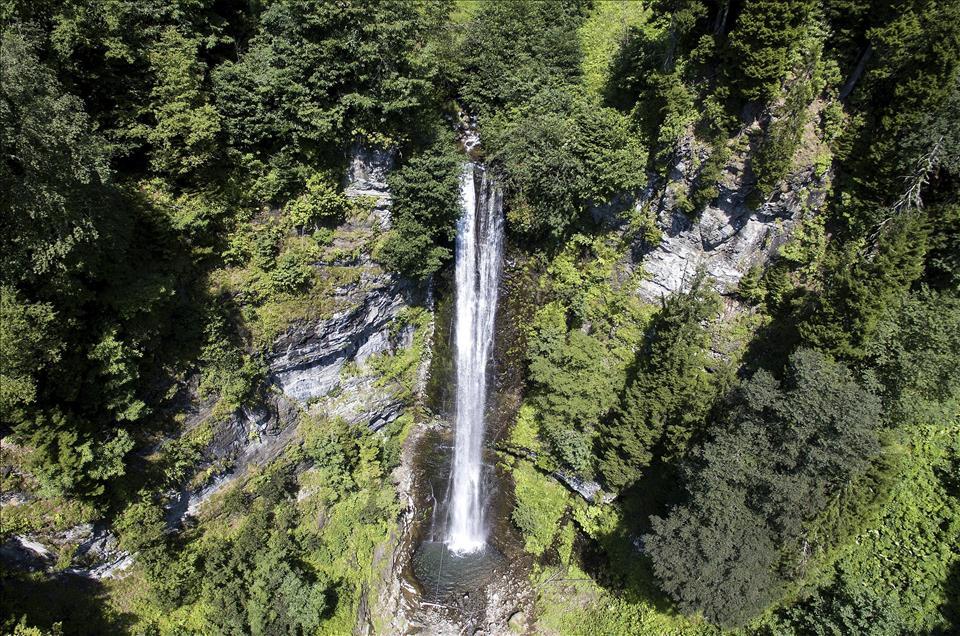


This article was automatically translated from the original Turkish version.
+1 More
Maral Waterfall is located in the northeastern part of Türkiye, within the Borçka district of Artvin Province, on the northwestern slopes of the Karçal Mountains. Its geographic coordinates are approximately 41° 57′ east longitude and 41° 30′ north latitude. The waterfall forms over the Maral Creek and lies administratively within the boundaries of Maral Village. It is regarded as an important element of the region due to its natural structure and water resources.
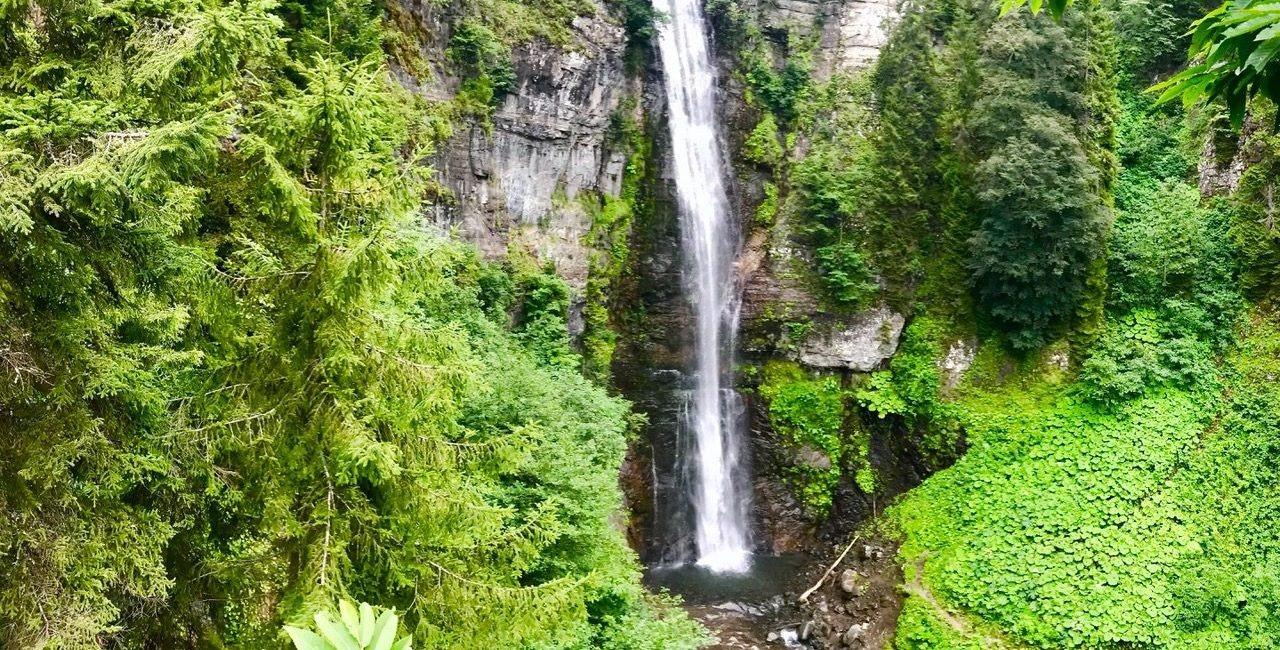
Image of Maral Waterfall (Borçka Municipality)
Maral Waterfall is situated at the foot of the Karçal Mountains, on their northwestern side, near Karçal Mountain, one of the highest peaks in the region at 3415 metres. The area surrounding the waterfall is enclosed by high mountainous terrain and dense forest cover and falls within the Black Sea climate zone. These climatic conditions ensure the year-round vitality of the region’s vegetation and hydrological regime.
Maral Waterfall flows over the Maral Creek with a single drop ranging between approximately 63 and 64 metres in height. This drop occurs along a slope break, which is a significant component of the region’s geological structure and is responsible for the waterfall’s tall and sharp formation. The development of the waterfall has been shaped by the interplay of the area’s topography, precipitation levels, and hydrological dynamics.
The area around the waterfall features a rich vegetation typical of the Black Sea region. Common tree species include beech, hornbeam, oak, and fir. This vegetation helps prevent soil erosion and enhances the natural beauty of the waterfall. Additionally, the waterfall and its surrounding water sources provide suitable habitats for numerous aquatic species. The ecosystem also exhibits diversity in birds, mammals and insects, contributing significantly to the region’s biological richness.

Image of Maral Waterfall. ()
Maral Waterfall is a key attraction for nature and ecotourism enthusiasts visiting the region. Access to the waterfall is short from the town centre of Borçka and is facilitated via walking trails and nature paths. The hiking routes in the area offer visitors opportunities to spend time in the natural environment and observe the region’s geomorphological features. Local authorities are implementing various infrastructure improvements to assess and enhance the waterfall’s tourism potential.
Due to its natural structure and ecological importance, conservation efforts are underway around Maral Waterfall. Measures such as regulating visitor numbers, managing waste, and preventing ecosystem degradation aim to ensure the sustainable use of the area. Additionally, educational programs are conducted to raise environmental awareness among local residents and visitors.
Maral Waterfall is not only a natural formation but also holds social and cultural value for the local population. Traditional activities held around the waterfall strengthen the bond between local life and nature. Furthermore, ecotourism activities that contribute to the regional economy are considered an important source of income for village residents.
The structural and environmental characteristics of the waterfall have been comprehensively studied through field observations and interviews. These studies aim to understand the waterfall’s natural dynamics, local life, and human impacts. The collected data contribute to the scientific literature and guide local authorities in their planning processes.
Maral Waterfall is one of Türkiye’s significant water resources due to its geographic location, height, and natural surroundings. It is regarded as an important asset for the region both in terms of ecological diversity and socio-cultural structure. Through the preservation of its natural structure and the implementation of sustainable tourism practices, it is expected to continue providing value to visitors and the local community in the future.
Anadolu Ajansı. "Maral Şelalesi, Doğa Tutkunlarının Gözdesi." Accessed August 16, 2025. https://www.aa.com.tr/tr/pg/foto-galeri/maral-selalesi-doga-tutkunlarinin-gozdesi/0/8175
Borçka Municipality. "Maral Şelalesi." Accessed August 16, 2025. https://www.borcka.bel.tr/turizm/maral-selalesi/.
Ramazan Sever and İbrahim Kopar. *Maral Şelalesi (Borçka–Artvin), doğal ortam özellikleri ve ekonomik potansiyeli.* Türk Coğrafya Dergisi, no. 52, 2009. Accessed August 16, 2025. https://dergipark.org.tr/tr/pub/tcd/issue/21229/227821

Location and Geographic Features
Hydrological Structure and Formation of the Waterfall
Flora and Fauna Diversity
Tourism and Recreational Activities
Conservation and Environmental Measures
Socio-Cultural Significance
Research and Investigation Methods