


This article was automatically translated from the original Turkish version.
+1 More
Maraş tarhana is a unique type of tarhana specific to the province of Kahramanmaraş. Its production primarily uses cracked wheat (dövme) and yogurt as key ingredients. The mixture is spread out on mats known as çığ to dry. The product contains minerals, vitamins, and both plant-based and animal-based proteins.
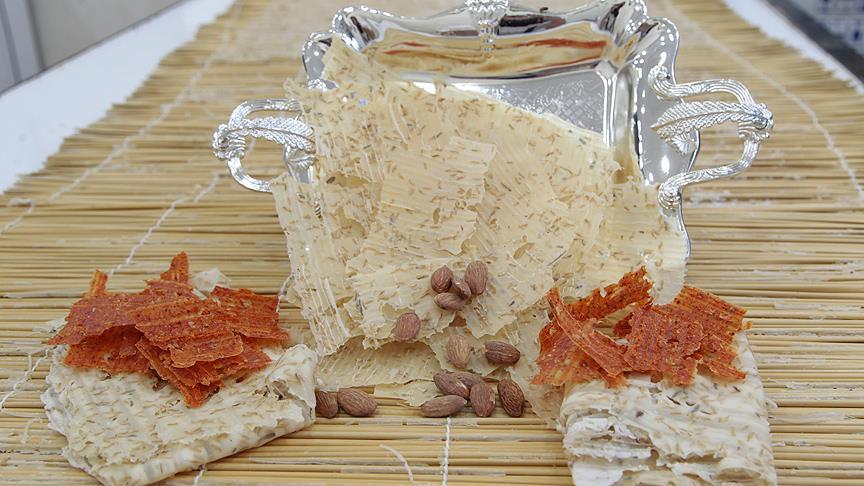
Maraş tarhana (AA)
Maraş tarhana differs from other types of tarhana in terms of production technology and consumption habits. The yogurt is added to the mixture without prior cooking, and only oregano and optionally caraway, walnut, almond, and pepper are used as spices, giving the product functional properties. The inclusion of the bran portion in the cracked wheat (dövme) enhances its nutritional value. The mixture is thinly spread on local mats called çığ and dried. It is consumed in various forms: as firik when partially dried, as dry tarhana as a snack, as soup, by soaking in hot meat or head broth, by frying in oil, or by sautéing with onion.
Maraş tarhana is presented with the label “Maraş Tarhana” and the official seal emblem on the product or packaging. When this is not feasible on the product or packaging, the label and emblem must be visibly displayed at the production facility. The dried tarhana can be consumed as firik or dry tarhana and is stored in sealed containers suitable for food contact.
In the production of Maraş tarhana, cracked wheat (dövme) is cleaned, pounded, and sifted, then cooked with water. The cooked dövme is mixed with yogurt and spices (oregano, and optionally caraway, walnut, almond, and pepper). The mixture is left to ferment in suitable vessels before being thinly spread on mats known as çığ. Drying is carried out under sunlight, in greenhouses, or in ovens depending on weather conditions. The dried tarhana is separated into firik or dry tarhana and stored under appropriate conditions.
Maraş tarhana is consumed either partially dried (firik) or fully dried. It can be prepared as soup, soaked in hot meat or head broth, fried in oil, or sautéed with onion after soaking. It can also be eaten by grating it over a hot griddle or baking it in an oven. Dried tarhana is also consumed as a snack.
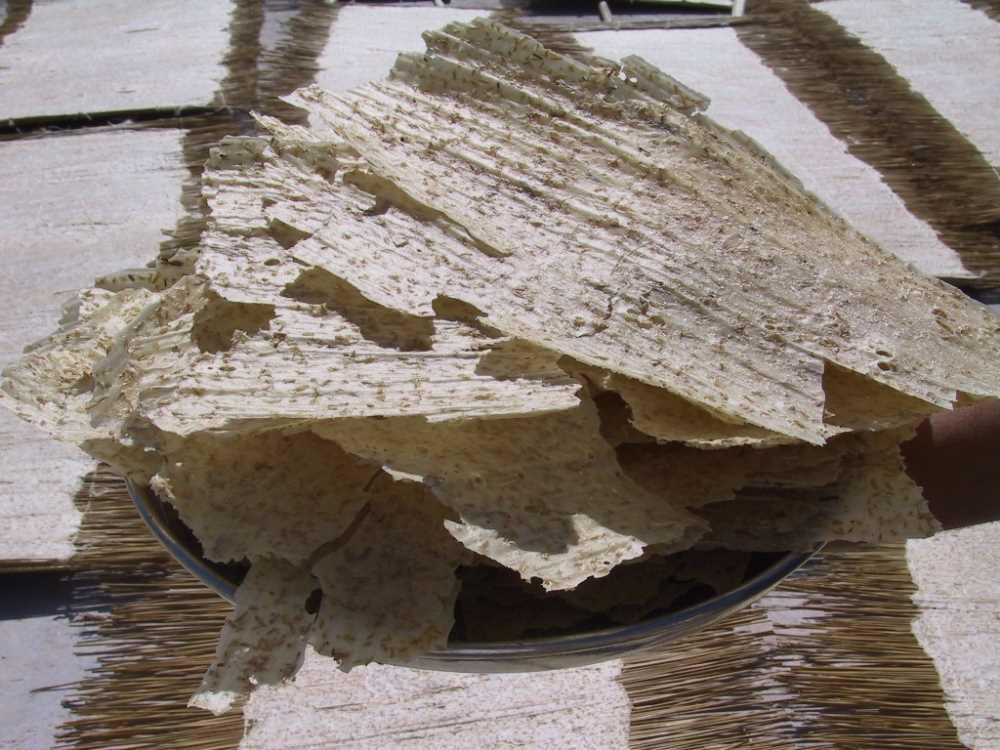
Maraş tarhana (Türkiye Culture Portal)
Maraş tarhana contains probiotic and prebiotic components derived from yogurt and wheat derivatives. Its nutritional composition includes minerals and both water-soluble and fat-soluble vitamins. The product provides a combination of plant-based and animal-based proteins. Fibers from the cracked wheat (dövme) support digestion. One hundred grams of Maraş tarhana contains approximately 370 calories of energy.
The production of Maraş tarhana is monitored under the coordination of the Kahramanmaraş Chamber of Commerce. The monitoring body consists of experts selected from the Kahramanmaraş Provincial Directorate of Agriculture and Forestry and the Kahramanmaraş Chamber of Commerce and Industry. Inspections cover compliance with ingredient specifications, adherence to production methods, and proper use of the “Maraş Tarhana” label and official seal emblem. Inspections may be conducted at any time upon request or complaint. Experts may be engaged from public or private institutions as needed.

Distinctive Features
Usage and Packaging
Ingredients
Production Process
Consumption Methods
Functional and Nutritional Properties
Monitoring
