+1 More

Margaret Elaine Hamilton was born on August 17, 1936, in Paoli, Indiana, United States. Her father was Kenneth Heafield and her mother was Ruth Esther Heafield (maiden name Partington). After her family moved to Michigan in 1954, Hamilton graduated from Hancock High School. She began her higher education in mathematics at the University of Michigan but later transferred to Earlham College, where her mother was also a student, and completed her undergraduate studies in mathematics and philosophy in 1958.

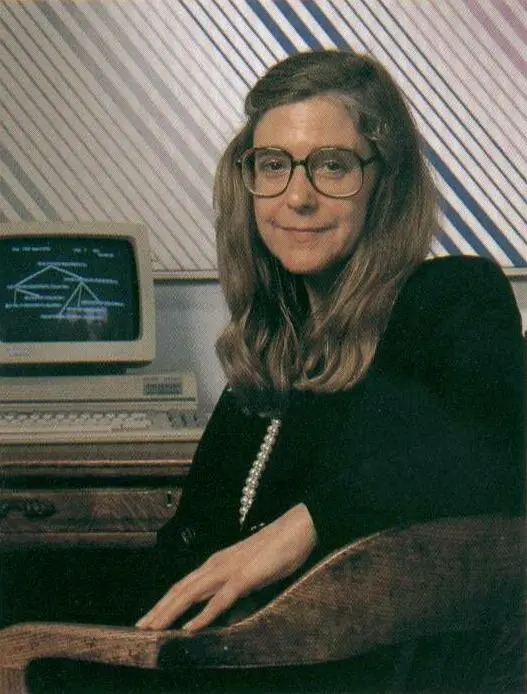
Margaret Hamilton. (NASA)
After completing her undergraduate studies, Hamilton began graduate work in mathematics at Brandeis University. However, she temporarily set aside her academic ambitions to support her husband, James Cox Hamilton, who had moved to Boston. During this period, she entered the field of software development by working on the Whirlwind computer, one of the first digital computers in the United States.
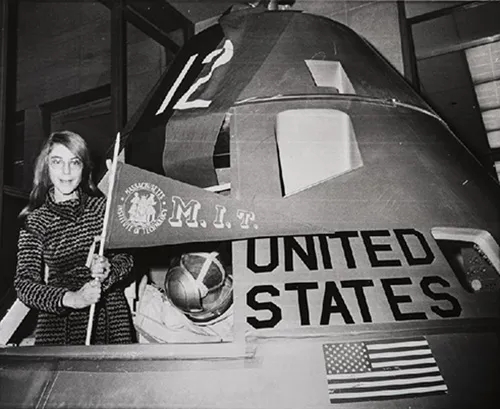
In 1961, Hamilton began working as a software programmer at the Massachusetts Institute of Technology (MIT) Instrumentation Laboratory, which was one of the teams developing flight software for NASA’s Apollo program. She played a pivotal role in developing the flight software for the Apollo command and lunar modules. During this time, she laid the foundations of software engineering and is recognized as one of the first people to use the term “software engineering.”
Under Hamilton’s leadership, her team adopted innovative approaches in the software developed for the Apollo missions, including asynchronous processing, error tolerance, and prioritized task queues. Notably, they developed software capable of detecting and correcting system errors in real time. These systems provided prioritized alert mechanisms during emergencies faced by astronauts, enabling critical decisions to be made under pressure.
During the Apollo 11 lunar landing, the landing radar was accidentally activated, causing the onboard computer to become overloaded. Hamilton’s software detected this condition and presented astronauts with emergency options, contributing directly to the successful completion of the landing.
In 1976, Hamilton founded the software company Higher Order Software to continue developing new approaches in software engineering. In 1986, she established Hamilton Technologies and developed the Universal Systems Language (USL), a model designed to make software development processes more systematic and reliable.
Throughout her career, Hamilton published more than 130 articles, reports, and projects. Her work laid the foundations of software engineering and significantly influenced the evolution of modern software development practices.
In 2016, she was awarded the Presidential Medal of Freedom by United States President Barack Obama for her contributions to the Apollo program.
Margaret Hamilton’s work made significant contributions to the development of software engineering and established the foundational principles of modern software development. The software she developed during her tenure at NASA played a critical role in the success of space missions and underscored the importance of software engineering. Her entrepreneurial and academic achievements have had a lasting impact across multiple domains of software engineering.

Early Career and Transition to Software Engineering
Work at NASA
Software Development Approaches
Role in the Apollo 11 Mission
Later Career and Entrepreneurship
Academic Contributions and Publications
Awards and Recognition