+2 More

Doğum tarihi | 1870-08-31 | ||||||||
|---|---|---|---|---|---|---|---|---|---|
Ölüm tarihi | 1952-05-06 | ||||||||
Profession(s) | Educator Educational Reformer Physician | ||||||||
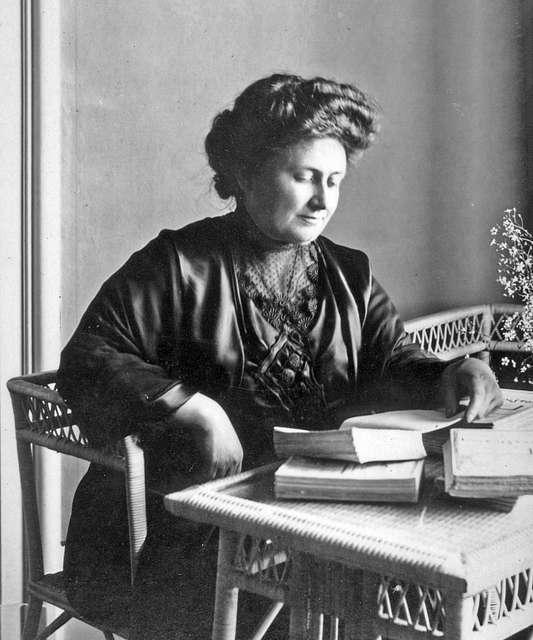
Maria Montessori was born on 31 August 1870 in the Italian town of Chiaravalle. Recognized as an educator physician and pedagogue Montessori is regarded as one of the pioneers of modern pedagogy due to her original approaches in early childhood education. The “Montessori Method” she developed is an innovative educational philosophy based on individual differences and allowing children to explore and experience their own learning process.
Maria Montessori graduated from the Faculty of Medicine at the University of Rome in 1896 becoming one of Italy’s first female physicians. During her medical training she developed an interest in neurology and psychiatry and her clinical observations of children with intellectual disabilities laid the foundation for the educational methods she would later develop.
After graduation she worked for a time in a psychiatric hospital in Rome where she noticed the neglect of education for children with intellectual disabilities. This prompted her to conduct research on pedagogical materials designed to reveal these children’s potential. By studying the experimental educational approaches of Jean-Marc-Gaspard Itard and Edouard Séguin she established the first theoretical foundations of child development.
In 1907 Montessori opened her first school called the “Casa dei Bambini” (Children’s House) in San Lorenzo a poor neighborhood in Rome. In this school she designed an environment where children could move freely and learn according to their own interests and needs placing the concept of the prepared environment at the center of education. In the Montessori Method children learn through sensory materials daily life activities and at their own pace.
Montessori’s pedagogical approach quickly attracted attention across Europe and the United States. She organized teacher training courses and wrote several books explaining her method. In 1912 her work The Montessori Method was translated into English and reached a wide audience.
During the 1920s and 1930s Montessori promoted the Montessori system throughout Europe India and the United States through seminars conferences and educational centers. However due to ideological conflicts with Mussolini’s regime in Italy she was forced to leave her country in 1934.
During World War II she lived in India where she continued her educational work. In this period she became closely engaged with Indian culture and philosophy particularly focusing on peace education and universal human values. After the war she returned to Europe and led the international revitalization of the Montessori movement.
Maria Montessori died on 6 May 1952 in Noordwijk the Netherlands. Even after her death the Montessori approach continued to have a global impact and is widely adopted in many countries as an alternative educational model especially in preschool and elementary education.
Montessori’s contributions to education extended beyond pedagogical materials and methods. She also developed progressive views on children’s rights women’s education and the culture of peace. UNESCO honors Montessori for her contributions to education and her name is still alive today in thousands of schools worldwide.
Maria Montessori’s educational philosophy is grounded in trust in the child’s innate potential. For her education is a process that supports the child’s inner development; the teacher’s role is not to transmit knowledge but to guide the child’s learning process. The phrase “Help me to do it myself” is recognized as one of the fundamental principles of Montessori pedagogy.
This approach emphasizes the child’s exploration of the environment through sensory experiences and movement. Montessori argued that learning is a holistic process encompassing not only intellectual but also physical emotional and social dimensions. Therefore in Montessori classrooms children move freely work at their own pace and interact directly with materials.
Other key concepts of Montessori education include:
Video about Maria Montessori (TRT2 A Short Break)
Maria Montessori developed pioneering ideas not only in education but also in the areas of women’s rights social justice and peace. She believed that women must be encouraged to pursue higher education and throughout her life worked to increase the visibility of women in scientific and intellectual life.
In the early 1900s when women’s roles in science academia and society were severely limited Montessori’s achievement in obtaining a medical education conducting scientific research and gaining international recognition was considered a major advancement. Furthermore her belief that the child must be seen as an individual offered a powerful alternative to the authoritarian child-rearing norms of her time.
The devastation brought by World War II strengthened Montessori’s belief in education as a foundation for peace. Amid the war she focused on peace education convinced that education could transform not only individuals but also society. In 1947 after returning from India she began collaborating with UNESCO emphasizing that education must serve as a tool for building peace.
In this context the concept of “Peace through Education” became the central theme of Montessori’s later work. According to Montessori lasting peace can only be achieved by raising children in an environment of freedom respect and cooperation. This idea underpins the emphasis Montessori schools today place on social and emotional learning.
After Maria Montessori’s death in 1952 her son Mario Montessori continued her work and led the global spread of Montessori education through the Association Montessori Internationale (AMI) which he founded. Today the Montessori Method is implemented in numerous countries from Europe to the Americas and from Africa to Asia particularly in preschool and elementary education.
Montessori’s legacy extends beyond educational methods. It has endured as a life philosophy encompassing universal values such as children’s rights and respect for human dignity.
"Maria Montessori1913." *Itoldya*. Accessed June 23, 2025. https://itoldya420.getarchive.net/media/maria-montessori1913-9e7857?action=print
Canbaz, Ayşegül, İdris Kara, and Ata Pesen. “Okul Öncesi Eğitimde Montessori Yaklaşımına İlişkin Lisansüstü Tezlerin İncelenmesi: Tematik İçerik Analiz Çalışması.” *Journal of Early Childhood Studies* 6, no. 2 (October 2022): 424–454. Accessed June 16, 2025. https://journalofomepturkey.org/index.php/eccd/article/download/434/315/2865.
Danişman, Şahin. “Montessori Yaklaşımına Genel Bir Bakış ve Eğitim Ortamının Düzenlenmesi.” *Journal of Policy Analysis in Education* 1, no. 2 (2012): 85–113. Accessed June 23, 2025. https://dergipark.org.tr/tr/pub/epa/issue/48308/611611
Demir, Ceren. “Maria Montessori Eğitimi Değiştiren Kadın.” Matematiksel, Accessed June 16, 2025. https://www.matematiksel.org/maria-montessori-egitimi-degistiren-kadin/.
Kayılı, Gökhan. “Türkiye’deki Montessori Yöntemi ile İlgili Araştırmalar: 2000–2016 Yılları Arasındaki Makale ve Tezlerin İncelenmesi.” *Researches on Montessori Method in Turkey* (2016). Accessed June 16, 2025. https://www.academia.edu/35239361/T%C3%9CRK%C4%B0YEDEK%C4%B0_MONTESSORI_Y%C3%96NTEM%C4%B0_...
Köseoğlu, Fatma, and Yaşar Barut. “Türkiye’de Montessori Yöntemi ile İlgili Yapılan Çalışmaların İncelenmesi (2010–2021).” *Yükseköğretim Bilim ve Politikaları Dergisi* 4 (2021). Accessed June 16, 2025. https://dergipark.org.tr/tr/pub/ybpd/issue/66296/1026936.
Maria Montessori in Amsterdam. "Bestanddeelnr 903-8468." Picryl. Accessed June 17, 2025. https://picryl.com/media/maria-montessori-in-amsterdam-bestanddeelnr-903-8468-ffe9eb
Maria Montessori ve Eğitime Katkıları. YouTube video, 16:33. 2022. Accessed June 16, 2025. https://youtu.be/EP2hCmkCmRU?si=aikGwyjYLtV1yiTJ.
Veli, Esra Sare. *Montessori Eğitim Yönteminin Okul Öncesi (36–66 Ay) Çocuklarının Günlük Yaşam Becerilerine ve Ebeveyn Tutumlarına Etkisinin İncelenmesi*. Master's thesis, İstanbul Sabahattin Zaim Üniversitesi, July 2020. Accessed June 16, 2025. https://openaccess.izu.edu.tr/xmlui/bitstream/handle/20.500.12436/2389/640514.pdf
YouTube. "Maria Montessori | Kısa Bir Ara | 62. Bölüm @trt2." TRT 2. Accessed June 23, 2025. https://www.youtube.com/watch?v=EP2hCmkCmRU

Doğum tarihi | 1870-08-31 | ||||||||
|---|---|---|---|---|---|---|---|---|---|
Ölüm tarihi | 1952-05-06 | ||||||||
Profession(s) | Educator Educational Reformer Physician | ||||||||
Educational Journey and Early Work
The Birth of the Montessori Method
International Activities and Exile Years
Death and Legacy
Pedagogical Philosophy and Core Principles
Women’s Rights and Social Views
Late Work and Peace Education
After Her Death