


This article was automatically translated from the original Turkish version.
+1 More
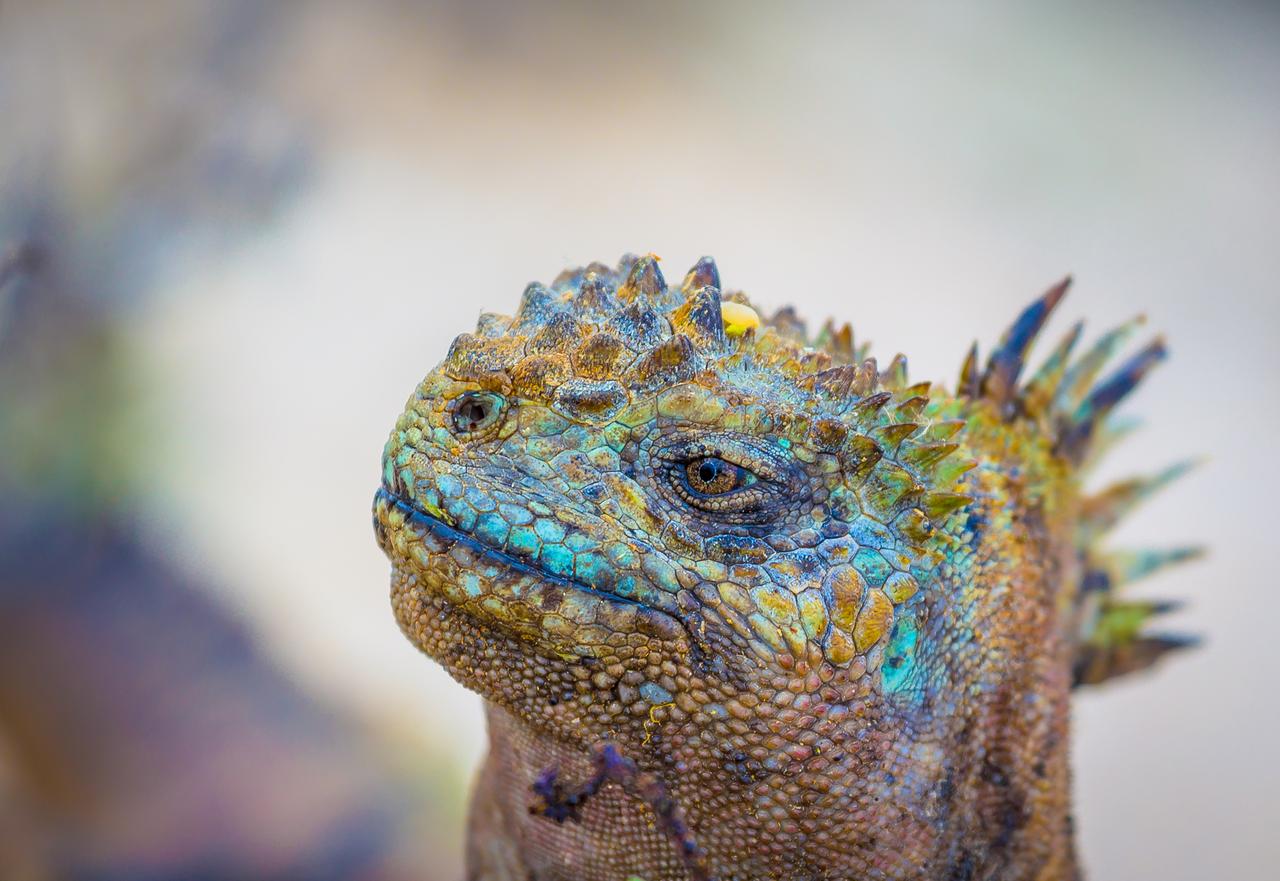
Marine Iguana
Scientific Name(s) | Amblyrhynchus cristatus | ||||||||
|---|---|---|---|---|---|---|---|---|---|
Type(s) | Marine Iguana | ||||||||
Nutrition | Autotrophic algae (marine seaweeds) | ||||||||
Geographic Distribution | Galápagos Islands | ||||||||
Conservation Status | Vulnerable according to the IUCN Red List | ||||||||
The marine iguana (Amblyrhynchus cristatus) is the only marine reptile species endemic to the Galápagos Islands and the only iguana species in the world adapted to a marine environment. Evolving from land iguanas, this species has adapted to life in the sea and holds great significance for studies on biological diversity and adaptation. However, the survival of marine iguanas is increasingly threatened by habitat destruction, climate change, and human activities. This situation necessitates urgent conservation and protection efforts to ensure the survival of the species and the sustainability of its ecosystem.

A Marine Iguana on the Seashore (WWF)
Marine iguanas have a muscular and robust body structure; adult individuals range from 1 to 1.5 metres in length and weigh between 1 and 2.5 kilograms. Their tails are flattened and powerful, enhancing their swimming and maneuverability in water. Their skin is thick, scaly, and rough, providing protection against the cold effects of seawater while also enabling them to grip rocky surfaces. Specialized salt glands located near their nostrils allow them to expel excess salt from their bodies, a process characterized by “sneezing” salt out through the nasal openings. During the breeding season, males develop prominent red, green, and black coloration on their heads and necks; this color change plays a role in mating and territorial defense.
Marine iguanas are found only along the coastal cliffs and surrounding coral reefs of the Galápagos Islands. Their habitat consists of shallow marine areas rich in seaweed and algae, surrounded by volcanic rocks. The geographic range of this species is extremely limited, making it highly vulnerable to ecosystem changes. Their habitat preferences are closely tied to the marine ecosystem, and the species has successfully adapted to life in the sea through its ability to feed underwater.
Rare Look at How Marine Iguanas Feed Underwater | 4K UHD | (BBC Earth)
The diet of marine iguanas consists entirely of seaweed and algae. These reptiles can dive to depths of up to 10 metres, clinging to rocks to graze on algae. Their digestive systems feature long and highly developed intestines to efficiently process the high-fiber seaweed. The salt glands help maintain osmoregulation by expelling excess salt from the body. Climatic fluctuations, particularly during El Niño events, increase sea surface temperatures and reduce both the quantity and quality of seaweed, leading to food shortages that directly impact population health.
Marine iguanas exhibit various behavioral and physiological adaptations to cope with cold seawater and environmental conditions. Basking behavior is critical for regulating body temperature; individuals typically spend much of the day basking in groups on rocky surfaces. When threatened, they quickly dive into the water to escape. During the breeding season, males engage in intense territorial defense, commonly displaying behaviors such as body inflation, head bobbing, and physical combat. The functional structure of the salt-excreting glands and their ability to dive underwater are key indicators of the species’ successful adaptation to marine life.
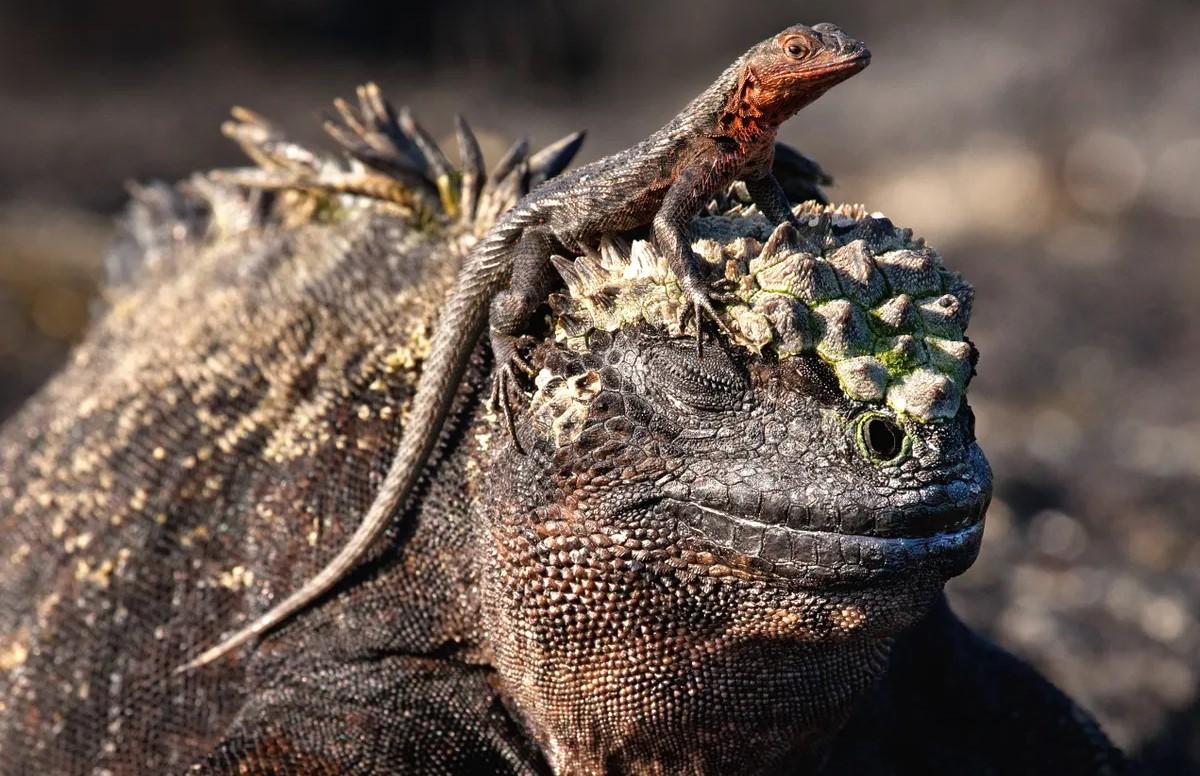
Adult and Juvenile Marine Iguanas (GCT)
The breeding season of marine iguanas coincides with the dry season. Males attract females through vivid color changes and aggressive displays. Females dig nests 30 to 60 centimetres deep in sandy, sheltered areas, laying 2 to 6 eggs. The incubation period lasts approximately three months, after which hatchlings emerge fully independent. Juveniles seek shelter among rocky areas to avoid predators. The average lifespan ranges from 12 to 20 years.
Marine iguanas are classified by the IUCN as Vulnerable due to their restricted habitat, sensitivity to climate change, and human impacts. Invasive species such as feral dogs, cats, and pigs reduce the survival chances of juveniles. Rising sea temperatures caused by climate change, especially during El Niño events, diminish seaweed production, resulting in food scarcity. Additionally, tourism activities and habitat degradation are other significant threats to the ecosystem. Conservation programs under the Galápagos National Park and Marine Reserve actively monitor marine iguana populations, restore habitats, and raise environmental awareness.
BBC Dünya. "Deniz İguanasının Beslenme Anı." YouTube video, 2020. Accessed May 24, 2025. https://www.youtube.com/watch?v=FTS46pVoX5w
Galapagos Conservation Trust. "Deniz İguanası." Accessed May 24, 2025. https://galapagosconservation.org.uk/species/marine-iguana/
National History Museum. "Galapagos Deniz Iguanas' Dwarfism." Accessed May 24, 2025. https://www.nhm.ac.uk/discover/küçülen-galapagos-deniz-iguanaları.html
TÜBİTAK Bilim ve Teknik. "Deniz İguanası." February 2018. https://bilimteknik.tubitak.gov.tr/system/files/makale/603_bilim_ve_teknik_2018_subat_80.pdf
World Wildlife Fund (WWF). "Deniz İguanası." Accessed May 24, 2025. https://www.worldwildlife.org/species/marine-iguana

Marine Iguana
Scientific Name(s) | Amblyrhynchus cristatus | ||||||||
|---|---|---|---|---|---|---|---|---|---|
Type(s) | Marine Iguana | ||||||||
Nutrition | Autotrophic algae (marine seaweeds) | ||||||||
Geographic Distribution | Galápagos Islands | ||||||||
Conservation Status | Vulnerable according to the IUCN Red List | ||||||||
Morphology and Physiology
Habitat and Geographic Distribution
Feeding Habits
Behavior and Adaptation Mechanisms
Reproduction and Life Cycle
Conservation Status and Threats