This article was automatically translated from the original Turkish version.
+1 More
Location | Marmaris Türkiye Muğla | ||||||||
|---|---|---|---|---|---|---|---|---|---|
Building Type | Castle and Archaeology Museum | ||||||||
Construction Period | Current form from the reign of Kanuni Sultan Süleyman in 1522 First construction 3rd millennium BCE | ||||||||
Historical Process | 1991: Opening as a museum 1914: Damage by the French navy 1522: Use as a military base during the Kanuni period 1390: Ottoman sovereignty 330 BCE: Siege and repair by Alexander the Great 3rd millennium BCE: First construction | ||||||||
Museum Opening | 18 May 1991 | ||||||||
Exhibition Halls | Stone Artifacts Hall Marmaris and Surroundings Hall Burgaz-Emecik Hall Knidos Hall | ||||||||
Marmaris Museum and Castle is a first-degree monumental defensive and settlement complex situated on a promontory overlooking the sea in the Marmaris district of Muğla Province, Türkiye. Since 18 May 1991, it has housed the Marmaris Museum and contains a multi-layered archaeological collection spanning from the Chalcolithic Age to the Republican Era.

Marmaris Castle (Ministry of Culture and Tourism)
The castle was constructed on a natural rock mass directly behind Marmaris Harbor, following a four-tiered plan. Regularly cut stone and rubble stone walls resting on the bedrock, a barrel-vaulted entrance space, and an interior layout consisting of seven enclosed rooms exhibit typical characteristics of 16th-century Ottoman fortifications. Access to the ramparts is possible via staircases on either side of the inner courtyard.
Early Period (3rd millennium BCE): The historian Herodotus reports that the earliest form of the castle was established in the 3rd millennium BCE to defend the Carian settlement of Physkos.
Hellenistic Period: Sources indicate that Alexander the Great repaired the walls and stationed troops behind them during his campaign in the region in the 330s BCE.
Ottoman Period: The region came under Ottoman control in 1390. Evliya Çelebi writes that Kanuni Sultan Süleyman expanded the existing ruins to transform the site into a military base for his Rhodes campaign in 1522.
World War I: In 1914, French naval artillery caused severe damage to the castle; local defense units cleared mines to restore the harbor’s usability.
Republican Era and Restoration: The inner courtyard, which had been filled with dwellings until the early 20th century, was cleared during restoration work beginning in the 1980s. The Marmaris Museum opened to the public on 18 May 1991.
The castle’s plan approximates an irregular polygon close to a square. Four main bastions provide outer defense, while the barrel-vaulted entrance connects the interior and exterior. The inscription above the entrance dates the construction program to the Kanuni period. The seven enclosed rooms, with their vaulted ceilings, now serve as exhibition halls. The inner courtyard has been arranged as an open-air display area.
The structure was placed under protection by a decision of the High Council for the Protection of Cultural and Natural Heritage on 14 October 1983. Following restoration, it opened as the Marmaris Museum on 18 May 1991. The barrel-vaulted rooms function as indoor exhibition spaces, while the inner courtyard serves as an open-air exhibition area.
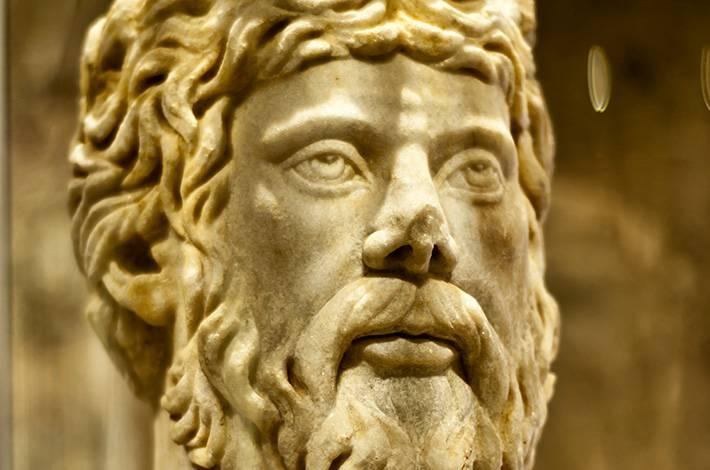
The Marmaris Museum has four main thematic halls organized by period and excavation site. The Knidos Hall displays marble statues, statue heads, figurines, decorative objects, amphorae, and everyday pottery vessels recovered from the excavations of the ancient city of Knidos. Among the notable pieces in this hall are a bronze kynis and the “Statue of the Seated Priest.”
The Burgaz-Emecik Hall contains artifacts discovered during excavations at Datça-Burgaz and in the sacred precinct of Apollo near the village of Emecik. The majority of this collection consists of limestone figurines and terracotta statuettes from the Archaic period.
The Marmaris and Surroundings Hall exhibits gold objects, coins, jewelry, figurines, glassware, and utilitarian vessels acquired from Marmaris and its vicinity. This hall also reveals traces of ancient settlements in the region, including Physkos, Amos, Kastabos, Hydas, Erine, Tymnos, Bybassos, and Phoenix.
The Stone Artifacts Hall displays tombstones, ostotekoi (structures for holding ashes and bones), friezes (architectural decorative elements), and statue heads. In the museum courtyard, various stone artifacts such as altars, column capitals, Ottoman tombstones, cannons, and amphorae recovered from underwater excavations are exhibited.
The castle-museum complex holds the status of “immovable cultural heritage requiring protection.” The artifacts within the museum illustrate the continuous cultural sequence in the region from the Chalcolithic Age to the post-Ottoman period. Maintained through regular conservation and repair works and open to the public under controlled visiting hours, the structure plays a key role in preserving Marmaris’s historical fabric.
Culture and Museums General Directorate. "Marmaris Müzesi." Culture and Museums General Directorate Official Website. Accessed July 9, 2025. https://muze.gov.tr/muze-detay?DistId=MRK&SectionId=MRM01.
Muğla İl Directorate of Culture and Tourism. "Marmaris Müzesi." Muğla Provincial Directorate of Culture and Tourism Official Website. Accessed July 9, 2025. https://mugla.ktb.gov.tr/TR-273357/marmaris-muzesi.html.
Turkish Museums. "Kanuni Sultan Süleyman’ın Emaneti: Marmaris Kalesi."PDF Belgesi. Accessed July 9, 2025. https://turkishmuseums.com/Uploads/M%C3%BCze/Dosya/208260c4-a362-48c4-bf38-b543b9a9d1c2.pdf.
Turkish Museums. "Marmaris Müzesi." Turkishmuseums.com. Accessed July 9, 2025. https://www.turkishmuseums.com/museum/detail/2171-mugla-marmaris-muzesi/2171/1.

Location | Marmaris Türkiye Muğla | ||||||||
|---|---|---|---|---|---|---|---|---|---|
Building Type | Castle and Archaeology Museum | ||||||||
Construction Period | Current form from the reign of Kanuni Sultan Süleyman in 1522 First construction 3rd millennium BCE | ||||||||
Historical Process | 1991: Opening as a museum 1914: Damage by the French navy 1522: Use as a military base during the Kanuni period 1390: Ottoman sovereignty 330 BCE: Siege and repair by Alexander the Great 3rd millennium BCE: First construction | ||||||||
Museum Opening | 18 May 1991 | ||||||||
Exhibition Halls | Stone Artifacts Hall Marmaris and Surroundings Hall Burgaz-Emecik Hall Knidos Hall | ||||||||
No Discussion Added Yet
Start discussion for "Marmaris Museum and Castle" article
Location and General Features
History
Architectural Features
Transformation into a Museum and Function
Exhibition Halls and Collections
Protection and Current Status