



Muğla
Muğla: History, Culture, and Nature
Muğla is a province located in the southwest of Türkiye and within the Aegean Region. The province of Muğla consists of thirteen districts: Bodrum, Dalaman, Datça, Fethiye, Kavaklıdere, Köyceğiz, Marmaris, Milas, Ortaca, Ula, Yatağan, Menteşe and Seydikemer. These districts reflect the diverse geographical and cultural characteristics of Muğla.
Muğla is situated in a landscape where sea, mountains and lakes converge. Renowned for districts such as Bodrum, Marmaris and Fethiye, Muğla also attracts attention for its natural beauty and historical richness.
The History of Muğla
The history of Muğla extends back to ancient times. The first known inhabitants of this region were the Carians, which is why the area was called “Caria” in antiquity. The Hittites referred to this region as “Lugga.”
Throughout history, numerous civilizations have flourished on Muğla’s territory, including the Phrygians, Lydians, Dorians and Ionians. In 546 BCE, the Persians conquered the region, followed by Alexander the Great in 334 BCE. In 189 BCE, the Kingdom of Pergamon took control, and in 133 BCE, the Roman Empire assumed governance.
After the division of the Roman Empire, Muğla’s territory came under the rule of the Eastern Roman (Byzantine) Empire. The Turks settled in the region in 1284 through the Menteşe Beylik. In 1391, Yıldırım Bayezid incorporated Muğla into Ottoman territories. However, following Timur’s invasion of Anatolia in 1402, the region was returned to the Menteşe Beylik. Finally, in 1425 during the reign of Murad II, Muğla was permanently integrated into the Ottoman Empire.
During the Menteşe Beylik period, Muğla’s coastlines and several islands were also administered by the beylik. At one point, the island of Rhodes even fell under their control.
Culture and Art
Muğla possesses a rich cultural heritage due to its long history as a home to ancient civilizations. The region contains numerous ancient cities dating back to earlier eras, including Halicarnassus (Bodrum), Kaunos (Dalyan), Knidos (Datça) and Tlos (Fethiye). Structures such as theaters, temples and city walls from these ancient settlements have survived to the present day.
Traditional crafts are also preserved in Muğla. Notably, handwoven fabrics known as “Muğla bezi” are important cultural values passed down from the past. Regional woodcarving, basket weaving and ceramics are also integral parts of this cultural richness.
The people of Muğla organize numerous traditional celebrations and festivals throughout the year. During these events, folk dances are performed, regional costumes are worn, and traditional dishes are served, ensuring that the region’s historical values are transmitted to new generations.

Traditional clothing of Muğla. (Generated by artificial intelligence.)
Natural Features
Muğla is one of Türkiye’s provinces with the longest coastline. Its coastal districts feature numerous bays, beaches and harbors, offering a landscape deeply intertwined with the sea, sun and nature.
In addition to the sea, Muğla is home to mountains, lakes and forests. Notable natural elevations include Sandras Mountain, Babadağ and Latmos Mountain. Freshwater sources such as Köyceğiz Lake and Bafa Lake enhance the region’s biodiversity. İztuzu Beach in Dalyan is a vital natural site where caretta caretta sea turtles lay their eggs.
Muğla’s forests are predominantly covered with pine trees, providing habitat for various animal and plant species. Additionally, highland pastures are used by locals during summer months for rest and agriculture.
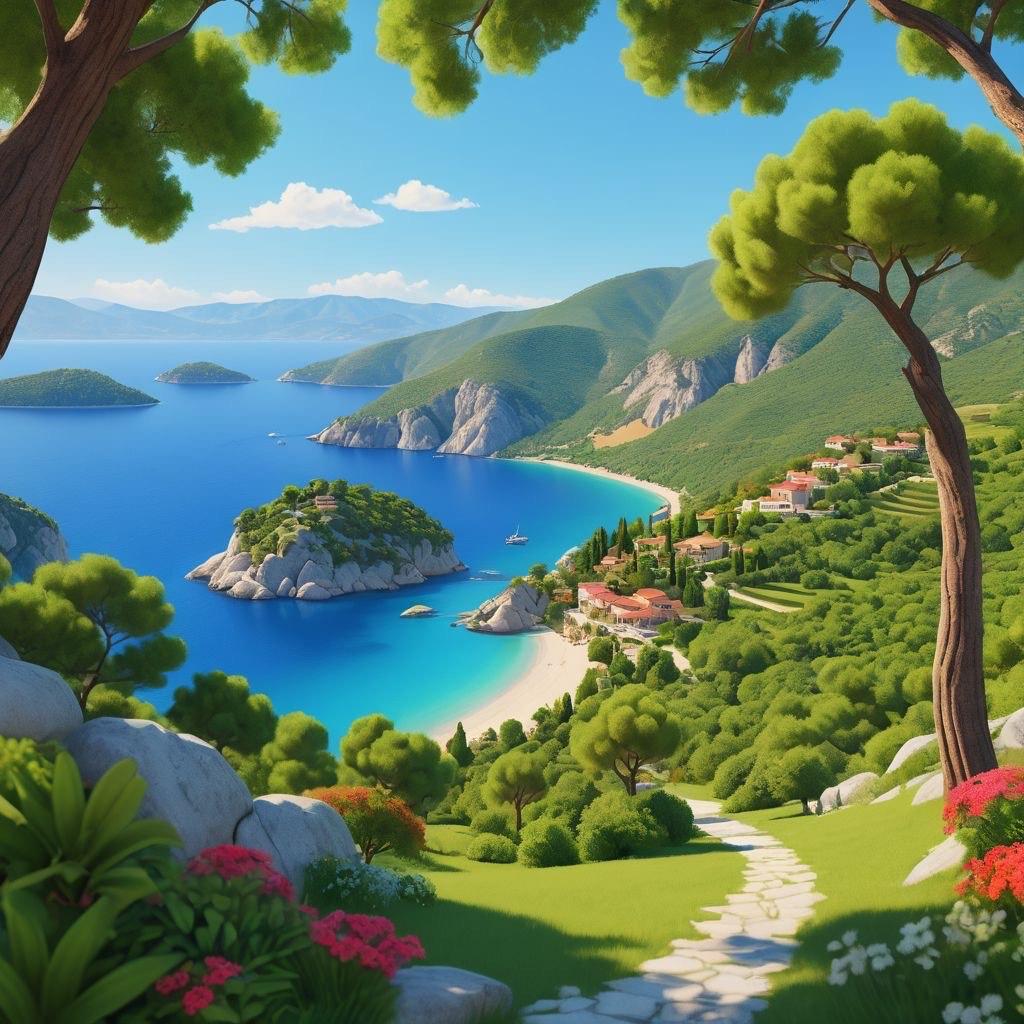
Natural beauties of Muğla. (Generated by artificial intelligence.)
Economy
Muğla’s economy is largely based on agriculture, tourism and forestry. Tourism is one of the most important sources of income, especially during summer months. Large numbers of tourists from both within and outside Türkiye visit districts such as Bodrum, Marmaris and Fethiye, stimulating sectors such as hospitality, food and beverage, transportation and souvenir retail.
Agriculture is also significant for Muğla. Olive, citrus fruits (such as orange and lemon), pomegranate, vegetables and tobacco are cultivated. Notably, Milas olive oil and Muğla pine honey are among the region’s distinctive agricultural products.
Muğla is also rich in forest resources, making forestry and the production of forest products such as timber and resin important economic activities.
Fishing is another livelihood in the coastal districts. Fish are harvested both from the sea and from aquaculture farms along the Mediterranean coast.

Some occupational groups in Muğla. (Generated by artificial intelligence.)
Education and Transportation
Educational activities in Muğla range from primary school to university. The province hosts numerous schools. Muğla Sıtkı Koçman University is a major institution providing higher education in the city, offering programs across many disciplines and contributing significantly to the city’s scientific, artistic and cultural life.
In terms of transportation, Muğla is connected to other provinces by land, air and sea routes. Dalaman and Milas-Bodrum airports serve both domestic and international flights. A well-developed road network enables bus travel to major cities. Additionally, sea buses and ferries are used for transportation in some districts.
Within the province, minibuses, municipal buses and private vehicles are widely used. Transportation activity increases significantly during summer months due to population growth from tourism.
Climate
Muğla generally experiences a Mediterranean climate, characterized by hot, dry summers and mild, rainy winters. Coastal areas, in particular, have very hot summers with minimal rainfall, making the season ideal for swimming and outdoor activities.
As one moves inland and into higher mountainous areas, the climate becomes somewhat cooler and wetter. Winters in these regions are colder, and snowfall occasionally occurs.
This climate enables both agriculture and extended outdoor activities throughout much of the year. The natural vegetation consists largely of forests and maquis.

The Mediterranean climate in Muğla. (Generated by artificial intelligence.)
Population and Settlement
Muğla’s population continues to grow each year. During summer months, the population increases significantly due to seasonal visitors. In winter, the population becomes more tranquil. The most populous districts include Bodrum, Fethiye and Menteşe.
Settlement in Muğla is concentrated along the coast and in lowland areas. Some villages and neighborhoods are located in mountainous regions. The province combines urban centers with rural areas, enhancing its natural and cultural diversity.
Menteşe district is the provincial center and hosts many official institutions. Districts such as Bodrum, Marmaris and Fethiye are notable for both their population and economic activity.
Places to Visit in Muğla
Muğla offers visitors a wide variety of historical and natural attractions. Below are some notable sites that may appeal to children as well:
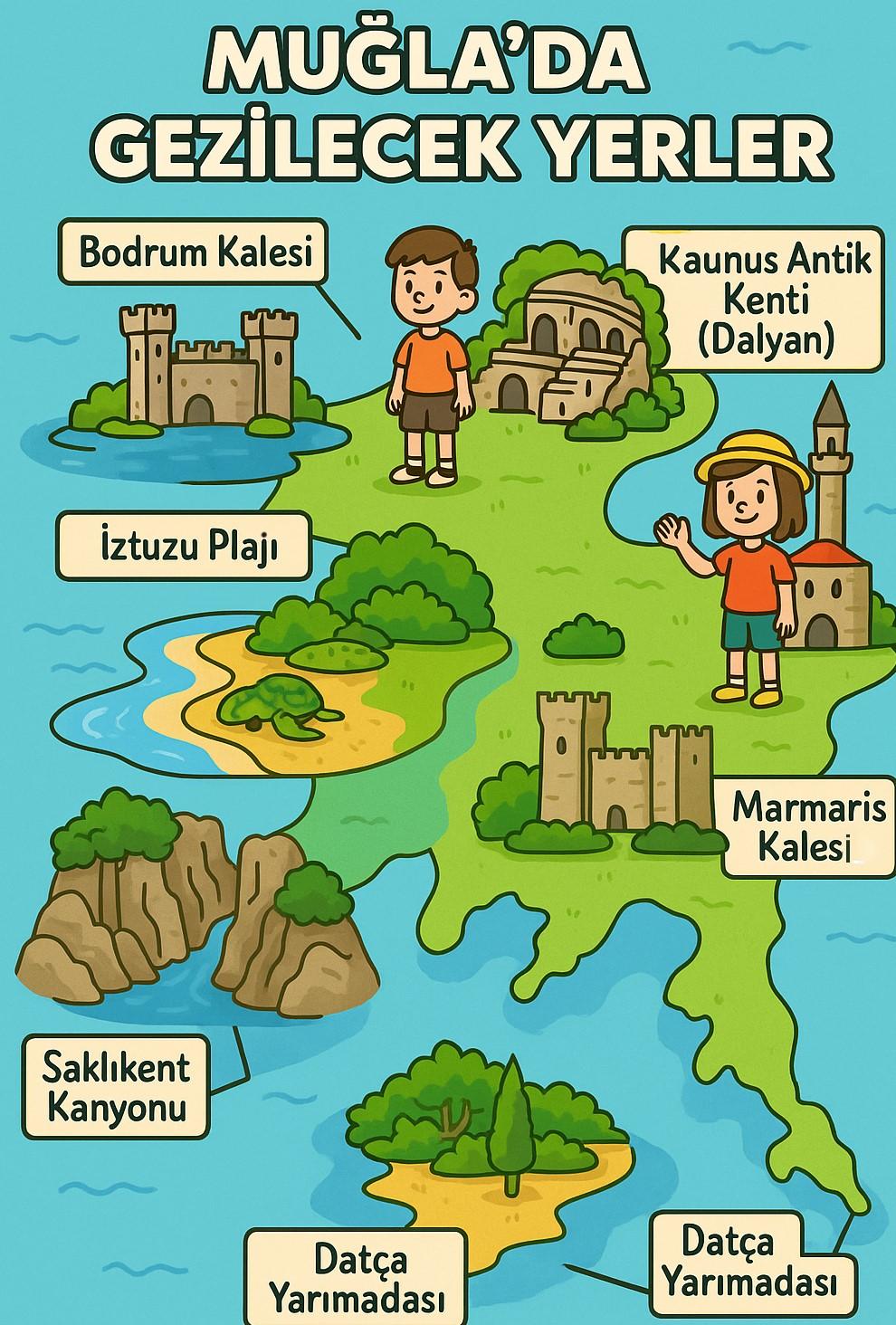
Map of places to visit in Muğla. (Generated by artificial intelligence.)
1. Bodrum Castle
This castle, dating from the Middle Ages, now houses a museum. Located on the coastline, it attracts visitors with its historical significance and sea views.
2. Ancient City of Kaunos (Dalyan)
Kaunos is an ancient city with well-preserved structures such as theaters, baths and tombs. Visitors can reach the site by boat from Dalyan.
3. İztuzu Beach
Located near Dalyan, İztuzu Beach is a nesting site for sea turtles. It is an excellent place to swim and learn about nature conservation.
4. Marmaris Castle
Marmaris Castle is a historical site featuring both ancient and modern structures. A small museum is located within the castle grounds.
5. Saklıkent Canyon
Saklıkent Canyon, located in Seydikemer, is one of Türkiye’s longest canyons. Visitors can hike here and enjoy time immersed in nature.
6. Datça Peninsula
Datça is known for its natural beauty, clean sea and tranquil beaches. Here, visitors can enjoy nature walks and experience the sea.
7. Menteşe and Milas
Muğla’s provincial center, Menteşe, and the district of Milas are rich in historical structures and natural beauty. Milas, in particular, features ancient mosques and ruins of ancient cities.
Natural Beauties and Fauna of Muğla
Muğla is known not only for its historical sites but also for its rich natural beauty.
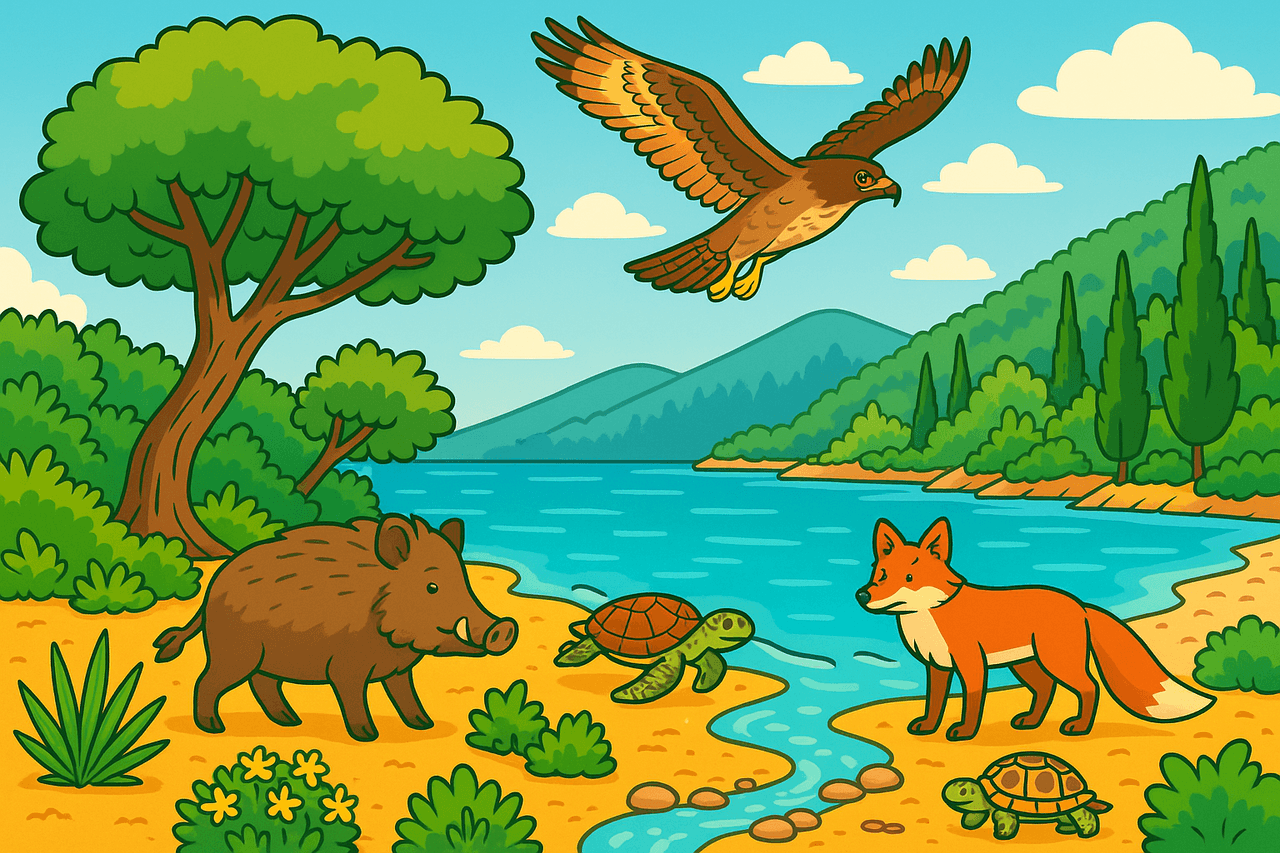
Animals in Muğla’s fauna. (Generated by artificial intelligence.)
1. Köyceğiz Lake
One of Muğla’s largest lakes, Köyceğiz Lake offers opportunities for walking, picnicking and enjoying nature. It also serves as a habitat for numerous bird species.
2. Dalyan River
This river flows through reed beds in Dalyan and is an important area for natural life. Boat tours along the river are very popular.
3. Caretta Caretta Sea Turtles
These sea turtles, found along Muğla’s coasts, are among the endangered species worldwide. İztuzu Beach is their primary nesting site and is under protection.
4. Forests and Vegetation
Muğla has extensive forests, predominantly covered with pine trees. Additionally, maquis vegetation, characteristic of the Mediterranean climate, is widespread.
5. Saklıkent National Park
This national park, which includes Saklıkent Canyon, offers rich biodiversity of plant and animal life. Visitors can hike and observe natural habitats here.
Cultural Events and Traditions in Muğla
Muğla is also notable for its rich culture, as local communities preserve and celebrate various traditions.
1. Yörük Culture
Yörük communities, nomadic Turkmen groups, live in Muğla. Their traditional clothing, crafts and lifestyle hold an important place in the region’s culture.
2. Handicrafts
Muğla bezi is a distinctive regional weaving style. Additionally, woodcarving, ceramics and basket weaving are widely practiced handicrafts.
3. Festivals
Various festivals are held throughout the year in Muğla, including sea festivals, cultural days and folk dance performances. These events showcase regional cuisine, music and dances.
4. Regional Cuisine
Muğla’s cuisine is famous for dishes made with olive oil, seafood and local herbs. Dishes such as stuffed squash blossoms and keşkek are commonly consumed.
References
Karatay University Continuous Education Application and Research Center (KARSEM). (2025). Things to know about Muğla. KARSEM Official Website. Accessed 14 June 2025, https://karsem.karatay.edu.tr/mugla-hakkinda-bilinmesi-gerekenler
Muğla Metropolitan Municipality. (2025). History of Muğla. Muğla Metropolitan Municipality Official Website. Accessed 14 June 2025, https://www.mugla.bel.tr/sayfa/mugla-tarihi
Ministry of Culture and Tourism of the Republic of Türkiye. (2025). Muğla Provincial Directorate of Culture and Tourism. Muğla Directorate of Culture and Tourism Official Website. Accessed 14 June 2025, https://mugla.ktb.gov.tr/
Governorship of Muğla, Republic of Türkiye. (2025). History. Muğla Governorship Official Website. Accessed 14 June 2025, http://www.mugla.gov.tr/tarihce