

This article was automatically translated from the original Turkish version.
+1 More
Type of Geographical İndication | Place of Origin | ||||||||
|---|---|---|---|---|---|---|---|---|---|
Registration Number | 379 | ||||||||
Registration Date | 15.08.2018 | ||||||||
Product / Product Group(s) | Honey | ||||||||
Province(s) | Muğla | ||||||||
Applicant/Registrant(s) | Muğla Province Beekeepers Association | ||||||||
Muğla Pine Honey is a resinous honey produced in specific districts of Muğla Province in southwestern Türkiye and officially registered under the geographical indication system of Law No. 6769 on Industrial Property. The registration was completed on 15 August 2018. The registering body is the Muğla Province Beekeepers Union.
Muğla Pine Honey is produced exclusively in the districts of Bodrum, Dalaman, Datça, Fethiye, Kavaklıdere, Köyceğiz, Menteşe, Milas, Ortaca, Seydikemer, Ula and Yatağan within Muğla Province. All stages of production occur within this defined geographical boundary.
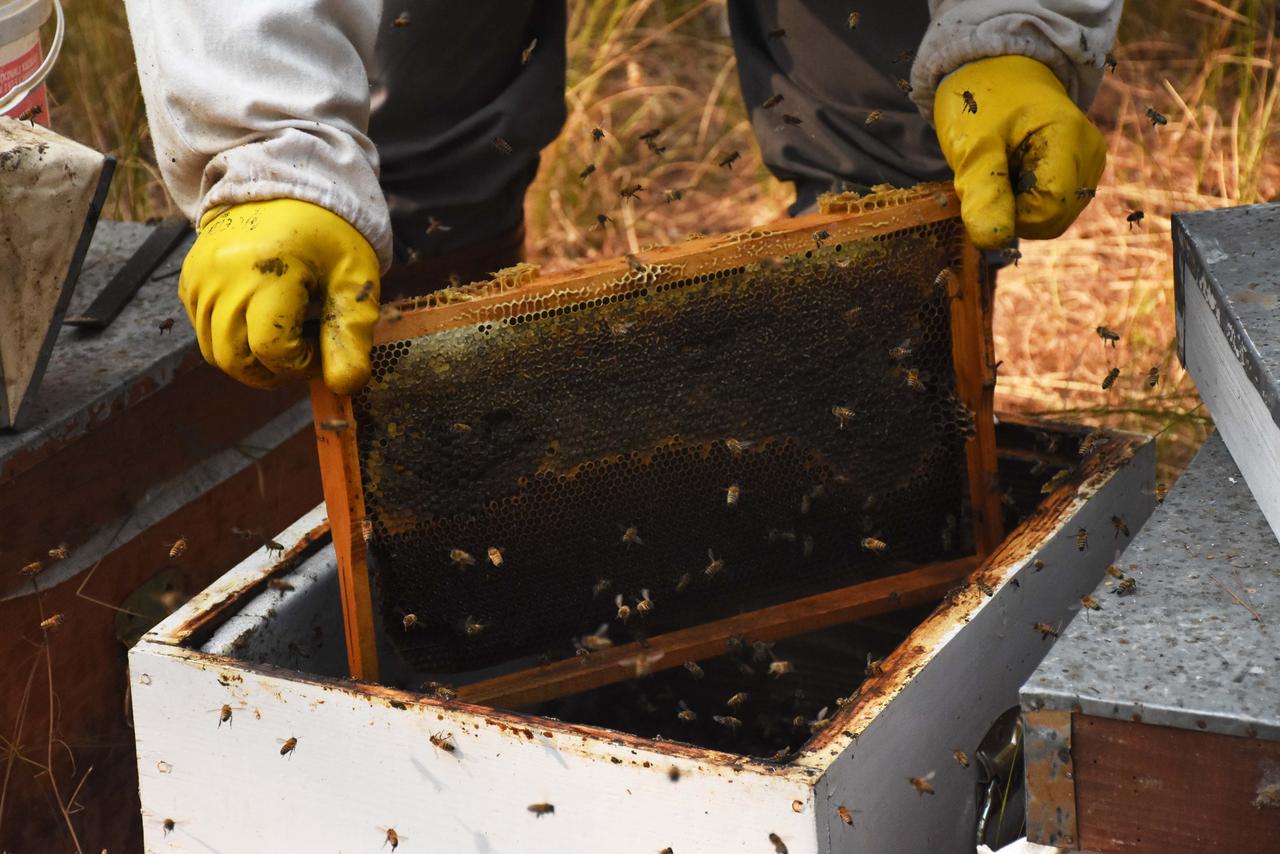
Muğla Pine Honey is formed by bees collecting the sugary exudate secreted by the pine woolly scale insect (Marchalina hellenica), which lives on Turkish pine trees (Pinus brutia). While the scale insect absorbs proteins from the pine sap, it excretes the sugary portion, which bees then collect and convert into honey. The production period spans from 15 August to 30 November, and depending on weather conditions, two to three harvests may occur annually. Honey is harvested without supplemental feeding; colonies are prepared for winter using stored honey reserves.

Muğla Pine Honey (AA)
Muğla Pine Honey is a dark honey with greenish fluorescent tones, featuring a woody and fresh aroma. Its sweetness is moderate, acidity is low, and crystallization rate is minimal. Due to its low water content, it exhibits high consistency. One of its most distinctive chemical characteristics, differentiating it from floral honeys, is its electrical conductivity exceeding 0.9 mS/cm. It is also known for its high mineral content, particularly iron, manganese and zinc.
Its physicochemical parameters include a maximum moisture content of 18 percent, a minimum fructose plus glucose content of 47 g/100 g, a minimum proline content of 400 mg/kg, and a maximum HMF content of 15 mg/kg. The delta Cl3 value of the honey is -22.5 or lower.
Ninety to ninety-two percent of global pine honey production occurs in Türkiye, of which 75 to 80 percent is produced in Muğla. Sixty-eight percent of Muğla’s land area is covered by forests, and 14.46 percent of its pine forests are infested with scale insects. Of the 385 forest villages in the region, 260 have scale insect-infested areas. Muğla is recognized as the natural habitat of the pine woolly scale insect.
Muğla Pine Honey can be easily distinguished from other honeys through sensory tests and laboratory analyses. Organoleptic evaluations highlight its woody and balsamic aroma, along with resinous and pine-like scents. Its dark color and high mineral content are linked to the region’s diverse soil composition.
Product monitoring is conducted by a four-member committee coordinated by the Muğla Province Beekeepers Union, with experts from the Muğla Provincial Directorate of Agriculture and Forestry and Muğla Sıtkı Koçman University. Inspections occur twice annually: once during the harvest period (September–November) and once during the packaging period (December). Physical and chemical compliance, as well as the correct use of the geographical indication emblem and logo, are verified. Samples are taken and analyzed when necessary.
Anadolu Ajansı. "Türkiye'nin Çam Balı Üretim Miktarını Muğla Ayakta Tuttu." Accessed October 19, 2025. https://www.aa.com.tr/tr/turkiye/turkiyenin-cam-bali-uretim-miktarini-mugla-ayakta-tuttu/1299281.
Turk Patent and Trademark Office. *Muğla Çam Balı Coğrafi İşaret Sicil Belgesi.* Turk Patent and Trademark Office. Accessed October 19, 2025. https://ci.turkpatent.gov.tr/Files/GeographicalSigns/4ba07307-8346-48d0-ac83-c22b4a918ff4.pdf.
Turkish Patent and Trademark Office. "Muğla Çam Balı." *Geographical Indications Portal.* Accessed October 19, 2025. https://ci.turkpatent.gov.tr/cografi-isaretler/detay/37982.

Type of Geographical İndication | Place of Origin | ||||||||
|---|---|---|---|---|---|---|---|---|---|
Registration Number | 379 | ||||||||
Registration Date | 15.08.2018 | ||||||||
Product / Product Group(s) | Honey | ||||||||
Province(s) | Muğla | ||||||||
Applicant/Registrant(s) | Muğla Province Beekeepers Association | ||||||||
Geographical Boundary
Production Process
Production Types
Physical and Chemical Properties
Distinguishing Features
Monitoring