This article was automatically translated from the original Turkish version.
+1 More
Geographical Indication Type(s) | Mahreç Sign | ||||||||
|---|---|---|---|---|---|---|---|---|---|
Geographical Boundary | Muğla Province Fethiye | ||||||||
Registration Number | 698 | ||||||||
Raw Material for Production | Sesame grown at the geographical boundary | ||||||||
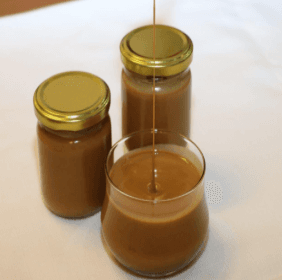
Fethiye Tahini is a traditional sesame paste produced in the Fethiye and Seydikemer districts of Muğla Province using traditional production techniques. The region-specific climatic conditions and the skilled production process impart this product with a distinctive aroma, color, and smooth, fluid consistency. The production of tahini using local Fethiye sesame seeds is an important part of the area’s cultural and economic heritage.
The distinctive qualities of Fethiye Tahini stem from specific steps in its traditional production process, which consists of three main stages:
Soaking (Salt Pool): Selected sesame seeds are soaked in saltwater prepared in a pool. This step facilitates the easy removal of the seed husks and results in a brighter color in the final tahini.
Double Roasting Over Wood Fire: After soaking, the sesame seeds are roasted in two stages over a wood fire, which imparts the unique flavor and aroma characteristic of Fethiye Tahini. This “double roasting” method brings out the product’s hazelnut-like taste and distinctive fragrance.
Grinding in Stone Mills: The roasted sesame seeds are ground into tahini using traditional stone mills rather than modern machinery. The use of stone mills helps preserve the sesame’s oils and nutritional value, and ensures the product achieves a smooth, fluid consistency.
These traditional production methods preserve the natural structure of the tahini, distinguishing it from other varieties and endowing it with the unique characteristics of the Fethiye region.
Due to its unique qualities, Fethiye Tahini was registered as a “Geographical Indication” by the Turkish Patent and Trademark Office on 23 March 2021. This registration mandates that production must occur within the defined geographical boundaries—the province of Muğla, specifically the districts of Fethiye and Seydikemer.
To ensure compliance with the geographical indication, a monitoring authority has been established under the coordination of the Fethiye Chamber of Commerce and Industry. This authority conducts annual inspections to verify the regional origin of the sesame used, adherence to traditional production methods, roasting duration, and other quality parameters. These inspections guarantee that the product consistently meets the standards outlined in its registration certificate.
Fethiye Chamber of Commerce and Industry. "Fethiye Tahini." Accessed August 27, 2025. https://www.ftso.org.tr/bilgi-bankasi/cografi-isaret/fethiye-tahini.
Güney Ege Kalkınma Ajansı. "GüneyEge Dergisi." Issue 32, October 2024. https://geka.gov.tr/uploads/current_publications_v/679cd5cb3453c-geka-dergi-32-sayi.pdf.
Türk Patent ve Marka Kurumu. "Coğrafi İşaretler." Türk Patent ve Marka Kurumu Coğrafi İşaretler Portalı. Accessed August 27, 2025. https://ci.turkpatent.gov.tr/cografi-isaretler/detay/382.

Geographical Indication Type(s) | Mahreç Sign | ||||||||
|---|---|---|---|---|---|---|---|---|---|
Geographical Boundary | Muğla Province Fethiye | ||||||||
Registration Number | 698 | ||||||||
Raw Material for Production | Sesame grown at the geographical boundary | ||||||||
Production Method and Distinctive Characteristics
Geographical Indication Registration and Oversight