


This article was automatically translated from the original Turkish version.
+1 More
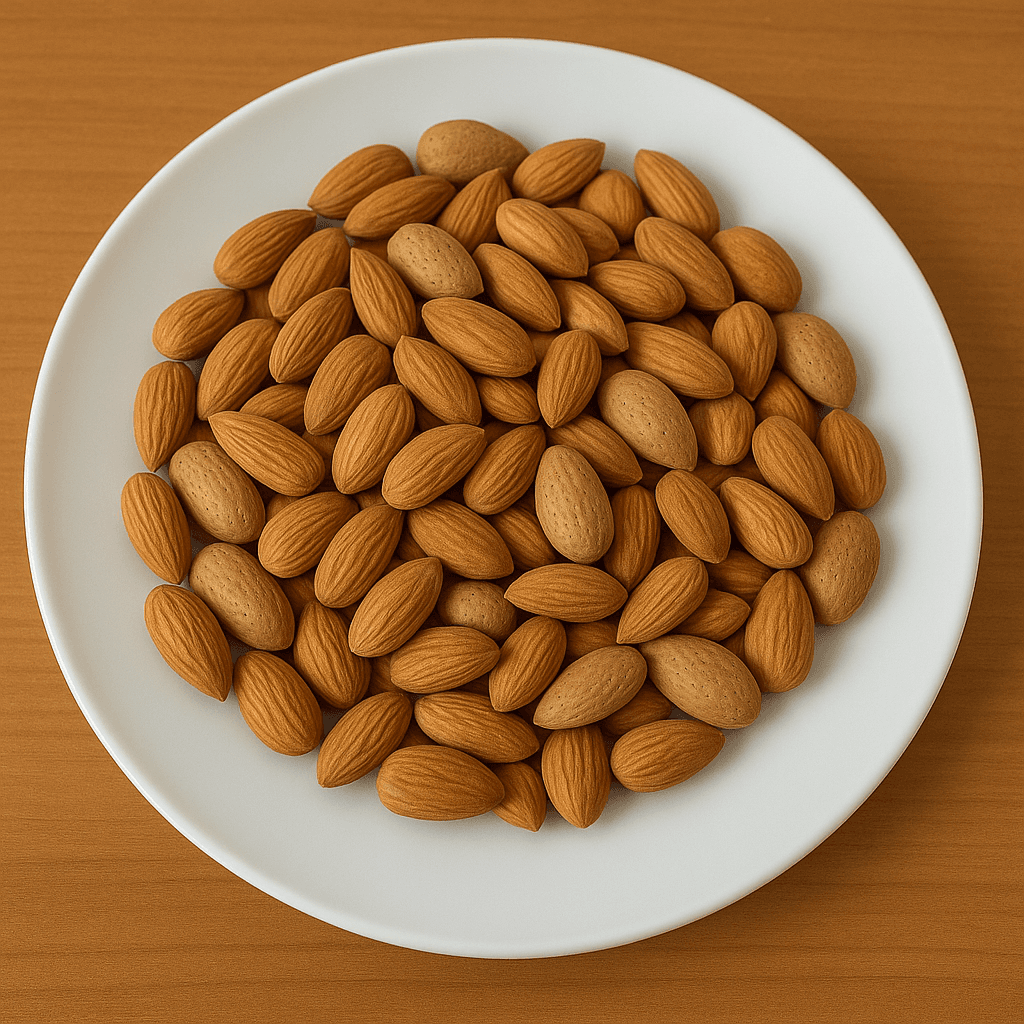
Datça Nurlu Almond
Product / Product Group(s) | Processed and unprocessed fruits and vegetables and mushrooms | ||||||||
|---|---|---|---|---|---|---|---|---|---|
Applicant/Registrant(s) | Muğla Chamber of Commerce and Industry | ||||||||
Registration Date | 24.11.2023 | ||||||||
File Number | C2021/000337 | ||||||||
Registration Number | 1504 | ||||||||
Datça Nurlu Bademi is a native almond variety cultivated within the boundaries of the Datça district of Muğla Province, consisting of large, hard-shelled almonds belonging to the species Prunus amygdalus Batsch. It has been officially registered under the designation “Place of Origin” by the Turkish Patent and Trademark Office and is protected under Registry No: 1504 dated 24 November 2023.

Datça Nurlu Bademi (AA)
Datça Nurlu Bademi is characterized by its very hard shell, large kernels, and sweet flavor. The outer shell consists of three layers: the outermost layer is rough and perforated; the middle layer is spongy yet firm; and the inner layer contains channels that facilitate nutrient transport. The hardness of the shell is associated with its high lignin content. The fruit base is rounded, tapering to a pointed tip.
The tree can reach a height of 3–5 meters and a width of 4–5 meters. Its roots develop deeply into the soil. The leaves are toothed, edged, dark green in color, and lance-shaped.
The prevailing north and south winds in the region where Datça Nurlu Bademi is grown play a significant role in pollination and meeting the plant’s moisture requirements. Red and stony soils provide suitable conditions for deep root development. Datça district, with its low rainfall and hot climate, offers favorable environmental conditions for almond cultivation.
Datça Nurlu Bademi is offered to consumers as fresh almonds, shelled dried almonds, raw kernel almonds, and roasted kernel almonds. Its oil content can vary between 40% and 50%.
Datça Nurlu Bademi prefers climates with mild, rainy winters and hot, dry summers. The risk of frost during the flowering period must be considered; temperatures between -5°C and -1°C can damage flower buds. Excessive humidity during flowering may lead to fungal diseases.
Light-textured, well-drained, alluvial, and deep soils are preferred for almond cultivation. Sandy, clayey, and stony soil structures are also suitable for root development.
Datça Nurlu Bademi is propagated by grafting onto almond rootstock. Seedlings developed over one year are typically planted in the field during November–December. Grafting is performed in the second or third year. Square planting is preferred on flat terrain, while contour planting is used on sloped land. Planting spacing ranges from 5 to 9 meters depending on soil structure.
Fertilization is based on soil and leaf analysis. Water requirements during plant growth can often be met by rainfall; however, supplementary irrigation may be necessary in February–March. Moderate pruning is carried out from the first year onwards to shape the canopy.

Datça Nurlu Bademi (AA)
Datça Nurlu Bademi is self-incompatible; therefore, one pollinator tree (such as Ak Bademi) is recommended for every nine trees. It is advised to place one bee hive per two decares to facilitate pollen transfer.
Harvesting begins in June. When the outer shell begins to dry, the fruit is collected by shaking. Harvested almonds are stripped of their green outer husks and dried in the sun for approximately two weeks. The dried almonds can be sold shelled or processed further into kernels.
The hard shell of dried almonds is cracked by hand or machine to preserve quality. The resulting product is marketed as raw kernel almonds or roasted kernel almonds.
Almonds intended for consumption as fresh almonds are harvested early by hand using the “peeling” method. These can be stored for up to one week at +4°C.

Datça Nurlu Bademi (AA)
Food-grade plastic, cardboard, fabric, or linen bags may be used. Product labels are prepared in accordance with applicable regulations.

Datça Nurlu Bademi (Generated by Artificial Intelligence)
Datça Nurlu Bademi is produced exclusively within the boundaries of the Datça district of Muğla Province. Monitoring is conducted at least once annually under the coordination of the Muğla Chamber of Commerce and Industry, by a committee of at least three members comprising the Muğla Provincial Directorate of Agriculture and Forestry, the Menteşe Chamber of Agriculture, and experts.
Anadolu Ajansı. "Datça’da Badem Hasadına Başlandı." Accessed May 31, 2025. https://www.aa.com.tr/tr/ekonomi/datcada-badem-hasadina-baslandi/2656417
Anadolu Ajansı. "Mevsimin İlk Badem Çağlalarının Hasadı Datça’da Başladı." Accessed May 31, 2025. https://www.aa.com.tr/tr/turkiye/mevsimin-ilk-badem-caglalarinin-hasadi-datcada-basladi/1073905
Türk Patent ve Marka Kurumu. "Datça Nurlu Bademi." Accessed May 31, 2025. https://ci.turkpatent.gov.tr/cografi-isaretler/detay/4982

Datça Nurlu Almond
Product / Product Group(s) | Processed and unprocessed fruits and vegetables and mushrooms | ||||||||
|---|---|---|---|---|---|---|---|---|---|
Applicant/Registrant(s) | Muğla Chamber of Commerce and Industry | ||||||||
Registration Date | 24.11.2023 | ||||||||
File Number | C2021/000337 | ||||||||
Registration Number | 1504 | ||||||||
Product Description and Distinctive Characteristics
Physical Characteristics
Dimensions (mm)
Weight and Moisture
Production Method
Climate Requirements
Soil Requirements
Orchard Establishment
Fertilization and Maintenance
Pollination
Harvest and Processing
Packaging
Geographical Boundary and Monitoring