


This article was automatically translated from the original Turkish version.
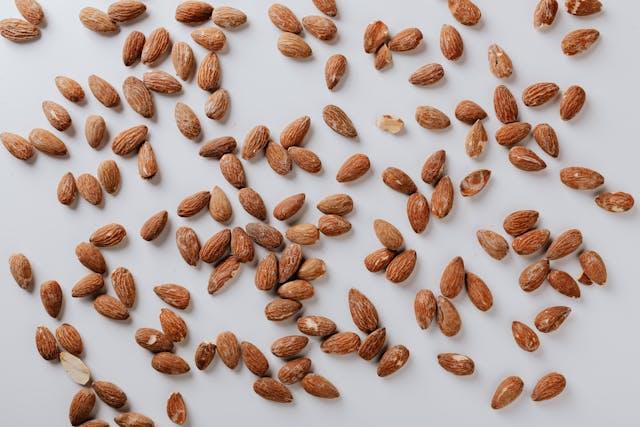
Almond
Scientific Name(s) | Amygdalus communis L. | ||||||||
|---|---|---|---|---|---|---|---|---|---|
Place of Origin | Central and Western Asia | ||||||||
Climate(s) | Hot temperate climate | ||||||||
Soil | Well-drained soils | ||||||||
Difficulty | Late spring frosts | ||||||||
Harvest | When the green shell cracks | ||||||||
Almond, scientifically known as Amygdalus communis L. (synonym Prunus dulcis), is an important stone fruit species with ancient origins in Central and Western Asia. Since then, it has spread to various regions including China, India, Iran, Syria, and Mediterranean countries. Almonds are valued for their edible kernels and are cultivated worldwide in temperate climates. Türkiye ranks among the world’s leading almond producers, following the United States, Spain, Italy, Iran, Morocco, and Syria.

Almond (Pexels)
Almond trees can grow as shrubs or reach heights of up to 10 meters, with either upright or spreading habits. The trunk is typically grayish-reddish brown. Branches are grayish-brown and densely branched. Leaves are long, lanceolate, and glossy dark green.
Almond flowers exhibit typical characteristics of the Rosaceae family: five sepals, five petals, twenty stamens, and one pistil. Petals are usually pinkish-red with prominent dark veins. The ovary contains two ovules, but typically only one develops into the kernel; if both develop, a “double almond” is formed. Rarely, the development of two ovaries results in “twin almonds” with no commercial value. Almonds have a chromosome number of n=8. Pollination is primarily carried out by bees. Most almond varieties are self-incompatible, and mutual incompatibility between varieties may occur, requiring the planting of at least two compatible varieties for successful fruit set.
Botanically, the almond fruit is a drupe, like peach and apricot. However, because the kernel is consumed, almonds are commercially classified among nut fruits.
Almonds are generally divided into two pomological groups:
These contain amygdalin, which converts to toxic hydrocyanic (prussic) acid when consumed in significant quantities. Bitter almonds are primarily used for oil extraction.
These contain very little or no amygdalin. Sweet almonds are further classified by shell hardness:
Desirable shell characteristics include moderate hardness—not too hard or too soft—and a well-closed suture line. For the kernel, a light color, smooth (non-wrinkled), and hairless surface is preferred.

Almond Tree Fooled by False Spring (AA)
Almond is well suited to temperate climates, particularly the Mediterranean climate characterized by mild, wet winters and hot, dry summers. Trees can withstand winter temperatures as low as −25°C, but flower buds may be damaged below −18°C. Almond requires a chilling requirement of approximately 300–500 hours below 7.2°C.
Spring frosts are a major limiting factor in almond cultivation because almonds bloom earlier than most other temperate fruit trees. Fully opened almond flowers can withstand temperatures as low as −4.4°C for a short time; this tolerance drops to −2.2°C once petals begin to fall, and young fruits may be damaged at −0.6°C to −1°C. To reduce frost risk, orchards should be planted on slopes where cold air can drain, and varieties with late flowering and long blooming periods should be selected.
High temperatures over a period of 6–8 months from flowering to harvest are necessary for fruit maturation. Almond is relatively drought-tolerant among fruit crops. However, annual rainfall of 500–600 mm or supplemental irrigation improves yield and fruit quality. Rain during flowering can negatively affect pollination and increase disease incidence. Rain just before harvest is undesirable as it reduces fruit quality.
Almond is not highly selective regarding soil type and can grow well in dry, stony, gravelly, and calcareous soils where other fruit trees struggle. However, it prefers deep, well-drained soils. Sandy-loam soils generally yield the best results. Almonds do not tolerate excessive soil moisture or fluctuating groundwater tables. Dry, gravelly, sandy soils should be improved with organic matter. Almond has a nitrogen requirement comparable to peach. Nutrient deficiencies can lead to weak tree growth, poor fruit set, and wrinkled, underfilled kernels.
Almond can be propagated sexually (by seed) or vegetatively. Seed propagation is used for breeding, orchard establishment, and rootstock production. For commercial nursery production, dormant T-budding is a common method. In regions with mild winters, bud grafting is preferred. In dry areas, grafting must be done early because sap flow begins early. In hot regions such as Türkiye’s GAP region, grafting is often delayed until September when temperatures are relatively lower; in such cases, chip budding is preferred because the bark may not peel easily. For changing varieties in mature trees, cleft grafting or bark grafting (shepherd grafting) is commonly used.
Rootstock selection depends on compatibility with the scion variety, soil conditions, water availability, and the presence of soil-borne pests such as crown gall and nematodes.
Commercial almond orchards can be established using grafted saplings or, especially in dry, non-irrigated areas, by direct seeding followed by in-place grafting. Grafted saplings are preferred for irrigated land. For optimal yield and quality, orchards should be established in soils approximately 2 meters deep, fertile, and permeable.
Due to self-incompatibility, orchards must be planted with at least two mutually compatible varieties. Pollinator varieties must have overlapping flowering periods with the main variety. Planting patterns may include two rows of the main variety followed by one row of the pollinator, or two rows each of two compatible main varieties. Beehives are essential for effective pollination (e.g., one hive per 5 decares or 5–8 hives per 10 decares). Bees become active when air temperature exceeds 12°C.
Planting distances vary depending on variety, rootstock, ecological conditions, and planned management, ranging from 3×3 m to 6×6 m, or up to 7×9 m in fertile soils. In dry areas, wider spacing allows for root spread; in irrigated areas, canopy size determines spacing. In regions with mild winters, autumn planting is preferred; in areas with harsh winters, spring planting is recommended. Because almond root systems are sparse and sensitive, using container-grown saplings can reduce transplant shock and improve survival rates.
In spring, orchards are typically disked to incorporate winter weeds into the soil. A light harrowing before harvest facilitates the collection of fallen almonds. Autumn tillage helps retain winter moisture. In areas with crown gall problems, soil cultivation should be shallow to avoid root injury; hand hoeing may be necessary when required.
Contrary to a common misconception, almond trees benefit significantly from irrigation. Regular irrigation increases yield and fruit quality and facilitates shell splitting. Two or three supplemental irrigations during the growing season, especially under low rainfall conditions, enhance growth and yield. Irrigation should be avoided immediately before harvest. Drip irrigation is an efficient method that conserves water and enables fertigation. Under irrigated conditions, yields can be two to three times higher than under non-irrigated conditions, and kernels are larger.
Fertilization practices should be based on soil analysis results. Nitrogen is particularly important for growth and yield; a general recommendation is 10–25 kg of pure nitrogen per decare. Farmyard manure is also beneficial for improving soil structure and fertility. In Türkiye’s Southeastern Anatolia Project (GAP) region, soils are generally poor in organic matter, high in clay and lime content, and have high pH, reducing the availability of phosphorus and zinc to plants.
Almond does not require excessive pruning. Regular removal of dead, crossing, or inward-growing branches and thinning to allow light penetration into the canopy is beneficial. For shaping young trees, the modified central leader system is commonly used. From the third year onward, annual shoots can be shortened (e.g., to 40–50 cm) and crowded branches removed. Almond bears fruit on annual shoots and spur clusters (bouquets). Annual pruning is necessary in bearing trees, but severe pruning should be avoided. Renewal pruning may be needed after 15–20 years. Pruning is generally done in autumn in mild regions and late winter (February) in cold regions, after most leaves have fallen.
In Türkiye, particularly in the Aegean Region, several promising native almond types have been identified through selection programs. Some examples are:
Almonds are susceptible to various diseases and pests. Common diseases include:
Common pests include:
For current pest and disease management recommendations, consult local agricultural extension services, as pesticide regulations and efficacy may vary.

Almond Cultivation in Elazığ (AA)
Maturity is indicated by the drying, leathery texture, and splitting of the outer green hull. Harvest should not begin until the green hulls of inner fruits begin to open.
Almonds are generally harvested by striking branches with poles or by shaking. Rubber-tipped mallets on poles minimize tree damage. Tarps are spread under trees to facilitate collection. In commercial orchards, mechanical shakers and collectors are used. Carbon-fiber rakes, hand-operated and battery-powered harvesters, efficiently and rapidly dislodge fruits without damaging flower buds.
Harvested fruits must be dehulled immediately. Delayed dehulling can lead to insect infestation and mold, and darken the kernel. Ease of hull removal is an important heritable trait. Hulls are separated manually or mechanically. If hulls are very dry, moistening almonds can facilitate separation. It has been successfully adapted to use modified hazelnut shelling machines with enlarged holes for almond dehulling.
Dehulled almonds dry easily in open air during autumn months, provided they are not piled and are occasionally turned. If available, drying facilities used for other crops can also be utilized. Drying should be done quickly. The kernel is sufficiently dried when it snaps rather than bends when bent.
If sold in-shell, almonds are bleached to achieve a uniform light yellow shell color. Bleaching is done using sulfur dioxide gas. For 100 kg of in-shell almonds, 50–150 g of sulfur flowers are burned. Bleaching lasts 10–30 minutes and does not reduce internal quality. However, prolonged exposure or high concentration to darken almonds can alter taste, imparting a soapy flavor.
Almond kernels sold shelled are cracked by producers or sellers. Cracking is done manually or mechanically. One worker can crack 8–10 kg of almonds by hand per day. Cracked kernels should be dried in a cool, shaded place (not in direct sunlight). Grading kernels through sieves enables more stable marketing and higher income for producers.
Properly dried in-shell almonds can be stored for up to six months in cool, dry storerooms. Hard-shell storage is most suitable. In cold storage at 0°C and 70–75% humidity, in-shell or shelled almonds can be stored for one to two years. They should be fumigated and placed in storage under appropriate conditions.
Yield in almond orchards is generally expressed as the weight of in-shell fruit or, in modern production, as the amount of kernel per unit area (decare or hectare). Kernel yield is calculated as: Kernel Yield (%) = (Kernel Weight / In-Shell Fruit Weight) × 100. This ratio varies with shell thickness; for example, Nonpareil (thin-shell) has a kernel yield of 60–70%, while Ferragnes (medium-thick shell) has about 40%.
In irrigated bearing orchards, 2000–3000 kg of green hull almonds per decare are obtained, depending on variety. This corresponds to approximately 6.6–9.0% kernel yield. In California (USA), irrigated orchards yield about 200 kg of kernel per decare. Modern almond orchards in Türkiye achieve similar yields. While some sources report yields of up to 300 kg of kernel per decare, current cultivation techniques make this level difficult to achieve. Therefore, for economic analyses, it is more realistic to estimate a maximum of about 200 kg of kernel per decare under optimal conditions as trees mature. In non-irrigated orchards, yields reach only 60–70 kg of kernel per decare. In addition to yielding at least two to three times more than non-irrigated orchards, irrigated orchards produce larger and more attractive kernels.
Adana İl Directorate of Agriculture and Forestry. *Badem Yetiştiriciliği ve Mücadelesi.* Adana: Ministry of Agriculture and Forestry, Plant Production and Plant Health Branch Directorate, n.d. Accessed June 17, 2025. https://adana.tarimorman.gov.tr/Belgeler/SUBELER/bitkisel_uretim_ve_bitki_sagligi_sube_mudurlugu/meyve_yetistiriciligi_ve_mucadelesi/Ba%C4%9Fdem.pdf.
Anadolu Ajansı. "Elazığ’da 5 Yılda 200 Bini Aşkın Badem Fidanı Toprakla Buluşturuldu." Accessed June 17, 2025. https://www.aa.com.tr/tr/ekonomi/elazigda-5-yilda-200-bini-askin-badem-fidani-toprakla-bulusturuldu/3252552.
Anadolu Ajansı. "Tekirdağ’da Yalancı Bahara Aldanan Badem Ağaçları Çiçek Açtı." AA.com.tr. Accessed June 17, 2025. https://www.aa.com.tr/tr/yasam/tekirdagda-yalanci-bahara-aldanan-badem-agaclari-cicek-acti/3471119.
Antalya İl Tarım ve Orman Müdürlüğü. *Badem Yetiştiriciliği: Yetiştiricilik, Hastalık, Zararlılar, Ders Notları.* April 2023. Accessed June 17, 2025. https://antalya.tarimorman.gov.tr/Belgeler/Badem%20Yeti%C5%9Ftiricili%C4%9Fi%20Ders%20Notlar%C4%B1.pdf.
Iriser, Irina. "Badem Kuruyemişlerinin Yakın Çekim Fotoğrafçılığı." Pexels. Accessed June 17, 2025. https://www.pexels.com/tr-tr/fotograf/badem-kuruyemislerinin-yakin-cekim-fotografciligi-1013420/.
Küden, Ayzin B., Ali Küden, Safder Bayazıt, Songül Çömlekçioğlu, Burhanettin İmrak, and Yeşim Rehber Dikkaya. *Badem Yetiştiriciliği: TAGEP Proje No. 5.2.3.1 (Şeftali, Nektarin, Badem ve Elma Çeşit Adaptasyonu Projesi).* T.C. Çukurova Üniversitesi Ziraat Fakültesi; KKTC Gıda, Tarım ve Enerji Bakanlığı; KKTC Tarımsal Araştırma Enstitüsü Müdürlüğü, n.d. Accessed June 17, 2025. https://azkurs.org/pars_docs/refs/22/21779/21779.pdf.
Pexels. "Gıda, Yemek, Yiyecek, Sıra." Pexels. Accessed June 17, 2025. https://www.pexels.com/tr-tr/fotograf/gida-yemek-yiyecek-sira-4033326/.
[1]
Bir bitki çeşidinin geç çiçeklendiğini ifade eder.


Almond
Scientific Name(s) | Amygdalus communis L. | ||||||||
|---|---|---|---|---|---|---|---|---|---|
Place of Origin | Central and Western Asia | ||||||||
Climate(s) | Hot temperate climate | ||||||||
Soil | Well-drained soils | ||||||||
Difficulty | Late spring frosts | ||||||||
Harvest | When the green shell cracks | ||||||||
No Discussion Added Yet
Start discussion for "Almond (Amygdalus communis L.)" article
Botanical and Morphological Characteristics
Almond Varieties
Bitter Almonds
Sweet Almonds
Ecological Requirements
Climate
Soil
Propagation and Rootstocks
Propagation
Rootstocks
Orchard Establishment and Annual Management Practices
Orchard Establishment
Soil Management
Irrigation
Fertilization
Pruning
Almond Varieties
Native Turkish Selections/Varieties
Foreign Almond Varieties
Diseases and Pests
Harvest and Post-Harvest Operations
Determining Harvest Time
Harvest Methods
Hull Removal (Dehulling)
Drying
Blanching
Cracking and Grading
Storage
Yield