


This article was automatically translated from the original Turkish version.
+1 More
Milas Olive and Olive Oil
Geographical Indication (Türkiye) | 2017 | ||||||||
|---|---|---|---|---|---|---|---|---|---|
Geographical Indication (EU) | 2022 | ||||||||
Production Method | Early harvest, cold press | ||||||||
Acidity Level | Low | ||||||||
Economic Importance | Regional livelihood source | ||||||||
Marketing Status | In demand in local and international markets | ||||||||
Place of Production | Milas, Muğla, Türkiye | ||||||||
Milas olives and olive oil are agricultural products derived from local olive varieties grown in the Milas district and surrounding areas of Muğla Province in Türkiye, possessing high economic and cultural value.
Milas and its surroundings stand out as one of the key centers of olive production in the Aegean Region. The most characteristic olive variety cultivated in the region is the local type known as "Memecik". This variety is notable for its adaptation to local climatic conditions and its high oil content. The majority of olive groves are located on sloping terrain and are maintained and harvested using traditional methods. This centuries-old production culture is one of the fundamental components of rural life and the local economy in Milas.

Natural Brined Milas Olive (Ministry of Agriculture and Forestry)
Milas olives and olive oil were officially registered as a geographical indication by the Turkish Patent and Trademark Office in 2017 and subsequently began to be protected by the European Union (EU) in 2022. Thus, Milas olive oil became the first olive oil product from Türkiye to receive EU geographical indication status. The official EU registration notice highlighted the unique aromatic profile and low acidity level of Milas olive oil. The protection afforded by the geographical indication ensures the product’s quality and the labor of local producers at an international level.

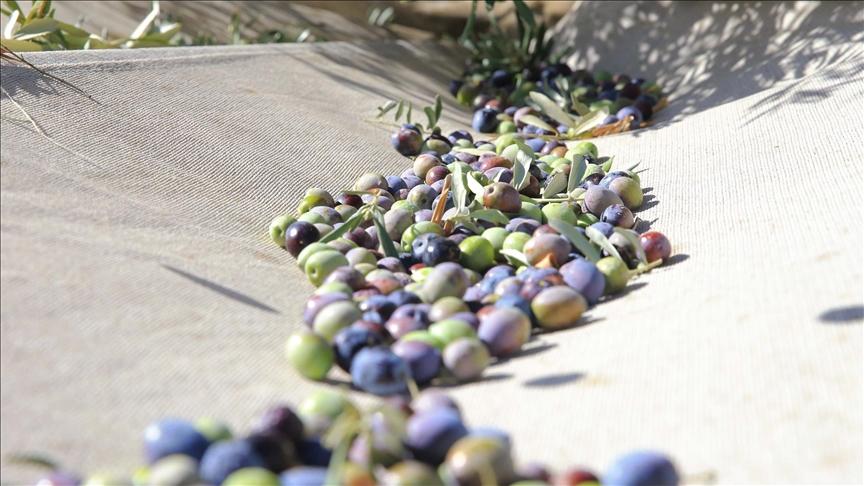
Olive Harvesting Using the Silkme Method (AA)
The production of Milas olive oil uses Memecik olives harvested at an early stage. After collection, the olives are processed immediately using the cold-press method. This production technique preserves the oil’s natural aromas and phenolic compounds. The resulting olive oil is characterized by its low acidity and fruity flavor. Additionally, Milas olive oil exhibits color tones ranging from yellow to green and possesses mild bitterness and pungency.
Milas olive and olive oil production is one of the primary sources of livelihood for the local population. Most local producers operate as small family enterprises, combining traditional production methods with modern techniques. The registration of the product with a geographical indication has increased producer incomes and supported the branding process. The growing demand for Milas olive oil in both domestic and international markets has created a strategic advantage for the Milas economy.
Major challenges in olive production include low yields, the impacts of climate change, and difficulties in agricultural labor. Research conducted by the Milas District Directorate of Agriculture and Forestry has indicated that yield declines have been observed in certain years and are linked to climatic changes. As a result, technical support, training programs, and sustainable agricultural practices are being promoted among producers in the region.
Anadolu Ajansı. “AB'den Coğrafi İşaretli Milas Zeytinyağı Piyasada Aranan Ürün Oldu.” Accessed June 16, 2025. https://www.aa.com.tr/tr/ekonomi/abden-cografi-isaretli-milas-zeytinyagi-piyasada-aranan-urun-oldu/2515897.
Milas Kaymakamlığı. "Milas Zeytini ve Zeytinyağı." Accessed June 16, 2025. http://www.milas.gov.tr/milas-zeytin-ve-zeytinyagi.
Milas Kaymakamlığı. "Zeytinde Verimsizliğin Nedenleri Araştırılıyor." Accessed June 16, 2025. http://www.milas.gov.tr/zeytinde-verimsizligin-nedenleri-arastiriliyor.
Ministry of Agriculture and Forestry. "Milas Yağlı Oil Receives EU Registration." Accessed June 16, 2025. https://www.tarimorman.gov.tr/Haber/5999/Milas-Yagli-Zeytini-Ab-Tescili-Aldi.
Ministry of Industry and Technology. "Milas Yağlı Oil Geographical Indication." Ministry of Industry and Technology. Accessed June 16, 2025. https://sanayi.gov.tr/medya/haber/milas-yagli-zeytinine-cografi-isaret.
Muğla İl Directorate of Culture and Tourism. "Neyi Meşhur?" Muğla Provincial Directorate of Culture and Tourism. Accessed June 16, 2025. https://mugla.ktb.gov.tr/TR-296595/neyi-meshur.html.

Milas Olive and Olive Oil
Geographical Indication (Türkiye) | 2017 | ||||||||
|---|---|---|---|---|---|---|---|---|---|
Geographical Indication (EU) | 2022 | ||||||||
Production Method | Early harvest, cold press | ||||||||
Acidity Level | Low | ||||||||
Economic Importance | Regional livelihood source | ||||||||
Marketing Status | In demand in local and international markets | ||||||||
Place of Production | Milas, Muğla, Türkiye | ||||||||
No Discussion Added Yet
Start discussion for "Milas Olive and Olive Oil" article
History and Regional Characteristics of Olive Cultivation
Geographical Indication Process
Production Process and Quality Characteristics
Economic and Social Contributions
Productivity Challenges and Agricultural Policies