


This article was automatically translated from the original Turkish version.
+1 More
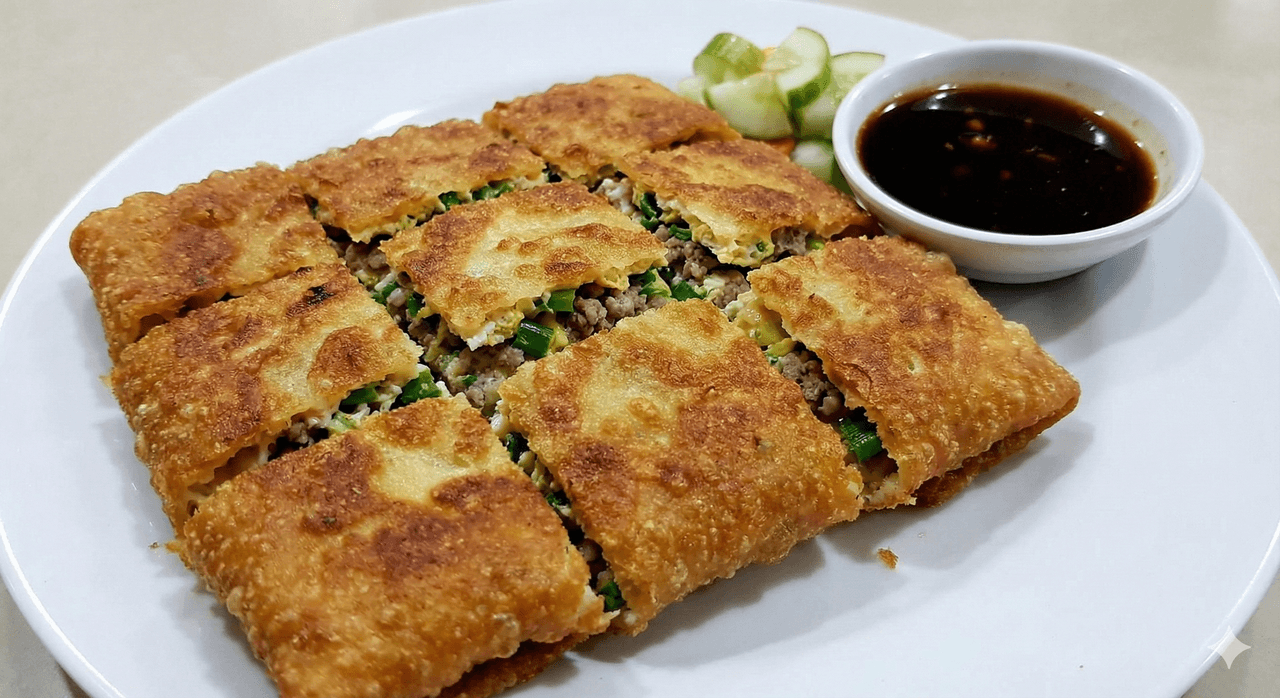
Martabak Telur (Generated with Artificial Intelligence.)
Type(s) | Salted Dough Art / Street Food | ||||||||
|---|---|---|---|---|---|---|---|---|---|
Origin(s) | Indonesia (Adaptation) Yemen and India (Historical Origins) | ||||||||
Etymology(s) | Arabic: Mutabbaq (Folded) | ||||||||
Taste Profile | Salty, Crispy Texture | ||||||||
Related Regions | Java (Lebaksiu/Tegal), Sumatra (Palembang), Malaysia, Singapore | ||||||||
Variations | Martabak Mesir, Martabak Malabar, Martabak HAR | ||||||||
Martabak Telur is a savory pastry made by rolling a yeast-free, elastic dough into a paper-thin sheet, filling it with a mixture of eggs, meat, and various vegetables, then folding it and shallow-frying until golden. Recognized as one of the foundational dishes of street cuisine, it is technically classified as a “stuffed and folded crepe” or “fried flatbread.” Indonesia
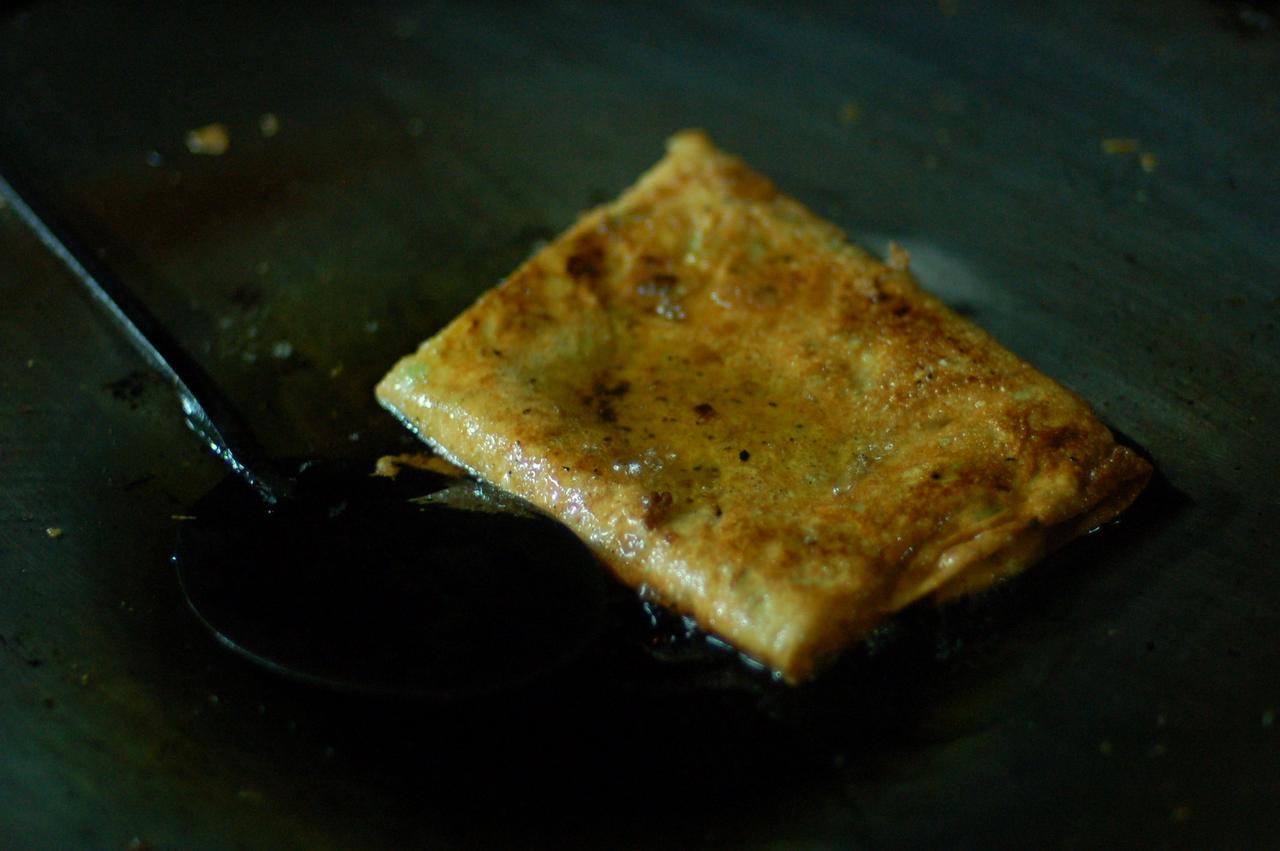
Martabak Telur (flickr)
The dish derives its name from the Arabic word mutabbaq, meaning “folded.” Historically, it was introduced to Southeast Asia by Indian Muslim traders via Yemen and Saudi Arabia. Its evolution in Indonesia became especially concentrated in the Lebaksiu region of Tegal, Central Java, during the 1930s. Local cooks adapted the Indian “Mutabar” dish by reducing the heavy spice profile of the original and increasing the proportion of garlic, onion, and leek. This process of cultural adaptation transformed the dish into a uniquely Indonesian culinary identity, distinct from its Arab and Indian predecessors.
The preparation of Martabak Telur involves a specialized technique requiring considerable skill:
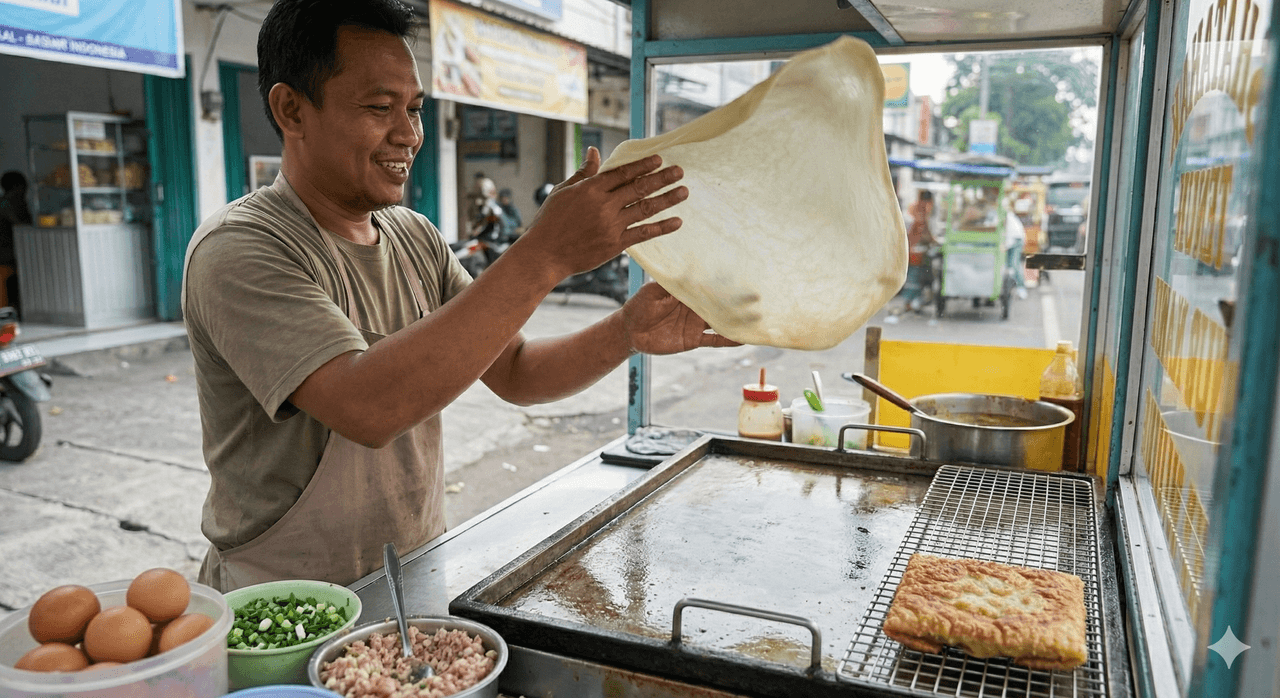
Street Vendor Preparing Martabak Telur (Generated by Artificial Intelligence.)
The cooked martabak is cut into square pieces, typically nine or twelve portions. It is always served with accompaniments that balance its richness and add acidity:
De Indo Mama. "Martabak Telor." De Indo Mama. Accessed January 8, 2026. https://www.deindomama.nl/2019/02/02/martabak-telor/
López-Alt, J. Kenji. "Sweet or Savory, Martabak Is the King of Indonesian Street Food." Serious Eats. Accessed January 8, 2026. https://www.seriouseats.com/sweet-or-savory-martabak-is-the-king-of-indonesian-street-food
Otto, Andrew. “Martabak.” Flickr. Accessed January 8, 2026. https://flic.kr/p/4NCuk6
Rianti, Angelina. "Food Culture Acculturation of Martabak Cuisine Originally from India to Indonesia." *Studi Budaya Nusantara* 2, no. 1 (2018): 1-13. Accessed January 8, 2026. https://jsbn.ub.ac.id/index.php/sbn/article/view/43
TasteAtlas. "Indonesian Martabak Telur." tasteatlas.com. Accessed January 8, 2026. https://www.tasteatlas.com/martabak/recipe/indonesian-martabak-telur

Martabak Telur (Generated with Artificial Intelligence.)
Type(s) | Salted Dough Art / Street Food | ||||||||
|---|---|---|---|---|---|---|---|---|---|
Origin(s) | Indonesia (Adaptation) Yemen and India (Historical Origins) | ||||||||
Etymology(s) | Arabic: Mutabbaq (Folded) | ||||||||
Taste Profile | Salty, Crispy Texture | ||||||||
Related Regions | Java (Lebaksiu/Tegal), Sumatra (Palembang), Malaysia, Singapore | ||||||||
Variations | Martabak Mesir, Martabak Malabar, Martabak HAR | ||||||||
Etimology and Historical Development
Ingredients and Preparation
Preparation Technique and Cooking
Serving and Presentation
Variations