


This article was automatically translated from the original Turkish version.
+1 More
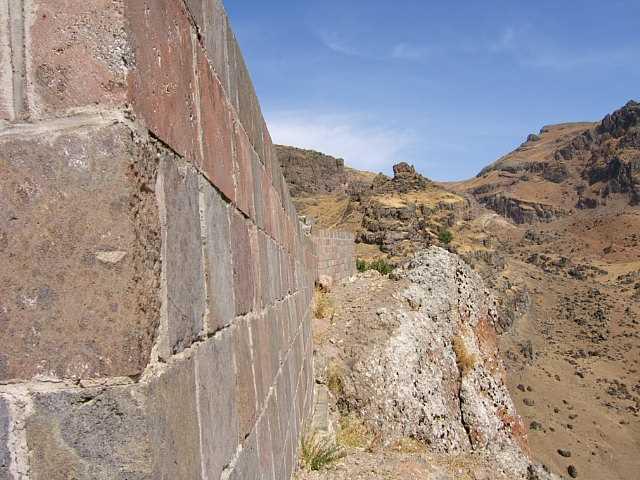
Mazgirt Castle(Kültürportalı)
Location | Mazgirt district Tunceli | ||||||||
|---|---|---|---|---|---|---|---|---|---|
Elevation(s) | Approximately 1 400 metres | ||||||||
Access | A pass ascended via a natural rock staircase with forty steps | ||||||||
Building Type | A fortress situated on a natural hill, surrounded by walls | ||||||||
Period(s) | Multi-layered use from Urartu to the Ottoman period | ||||||||
Remains | Observation point, pavilion, and possible windmill foundations | ||||||||
Mazgirt Castle is situated on the summit of a natural hill dominating the plain, approximately 40 kilometers north of the center of Tunceli Province. This location provided significant advantages for defense, surveillance, and control of trade routes since antiquity. The castle occupies a strategic point controlling the passes leading into the Euphrates Valley and has thus shaped the military, administrative, and commercial developments in the region’s history.
The planning of Mazgirt Castle took full advantage of the natural topography. The geological formation of the hill was adapted for defensive purposes. Access to the castle is achieved via a tunnel-like passage carved into the rock, followed by a narrow path consisting of approximately forty steps. This design ensured controlled access and enhanced the castle’s defensive strength.
Some stone structure remains at the summit are interpreted as possibly serving as a watchtower or military headquarters. Foundations of structures believed to have functioned as windmills or similar agricultural installations are also present. Surviving sections of the curtain walls are constructed from large stone blocks; although partially damaged over time, substantial portions still stand.
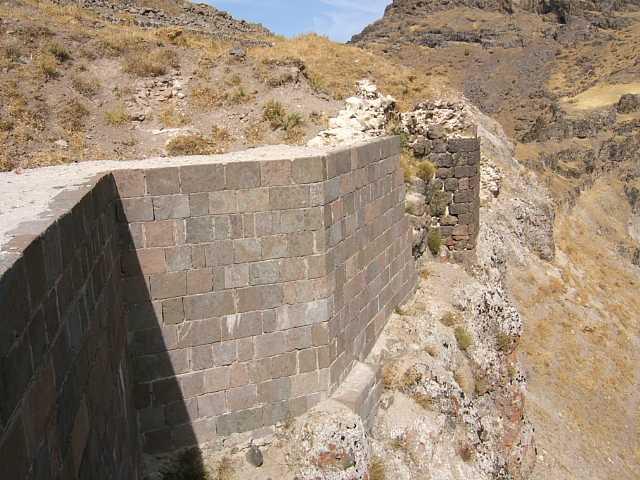
Mazgirt Castle (Culture Portal)
Mazgirt and its surroundings have been within the sphere of influence of numerous civilizations throughout history. The region was first settled during the Urartian period and later came under the control of the Medes, Persians, Romans, and Byzantine Empire. Particularly due to its position along the Roman–Byzantine frontier, the castle is understood to have functioned as a surveillance station in the early Middle Ages.
With the arrival of Islam in the region from the 7th century onward, the castle assumed an active role in the Arab–Byzantine conflicts. After coming under Seljuk rule in the 11th century, it was later restored and repurposed during the Akkoyunlu and Ottoman periods as an administrative center ensuring regional security.
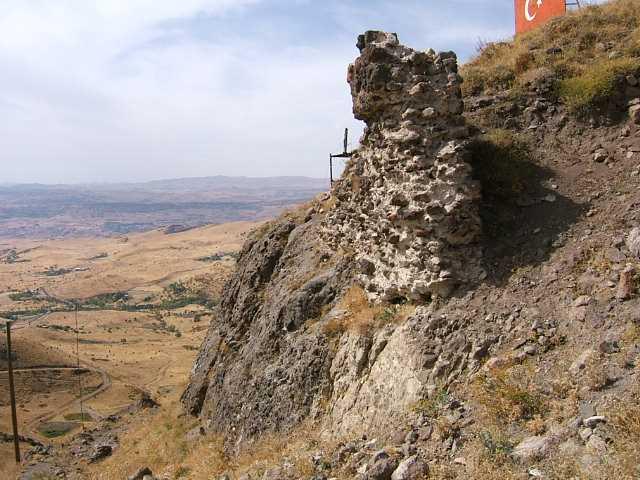
Mazgirt Castle (Culture Portal)
Mazgirt Castle is currently recognized as a protected archaeological and cultural heritage site and attracts both local and international visitors. The hiking route leading to the castle is used by nature walkers and history enthusiasts alike. Visitors experience a rich combination of scenic views and historical atmosphere around the site.
Although a large portion of the curtain walls is in ruins, the surviving sections provide sufficient information about the overall architectural structure. Local communities and municipal authorities are conducting various cultural awareness initiatives to preserve the castle and its surroundings.
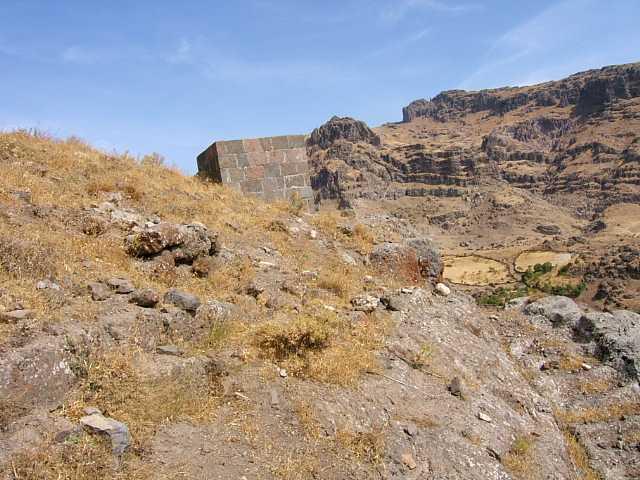
Mazgirt Castle (Culture Portal)
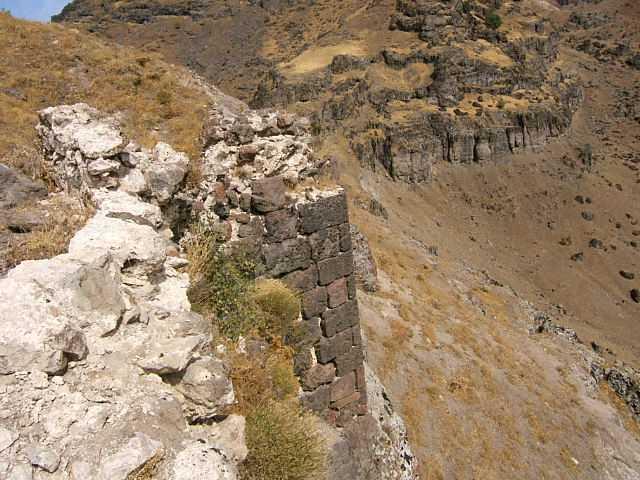
Mazgirt Castle (Culture Portal)
Ministry of Culture and Tourism of the Republic of Türkiye. "Mazgirt Kalesi." *Kültür Portalı*. Accessed July 15, 2025. https://www.kulturportali.gov.tr/turkiye/tunceli/gezilecekyer/mazgirt-kalesi
T.C.Mazgirt Kaymakamlığı Governorship. "Mazgirt." Accessed July 15, 2025. http://www.mazgirt.gov.tr/mazgirt-1
T.C.Mazgirt Kaymakamlığı Governorship. “Coğrafi Özellikleri ile Mazgirt.” Accessed July 15, 2025. http://www.mazgirt.gov.tr/cografi-zellikleri-ile-mazgirt
T.C.Tunceli İl Directorate of Culture and Tourism. "Mazgirt." Accessed July 15, 2025. https://tunceli.ktb.gov.tr/TR-57255/mazgirt.html

Mazgirt Castle(Kültürportalı)
Location | Mazgirt district Tunceli | ||||||||
|---|---|---|---|---|---|---|---|---|---|
Elevation(s) | Approximately 1 400 metres | ||||||||
Access | A pass ascended via a natural rock staircase with forty steps | ||||||||
Building Type | A fortress situated on a natural hill, surrounded by walls | ||||||||
Period(s) | Multi-layered use from Urartu to the Ottoman period | ||||||||
Remains | Observation point, pavilion, and possible windmill foundations | ||||||||
Architectural Plan, Construction Techniques, and Remains
Historical Background and Civilizational Context
Conservation Status and Contemporary Use