


This article was automatically translated from the original Turkish version.
+1 More
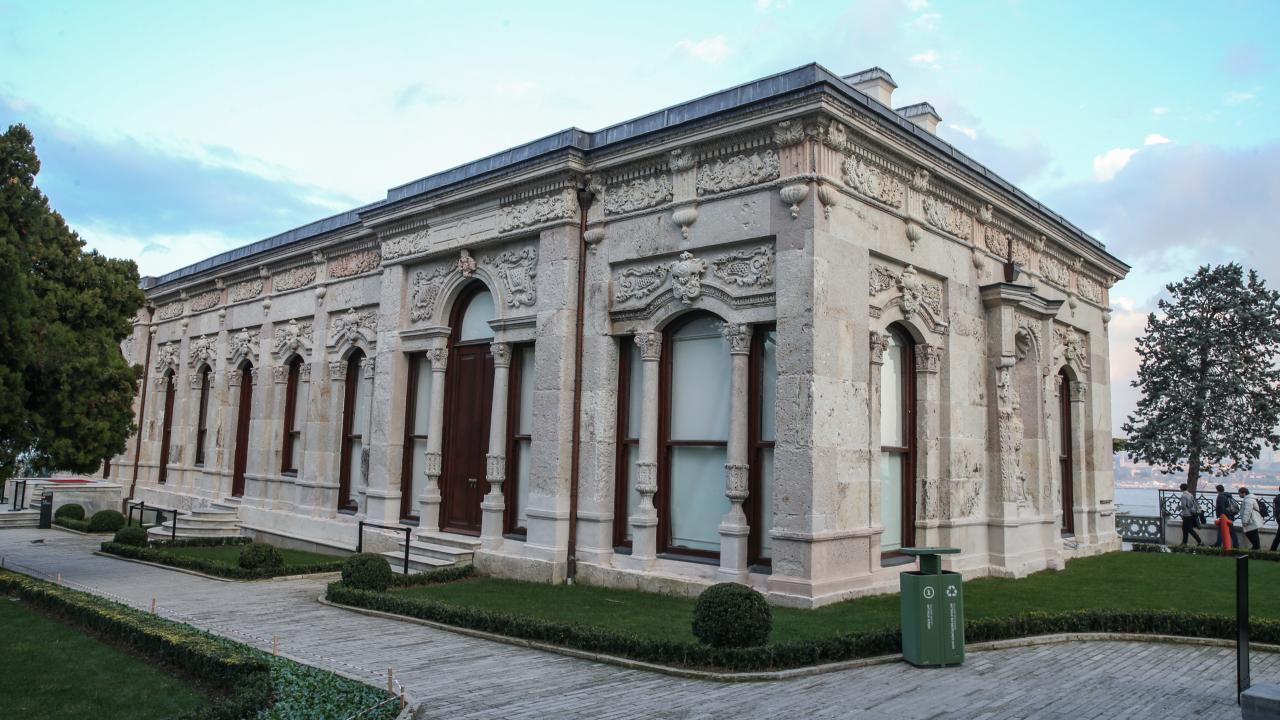
The Mecidiye Köşkü is a structure built in the fourth courtyard of Topkapı Sarayı during the reign of Abdülmecid. The pavilion, covering an area of approximately 570 square meters, was completed in 1858 under the architectural design of Sarkis Balyan. It also holds the distinction of being the last pavilion constructed within Topkapı Sarayı.
It was built atop a retaining wall dating back to the Byzantine period. It is believed that previously, on the same site, there stood the Çadır Köşkü and another pavilion from the reign of Mehmed IV.
The structure commissioned by Sultan Abdülmecid is also known as Kasr-ı Hümayun. As the final pavilion built within Topkapı Sarayı, it is also referred to as Yeni Köşk. The pavilion has three entrances, one of which faces the Bosphorus. Inside, it contains two salons, six chambers, a toilet, and ancillary sections.
The pavilion features a spacious terrace covered with marble on its open facade facing the Bosphorus. The building consists of two main sections: the Harem and the Reception Hall. Within the Reception section, there is a large salon and two audience rooms.

Mecidiye Köşkü (Anadolu Agency)
The building was constructed in a style distinct from the general architectural character of Topkapı Sarayı and exhibits influences from 19th-century architectural art. Designed in the Empire style, the pavilion resembles Dolmabahçe Sarayı, which was built during the same period.
The ceiling decorations featuring floral motifs and gilded stucco work resemble those found in Dolmabahçe Sarayı, Ihlamur Kasrı, and Küçüksu Kasrı.
Mirrors, consoles, glass doors, chandeliers, interior wall decorations, and ceiling ornamentation follow this style. Additionally, the large-scale seashell and scroll motifs adorning both interior and exterior surfaces are examples of the Empire style’s adaptation of late Baroque decorative elements.
The pavilion, used for diplomatic purposes, was furnished with furniture imported from France. Items such as Boule technique cabinets, mirrors, and pianos are prominently displayed.

Mecidiye Köşkü (TRT News)
In 1856, during the Ottoman period, the imperial administration moved from Topkapı Sarayı to Dolmabahçe Sarayı. The Mecidiye Köşkü, built by Sultan Abdülmecid, was not used as a residence or administrative center but rather as a ceremonial and leisure pavilion. When sultans visited Topkapı Sarayı for pilgrimages to the Hırka-ı Saadet and for religious and official ceremonies, they used this pavilion as a resting place. Ambassadors and foreign guests visiting the palace were also hosted in the Mecidiye Köşkü during official visits. During the Republican period, Atatürk and subsequent presidents used the Mecidiye Köşkü.
The restoration process, which began in 2020, was completed in 2023, after which the pavilion was opened to the public. The restoration was carried out in accordance with 19th-century photographs and historical documents. All furniture within the structure was also examined and conserved. The gold-leaf wall decorations inside the pavilion were restored by calligraphers. The plaster coating on the exterior surface was removed during the restoration to reveal the building’s original state.
Anadolu Ajansı. “Topkapı Sarayı’ndaki 165 Yıllık Mecidiye Köşkü İlk Kez Ziyarete Açılacak.” Accessed March 18, 2025.
NTV. "Restorasyonu Tamamlanan 164 Yıllık Mecidiye Köşkü Ziyarete Açılıyor." Accessed March 18, 2025. https://www.ntv.com.tr/n-life/kultur-ve-sanat/restorasyonu-tamamlanan-164-yillik-mecidiye-kosku-ziyarete-aciliyor,LHXoW1USoUClvlKvlFgERg
TRT Haber. “Mecidiye Köşkü 165 Yıl Sonra Ziyarete Açıldı.” Accessed March 18, 2025. https://www.trthaber.com/haber/kultur-sanat/mecidiye-kosku-165-yil-sonra-ziyarete-acildi-768329.html
Türkiye’s Historical Monuments. "Mecidiye Köşkü." Accessed March 18, 2025. https://www.turkiyenintarihieserleri.com/?oku=223
Yeni Şafak. "Mecidiye Köşkü Ziyarete Hazır: İlk Kez Yeni Şafak Görüntüledi." Accessed March 18, 2025. https://www.yenisafak.com/foto-galeri/hayat/mecidiye-kosku-ziyarete-hazir-ilk-kez-yeni-safak-goruntuledi-2073875/6
YouTube. "Mecidiye Köşkü – Video." Accessed March 18, 2025. https://www.youtube.com/watch?v=KyHL_Hk3_RA&themeRefresh=1
İrez, Yrd. Doç. Dr. Feryal. Osmanlı Devrinde Batılılaşma ve Mecidiye Köşkü

Architectural Features
Usage
Restoration Process