


This article was automatically translated from the original Turkish version.
Essential Materials Required | First Aid Brochure Antiallergic Ointment Burn Ointment Disinfectant Solution Adhesive Tape Bandage Cloth Sterile Gauze Cotton | ||||||||
|---|---|---|---|---|---|---|---|---|---|
A pharmacy cabinet is a health support unit that may be established only in settlements without a pharmacy, and whose operation is permitted under specific conditions. Only medications authorized by relevant regulations may be stored and distributed in these units. The operational principles are regulated by the Pharmacy Cabinet Directive issued by the Ministry of Health.
Physicians wishing to open a pharmacy cabinet must submit a written application to the Directorate of Health and Social Assistance to which the location is affiliated. Following the application, if an on-site inspection by the relevant authorities confirms compliance with the provisions of the Directive, permission is granted to open the cabinet. Reports and information regarding this process are transmitted to the Health Agency (currently the Ministry of Health).
Physicians who violate the provisions of the Directive receive two written warnings from the Health Agency. If non-compliance continues despite these warnings, the cabinet is closed and no further pharmacy cabinet may be opened in the same area. Medications from closed cabinets are transferred under supervision to another pharmacy or storage facility.
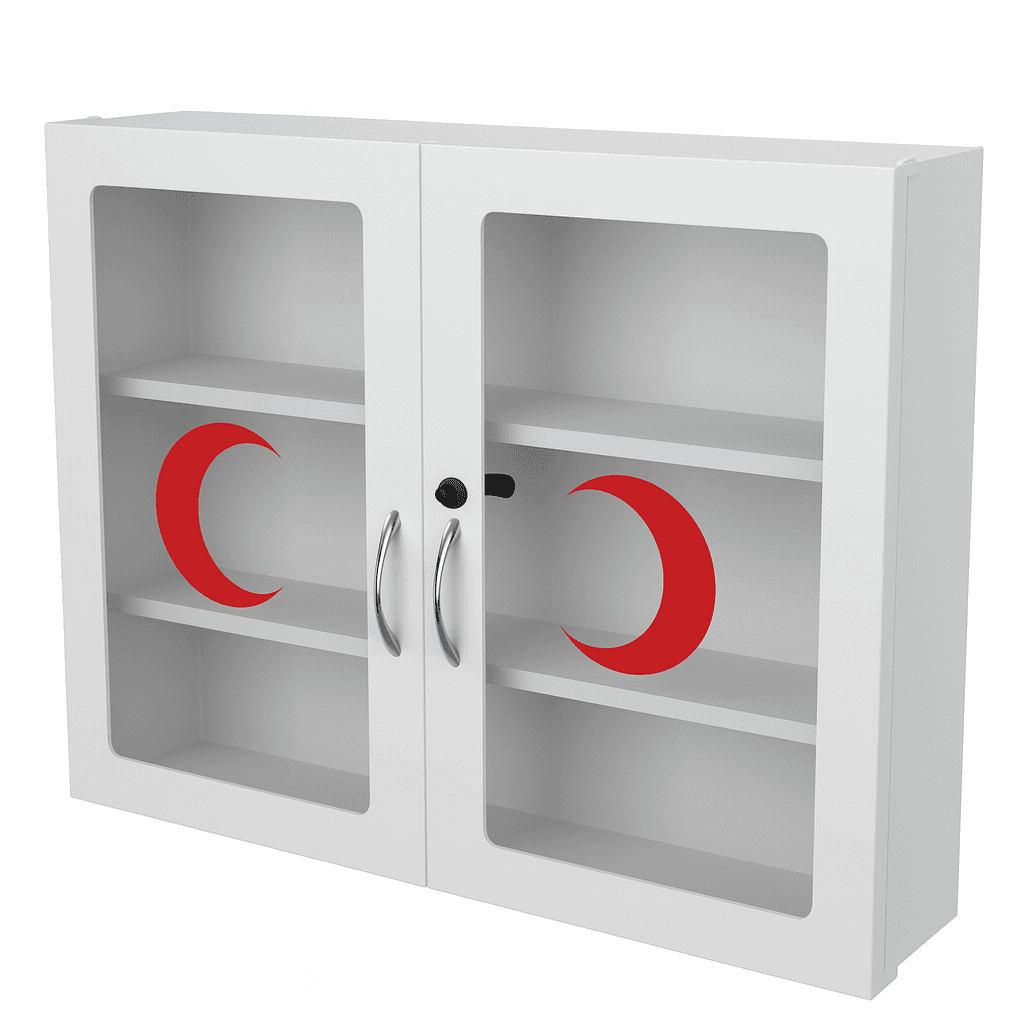
A pharmacy cabinet is a storage unit for medical products and first aid supplies that ensure prompt and effective intervention in emergency health situations at home, school, or workplace. When selecting medications and equipment for the cabinet, common illnesses, accident risks, and the specific health needs of family members must be considered. Medications requiring a doctor’s prescription must be stored in the correct dosage and under appropriate conditions.
Mezitli İlçe National Education Directorate. "Ecza Dolapları." Microsoft Word document. Accessed July 26, 2025. https://mezitli.meb.gov.tr/meb_iys_dosyalar/2016_08/23103048_ecza_dolaplari.docx.
Ministry of Health of the Republic of Türkiye. "Ecza Dolapları Talimatnamesi." Accessed July 26, 2025. https://www.saglik.gov.tr/TR-11082/ecza-dolaplari-talimatnamesi.html.
T.C.Yozgat İl Directorate of National Education. *İlkyardım ve Ecza Dolabı Malzeme Listesi*. Yozgat: T.C. Millî Eğitim Bakanlığı, 2019. Accessed July 26, 2025. https://yozgatisg.meb.gov.tr/meb_iys_dosyalar/2019_01/21162630_ilkyardYm_ve_ecza_dolabY_malzeme_listesi.docx.

Essential Materials Required | First Aid Brochure Antiallergic Ointment Burn Ointment Disinfectant Solution Adhesive Tape Bandage Cloth Sterile Gauze Cotton | ||||||||
|---|---|---|---|---|---|---|---|---|---|
Application and Authorization Process
Violations and Sanctions
First Aid Materials and Medications Required in a Pharmacy Cabinet
Medications Required in a Pharmacy Cabinet
First Aid Materials Required in a Pharmacy Cabinet
Other Items Required in a Pharmacy Cabinet