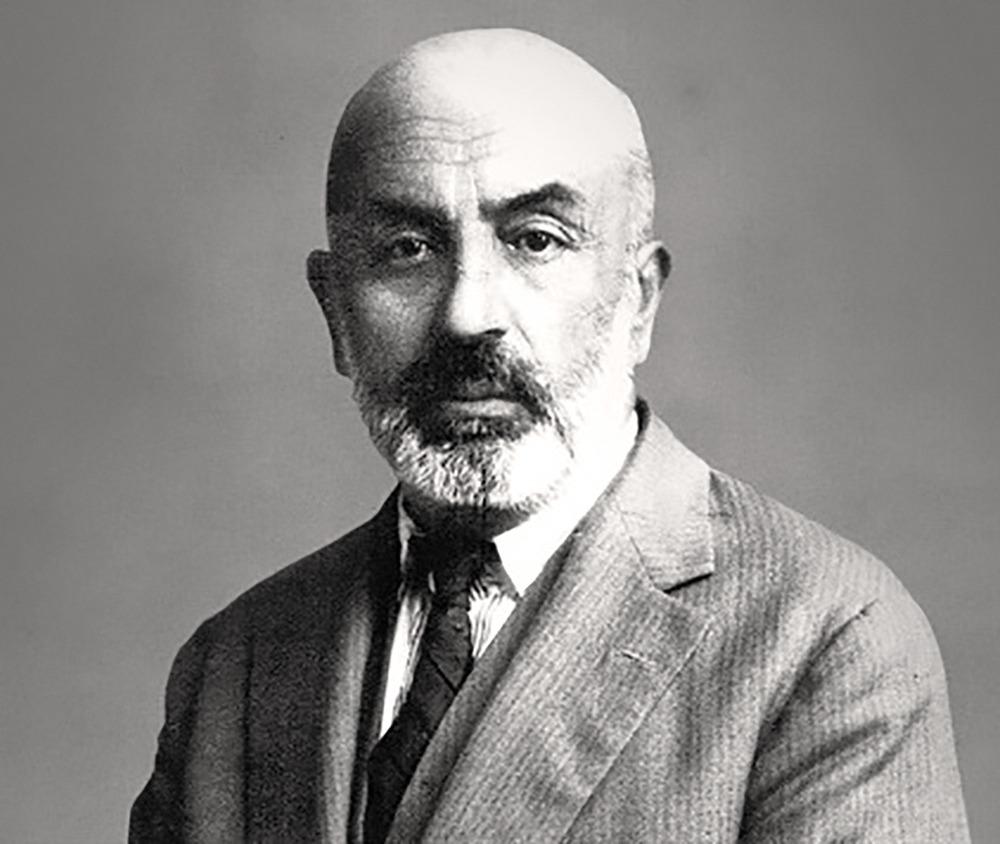


+2 More

Birth | Istanbul 20 December 1873 | ||||||||
|---|---|---|---|---|---|---|---|---|---|
Death | Istanbul 27 December 1936 | ||||||||
Burial | Istanbul Edirnekapı Cemetery | ||||||||
Profession(s) | member of parliament teacher veterinary physician translator thinker Poet | ||||||||
Spouse(s) | İsmet Hanım | ||||||||
Child | Mehmet Emin Mehmet Tahir Suat Ayşe Feride Fatma Cemile | ||||||||
Education | Halkalı Veterinary School Mekteb-i Mülkiye İdâdîsi Fatih Central Intermediate School Emir Buhârî Neighborhood School | ||||||||
Professional Positions | translation of the Qur’an Turkish language courses at Câmiatü’l-Mısriyye (Cairo University) secretary-general of Dârü’l-Hikmeti’l-İslâmiyye Cemiyeti professor of Ottoman literature at the Faculty of Letters of Istanbul Darülfünûnu writing and publications around Sırât-ı Müstakîm / Sebîlürreşâd Veterinary medicine under the Ministry of Agriculture | ||||||||
Political Positions | Member of parliament for Burdur in the First Grand National Assembly of Türkiye (1920–1923) | ||||||||
Works | Gölgeler Âsım Hatıralar Fatih Kürsüsünde Hakkın Sesleri Süleymaniye Kürsüsünde Safahat İstiklâl Marşı | ||||||||
Mehmet Âkif Ersoy (20 December 1873–27 December 1936) was a poet, writer, and intellectual who lived during the final years of the Ottoman Empire and the founding years of the Republic of Türkiye. He is known for his activities during the National Struggle, his service as a deputy for Burdur in the Grand National Assembly of Türkiye (1920–1923), and for being the author of the İstiklâl Marşı, the national anthem of Türkiye.
Two main claims appear in different sources regarding the place of Mehmet Âkif Ersoy’s birth. Ottoman population registers dated 1906 and 1919 record his name as “Mehmed Âkif Efendi,” with a birth year of 1873 and birthplace listed as Bayramiç, within the sanjak of Çanakkale. These same documents link his place of registration to the Fatih district of Istanbul Vilayet and provide a specific address: Hoca Üveys neighborhood, Hüsrev Paşa Street, residence number 10, type of dwelling: house.【1】 These records provide concrete evidence that Âkif’s official identity was tied to a residential trajectory anchored in Bayramiç for birth and Fatih, Istanbul, for registration.
By contrast, the introduction to the TBMM publication of letters states that Âkif was born in Sarıgüzel Neighborhood, near Fatih in Istanbul, in the area of today’s Vatan Street. Thus, while the Ottoman population registers record Bayramiç as the place of birth and Fatih as the place of registration, the TBMM biographical introduction directly identifies Istanbul-Fatih/Sarıgüzel as the birthplace.【2】 When reconstructing his early life, both narratives must be considered simultaneously.
Family details are thoroughly documented in both official records and Âkif’s own accounts. The population registers list his father’s name as “müteveffâ Mehmed Tahir” and his mother’s as “Emine Şerife Hanım.” In the 19 May 1909 family statement used for his civil service record, his father is described as “the late Mehmed Tahir Efendi of the Fatih dersiamlar.”【3】 This phrasing indicates that his father’s identity was recorded not merely by name but also by his scholarly standing within Istanbul’s intellectual circles.
In a personal account given to his close circle, Âkif stated that his father, Tahir Efendi, was from the village of İpek in Suşisa; that his grandfather’s name was Nurettin Ağa; that Nurettin Ağa was illiterate and a “pure Albanian”; and that Tahir Efendi came to Istanbul and received instruction and authorization from Hacı Mahmut Efendi of Yozgat.【4】 Thus, his father’s life is clearly traced along a line connecting a Rumelian family background with Islamic education in Istanbul and the role of dersiam. The TBMM publication places this lineage within a chronological framework, listing Tahir Efendi among the teachers of the Fatih Medrese, giving his birth and death years as 1826–1888, and explicitly stating that the family migrated from the Balkans (Kosovo) to Istanbul during the reign of Sultan Mahmud II.【5】
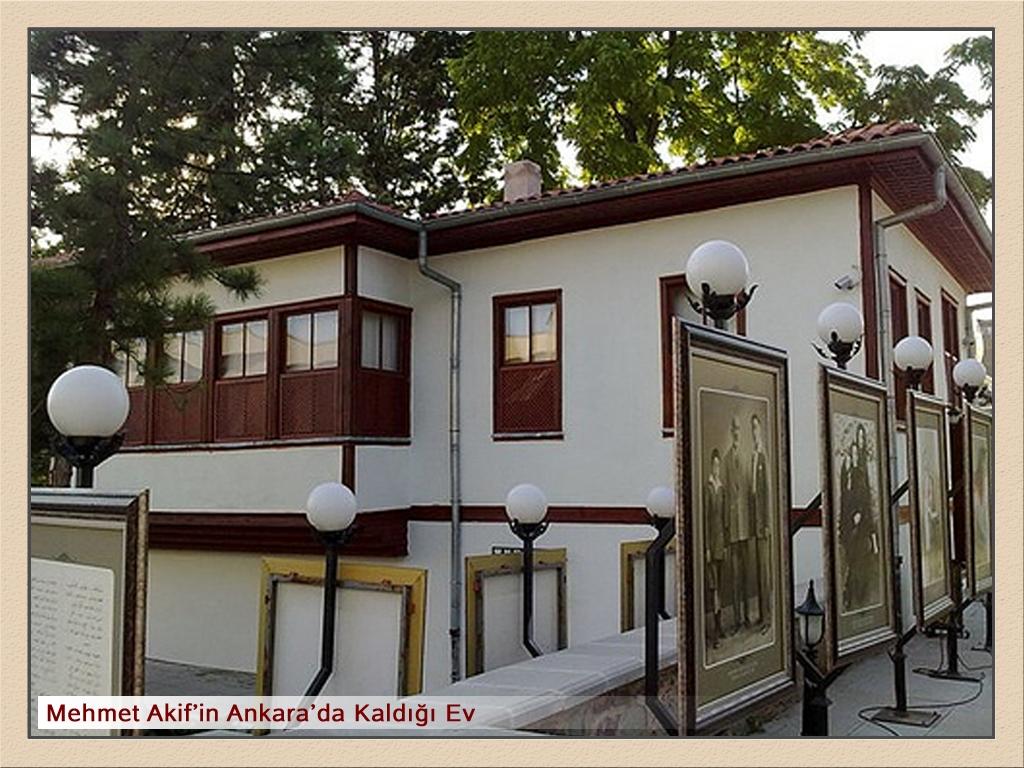
The House Where Mehmet Akif Ersoy Lived in Ankara (Diyanet)
The maternal lineage is similarly detailed. The mother, recorded in official documents as Emine Şerife, is also referred to as “Şerife Hanım,” with birth and death years given as 1836–1926. Her family originally migrated from Central Asia (Uzbekistan/Bukhara), first settling in Tokat and later moving to Istanbul.【6】 In Âkif’s personal account, the Bukharan connection is elaborated further: his maternal grandfather was Mehmed Efendi of Bukhara; a family that migrated from Bukhara to Anatolia married in Boyabat and later moved to Tokat; his maternal grandmother was born in Tokat; and Emine Şerife Hanım herself was born and raised in Anatolia.【7】 Thus, the maternal line is linked to a family history of settlement in Anatolia via the Bukhara-Tokat route and a migration trajectory extending to Istanbul.
The spatial framework of his early life becomes evident through the Fatih records in the population registers. The entries for Hoca Üveys Neighborhood and Hüsrev Paşa Street anchor Âkif’s childhood environment in one of Istanbul’s historic centers, within a neighborhood-scale daily life. This address is not merely a residence record; it also signifies the family’s contact points with the city’s social and religious circles. Combined with his father’s role as a dersiam, it becomes clear that religious education, textual study, and language learning were integral parts of daily life from an early age.
During his early childhood, Âkif’s initial education unfolded closely within the family circle. In his own account, he began schooling at age four at the Emir Buhari neighborhood school in Fatih, where he studied for about two years. He then continued at an official primary school under the Ministry of Education in Fatih; during this period he attended school regularly while also continuing Arabic reading lessons with his father.【8】 This dual path demonstrates that from an early age, he was simultaneously engaged with the formal school system and home-based language instruction.
The rüştiye years bring the human dimension of his early environment into sharper focus. Âkif recalls specific teachers from the Fatih Central Rüştiye by name: Chief Teacher Hoca Süleyman Efendi, Second Teacher Mustafa Efendi, and Third Teacher Hafız Osman Efendi. The same account provides details about their origins: Süleyman Efendi is identified as Albanian, Mustafa Efendi as Anatolian, and Hafız Osman Efendi is remembered by his physical appearance—his yellow beard.【9】 Such details show that his early educational environment was remembered not merely by institutional names but by the identities and everyday impressions of the individuals involved.
Mehmet Âkif’s formal education followed a path beginning with classical preparatory studies and extending into the modern bureaucratic schools and specialized institutions of his time. In the initial phase, he studied foundational subjects known as “mukaddemât-ı ulûm”; this period served as a foundation for the formal educational levels he would later enter.【10】 Following this preparation, he entered the Mülkiye İdadisi and graduated on 23 November 1889 with a certificate of completion.【11】 The Mülkiye İdadisi diploma conferred privileges under the Maarif Nizamnamesi; the existence of French-certified copies of the diploma indicates the institution’s bilingual administrative procedures.【12】
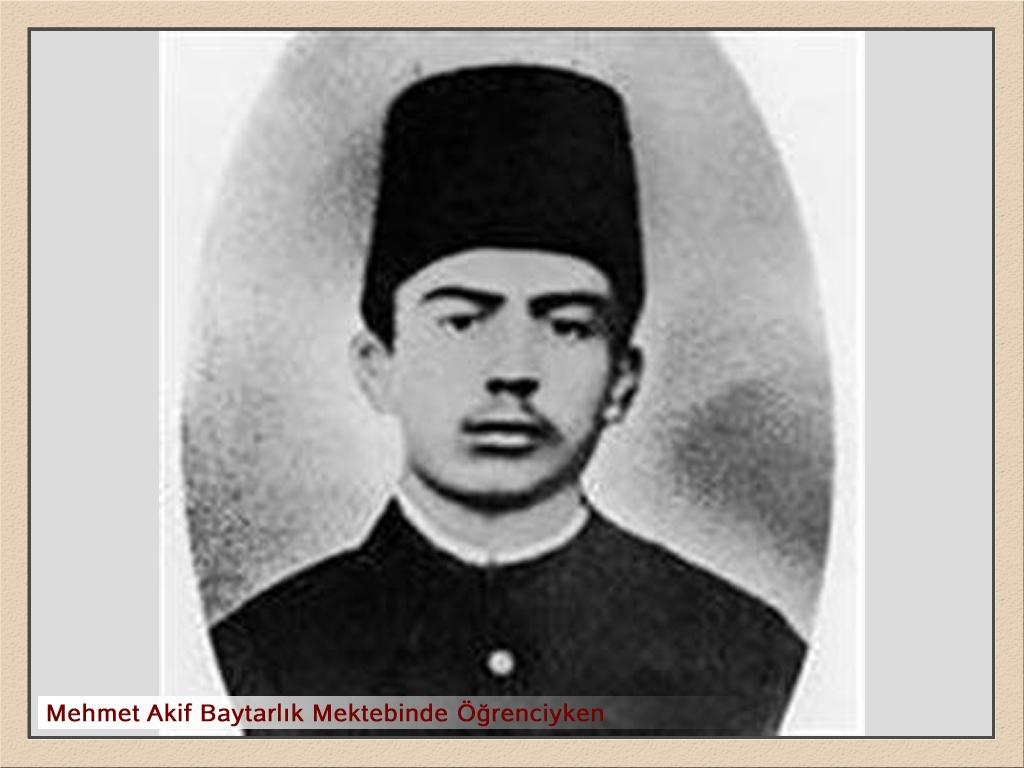
Mehmet Akif Ersoy at the Baytar Mektebi (Diyanet)
After the İdadis, his specialization became clear as he entered the Mülkiye Baytar Mektebi Âlîsi by examination. This four-year program combined theoretical and practical veterinary training. The educational process was not limited to coursework; students were required to demonstrate theoretical and practical competence through examinations. Âkif completed his four-year studies and passed his graduation examination as the top student in his class, graduating on 3 January 1894.【13】
Diploma and authorization certificates can be traced through copies issued and certified several years after graduation. The veterinary medical authorization certificate issued by the Mülkiye Baytar Mektebi bears the date 24 September 1897;【14】 the veterinary doctor diploma copies bear the date 4 October 1897.【15】 This shows that professional certification was recorded at different dates within the official documentation system. Alongside Ottoman-language copies, French-certified versions were available, demonstrating that the professional diploma was documented not merely for internal bureaucratic use but also for recognition by various official authorities.
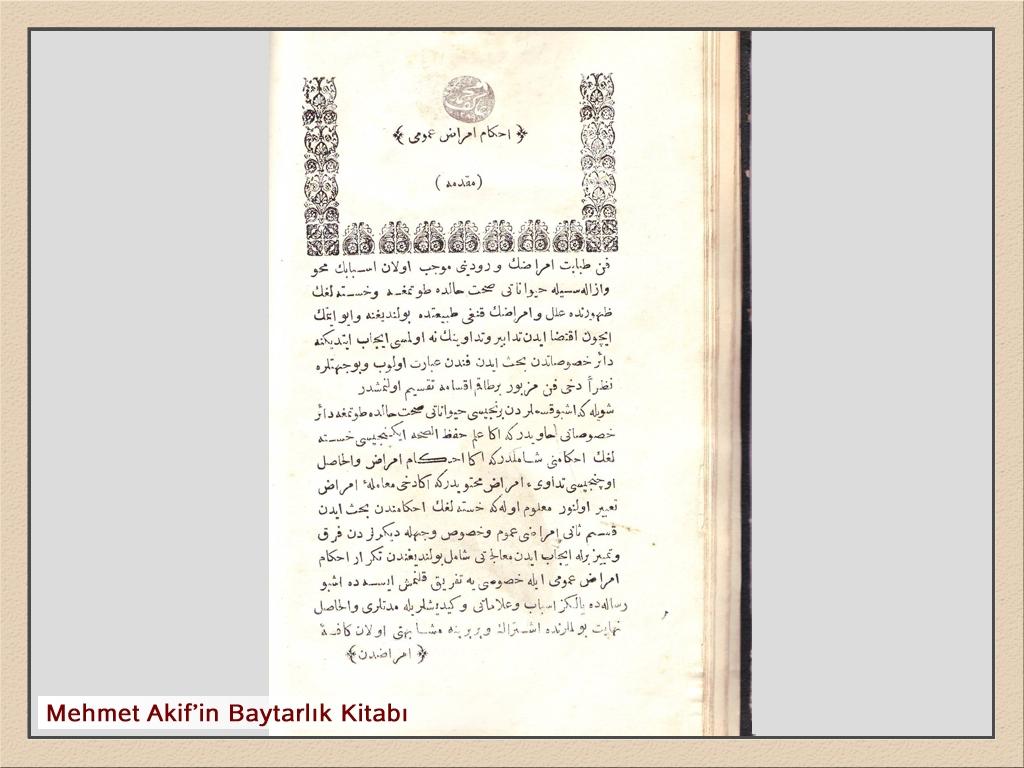
Introduction to Mehmet Âkif’s Book on Veterinary Science (Diyanet
At age twenty, on 26 December 1893, Mehmet Âkif was appointed as Assistant Inspector of the Fifth Branch of the Ziraat Hey’et-i Fenniyesi under the Ministry of Forestry, with a salary of 750 kurush.【16】【17】 When the dates are considered together, this appointment preceded his graduation, reflecting an intermittent transition between education and public service. The integration of his professional formation with state service reflects the conceptualization of veterinary science not merely as a “healing” field but as an administrative expertise linked to agricultural and livestock oversight.
His linguistic ability was also formally documented. Âkif explicitly declared in his official translation statement that he spoke and wrote both Turkish and French.【18】 When combined with the French-certified copies of his İdadis and Baytar diplomas, it becomes clear that French was not merely a reading skill for him but a functional competency essential for official documents, correspondence, and inter-institutional communication.
Mehmet Âkif’s public service began on 26 December 1893 with his appointment as assistant veterinary inspector at the Fifth Branch of the Ziraat Hey’et-i Fenniyesi under the Ministry of Forestry. His initial salary was 750 kurush. On 13 March 1897, as part of a general salary adjustment, his monthly pay was reduced to 675 kurush; on 16 September 1897, it increased by 225 kurush to 900 kurush. On 26 December 1903, it rose by another 115 kurush to 1055 kurush. On 29 August 1908, a raise of 295 kurush brought his salary to 1350 kurush; on 14 October 1908, a further raise of 450 kurush raised it to 1850 kurush. The 1909 family statement records that at that time he was serving with a salary of 1850 kurush, with no complaints recorded against him and no judicial proceedings initiated.【19】
His job description included both specialized tasks within the central administration and field assignments. In 1894, he was sent to Edirne Vilayet to implement scientific and preventive measures against animal diseases. For this assignment, travel expenses of 440 kurush were paid. His actual service period in Edirne was recorded as 18 months and 9 days, from 31 August 1894 to 10 March 1896.【20】
The relevant provision of the period’s Mülkiye Baytarları Nizamnamesi stipulated that veterinarians temporarily assigned to duties outside their jurisdiction were entitled to an additional payment equal to half their salary. Accordingly, a total of 2407 kurush in additional payments was approved for his 18-month service in Edirne; it was decided that this amount would be covered under the “veterinarians’ daily allowances and travel expenses” budget line of 1897.【21】
Within the central administration, the department responsible for paying his salary changed. Starting on 14 March 1906, his salary began to be paid from the budget of the Ministry of Forestry and Mines through the Ziraat Sandığı, reflecting a shift in internal financial arrangements.【22】 During the same period, his duties were no longer limited to inspection and reporting; administrative correspondence and teaching activities became a distinct parallel line of responsibility alongside his civil service.
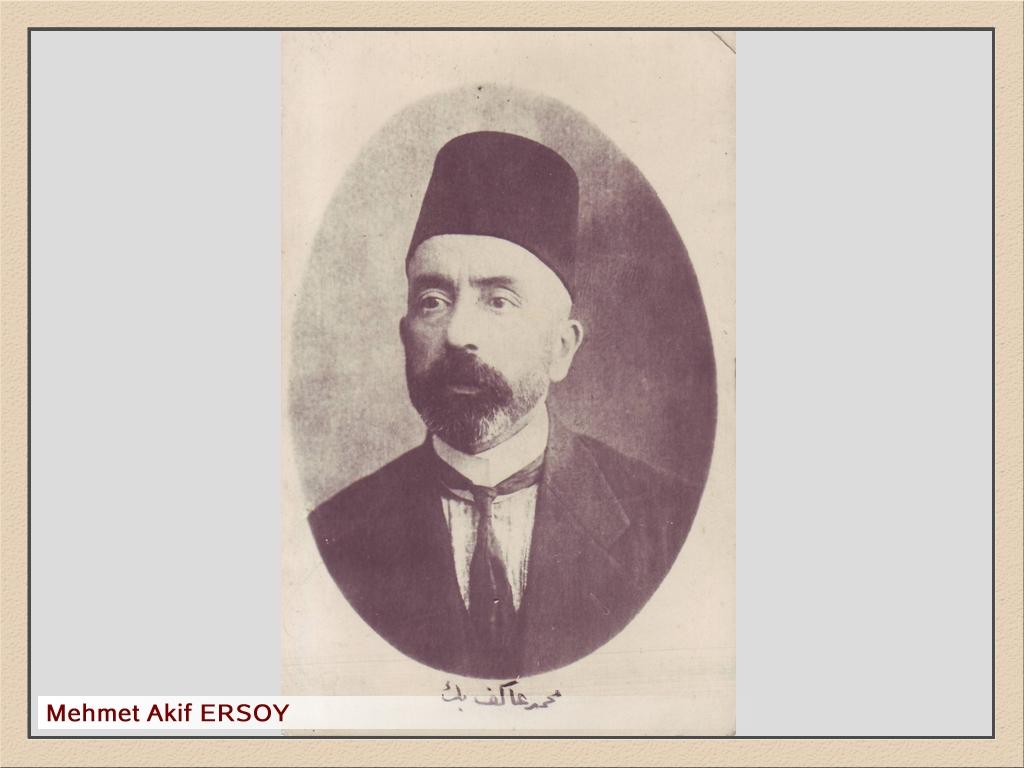
Portrait of Mehmet Akif Ersoy (Diyanet)
Teaching assignments first entered official records through the Halkalı Ziraat Mektebi. On 17 October 1906, he was appointed as a teacher of official correspondence at the Halkalı Ziraat School for an additional fee of 300 kurush. On 19 December 1908, this additional fee was raised to 400 kurush. A regulation dated 11 September 1909 confirmed that he continued teaching at this rate; on 4 January 1910, the fee was increased by 100 kurush to 500 kurush.【23】 This trajectory shows that Âkif was associated not only with literary production but also with institutional teaching in the fields of “official writing” and “penmanship.”
From the end of 1908, the teaching line shifted to Darülfünun. After Tevfik Fikret resigned from his position teaching Ottoman Literature, it was decided that Âkif would be assigned the first-year Ottoman Literature course; the second-year course was assigned to Hüseyin Cahid, and the third-year course to Dr. Ali Rıza Tevfik. On 24 November 1908, he was officially appointed to teach Ottoman Literature at Darülfünun’s Literature Branch with a salary of 600 kurush, confirming this decision as an official assignment. A document dated 1910 further records that he had been actively fulfilling this role since 1908.【24】
During the same years, his professional expertise and teaching activities progressed in parallel. On 5 November 1908, he was assigned to teach courses in health mapping, veterinary correspondence, commercial law, and medical law at the Mülkiye Baytar Mektebi; an additional fee of 750 kurush was proposed. However, he resigned from this position.【25】 This resignation can be interpreted as a deliberate choice amid growing teaching and institutional responsibilities.
The most significant advancement in his civil service career came with his promotion on 7 September 1909, when he was appointed Assistant Director of Veterinary Affairs with a salary of 2000 kurush.【26】 Thus, Âkif advanced to a higher administrative position within the forestry-agriculture bureaucracy while continuing his teaching activities at Halkalı Ziraat Mektebi and Darülfünun, establishing a dual professional practice integrating public service and education.
Mehmet Âkif’s relationship with the literary environment developed on a foundation combining the observational experience gained through his professional life with the expressive opportunities offered by Istanbul’s periodical press. Sırat-ı Müstakim, launched on 24 July 1908 after the re-establishment of the Constitutional Monarchy, became central to this environment. Âkif served as chief editor of the magazine; he continued in this role even after the publication’s name changed to Sebilürreşad in 1912.【27】 These two names represent not merely a change of title but the institutional forms adopted by the same publication line during different periods. The magazine combined religious, scientific, and literary elements and quickly expanded its agenda to become a vibrant public debate forum.
During its founding phase, Eşref Edip and Ebulûla Mardin played decisive roles, while Âkif worked within the magazine not under an official title but as an “unnamed chief editor” through his practical influence.【28】 Within this framework, Âkif influenced not only the magazine’s textual production but also the gradual shaping of its editorial policy. The initial religious-ethical framework was preserved while the magazine expanded through lectures, foreign news, articles from distant regions, and letters.
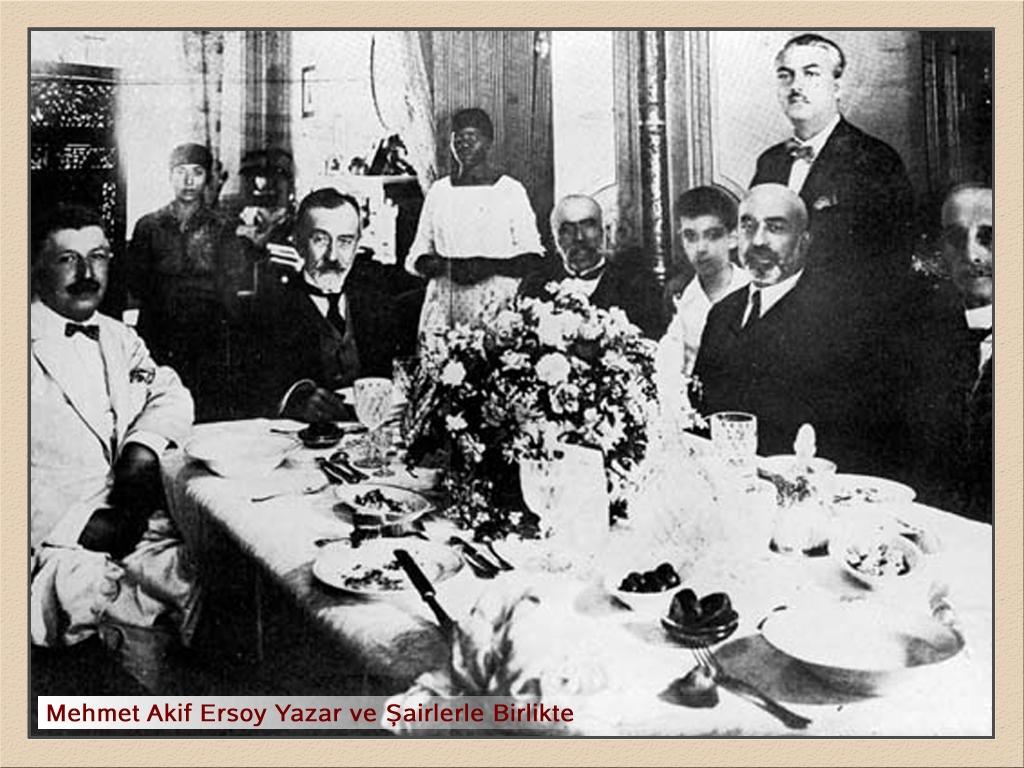
The Literary Circle Involving Mehmet Âkif (Diyanet)
One notable aspect of this expansion was the magazine’s orientation toward a broad audience extending far beyond Istanbul—from the Balkans to Kazan, from Turkistan to the Caucasus, from India to Japan.【29】 The letters received and the sensitivity toward distant regions demonstrate that Sırat-ı Müstakim–Sebilürreşad evolved into a publication network connecting with diverse regions of the Turkish and Islamic world.
The functioning of this periodical activity can be traced through concrete examples. The initial contact established with Ahmet Mithat Efendi is a typical case. Ahmet Mithat’s lecture on “Turkism” at his Fevziye Kıraathanesi was transcribed into two issues of the magazine.【30】 This transformation was not merely the publication of a lecture; it emerged as a publication technique that enhanced the magazine’s capacity to generate public debate.
In preparing the lecture text, Eşref Edip, under Âkif’s assignment, took notes and converted the speech into writing, revealing an internal division of labor and editorial coordination within the magazine. Similarly, the magazine’s interest in lectures expanded over time; the lectures and texts of figures such as Yusuf Akçura, Halim Sabit, Ispartalı Hakkı, and Halil Halit—who connected with the magazine’s circle upon his return from London Darülfünun—expanded its debate space. Later, Abdürreşit İbrahim also joined this circle; the publication and book-form dissemination of his travels and memoirs exemplify how the magazine’s activities extended beyond weekly publication to longer-term publishing initiatives.
Âkif’s production in the periodical world was not limited to poetry; however, the center of gravity shifted over time. In the magazine’s early period, he became more visible through his poems and some translations. Among these translations, his brief introductory text (“A Few Words”) to a translation from Ferit Vecdi stands out; alongside this, the open-letter-style text titled “An Important Message to Darülfünun Students” is recognized as one of the earliest examples of his prose style.【31】 These text types reflect the magazine’s desire to establish direct contact with its audience and the translation of rhetorical skill into writing: on one hand, moral and intellectual appeals to the public; on the other, direct addresses to specific groups such as students—all coexisting on the same publication platform.
The literary circle around the magazine was not merely a “writer roster”; it was a network functioning through meetings, lectures, shared writing, evaluation of incoming letters, and a balance of news and commentary from distant regions. It is also noteworthy how this network connected with Istanbul’s institutional circles.
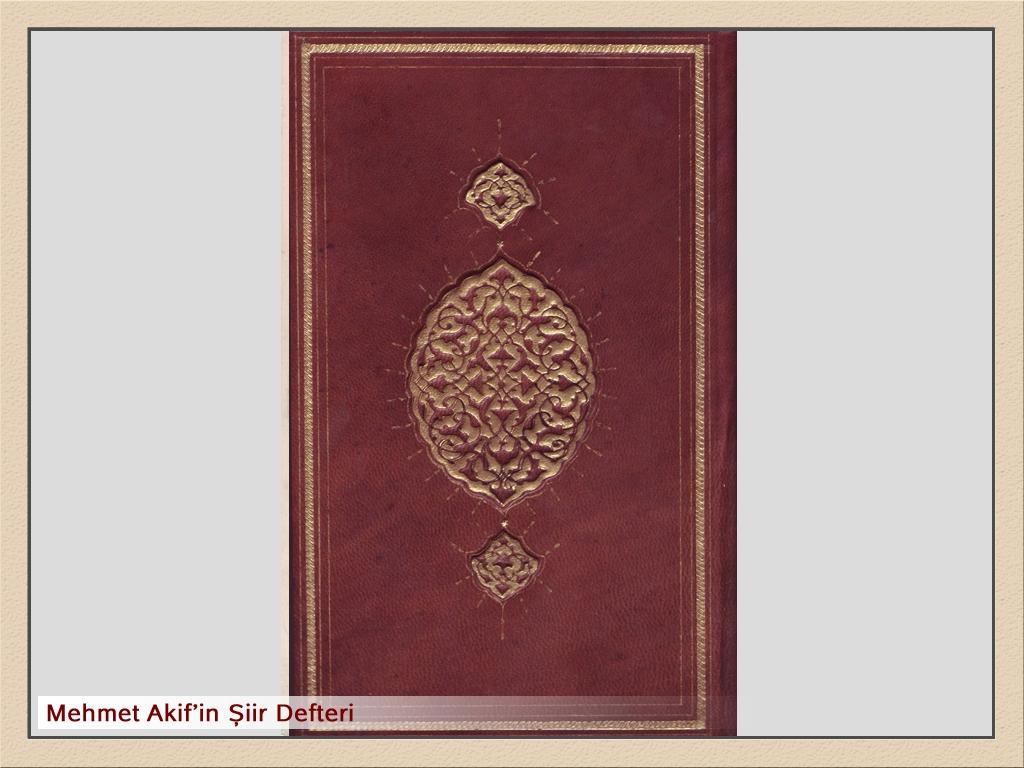
Mehmet Âkif Ersoy’s Poetry Notebook (Diyanet)
The Sırat-ı Müstakim circle established close ties with the Türk Derneği, founded in 1908; the magazine came to be perceived as a vehicle for the ideas of such organizations.【32】 The notion that this closeness provided a foundation for later organizational and publishing initiatives demonstrates that the magazine functioned not merely as a “literary journal” but as a guiding platform in the intellectual life of the era.
In this context, Âkif’s literary environment and periodical activities are evident in three layers. First, his role as chief editor, bearing editorial weight on the Sırat-ı Müstakim–Sebilürreşad line and shaping the magazine’s style and agenda. Second, his writing activities across different genres—poetry, translation, open letters, and lecture texts—all unified under the same publication platform and employing rhetoric that directly engaged readers. Third, his publishing approach, which transformed the magazine into a transnational network through letters and writings received from a vast geographical area. These layers require viewing Âkif’s position in the literary environment not merely as a “poet” but as someone fulfilling functions of publication management, text organization, and public debate production.
Mehmet Akif’s literary production expanded through interconnected yet historically distinct clusters of texts; the backbone of this whole is the Safahat, composed of seven volumes. Safahat is not merely a collection of poems arranged sequentially; it is a comprehensive corpus that traces the poet’s evolving choices in language, theme, and narrative style across different periods. The publication timeline spans from 1911 to 1933: Safahat (Istanbul 1911), Süleymaniye Kürsüsünde (Istanbul 1912), Hakkın Sesleri (Istanbul 1913), Fatih Kürsüsünde (Istanbul 1914), Hatıralar (Istanbul 1917), Asım (Istanbul 1924), and Gölgeler (Cairo 1933).【33】 This sequence reveals both the rhythm of composition and publication and the poet’s evolving approach to social issues.
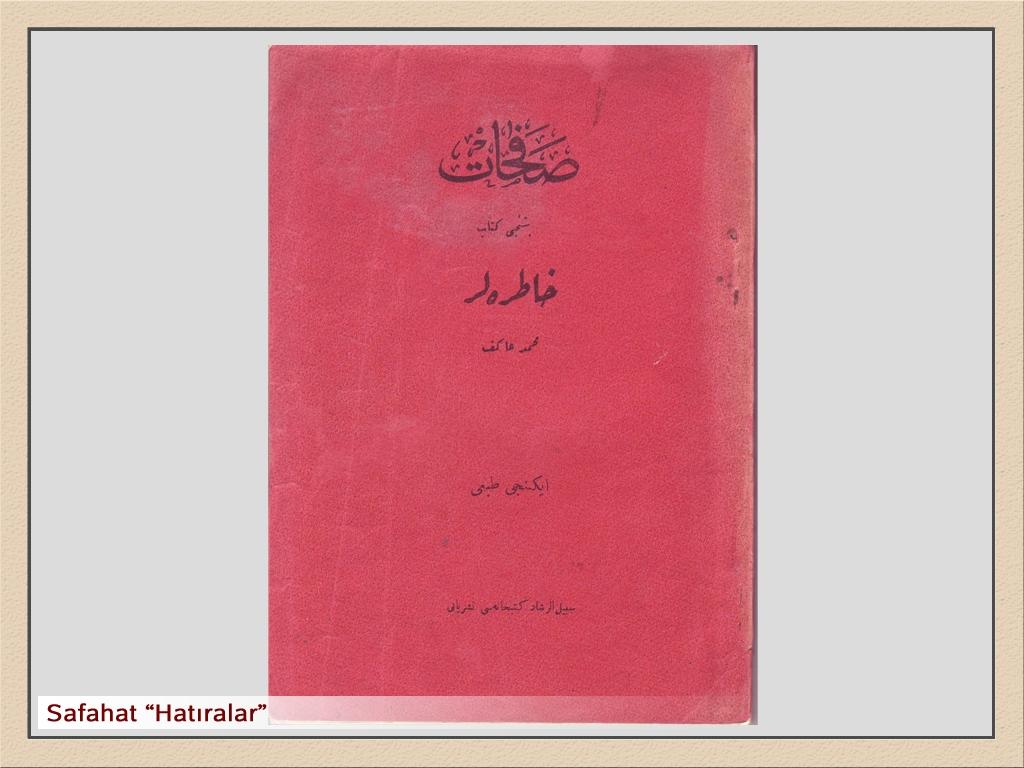
Safahat - Hatıralar Book (Diyanet)
The first volume of Safahat (1911) serves as a prologue clearly revealing the function Akif assigned to poetry. Shortly after its publication, he composed a short verse summarizing his poetic outlook within his circle of friends;【34】
My two eyes, brother Mithat Cemal,
If you seek poetry in Safahat, do not look,
There is only one place that is precious... Show it...
No Kufic script,
No illness,
No coffee,
Which one then?
A whole lifetime buried in three and a half nazmas!
This verse does not appear in the first edition but was added to the end of the book in the 1918 second edition.【35】 During the same period, it is observed that Akif gifted copies of the book to close associates and students, sometimes inscribing personal dedications in his own handwriting. These details suggest that Safahat was not merely a printed object but a living text, circulating, shared, and acquiring new layers of meaning within personal relationships.
The second volume of the corpus, Süleymaniye Kürsüsünde (1912), is one of the clearest examples of Akif’s capacity for sustained narrative poetry. The work comprises 501 couplets; its publication progressed through serial installments in the magazine, with a gap intervening before completion.【36】 This technical detail reveals that Akif’s poetic production developed not as isolated, complete texts but as labor-intensive processes shaped by the possibilities and constraints of the publishing world. Moreover, the book’s reprints in 1912, 1914, 1918, and 1928 demonstrate its continuous circulation among readers of the era.【37】
Fatih Kürsüsünde (1914) and Süleymaniye Kürsüsünde, as their titles suggest, center the concept of the “kurs” (platform). Here, the kurs is not merely the space of religious sermons but a node where public speech meets the social sphere. Akif, along this line, carries a narrative style approaching spoken discourse within long poetic structures; the narrator’s voice maintains fluid transitions between observation, critique, accounting, and direct address. In these books’ language, the rhythm of everyday speech and the discipline of aruz coexist: Akif uses aruz not merely out of adherence to tradition but as a means to construct expansive narratives without distorting the nature of speech.【38】
Within the corpus, Hatıralar (1917) is a structure that brings together “personal memory” and “collective memory” on the same plane. On one hand, concrete scenes are constructed through place, time, and human relationships; on the other, these scenes are interpreted within the social climate of wartime, the pressures of daily life, and the erosion of moral standards. The position of Hatıralar within Safahat marks a phase in which Akif’s observational side becomes more prominent, and poetry assumes a kind of “social record” function.
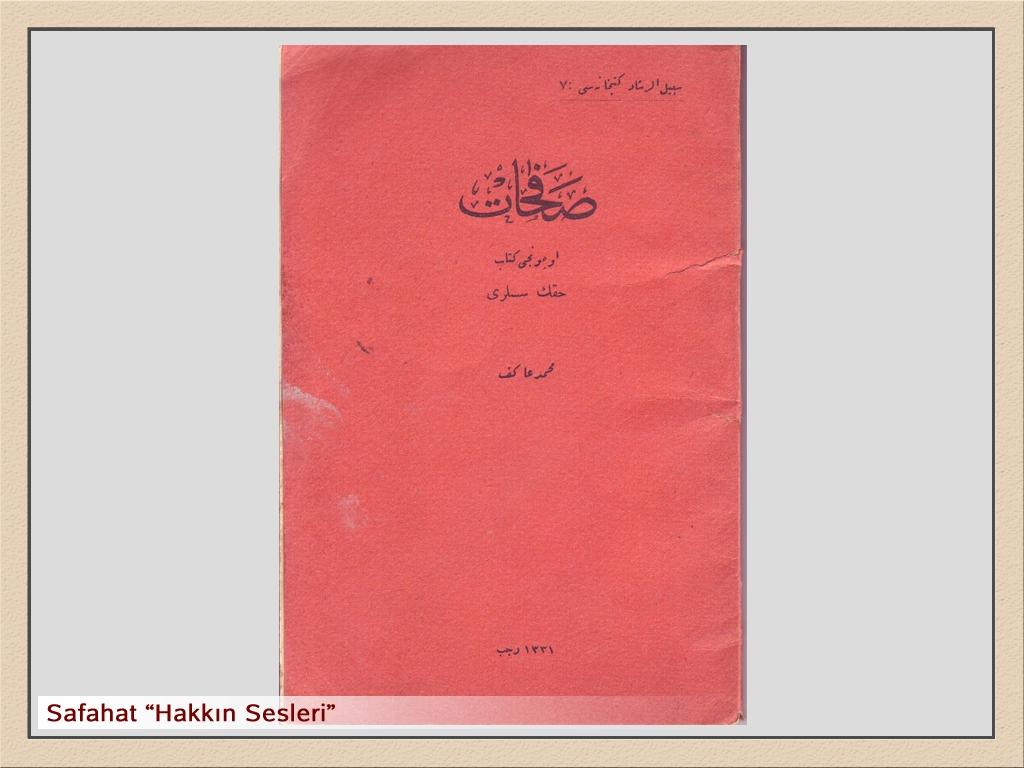
Safahat - Hakkın Sesleri Book (Diyanet)
The sixth volume of Safahat, Asım (1924), takes shape as the most voluminous and most distinctly dramatic piece of the corpus. This work consists of a single long poem; narrative form dominates, with anecdotal moral lessons and dialogues forming its skeleton. Among the prominent figures in the dialogue are Hocazade (the poet’s voice), Köse İmam (Ali Şevki Hoca), and his son Asım. The dialogues function as a lens examining the social problems of the First World War and its immediate aftermath; the text brings together critiques of “vulgarity,” imitation, blind admiration of the West, and political currents of the era in the language of everyday life.【39】
Asım is constructed as a prototype of the new generation expected to carry the future; the text links this prototype’s elevation not only to faith and historical consciousness but also to the adoption of Western positive sciences. The idea of sending Asım to Berlin concludes the work. The publication of the book received visible recognition within the literary circles of the era; photographs from a banquet held to celebrate the printing show Akif seated among the era’s renowned figures, demonstrating the cultural significance of this visibility.【40】
Akif explicitly stated in his correspondence in spring 1924 that he had completed Asım, and the book was published within the same year, indicating that the text had reached its “final form” after a long period of accumulation.【41】 Furthermore, Akif’s dating and signing of the dedication on the book’s cover to Neyzen Tevfik indicate that the texts carry traces not only of content but also of material culture and circulation history: poetry, upon contact with readers, transforms into a form of relationship; dedications, seals, and hand-to-hand transmissions are the documents of this contact.【42】
The final volume of Safahat, Gölgeler (1933), opens, as its title suggests, to a more inward, “state-centered” layer of Akif’s poetic world. This volume is a compilation of poems written between 1918 and 1933 in different locations—Istanbul, Ankara, and Hilvan; the poems vary in length and tone. Some texts in this volume reflect heightened religious lyricism; others are poems composed on the news of a city’s loss and woven with patriotic sentiment.
The publication of Gölgeler in Cairo indicates that during this phase of Akif’s life, the geography of poetic production and publication had changed; poetry now reached readers through a different circulation network. Indeed, Akif’s letter stating that he sent one hundred copies of the book demonstrates that he personally participated in and closely followed the process of the printed work reaching its audience.【43】
One of the most prominent features of Akif’s poetic technique in the Safahat corpus is his persistent and conscious relationship with aruz. Akif does not oppose the development of hece (syllabic meter); rather, he accepts that the harmony of hece will gradually settle and that ears will become accustomed to it. Nevertheless, he views the neglect of aruz as a loss and declares that he will not abandon aruz; he emphasizes that talented figures like Faruk Nafiz should master hece without neglecting aruz.【44】
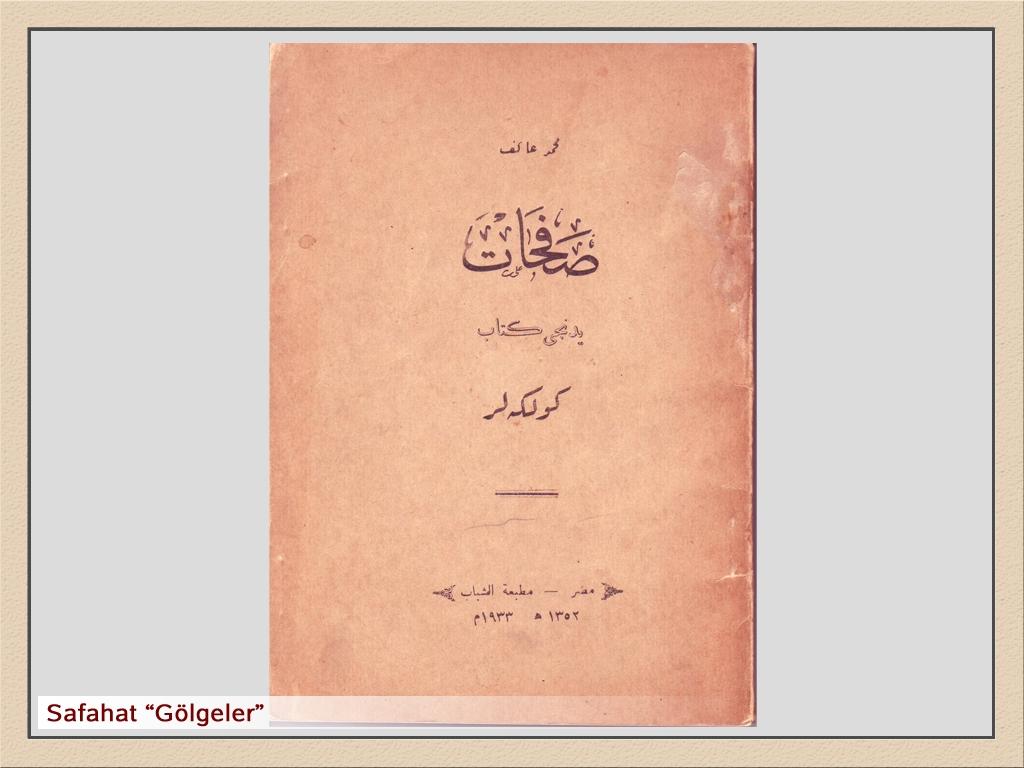
Safahat - Gölgeler Book (Diyanet)
This approach shows that Akif’s effort to make poetry “national” cannot be reduced to a mere metrical debate; he considers the connection between language and society, the ethical burden of literature, and the transformation and continuation of tradition on the same plane. Moreover, Akif’s frequent use of the mesnevi form expands his capacity for long narrative, the integration of spoken rhythm into poetry, and the dramatization of social issues; in many parts of Safahat, narrative poetry and social observation are intertwined.
Finally, the boundaries of Safahat are not static: some of the poet’s poems were not included in the Safahat volumes; later publications have debated the classification and placement of non-Safahat texts within the corpus. This situation demonstrates that Akif’s poetic legacy became not merely a fixed body of texts but a continuously reorganized “textual field” through subsequent reading and publication practices. However, regardless of which edition is preferred, the seven-volume core of Safahat continues to provide the main map of Akif’s poetic universe: along a line extending from 1910s Istanbul to 1930s Cairo, social critique, moral accounting, religious sensitivity, the idea of homeland, and debates on modernization accumulate as successive layers within a single poet’s language.
In Mehmet Âkif’s intellectual world, religion is not merely a personal domain of belief but a framework establishing the moral and intellectual foundations of social order. His texts emphasize a Quran-centered conception of religion; approaches that sever religion from daily life, separating worship and faith from everyday responsibility, are criticized.【45】 In this framework, the distinction between superstition and religion is sharp. Âkif’s understanding of religion is built directly along the line of “tawhid–responsibility–action”; faith is regarded as a principle determining an individual’s position toward the world and is accepted as the carrier of values such as honesty, trustworthiness, justice, and compassion in social life.
In this framework, religion is not presented as the cause of society’s backwardness; the source of backwardness is the withdrawal of religious principles from life, the rise of formalism, the replacement of knowledge with superstition, and especially the weakening of the discipline of work and production. In Âkif’s language of belief, “prayer” and “reliance on God” do not imply passivity; they are understood alongside an ethics of will that prioritizes human effort. When piety becomes a refuge allowing one to escape responsibility for transforming one’s own life and social environment, faith is reduced to a kind of mental comfort; one of Âkif’s strongest objections is directed precisely at this point.【46】
One of the most prominent tensions in Âkif’s belief framework is the relationship between fate and human will. Fate is not accepted as a justification for human inaction; rather, an understanding is advanced that does not negate human responsibility for actions and choices.【47】 When social and moral decay, poverty, disintegration, and backwardness are normalized under the label of “fate,” will and effort weaken; Âkif interprets this weakening as a kind of collapse dynamic on both moral and political levels. Therefore, his discussions on fate are not merely theological; they are directly connected to the will for work, education, discipline, and social renewal.
In Âkif’s thought, morality is not an abstract list of virtues but a system tested within the institutions and daily life of society. The sense of trustworthiness, fidelity, truthfulness, attitude toward bribery and interest-based relationships, sense of justice, and public responsibility form the core value clusters of his texts.【48】 Moral decay is not merely an individual flaw; it is treated as a structural problem that disrupts institutional functioning, erodes social trust, and renders communal life unsustainable. Therefore, Âkif’s criticism does not remain limited to a language of “blaming” individuals; he emphasizes that when the moral foundation is corrupted, education, economy, law, and politics also lose their direction.
The reconstruction of morality in his intellectual world proceeds along two main channels. The first channel is the transformation of religious principles into daily behavior, that is, strengthening the bond between belief and action. The second channel is education and knowledge systems. Âkif particularly promotes the idea of “character education” through the education of the younger generation; he constructs this education not only through school discipline but also through family, neighborhood, and public examples.【49】 Thus, his moral approach produces a framework extending beyond the individual’s inner world to address a broad social system problem.
Âkif’s conception of “civilization” is not a monolithic entity to be either affirmed or rejected. The idea of “progress” is strong in his texts; knowledge, technique, discipline, and a work ethic are seen as indispensable for overcoming backwardness. The relationship between Islam and science is not framed as a conflict; rather, it is accepted that religion, properly understood, advances in the same direction as reason and knowledge. The real problem, however, is not adopting the intellectual mindset that produces science and technology but choosing a “mimetic modernity” based on appearance and consumption.【50】
One of Âkif’s most striking aspects in the civilization debate is his consistent maintenance of moral criteria. When technical progress proceeds alongside moral decay, it does not strengthen individuals or society; therefore, progress limited to the “objects and technology” level is criticized. For him, progress is also a matter of character and responsibility; discipline, labor, merit, and a sense of justice are the social conditions of advancement.
Âkif’s East-West problematics is not a schema that fixes two civilizations as “complete opposites”; rather, it is an approach that compares the reasons for the East’s decline with the sources of the West’s strength and then proposes a principle of selectivity. The West’s power in science, technology, and organization is accepted; however, the West’s morality and lifestyle, especially through imitation, are subjected to criticism. The decisive criterion here is the distinction between what should be adopted and what should not: science, method, work discipline, and institutional order; against these, patterns that erode the social fabric, promote consumption and spectacle, and legitimize moral weakness.【51】
The critique of imitation is not merely an objection to imitation of the West; it is also directed at the inertia and intellectual fragmentation within the East itself. In Âkif’s intellectual world, the concept of “innovation” means a transformation centered on knowledge, labor, and responsibility, not a mere change of display. Therefore, the East’s recovery requires first establishing its own educational and moral order and then making a systematic move in the field of science and technology.
In Âkif’s thought, education is not merely the transmission of knowledge but a process that shapes the human type. The ideal human type aimed for in his educational philosophy is an individual who possesses both faith and morality and comprehends the science and technology of the age.【52】 These two domains do not exclude each other; rather, when they proceed together, they enable social renewal. At this point, the emphasis frequently found in Âkif’s texts concentrates on the concepts of “useful knowledge,” “application,” “work discipline,” and “responsibility.” Education is positioned as a motor that gathers the scattered energies of society, generates a shared sense of purpose, and makes institutional functioning possible.
After the Armistice of Mudros, organization accelerated in Anatolia; due to increasing pressure on Istanbul-based intellectual and press circles, the relocation of certain figures to Anatolia became a matter of security and continuity. In this context, Mehmet Âkif’s contacts with the National Struggle cadres intensified, and he assumed political roles extending beyond mere literary activities. Within Ankara’s communication and transit networks, control of transit routes from Istanbul to Anatolia and secure transportation were decisive; Âkif’s movement to the frontlines along these routes fulfilled the National Struggle’s need for “cadres and ideas.”
In the spring of 1920, Âkif’s departure from Istanbul to Anatolia ceased to be merely an individual decision; it became part of a movement that brought together individuals from diverse professions and backgrounds, sometimes overlapping with military transports. During this period, it is recorded that the poet Mehmed Âkif Bey was part of a caravan heading toward Geyve; among the same caravan were Trabzon deputy Ali Şükrü Bey, Kütahya deputy Ragıb Bey, Soysallıoğlu İsmail Bey, Hague Consul Ferid Halid Bey, pharmacist Hulusi Bey, retired Rıfat Bey, Nuri Bey, and Kerim Bey, brother of Hamdullah Suphi Bey, and Lieutenant Colonel Çolak İbrahim Bey.【53】
The same record indicates that munitions and ammunition transports were ongoing in the region, that encrypted telegrams sometimes failed to reach their addressees, and that armed groups such as the Bulgarian Sadık gang affected security balances on the front. Thus, Âkif’s journey to Ankara was not merely a “trip”; it became part of an evacuation involving simultaneous movement of deputies, civil servants, and military personnel, with intelligence and logistical dimensions.
Mehmet Âkif’s inclusion in the Grand National Assembly also took shape within the political architecture of this period. Official correspondence stating that he chose the Burdur constituency and withdrew from the Biga constituency was reflected in Assembly records in July 1920.【54】 This choice was not merely a selection process; it established a framework showing that his parliamentary activities in Ankara and his guidance efforts in Anatolia proceeded simultaneously. His acquisition of deputy status under the TBMM umbrella clarified the institutional basis for his subsequent duties and leave periods.
In the autumn of 1920, Mehmet Âkif was officially assigned to conduct guidance activities in Kastamonu and its surroundings. In a document dated 4 October 1920 signed by the General Director of Press and Intelligence, Galib Bahtiyar, it was stated that sending Burdur deputy Mehmed Âkif Bey to Kastamonu for guidance purposes was considered beneficial; it was noted that he was ready to depart; the proposal was discussed in the Presidency Council on 7 October 1920 and approved by the General Assembly on 9 October 1920, granting him one and a half months of leave.【55】 This decision also regulated his salary and compensation relations through internal Assembly procedures; thus, Âkif’s journey to the front was positioned within Ankara’s official guidance policy rather than appearing as a “personal initiative.”
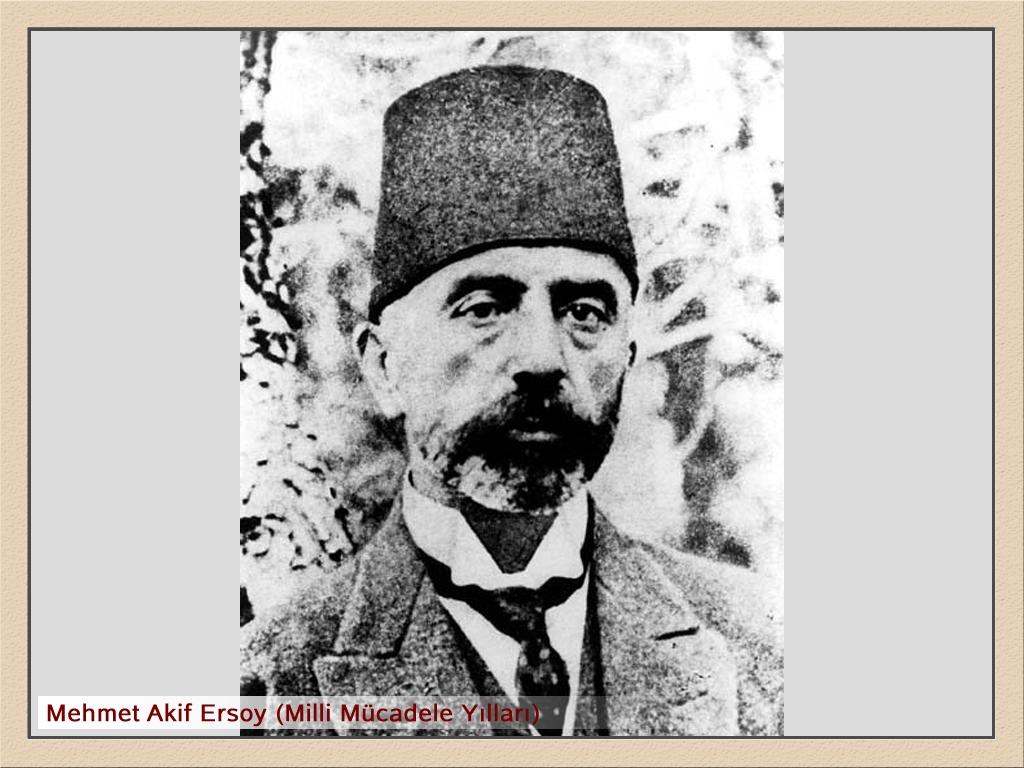
Mehmet Âkif During the National Struggle Years (Diyanet)
The Kastamonu phase was critical both for the mass impact of oral guidance and for its reproducibility through the press. Summaries of Âkif’s sermons at the Nasrullah Mosque were published in the first issue of Sebilürreşad printed in Kastamonu under the title “On the Nasrullah Platform”; this issue was printed on 25 November 1920.【56】 After the Kastamonu period, a summary of the same sermon series appeared in the first Ankara-printed issue of the magazine under the title “Those Who Fall from the Tree Are Not Muslims” in the issue dated 3 February 1921.【57】 Thus, the sermon texts did not remain confined to mosque congregations; they acquired the status of moral texts reaching the periphery and rear lines through the magazine.
The impact of the Kastamonu guidance efforts among the front and command circles became concrete in a letter written by Âkif on 16 February 1921.【58】 In this letter addressed to Nihat Pasha, Commander of Diyarbakır’s Elcezire region, he expressed gratitude for the effort shown in transmitting the message from the Nasrullah platform to “all fellow believers” at the front. The historical significance of this letter lies in demonstrating that the sermon was not merely a religious address but was integrated into communication networks established to strengthen the morale of the National Struggle. This letter reveals that the influence of Sebilürreşad was recognized even by command levels and that the sermon text had become a “requested” and “distributed” document.
During the same period, Mehmet Âkif also struggled with practical difficulties related to the publication of Sebilürreşad. In a letter dated 22 January 1921, he noted that “great sacrifices” were needed to publish the magazine; he sent greetings to his circle in Kastamonu; and he entrusted his family first to God’s protection and then to the recipient’s care.【59】 This statement shows that the guidance duty was not limited to public speaking; it also encompassed the logistical and material burdens of magazine activities. Thus, Âkif’s role during the National Struggle years became evident along three lines: political representation within the Assembly, mass guidance from mosque platforms in Anatolia, and continuous publication activities through Sebilürreşad.
This mobility was not limited to Kastamonu; speeches and contacts in various Anatolian cities at different times also fed the same guidance chain. The farewell text, shaped by the phrase “In essence, the path for the Truth is one,” found in a text published in Konya, was recorded as part of the Anatolian contacts of June 1920.【60】 Thus, between 1920 and 1921, Mehmet Âkif’s activities were situated along a line connecting Ankara-centered political structures with provincial sermons and publication networks; the National Struggle’s need for social mobilization was supported through his language and rhetoric.
Mehmet Âkif participated in the Ankara-centered political structure of the National Struggle as a deputy from Burdur; in Assembly records and election documents, he was recorded as 48 years old, with his profession and duty listed as chief editor of Sebilürreşad. The vote he received from Burdur was 58, with 33 votes from the central district and 25 from the Tefenni district; it was also recorded in the minutes that Soysallı İsmail Subhi Bey and former mutasarrıf Ali Ulvi Bey were elected as deputies in the same election.【61】
His arrival date in Ankara was recorded as the date of the confirmation of the mandate, 4 June 1920; this date marks one of the thresholds of his formal inclusion in the Assembly cadre.【62】 Additionally, being elected from both Biga and Burdur sanjaks during the same period meant his transfer to the Assembly agenda; he informed the Assembly on 17 July 1920 via a petition that he had chosen Burdur and resigned from Biga; this choice was recorded in the Minutes of 18 July 1920.【63】 In this context, Âkif’s position in Ankara advanced simultaneously along the lines of parliamentary representation, continuous publication activities, and guidance efforts.
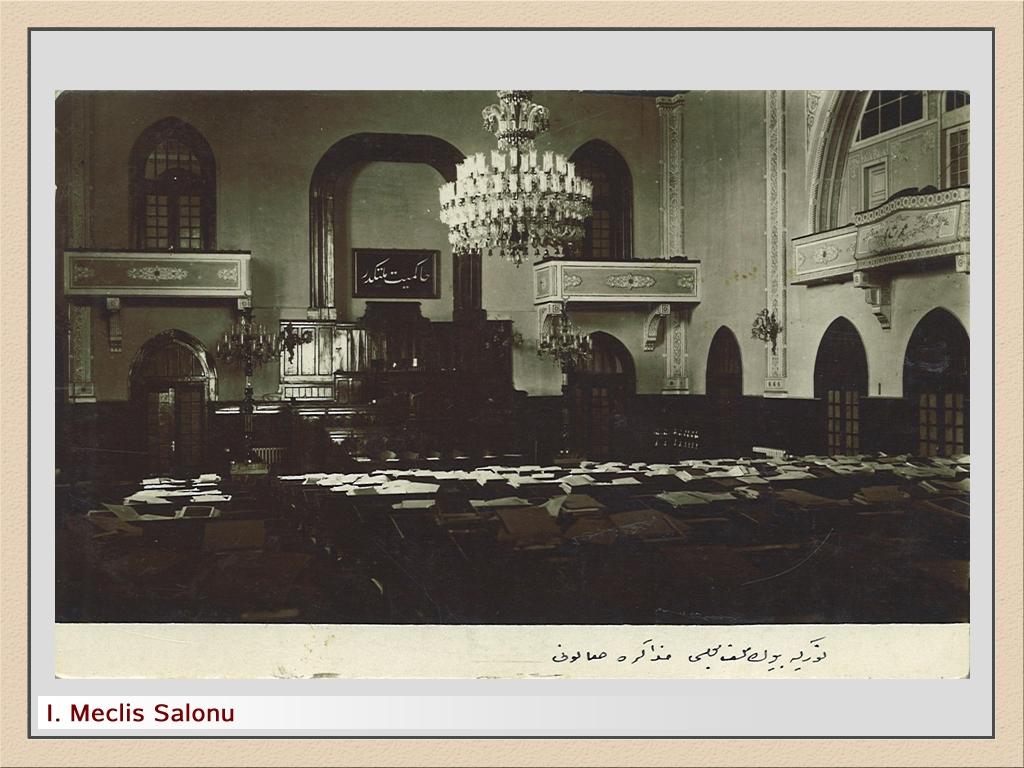
TBMM Negotiation Hall (Diyanet)
One symbolic need generated by Assembly activities and wartime conditions was a national anthem expressing the idea of independence. This need became evident shortly after the opening of the TBMM; on 18 September 1920, the Minister of Education, Rıza Nur, issued a circular to all units under the Assembly. Subsequently, on 7 November 1920, the Ministry of Education published an announcement in the newspaper Hakimiyet-i Milliye titled “To the Attention of Turkish Poets,” opening a competition for the İstiklâl Marşı; it stated that submissions would be selected by a literary committee established at the Ministry of Education on 23 December 1920; a prize of 500 liras was offered for the lyrics, and a separate competition would be held later for the melody. By the final submission date, the number of poems reached 724; however, the Ministry of Education concluded that none of these works were suitable for adoption as the national anthem.【64】
At this stage, the Minister of Education, Hamdullah Suphi (Tanrıöver), directly approached Âkif, believing he could write the national anthem. Mehmet Âkif had not wished to participate in the competition due to the prize; however, in a letter written to him, Hamdullah Suphi assured him that the monetary prize would not apply to him. After this assurance, Âkif completed the poem in Ankara in early February 1921 and submitted it to the Ministry of Education. The text was first published in the 468th issue of Sebilürreşad on 17 February 1921, dedicated to “Our Heroic Army”; shortly afterward, it was republished in the 123rd issue of the Kastamonu-based newspaper Açıksöz on 21 February 1921. Thus, before being introduced to the Assembly agenda, the anthem text circulated among Ankara’s periodical circles and the provincial press.【65】
The issue of the national anthem in the TBMM proceeded with debate; motions were submitted proposing that the selection be left to the Ministry of Education or entrusted to a qualified committee; these motions were not accepted.【66】 During the debates, Minister of Education Hamdullah Suphi responded to objections that the poem could not serve as a voice of the people’s spirit; he stated that the effect of the poems read before the Assembly was directly observed; he proposed that the existing poems be voted on individually. Subsequently, after the debate was deemed sufficient, a motion by Karesi deputy Hasan Basri Bey to accept Mehmed Âkif’s poem was put to a vote and adopted by a majority and applause. After the adoption decision, the poem was read again from the Assembly platform and listened to standing by the deputies.
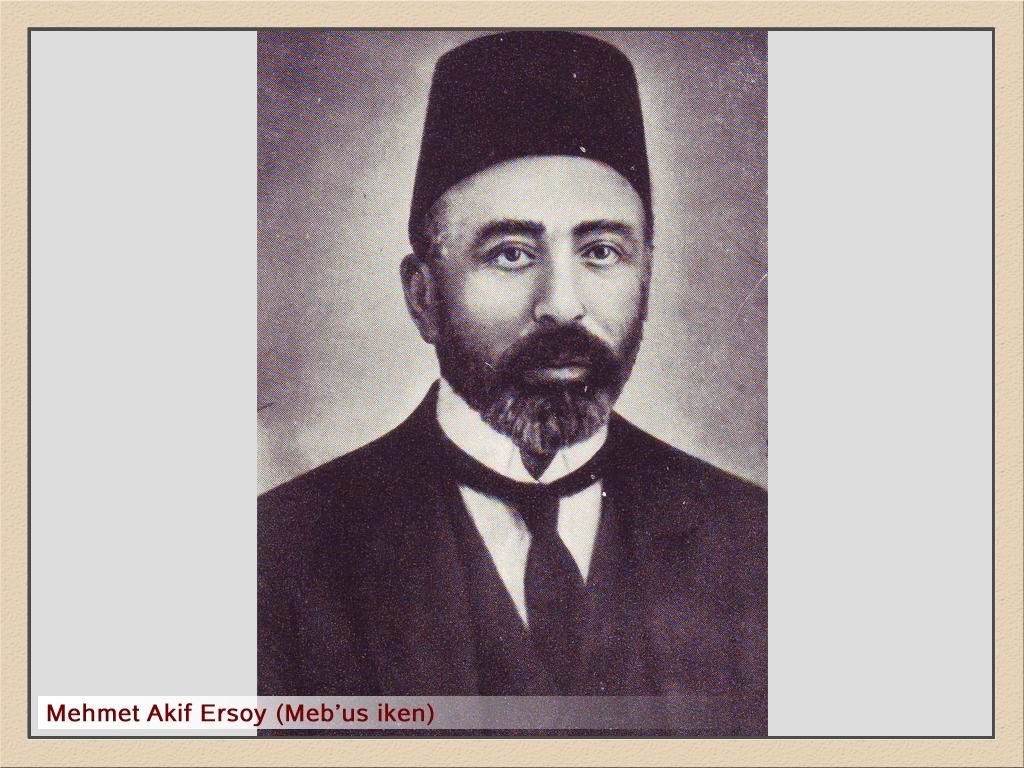
Mehmet Âkif Ersoy as Deputy from Burdur (Diyanet)
The official documentation process for the adoption decision was completed shortly thereafter. On 13 March 1921, the TBMM Secretariat’s Minutes Office sent the approved version of the İstiklâl Marşı, adopted by a large majority on 12 March 1921, to the Council of Ministers; it informed them that the necessary procedures for the melody would be addressed to the Ministry of Education. The text was also published in the Official Gazette on 21 March 1921, issue 7, with the note “Adoption Date: 12 March 1921,” entering official circulation.【67】
Based on the Council of Ministers’ decision of 29 May 1921, the Ministry of Education transferred the 500-lira prize to its budget despite Mehmet Akif’s refusal to accept it,【68】 but Âkif did not accept this money and donated it to Darülmesai (Association for the Evaluation of Women’s Labor).【69】 This organization was a charitable society that supported the livelihood of women and children through production during wartime and poverty conditions. The donation, approved by the Ministry of Education, was directed to this association; the 500-lira amount was transferred to the production workshop established by the association for poor women. Thus, the prize was effectively spent, but it never passed into Mehmet Âkif’s personal possession.
After the lyrics of the İstiklâl Marşı were adopted by the Assembly, the Ministry of Education opened a melody competition the same year. Twenty-two different melodies were submitted; among them, Ali Rıfat Çağatay’s composition emerged as the most prominent. The Ministry of Education accepted this melody as the provisional national anthem melody and decided that the anthem would be played with Ali Rıfat Çağatay’s melody in state ceremonies starting in 1924.【70】 This melody, based on the rast makam, was a more classical form of Turkish music reflecting the musical tastes of the era. Çağatay’s arrangement was performed in schools and official ceremonies for several years.
İstiklâl Marşı - Ali Rıfat Çağatay’s Melody (Beyoğlu Refia Övüç Maturation Institute)
Ali Rıfat Çağatay’s melody created difficulties in performance by military bands due to its makam characteristics and Turkish music form. Additionally, officers and bandmasters trained in Western music did not find this melody suitable for orchestral arrangements. During this period, the Musiki Muallim Mektebi (1924) established in Ankara and the army bands expressed that a multi-voiced arrangement would be more suitable for the anthem. This debate brought the issue of the “universal performance form of the national anthem” to the agenda by the end of the 1920s.
Following the proclamation of the Republic (1923) and the subsequent restructuring of the Ministry of Education’s Music Council in 1924, a new search for a melody for the İstiklâl Marşı began. During this process, an arrangement prepared by Osman Zeki Üngör (1880–1958), chief conductor of the Presidency Orchestra, was sent to Ankara. Üngör created a melody using the Western multi-voiced music approach, emphasizing rhythmic intensity and suitable for large orchestral performances. Although official approval was not completed until the early 1930s, Üngör’s melody was effectively used in all official ceremonies.
İstiklâl Marşı (Yozgat Bozok University)
In 1932, correspondence by the Ministry of Education’s Music Department recorded that Üngör’s melody was “accepted as the official melody of the national anthem.”【71】 Later, Edgar Manas (1875–1964), assistant chief conductor of the Presidency Orchestra, added orchestration (harmonization) to this melody; the multi-voiced arrangement was adapted to Western music standards. Thus, the İstiklâl Marşı form used today was completed in the mid-1930s as a combination of Mehmet Âkif’s lyrics, Osman Zeki Üngör’s melody, and Edgar Manas’s harmonization.
Dedicated to Our Heroic Army
Do not fear, the red banner fluttering in these dawn skies shall never fade;
It is the last hearth still smoking above my homeland.
It is my nation’s star; it shall shine;
It is mine, it belongs only to my nation.
Do not strike, let my beloved crescent be your sacrifice!
Give a rose to my heroic race... What is this fury, this violence?
The blood spilled for you shall not be in vain;
My nation’s independence is the right of those who worship the Truth!
I have lived free since eternity, and I shall live free forever.
What madman will chain me? I am astonished!
I am like a roaring flood; I crush my barriers, I overwhelm them;
I tear mountains apart, I overflow the depths, I spill over.
If the West’s horizons are encircled by steel-armored walls;
My breast, full of faith, is my frontier.
Do not fear, O nation! How can such a faith be drowned,
By the “civilization” you call, the last remaining monster?
Friend! Do not let the lowly defile my homeland;
Shield your body, let this disgraceful invasion cease.
The day promised to you by the Truth shall come;
Who knows, perhaps tomorrow... perhaps even sooner.
Do not tread on the ground calling it “earth!” Know it:
Think of the thousands lying beneath, without shrouds.
You are the son of a martyr; do not hurt, it is shameful to your father;
Do not give up this paradise homeland, even if you take all the worlds.
Who will not sacrifice for this paradise homeland?
The earth, if pressed, shall gush forth martyrs!
Let my soul, my very being, be taken by God;
Let me not be separated from my homeland in this world.
My only duty to You, O God, is this:
Let no unclean hand touch the breast of my sanctuary!
These calls—whose testimonies are the foundation of religion—
Must echo eternally above my eternal homeland.
Then, with ecstasy, thousands will prostrate themselves if stones have souls;
From every wound, O God, my blood and tears shall flow;
My corpse shall rise like a pure spirit from the earth;
Then perhaps my head shall rise worthy of the Throne.
Wave like the dawn, O glorious crescent;
Let all the blood I shed now be lawful.
There is no annihilation for you, nor for my race:
It is right that my flag’s freedom was lived freely;
It is right that my nation’s independence is dedicated to the Truth!
Mehmet Âkif did not return to the Assembly after the 1923 election renewal.【72】 This development produced not only a political outcome but also directly affected his livelihood and work routine. Since he had delayed pension procedures after leaving civil service in 1913, he had no pension; at age fifty, he found himself in a position with no practical occupation.
Under these conditions, his old friendship and patronage relationship with Prince Abbas Halim became decisive. In October 1923, Âkif traveled to Egypt with Abbas Halim Pasha as his guest, intending to spend the winter. This pattern continued not as a complete break but as an intermittent residence arrangement: he returned to Istanbul in spring 1924; again moved to Egypt in the winter of the same year; returned to Istanbul in spring 1925; and went to Egypt again in autumn 1925.
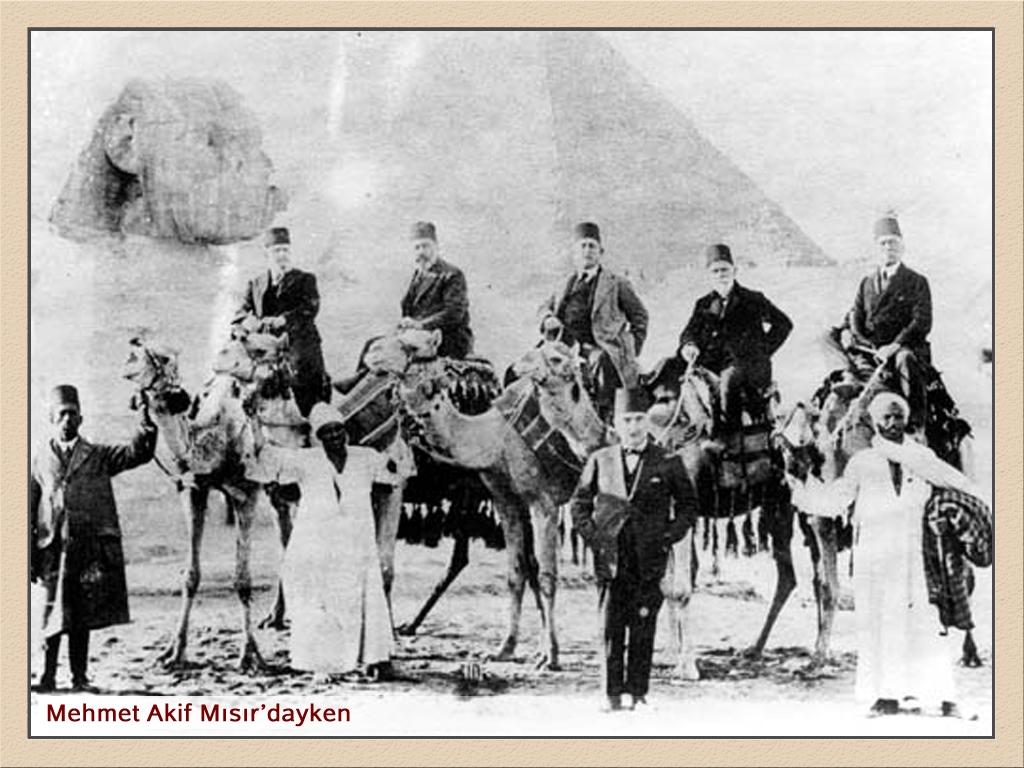
Mehmed Âkif During His Egyptian Years (Diyanet)
This pattern created a concrete calendar showing that his connection with Türkiye was not fully severed while Egypt gradually became a longer-term residence. The spatial focus of these movements became Hilvan (Helwan), near Cairo. He spent the winter of 1924 at Abbas Halim Pasha’s residence in Hilvan; when he returned to Egypt in the summer of 1925, he settled permanently in Hilvan with his family in a small house he had acquired.
From this date onward, Âkif’s residential focus shifted to Egypt. It is recorded that he wrote poetry in Hilvan in late 1924 and composed poems dated Hilvan in January 1925.【73】 These records concretely demonstrate that Egypt was not merely a refuge or guest location but a place where production and daily life were actively established.
Âkif described himself in Hilvan as “completely secluded”; he wrote directly that there were days when he did not leave his house for three or four days.【74】 This routine had two concrete reasons: first, the scorching heat; second, the intensity of his work. The pressure of the heat and the coolness of his home transformed his already preferred solitude into a forced daily rhythm.
This solitude was not passive withdrawal but a form of seclusion combined with work and production; in the same letter, he clearly stated that the relative relaxation of Hilvan’s quiet environment and cost of living compared to previous years provided an atmosphere conducive to work, so much so that he often wished this life had begun fifteen years earlier.
Nevertheless, Hilvan did not completely isolate Âkif from Cairo. In the same letter, after noting the abundance of fine Quran reciters in Egypt, he wrote that he was particularly moved by Sheikh Muhammad Rifat’s recitation of Surah Al-Kahf from Friday prayers until the call to prayer; he noted that he often traveled from Hilvan to Cairo solely for this purpose.【75】 This detail shows that the core of daily life in Hilvan was home and work, but specific religious attractions regularly drew him to Cairo.
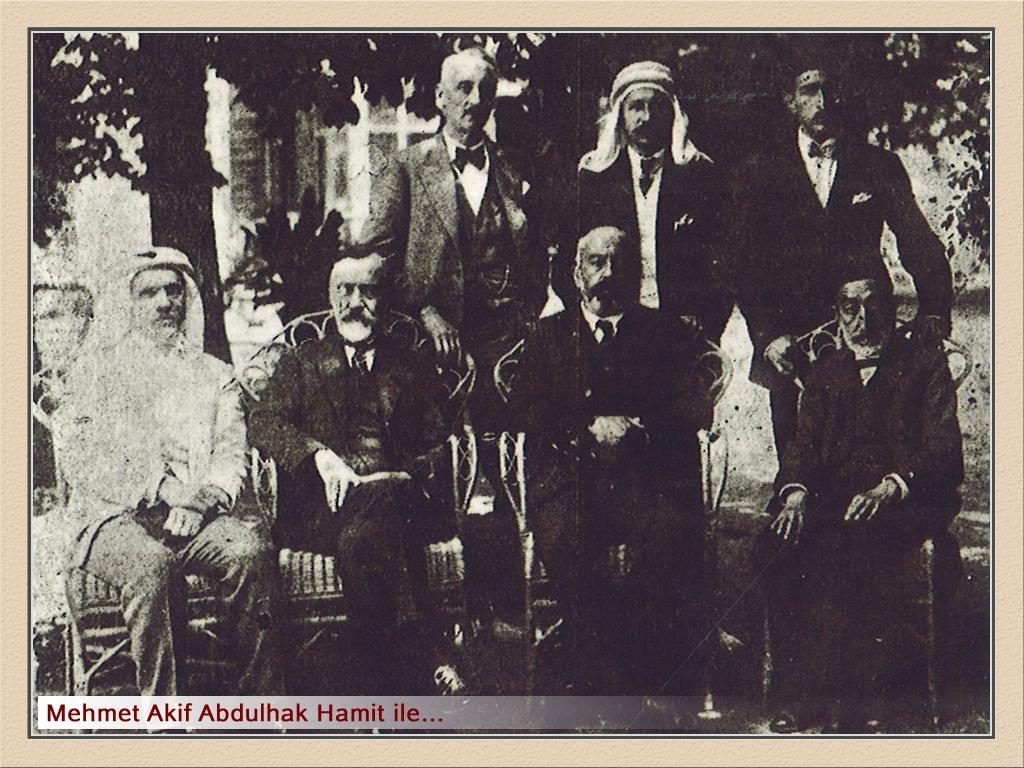
Mehmet Âkif with Abdülhak Hamit (Diyanet)
The most prominent circle of Hilvan’s social environment was centered around the Abbas Halim Pasha family. In Âkif’s recollections of past years, he recounts frequent visits to the area with the late pasha, sitting under trees and conversing; at that time, Zeynel and Melek Hanım were young children, whom he watched playing; sometimes he even joined their games.【76】
Another aspect of the social circle was the correspondence network maintained with friends and colleagues in Türkiye. In one letter, he wrote of learning of the death of Ali Rıza Bey, Director of Veterinary Affairs, expressed his sorrow, inquired who had replaced him, and asked for news about what his colleagues were doing.【77】
In a letter dated 8 June 1926, addressing Mahir İz, he sent greetings to mutual acquaintances; he specifically requested that if he saw Hayri and Ferit Kam, he should tell them he missed them.【78】 This demonstrates that the solitude established in Hilvan did not sever ties with the intellectual and personal circles in Türkiye; rather, it sustained them through correspondence.
Âkif openly wrote that during his Egyptian years, especially in the 1930s, even daily expenses sometimes became burdensome. In a letter dated 31 October 1931, he expressed that his wife’s long-term illness combined with the high cost of living placed him in “extreme hardship”; he even stated that it had become difficult to afford the fare to travel from Hilvan to Cairo.【79】
In the continuation of the letter, he wrote that he could not afford even the fee for a minor official procedure, so he and the official simply looked at each other; this shows that financial hardship was not merely a general complaint but a concrete reality affecting daily details.
This financial fragility increased the necessity for Âkif to diversify his income sources. Foremost among these was university teaching. In a letter dated 17 December 1929 from Hilvan, he detailed his acceptance of Turkish language courses at Câmiatü’l Mısriyye: he limited the course to the third and fourth-year literature classes; he conducted it at four hours per week (two hours per class).【80】
The institutional framework of this position was clear: the same text explained that the position was not permanent, paid hourly, and valid only for six months per year. The lack of formal security in this position meant it did not fully solve his regular income needs but provided temporary relief.
It is clear that his teaching load increased over time. Records show that in 1928, he taught Turkish for two hours per week in the Faculty of Literature; by 1933, he began teaching graduate students; in some months, his teaching load increased significantly. The text also notes that his teaching fee was set at “one Egyptian pound per class.”【81】
Nevertheless, Âkif’s work regime was not limited to teaching; it expanded to include private lessons and additional duties. In a family letter dated 23 March 1936, he wrote that he was “very busy” that year; he had been assigned Persian language courses at the university; he also conducted private lessons.【82】 In the same lines, he noted that both courses would be on summer break, revealing that he structured his annual rhythm in a cycle of “teaching period–vacation period.”
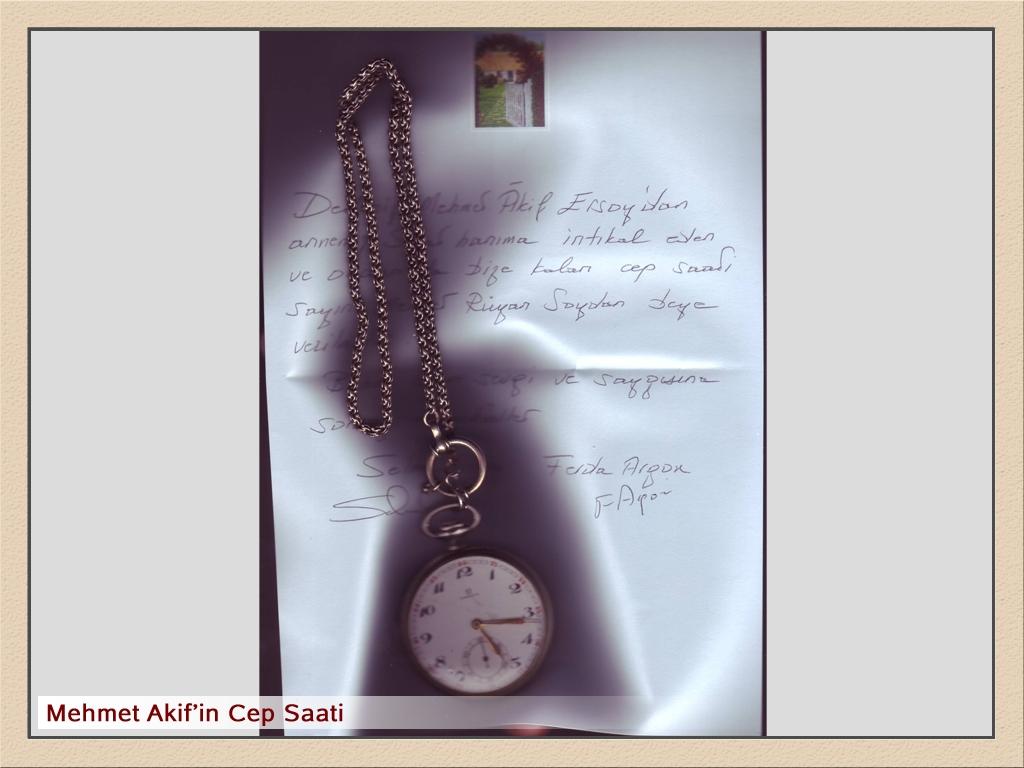
Mehmet Âkif Ersoy’s Pocket Watch (Diyanet)
Here, the connection between livelihood and work is direct: the teaching period was not merely an academic occupation but a period sustaining his material continuity. It is also evident that financial pressure sometimes led to borrowing. In a letter dated 20 April 1931, Âkif wrote that he had “borrowed a little in recent months” and requested “five or ten pounds” from his close circle; this shows that short-term cash needs were sometimes met through family and friends.【83】
Alongside this fragile income structure, the most significant “institutional work” of his Egyptian years was the project of translating the Qur’an and writing a short commentary. The notarized contract clearly defined the nature of the work and its methodology: Âkif and Elmalılı Muhammed Hamdi undertook the translation and concise commentary of the Qur’an; the Diyanet committed to paying each 6,000 liras.【84】
The payment plan was structured as a combination of advance payment and installments upon completion of each volume (each received 1,000 liras upfront; subsequent installments were paid as volumes progressed). The work method was also regulated: verses were to be written, followed by the translation, then commentary and explanation. The contract detailed not only “what to write” but also “how to produce”: drafts were to be copied into three copies; one copy to be kept by Âkif, one by Elmalılı, and one by Aksekili Ahmed Hamdi on behalf of the Diyanet. Additionally, one or two paid copyists skilled in beautiful handwriting were to be employed for transcription and, if needed, for copying texts from libraries; their salaries were to be paid by the Diyanet. The first printing was planned for 10,000 copies, with twenty percent allocated to the authors.【85】
In conclusion, during his Egyptian years, Âkif’s livelihood structure consisted of a material framework narrowed by high costs and health expenses, sometimes leading to borrowing; on the other hand, it was sustained by teaching, private lessons, and a major translation project. His work regime combined “solitude” with “regular work hours”: Hilvan-centered life produced a routine extending to Cairo on teaching days; the translation contract imposed a long-term, disciplined text production.
The Qur’an translation project became prominent in 1925 with the initiative of the Presidency of Religious Affairs to prepare a translation and commentary; the assignment to Âkif was linked to his sensitivity to religious texts and his expertise and knowledge in language. It is recorded that the insistence of Aksekili Ahmed Hamdi, appointed by the Diyanet, influenced the decision; Âkif accepted the task on the condition that it be called “translation” rather than “meaning” and that it be published together with Elmalılı Muhammed Hamdi’s commentary.【86】
From his memoirs, it is understood that Âkif had long resisted this assignment and finally accepted it reluctantly. The institutional basis for this acceptance was established by a contract dated 26 October 1925; the document was certified as a contract on 8 November 1925 by Notary Midhat Cemal of the Fourth Notary Office in Beyoğlu under general number 13738.【87】
The parties to the contract were clearly stated: the Republic of Türkiye Presidency of Religious Affairs, Elmalılı Muhammed Hamdi Efendi, and Mehmed Âkif Bey; representing the Diyanet was Danışma Kurulu member Aksekili Ahmed Hamdi Efendi. The contract clearly defined the scope of work in its first article: Âkif and Elmalılı undertook the translation and concise commentary of the Qur’an.
The payment and plan were also itemized. The Diyanet agreed to pay each 6,000 liras; 1,000 liras of this were to be paid upfront, and the remainder in installments as volumes progressed (186 liras upon completion of the first volume, then 166 liras for subsequent volumes). The method of writing—the “writing technique”—was also regulated: verses were to be written, followed by the translation, then commentary and explanation.
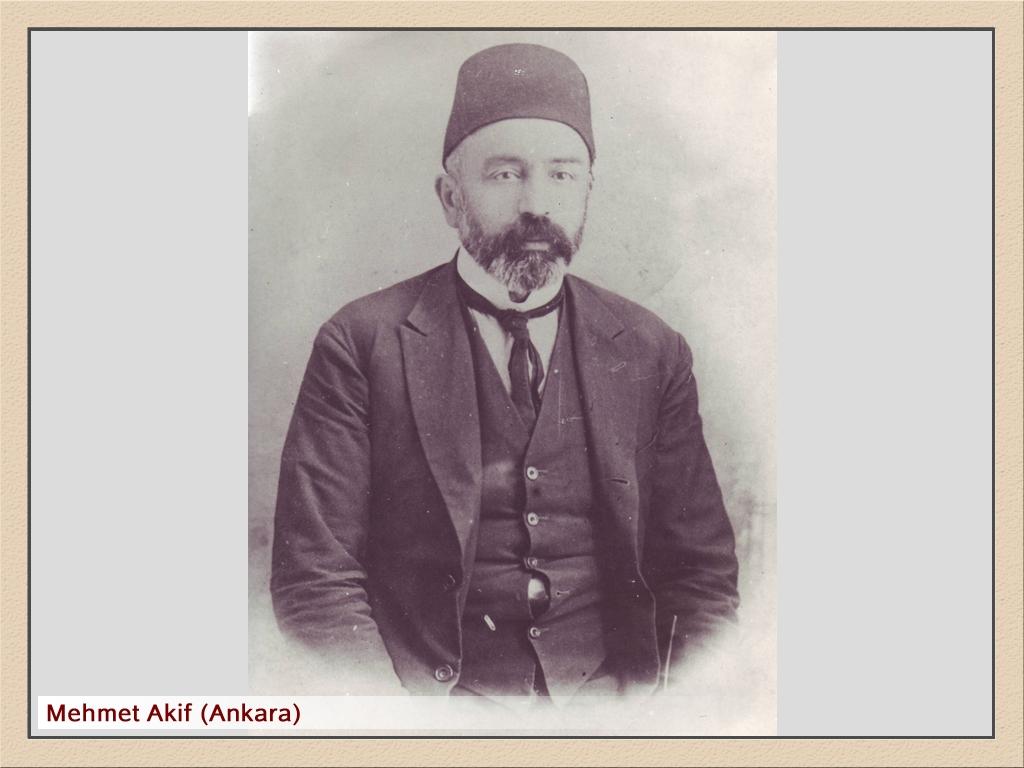
Portrait of Mehmet Âkif Ersoy (Diyanet)
The types of information to be included in the commentary and explanation section were listed like a checklist: connections between verses, reasons for revelation, recitation variants (without exceeding the ten canonical readings), and, when necessary, explanations of composition and wisdom; additionally, the framework of adhering to the Sunni creed and Hanafi practice in matters of law and the clear explanation of the religious, legal, social, and moral rulings of the verses were explicitly included.
It was also stipulated that critical notes should be added where Western authors had “misrepresented or distorted” the Qur’an, and that a preface explaining important issues regarding the Qur’an should be written at the beginning. The production process was also detailed: drafts produced were to be copied into three copies; one copy to be kept by Elmalılı, one by Âkif, and one by Aksekili Ahmed Hamdi Efendi on behalf of the Diyanet.
One or two paid copyists skilled in beautiful handwriting were to be employed for transcription and, if needed, for copying texts from libraries; their salaries were to be paid by the Diyanet. Thus, the work became not merely a text developed at one person’s desk but an “workflow” with control copies, copyist support, and oversight by the Diyanet’s representative. The printing and publication phase was also guaranteed by the contract.
The first printing rights belonged to the Diyanet; the work was to be printed in 10,000 copies on “fine paper and in excellent form”; twenty percent of the copies were to be allocated to the authors. The authors would determine the format of the printing; in return, all tasks related to proofreading and printing were to be carried out by the Diyanet. After the first printing, the printing rights were to belong exclusively to the authors, who could print any quantity they desired.
This demonstrates that the contract was not merely a legal document; it created a binding framework directly determining Âkif’s daily life, spatial choice, and work pace: draft production, transcription, copy control, commentary standards, and preparation for printing transformed the idea of “translation” into a planned publishing project.
Literary production did not cease during his Egyptian years; some works were completed and published directly in this geography. The most prominent of these was Gölgeler. The work was published in Egypt in 1933 and acquired the status of the “final great link” within the Safahat corpus. During the same period, Âkif did not merely write his texts; he personally followed their circulation. In a letter, he wrote to his recipient that he had sent one hundred copies of the book and that Gölgeler would soon reach his hands shortly after the letter arrived, demonstrating that this circulation was conducted in a planned manner.【88】
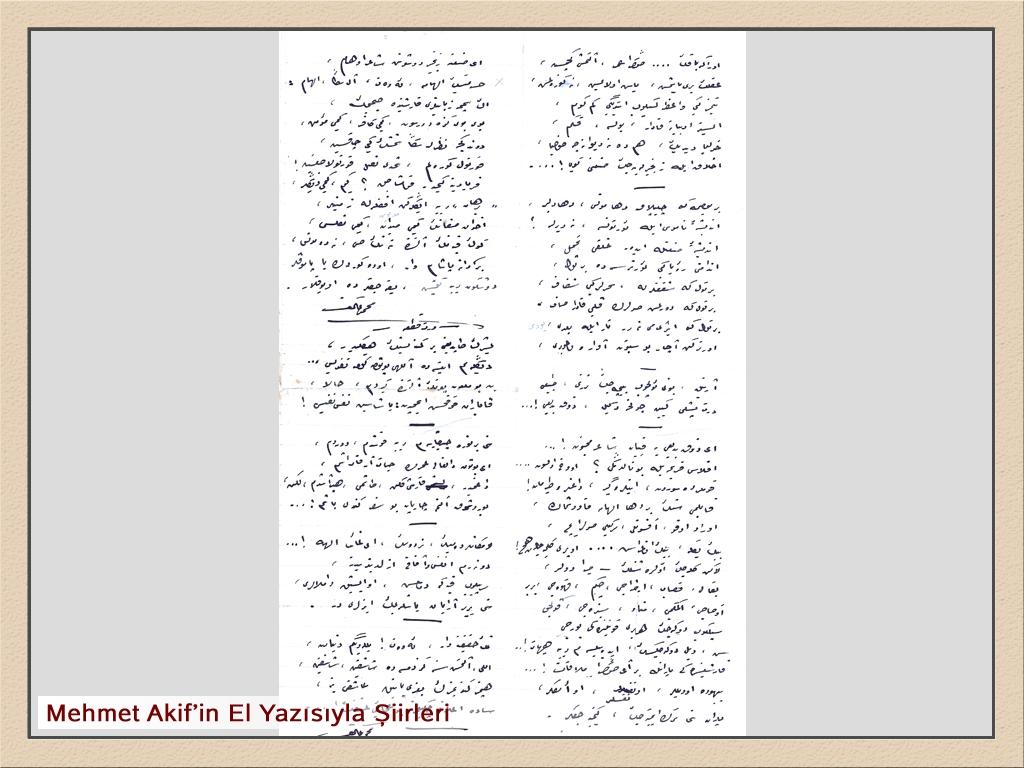
From Mehmet Âkif’s Handwritten Poems (Diyanet)
Letters enabled the concrete tracing of daily life in Egypt, moving beyond an abstract narrative of exile. Family movements, travel arrangements, and daily organization were directly reflected in the letters. The details of his wife’s journey back to Istanbul—ferry day, meeting at the port, accommodation plans—even the justification for choosing first-class travel, exemplify the detailed documentation of Âkif’s family life.【89】
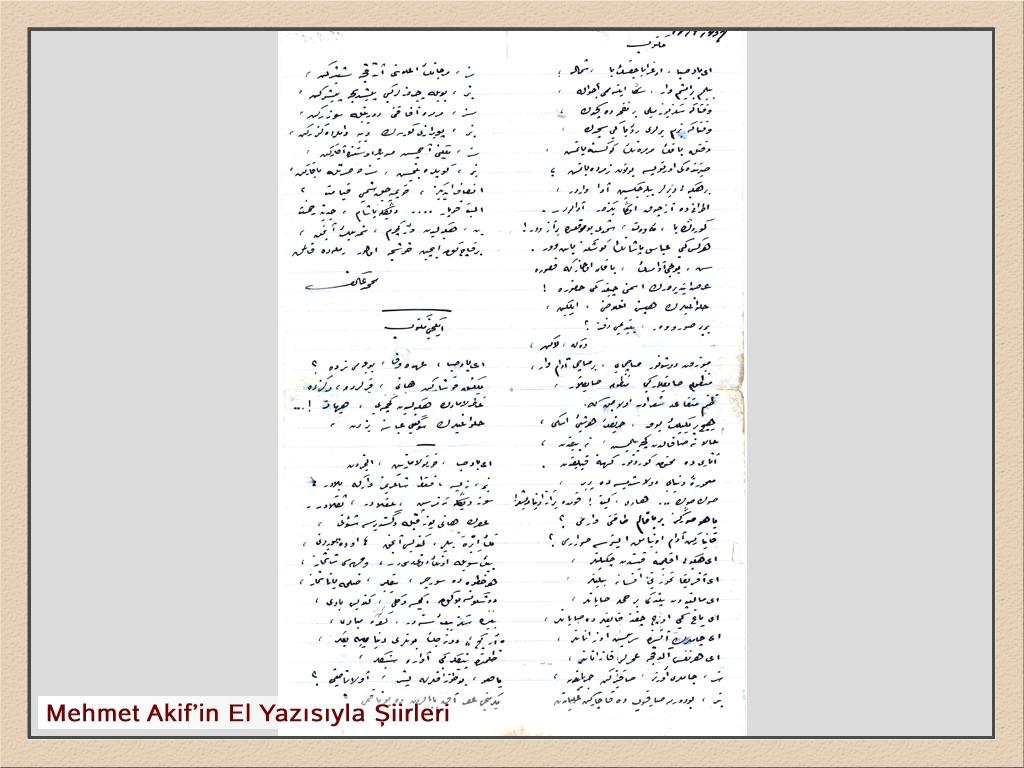
From Mehmet Âkif’s Handwritten Poems (Diyanet)
Health problems became prominent from 1935 onward; letters increasingly became records of literary thought on one hand and illness and treatment searches on the other. During these years, malaria diagnosis, the search for climate change, and regional mobility proceeded along the same line. The chronology of letter headings reveals a treatment-seeking journey extending to Lebanon–Beirut in summer 1935; followed by invitations and contacts toward Hatay/Antakya; and by early 1936, letters to family members showed the combined intensification of health and livelihood pressures.【90】
Mehmet Akif Ersoy’s works, due to his publishing and editorial history, are scattered and number in the hundreds. Therefore, his most extensive projects can be listed as follows:
Safahat Corpus (7 books)
This group consists of works not originally written by Âkif but translated by him and published in book form; the most well-known are:
From Said Halim Pasha
From Sheikh Muhammad Abduh
From Abdülaziz Çâvîş
From Muhammed Ferîd Vecdî
From Camille Flammarion
Language and Education Articles
Translated Articles and Series
Mehmet Âkif married İsmet Hanım in 1898. İsmet Hanım was the daughter of Mehmet Emin Bey, Treasurer of Tophane-i Amire.【91】 This marriage produced five children: Fatma Cemile, Ayşe Feride, Suat, Mehmet Tahir, and Mehmet Emin. The children appeared in different ways during different phases of Âkif’s life: during Istanbul’s intense working years, the family was at the center of daily life; during the mobile period of the National Struggle and afterward, family life proceeded through brief reunions and separations. During his Egyptian years, family life became more fragile due to Âkif’s work needs and financial search on one hand, and his wife’s health and children’s needs on the other.
As the children grew, the family expanded through sons-in-law and grandchildren. Âkif’s daughter Fatma Cemile married Ömer Rıza Doğrul. Suat had a daughter named Ferda; thus, Âkif’s family extended to the grandchild generation. This expansion was important not only for lineage continuity but also for maintaining family communication and solidarity during the long separations between Istanbul and Egypt.
Âkif’s family life was initially and longest rooted in Istanbul. The family, within the opportunities and limitations of urban life, established a structure dominated by livelihood and education concerns. Although Âkif’s civil service and teaching provided a certain income and routine, long working hours and occasional assignments outside the city created gaps and absences in family life.
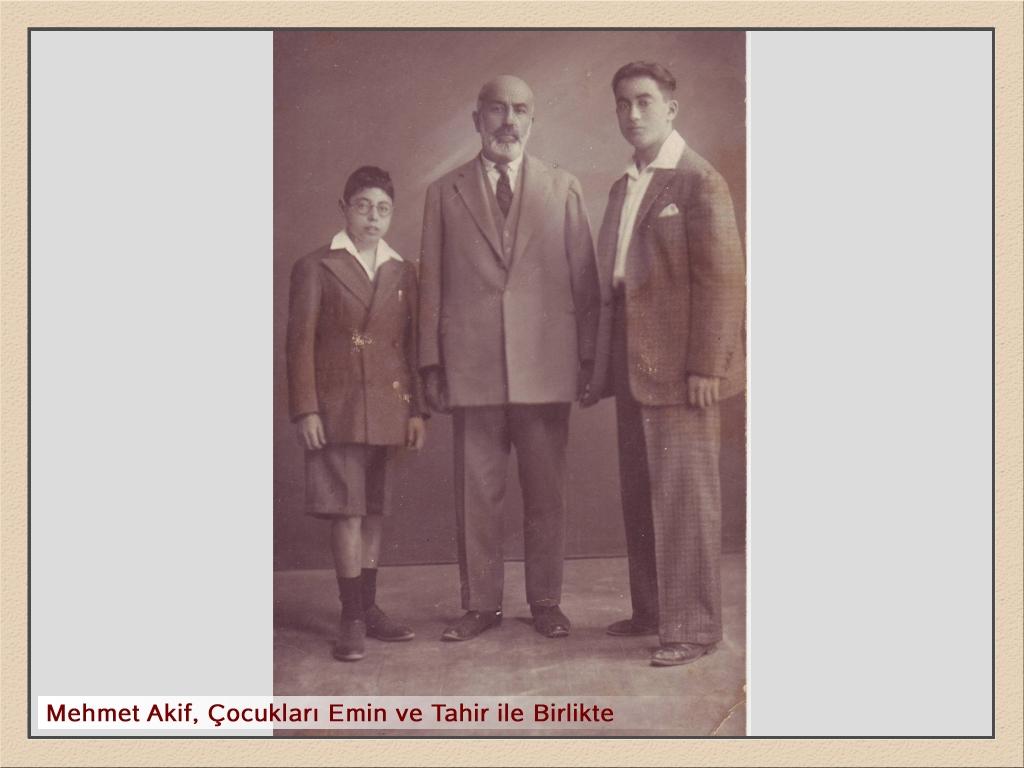
Mehmet Âkif and His Two Sons (Diyanet)
From the mid-1920s, a change in spatial location became evident in family life. Âkif’s life path toward Egypt was not merely a personal relocation but a turning point affecting the entire family. In Hilvan-centered Egyptian years, family life operated along two axes: on one hand, Âkif’s search for a quieter work environment; on the other, the health, education, and livelihood conditions of family members. During this period, Âkif structured his work rhythm around solitude and discipline in Hilvan, while family life continued through visits and intermittent reunions without fully severing ties with Istanbul.
One of the heaviest burdens of family life was health problems. His wife’s prolonged illnesses increased Âkif’s financial and mental burdens. The high cost of living in Egypt and irregular income sources combined with this health burden made the household economy more fragile. Under these conditions, Âkif worked to sustain the family through teaching and various jobs; at the same time, he was compelled to keep the family together, meet their needs, and especially care for his wife’s condition. This picture shows that Âkif’s “work in exile” was underpinned by a constant family issue: exile was not merely a change of place but also an extended period of effort to sustain the family.
The deterioration of his health, treatment searches, and the process of returning to Istanbul created a period that needed to be considered together with his family. After his death, the family, especially his wife and children, had to adapt to a new life in social and administrative terms. The family nucleus formed through marriage and children continued to exist after his death; family members became the carriers of memory and legacy.
Mehmet Akif’s “final phase” became evident in 1936 with his return to Istanbul. Official documents record that his pension was granted starting 1 June 1936.【92】 Nevertheless, his health condition worsened; he died on 27 December 1936 while receiving treatment in Istanbul.【93】 His funeral prayer was held the next day at Bayezıt Mosque, and he was buried in Edirnekapı Cemetery; in 1960, during a reorganization, his grave was relocated to its current location in Edirnekapı Şehitliği.
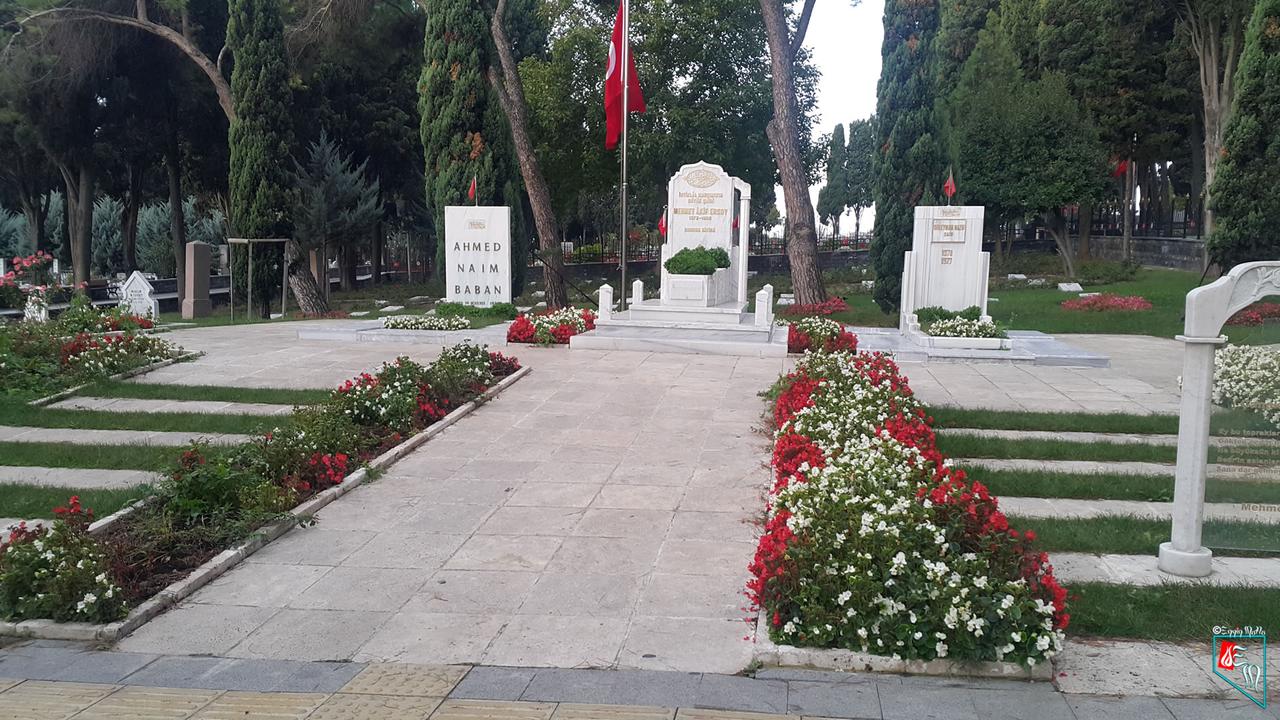
Mehmet Âkif Ersoy’s Grave (Cultural Inventory - Engin Mutlu)
Immediately after his death, the matter was tracked not only in the press but also in administrative correspondence. The Istanbul Governorate’s telegram to the Ministry of Interior recorded the death, funeral, and burial day by day; additionally, an official document regarding the funeral ceremony, burial, and attendees was prepared in early 1937. The social-administrative process concerning the family after his death also became concrete in documents: his wife İsmet Ersoy’s application for a pension and correspondence regarding its approval in 1937 were filed.【94】
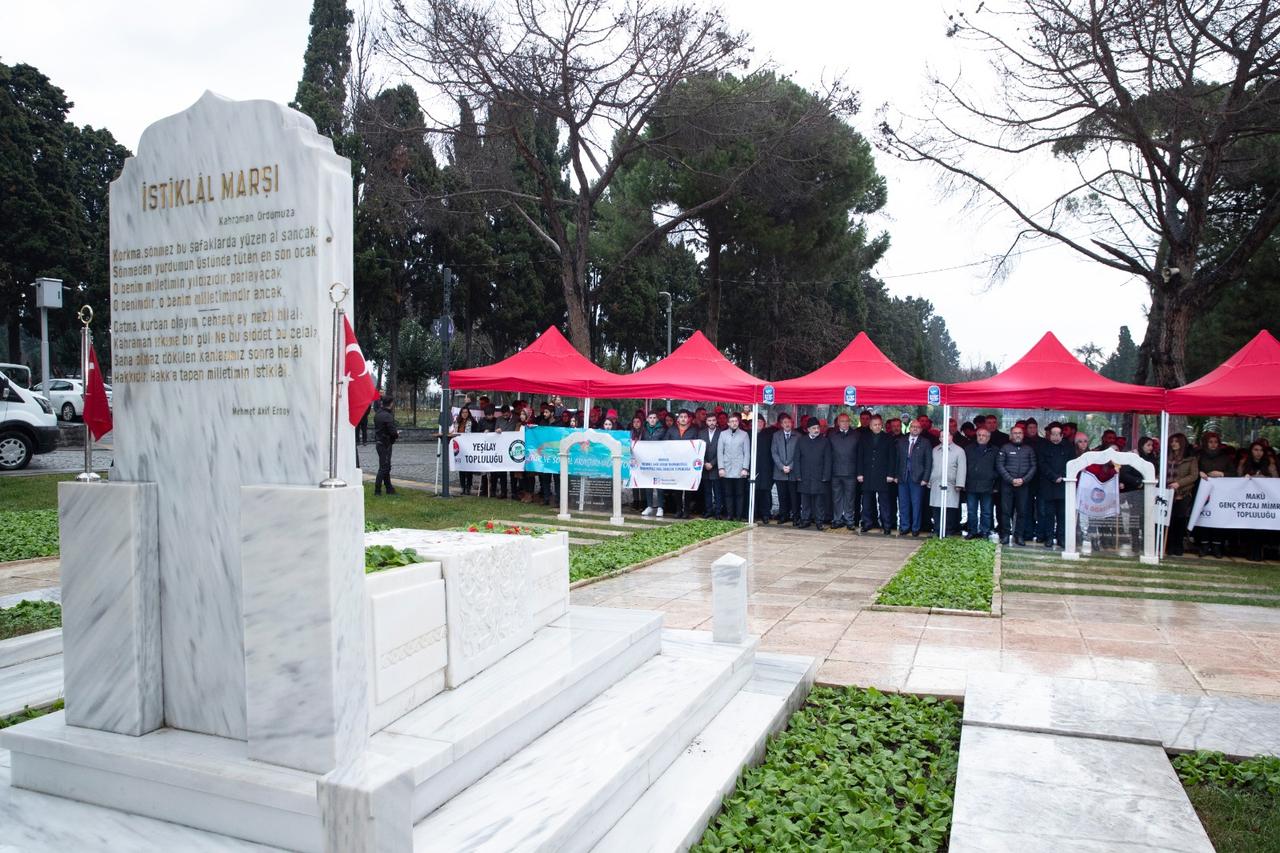
Two Quatrains from the İstiklâl Marşı on the Back of Mehmet Âkif’s Grave (Istanbul Governorship)
The establishment and maintenance of the memorial site became visible early on through initiatives by civil and student circles. In 1939, the Veterinarian Faculty students’ commemoration meeting was recorded in official correspondence;【95】 in 1940, intelligence reports noted that students from Istanbul University’s Faculty of Medicine and Literature collected money to build a grave and planned a ceremony at the grave on the anniversary of his death.【96】
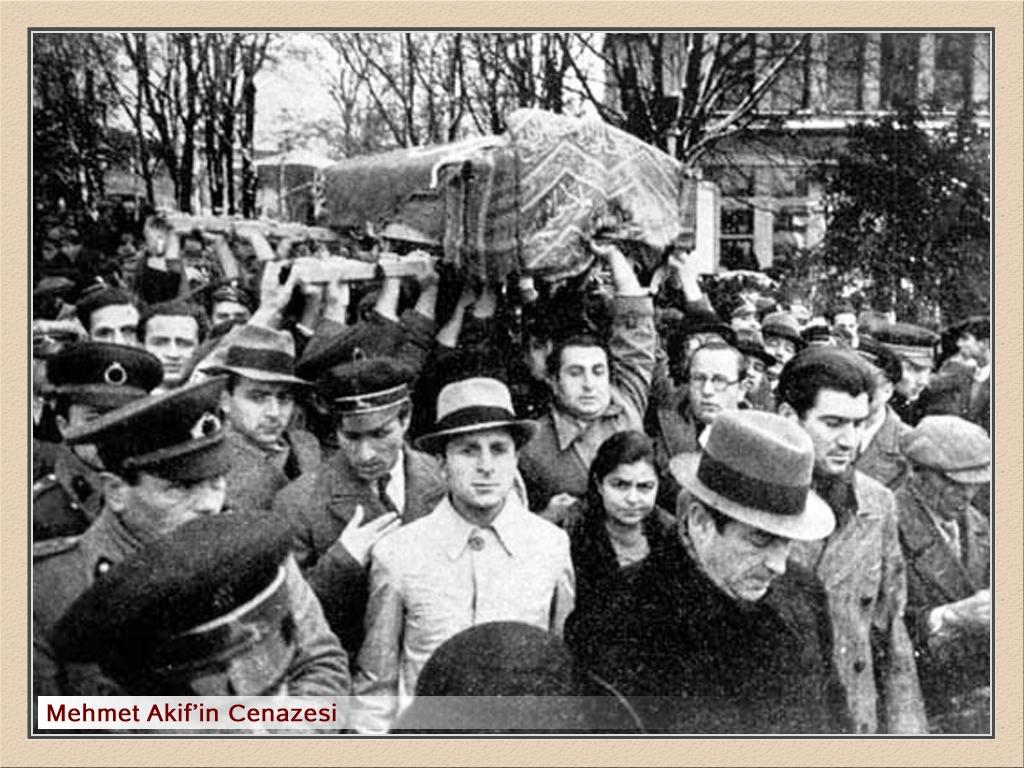
A Scene from Mehmet Âkif’s Funeral (Diyanet)
In 1947, on the tenth anniversary of his death, a commemoration ceremony was held in Istanbul (at Eminönü Halkevi and at his grave) by the Turkish Student Union, as recorded.【97】 The physical development of the grave also became part of commemoration practices. In 1960, due to road construction and urban planning, the tomb was relocated to Edirnekapı Şehitliği;【98】 in 1986, on the fiftieth anniversary of his death, the Ministry of Culture commissioned a new tombstone for his grave.【99】
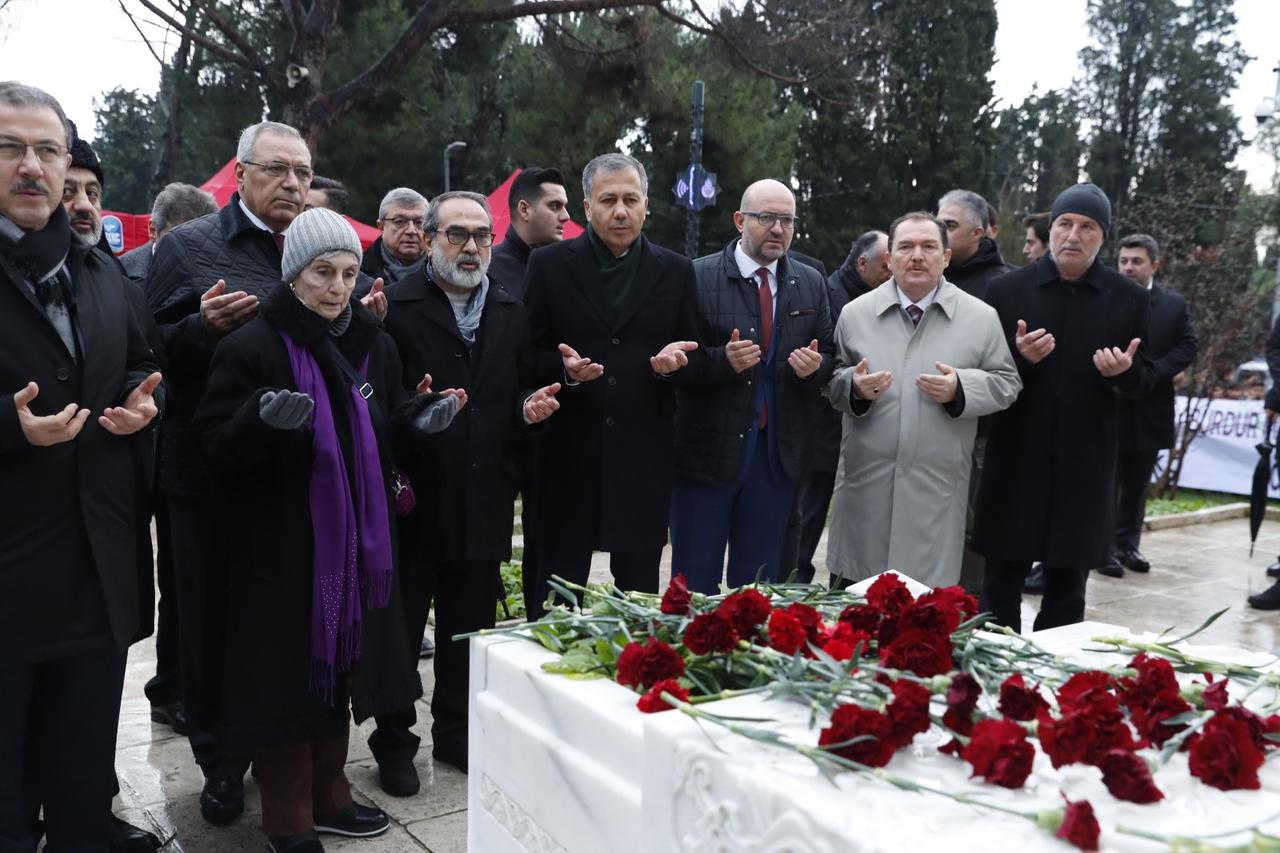
Praying at Mehmet Âkif Ersoy’s Grave (Istanbul Provincial Governorship)
This trajectory shows that Âkif’s legacy was not only reproduced through texts but also through space and monuments. Over time, commemoration practices became institutionalized on a calendar. Under a regulation based on Law No. 5649, committees were established to organize participation by public institutions and related organizations in “Mehmet Âkif Ersoy Commemoration Week,” observed between 20–27 December, coinciding with the adoption date of the İstiklâl Marşı on 12 March.【100】
In recent times, commemoration has gained a more visible political and public framework within the context of the centenary. By a decision of the TBMM, 2021 was declared the “İstiklâl Marşı Year”; this decision was linked to the goal of helping new generations more systematically understand the spirit of the National Struggle and the context of the İstiklâl Marşı.【101】
Aba, Veli. “Mehmet Akif Ersoy’un Hastalığı ve Ölümü.” In *Uluslararası Mehmet Akif Ersoy Sempozyumu Sanatı - Kişiliği - Milli Mücadeledeki Yeri [Mehmet Akif’in Balıkesir’e Gelişinin 91. Yılldönümü Anısına]*, 95–105. Balıkesir, 2011. Accessed December 20, 2025. https://isamveri.org/pdfsbv/D207756/2011/2011_ABAV.pdf.
Audiovisual Sources
Bacaksız, Haluk. “Mehmet Akif Ersoy'da Aile, Toplum ve İnsan.” Master's thesis, Sakarya Üniversitesi, 2008. Accessed December 20, 2025. https://tez.yok.gov.tr/UlusalTezMerkezi/TezGoster?key=UPP_Zu9isEmWGFXFCBYasW3fk87B4iW-MvXYCfNbZUiRstqzaHfaSDnIENuhKZre.
Beyoğlu Refia Övüç Olgunlaşma Enstitüsü. “İstiklâl Marşı Besteleri - Ali Rıfat (Çağatay) Bey.” YouTube. Accessed December 20, 2025. https://www.youtube.com/watch?v=EbB0aqvOg4A&list=RDEbB0aqvOg4A&start_radio=1.
Culture Inventory. "Mehmet Akif Ersoy's Grave." Accessed December 20, 2025. https://kulturenvanteri.com/yer/mehmet-akif-ersoy-kabri/#17.1/41.032288/28.929174.
Diyanet İşleri Başkanlığı. "Galeri." *Safahat: Mehmet Akif Ersoy.* Accessed December 20, 2025. https://safahat.diyanet.gov.tr/Gallery.aspx.
Doğan, D. Mehmet. “Mehmet Âkif Ersoy.” *Tarihi, Kültürü ve Sanatıyla VI. Eyüpsultan Sempozyumu: Tebliğler (10-12 Mayıs 2002)*, 200–213. İstanbul, 2003. Accessed December 20, 2025. https://isamveri.org/pdfsbv/D088225/2003/2003_DOGANDM.pdf.
Durdudiler, Zeynep. “Mehmet Akif Ersoy'un Milliyetçilik Anlayışı.” Master's thesis, İstanbul Arel Üniversitesi, 2020. Accessed December 20, 2025. https://tez.yok.gov.tr/UlusalTezMerkezi/TezGoster?key=4J_FzTwlrMCH4qBROpXPH2bKJ6CLSbRNS-5aIMEylhRGJS5r9k6wgIz5mB4cPEQc.
Ersoy, Mehmet Akif. *Arkamda Serilmiş Yere Bir Mazi: Mehmet Akif’in Mektupları*. Volume 1. Edited by Necmettin Turinay, Mehmet Rüyan Soydan, and Selçuk Karakılıç. Ankara: Türkiye Büyük Millet Meclisi Başkanlığı, 2021. Accessed December 20, 2025. https://cdn.tbmm.gov.tr/TbmmWeb/Yayinlar/Dosya/dd40c039-8b6b-448e-b276-54a5ea002e16.pdf.
Ersoy, Mehmet Akif. *Mehmet Akif Ersoy’un Aile Mektupları*. Prepared by Ömer Hakan Özalp. Edited by Nihat Karaer. Burdur: Mehmet Akif Ersoy Üniversitesi Rektörlüğü, 2010. Accessed December 20, 2025. https://mae.mehmetakif.edu.tr/yayinlar/mehmet-akif-ersoyun-aile-mektuplari-2010.pdf.
Ersoy, Mehmet Akif. *Safahat: Mehmet Akif Ersoy Şiir Külliyatı*. Edited by Necmettin Turinay. Ankara: Türkiye Büyük Millet Meclisi Başkanlığı, 2021. Accessed December 20, 2025. https://cdn.tbmm.gov.tr/TbmmWeb/Yayinlar/Dosya/a211a41b-6ebd-4b3b-bbd4-a69347fe62cd.pdf.
Husseiny, Amira Ashraf Elsayed. “Mehmet Akif Ersoy'un Mısır Hayatı Üzerine Bir Araştırma.” Master's thesis, Sakarya Üniversitesi, 2019. Accessed December 20, 2025. https://tez.yok.gov.tr/UlusalTezMerkezi/TezGoster?key=vjszP7PzV0HebcjFEvDfwGdlVEAEeuYXb8cspBjIKfkjOYRrJUKpHdNHJ1bJTVUK.
Kaplan, Mehmet. “Mehmet Akif Ersoy.” *Kaynaklar*, no. 6 (Winter 1988). Accessed December 20, 2025. https://isamveri.org/pdfdrg/D00065/1988_6/1988_6_KAPLANM.pdf.
Karabulut, Mustafa. “Mehmet Akif Ersoy ve Hikmetli Şiir.” *Hikmet Yurdu*, Yunus Emre'den Mehmed Âkif'e Şiir Özel Sayısı (December 2021): 34–44. Accessed December 20, 2025. https://dergipark.org.tr/tr/pub/hikmet/article/974900.
Kayhan, Melek. “Milli Mücadele ve Mehmet Akif Ersoy.” Master's thesis, Niğde Üniversitesi, 2013. Accessed December 20, 2025. https://tez.yok.gov.tr/UlusalTezMerkezi/TezGoster?key=rcbWnuqW6HxCZ_98ARapgiR1WzDVteloGaYRdzXFbyRlEp45fgs1B3xFkl5CeAON.
Kukul, Hazal. “Mehmet Akif Ersoy Düşüncesinde Doğu-Batı Sorunu.” Master's thesis, Kırklareli Üniversitesi, 2019. Accessed December 20, 2025. https://tez.yok.gov.tr/UlusalTezMerkezi/TezGoster?key=S2eMu1TIwY_v4mYv58xArzQ9OXqdLlRkJaXAQwlSk865wf2-rUTIom2dp4f0mCZL.
Kurtoğlu, Mehmet. “Mehmet Âkif Ersoy Kültür Evi.” *Vakıflar Dergisi*, no. 44 (2015): 131–144. Accessed December 20, 2025. https://isamveri.org/pdfsbv/D00143/2015_44/2015_44_KURTOGLU.pdf.
Küçük, Murat. “Mehmet Âkif Ersoy ve Türkçe.” *Ankara Üniversitesi Dil ve Tarih-Coğrafya Fakültesi Türkoloji Dergisi* 21, no. 2 (2014): 93–112. Accessed December 20, 2025. https://dergipark.org.tr/tr/download/article-file/648427.
Mazıoğlu, Hasibe. “Mehmet Âkif Ersoy (1878-1936).” *Eski Türk Edebiyatı Makaleleri*, 815–841. Ankara, 2009. Accessed December 20, 2025. https://isamveri.org/pdfdrg/D188454/2009/2009_MAZIOGLUH36.pdf.
Okay, M. Orhan and M. Ertuğrul Düzdağ. “Mehmed Âkif Ersoy.” TDV İslâm Ansiklopedisi. Accessed December 20, 2025. https://islamansiklopedisi.org.tr/mehmed-akif-ersoy.
Okay, M. Orhan and Nuri Özcan. “İstiklâl Marşı.” TDV İslâm Ansiklopedisi. Accessed December 20, 2025. https://islamansiklopedisi.org.tr/istiklal-marsi.
Research Works
Store Norske Leksikon. "Mehmet Akif Ersoy." Accessed December 20, 2025. https://snl.no/Mehmet_Akif_Ersoy.
Toprakçı, Erdal, and Ercan Baysülen. “Mehmet Akif Ersoy’un Eğitim Felsefesi (Konuşmaları ve Yazdıkları Işığında Nitel Bir Analiz).” *Mehmet Akif Ersoy Üniversitesi Eğitim Fakültesi Dergisi*, no. 42 (2017): 168–188. Accessed December 20, 2025. https://dergipark.org.tr/tr/download/article-file/327620.
Truçi, Betim. “Mehmet Akif Ersoy'un Ahlâk Anlayışı.” PhD thesis, Bursa Uludağ Üniversitesi, 2023. Accessed December 20, 2025. https://tez.yok.gov.tr/UlusalTezMerkezi/TezGoster?key=j_Fjwp4JS4mk97Puqti8rqv3IMMtCSK2jIwx72AgT0XSAgZuE75c0-FrP1-NcVfG.
Uluçay, Mustafa. “Mehmet Akif Ersoy'un Eserleri Üzerinde Dil ve Üslûp İncelemesi.” PhD thesis, İstanbul Üniversitesi, 2014. Accessed December 20, 2025. https://tez.yok.gov.tr/UlusalTezMerkezi/TezGoster?key=DPTyuy3wRPq_qvCPSqUB686c--bsIW7c51vfALNnRtiX3RehFShewsUHAqQTUAuB.
Vatandaş, Celalettin, Yeşim Çağlar, and Sezai Öztaş, eds. *Mehmet Akif Ersoy: Hayatı, Düşünceleri, Eserleri*. Ankara: Türkiye Büyük Millet Meclisi Başkanlığı, 2022. Accessed December 20, 2025. https://cdn.tbmm.gov.tr/TbmmWeb/Yayinlar/Dosya/bf8b0317-d352-4b0d-91a1-492f5be82b2a.pdf.
Yozgat Bozok Üniversitesi UZEM. "Saygı Duruşu ve İstiklal Marşı." YouTube. Accessed December 20, 2025. https://www.youtube.com/watch?v=isdeiSjnTD8&list=RDisdeiSjnTD8&start_radio=1.
Yıldırım, Adem. “Mehmet Akif Ersoy’da Siyaset Düşüncesi.” *Fikirleri ve Mücadelesiyle Mehmet Akif Ersoy*, edited by Adem Yıldırım and Betül Karaçöl, Ankara: Grafiker Yayınları, 2022. Accessed December 20, 2025. https://www.grafikeryayin.com/resimler/fikirleri-ve-mucadelesiyle-mehmet-akif-ersoy.pdf.
Yıldıztaş, Ahmet, and Ayşe Dinç. “Mehmet Âkif Ersoy’un Şahsiyeti, Sanatı ve Eserleri (1873-1936).” *The Journal of Turk-Islam World Social Studies* (2018). Accessed December 20, 2025. https://tidsad.com/?mod=makale_tr_ozet&makale_id=30721.
Çongur, Rıdvan. “İstiklal Marşı Şairimiz Mehmet Akif Ersoy.” *Türk Yurdu* 20, no. 152 (2000): 8–11. Accessed December 20, 2025. https://isamveri.org/pdfdrg/D00387/2000_152/2000_152_CONGURH.pdf.
Özal, Turgut. “Vatan Şairimiz Mehmet Akif Ersoy.” *Belgelerle Türk Tarihi Dergisi: Dün Bugün Yarın*, no. 22 (1986): 12–13. Accessed December 20, 2025. https://isamveri.org/pdfsbv/D00521/1986_22/1986_22_OZALT.pdf.
Özdil, Orhan, Murat Babuçoğlu, and Sena Gürlek, eds. *Mehmet Akif Ersoy ve İstiklal Marşı*. Ankara: T.C. Cumhurbaşkanlığı Devlet Arşivleri Başkanlığı, 2021. Accessed December 20, 2025. https://www.devletarsivleri.gov.tr/cdn/file/download?fileId=1253.
Öztürk, Bekir. “Mehmet Akif Ersoy ve İstiklâl Marşımız.” *Milli Kültür*, no. 55 (December 1986): 65–70. Mehmet Akif Ersoy Özel Sayısı. Accessed December 20, 2025. https://isamveri.org/pdfsbv/D00087/1986_55/1986_55_OZTURKB.pdf.
İlter, Nihat. “Mehmet Âkif Ersoy'un İnanç Dünyası.” Master's thesis, Erciyes Üniversitesi, 2020. Accessed December 20, 2025. https://tez.yok.gov.tr/UlusalTezMerkezi/TezGoster?key=fl0Kw4p1rmMDotyKRdYv1M9Y9CUK8OHkH5y4IVEGQUVzhJbbPrzoTQF2ZpKH4Gyu.
İstanbul Valiliği. “Milli Şairimiz Mehmet Akif Ersoy, Kabri Başında Dualarla Anıldı.” Accessed December 20, 2025. https://www.istanbul.gov.tr/milli-sairimiz-mehmet-akif-ersoy-kabri-basinda-dualarla-anildi.
İz, Fahir. “Mehmet Akif Ersoy (1873-1936) a Biography.” *Erdem: Atatürk Kültür Merkezi Dergisi* 4, no. 11 (1988): 311–337. Accessed December 20, 2025. https://isamveri.org/pdfsbv/D00039/1988_11/1988_11_IZF.pdf.
Şahin, Ahmet Metehan. “Hususi Mektuplarına Göre Mehmet Âkif Ersoy.” *Türk Dili* 70, no. 831 (March 2021). Accessed December 20, 2025. https://tdk.gov.tr/wp-content/uploads/2021/03/Ahmet-Metehan-Şahin--HUSUSİ-MEKTUPLARINA-GÖRE-MEHMET-ÂKİF-ERSOY--10.pdf.
[1]
Orhan Özdil, Murat Babuçoğlu ve Sena Gürlek, haz., Mehmet Akif Ersoy ve İstiklal Marşı (Ankara: T.C. Cumhurbaşkanlığı Devlet Arşivleri Başkanlığı, 2021), s. 26-39.
[2]
Mehmet Akif Ersoy, Arkamda Serilmiş Yere Bir Mazi: Mehmet Akif’in Mektupları, 1. Cilt, haz. Necmettin Turinay, Mehmet Rüyan Soydan ve Selçuk Karakılıç (Ankara: Türkiye Büyük Millet Meclisi Başkanlığı, 2021), s. V.
[3]
Orhan Özdil, Murat Babuçoğlu ve Sena Gürlek, haz., Mehmet Akif Ersoy ve İstiklal Marşı (Ankara: T.C. Cumhurbaşkanlığı Devlet Arşivleri Başkanlığı, 2021), s. 28-29.
[4]
Haluk Bacaksız, “Mehmet Akif Ersoy'da Aile, Toplum ve İnsan” (Yüksek Lisans Tezi, Sakarya Üniversitesi, 2008), s. 15.
[5]
Mehmet Akif Ersoy, Arkamda Serilmiş Yere Bir Mazi: Mehmet Akif’in Mektupları, 1. Cilt, haz. Necmettin Turinay, Mehmet Rüyan Soydan ve Selçuk Karakılıç (Ankara: Türkiye Büyük Millet Meclisi Başkanlığı, 2021), s. V.
[6]
Mehmet Akif Ersoy, Arkamda Serilmiş Yere Bir Mazi: Mehmet Akif’in Mektupları, 1. Cilt, haz. Necmettin Turinay, Mehmet Rüyan Soydan ve Selçuk Karakılıç (Ankara: Türkiye Büyük Millet Meclisi Başkanlığı, 2021), s. V.
[7]
Haluk Bacaksız, “Mehmet Akif Ersoy'da Aile, Toplum ve İnsan” (Yüksek Lisans Tezi, Sakarya Üniversitesi, 2008), s. 15-16.
[8]
Haluk Bacaksız, “Mehmet Akif Ersoy'da Aile, Toplum ve İnsan” (Yüksek Lisans Tezi, Sakarya Üniversitesi, 2008), s. 16.
[9]
Haluk Bacaksız, “Mehmet Akif Ersoy'da Aile, Toplum ve İnsan” (Yüksek Lisans Tezi, Sakarya Üniversitesi, 2008), s. 16.
[10]
Orhan Özdil, Murat Babuçoğlu ve Sena Gürlek, haz., Mehmet Akif Ersoy ve İstiklal Marşı (Ankara: T.C. Cumhurbaşkanlığı Devlet Arşivleri Başkanlığı, 2021), s. 29.
[11]
Orhan Özdil, Murat Babuçoğlu ve Sena Gürlek, haz., Mehmet Akif Ersoy ve İstiklal Marşı (Ankara: T.C. Cumhurbaşkanlığı Devlet Arşivleri Başkanlığı, 2021), s. 25.
[12]
Orhan Özdil, Murat Babuçoğlu ve Sena Gürlek, haz., Mehmet Akif Ersoy ve İstiklal Marşı (Ankara: T.C. Cumhurbaşkanlığı Devlet Arşivleri Başkanlığı, 2021), s. 40, 44.
[13]
Orhan Özdil, Murat Babuçoğlu ve Sena Gürlek, haz., Mehmet Akif Ersoy ve İstiklal Marşı (Ankara: T.C. Cumhurbaşkanlığı Devlet Arşivleri Başkanlığı, 2021), s. 33.
[14]
Orhan Özdil, Murat Babuçoğlu ve Sena Gürlek, haz., Mehmet Akif Ersoy ve İstiklal Marşı (Ankara: T.C. Cumhurbaşkanlığı Devlet Arşivleri Başkanlığı, 2021), s. 28.
[15]
Orhan Özdil, Murat Babuçoğlu ve Sena Gürlek, haz., Mehmet Akif Ersoy ve İstiklal Marşı (Ankara: T.C. Cumhurbaşkanlığı Devlet Arşivleri Başkanlığı, 2021), s. 42.
[16]
Sayfanın başında "Ahkâm-ı Emrâz-ı Umûmî", en üstte görülen mühürde ise hicri 289 tarihiyle beraber "Mehmet Âkif" yazmaktadır.
[17]
Orhan Özdil, Murat Babuçoğlu ve Sena Gürlek, haz., Mehmet Akif Ersoy ve İstiklal Marşı (Ankara: T.C. Cumhurbaşkanlığı Devlet Arşivleri Başkanlığı, 2021), s. 33.
[18]
Orhan Özdil, Murat Babuçoğlu ve Sena Gürlek, haz., Mehmet Akif Ersoy ve İstiklal Marşı (Ankara: T.C. Cumhurbaşkanlığı Devlet Arşivleri Başkanlığı, 2021), s. 34.
[19]
Orhan Özdil, Murat Babuçoğlu ve Sena Gürlek, haz., Mehmet Akif Ersoy ve İstiklal Marşı (Ankara: T.C. Cumhurbaşkanlığı Devlet Arşivleri Başkanlığı, 2021), s. 34.
[20]
Orhan Özdil, Murat Babuçoğlu ve Sena Gürlek, haz., Mehmet Akif Ersoy ve İstiklal Marşı (Ankara: T.C. Cumhurbaşkanlığı Devlet Arşivleri Başkanlığı, 2021), s. 49.
[21]
Orhan Özdil, Murat Babuçoğlu ve Sena Gürlek, haz., Mehmet Akif Ersoy ve İstiklal Marşı (Ankara: T.C. Cumhurbaşkanlığı Devlet Arşivleri Başkanlığı, 2021), s. 51.
[22]
Orhan Özdil, Murat Babuçoğlu ve Sena Gürlek, haz., Mehmet Akif Ersoy ve İstiklal Marşı (Ankara: T.C. Cumhurbaşkanlığı Devlet Arşivleri Başkanlığı, 2021), s. 30.
[23]
Orhan Özdil, Murat Babuçoğlu ve Sena Gürlek, haz., Mehmet Akif Ersoy ve İstiklal Marşı (Ankara: T.C. Cumhurbaşkanlığı Devlet Arşivleri Başkanlığı, 2021), s. 30.
[24]
Orhan Özdil, Murat Babuçoğlu ve Sena Gürlek, haz., Mehmet Akif Ersoy ve İstiklal Marşı (Ankara: T.C. Cumhurbaşkanlığı Devlet Arşivleri Başkanlığı, 2021), s. 58.
[25]
Orhan Özdil, Murat Babuçoğlu ve Sena Gürlek, haz., Mehmet Akif Ersoy ve İstiklal Marşı (Ankara: T.C. Cumhurbaşkanlığı Devlet Arşivleri Başkanlığı, 2021), s. 29.
[26]
Orhan Özdil, Murat Babuçoğlu ve Sena Gürlek, haz., Mehmet Akif Ersoy ve İstiklal Marşı (Ankara: T.C. Cumhurbaşkanlığı Devlet Arşivleri Başkanlığı, 2021), s. 30.
[27]
Orhan Özdil, Murat Babuçoğlu ve Sena Gürlek, haz., Mehmet Akif Ersoy ve İstiklal Marşı (Ankara: T.C. Cumhurbaşkanlığı Devlet Arşivleri Başkanlığı, 2021), s. 25.
[28]
Mehmet Akif Ersoy, Arkamda Serilmiş Yere Bir Mazi: Mehmet Akif’in Mektupları, 1. Cilt, haz. Necmettin Turinay, Mehmet Rüyan Soydan ve Selçuk Karakılıç (Ankara: Türkiye Büyük Millet Meclisi Başkanlığı, 2021), s. 26.
[29]
Mehmet Akif Ersoy, Arkamda Serilmiş Yere Bir Mazi: Mehmet Akif’in Mektupları, 1. Cilt, haz. Necmettin Turinay, Mehmet Rüyan Soydan ve Selçuk Karakılıç (Ankara: Türkiye Büyük Millet Meclisi Başkanlığı, 2021), s. 25.
[30]
Mehmet Akif Ersoy, Arkamda Serilmiş Yere Bir Mazi: Mehmet Akif’in Mektupları, 1. Cilt, haz. Necmettin Turinay, Mehmet Rüyan Soydan ve Selçuk Karakılıç (Ankara: Türkiye Büyük Millet Meclisi Başkanlığı, 2021), s. 27.
[31]
Mehmet Akif Ersoy, Arkamda Serilmiş Yere Bir Mazi: Mehmet Akif’in Mektupları, 1. Cilt, haz. Necmettin Turinay, Mehmet Rüyan Soydan ve Selçuk Karakılıç (Ankara: Türkiye Büyük Millet Meclisi Başkanlığı, 2021), s. 116.
[32]
Mehmet Akif Ersoy, Arkamda Serilmiş Yere Bir Mazi: Mehmet Akif’in Mektupları, 1. Cilt, haz. Necmettin Turinay, Mehmet Rüyan Soydan ve Selçuk Karakılıç (Ankara: Türkiye Büyük Millet Meclisi Başkanlığı, 2021), s. 26-27.
[33]
Mehmet Akif Ersoy, Safahat: Mehmet Akif Ersoy Şiir Külliyatı, haz. Necmettin Turinay (Ankara: Türkiye Büyük Millet Meclisi Başkanlığı, 2021), s. IX.
[34]
Mehmet Akif Ersoy, Safahat: Mehmet Akif Ersoy Şiir Külliyatı, haz. Necmettin Turinay (Ankara: Türkiye Büyük Millet Meclisi Başkanlığı, 2021), s. 326.
[35]
Mehmet Akif Ersoy, Safahat: Mehmet Akif Ersoy Şiir Külliyatı, haz. Necmettin Turinay (Ankara: Türkiye Büyük Millet Meclisi Başkanlığı, 2021), s. 326.
[36]
Mehmet Akif Ersoy, Safahat: Mehmet Akif Ersoy Şiir Külliyatı, haz. Necmettin Turinay (Ankara: Türkiye Büyük Millet Meclisi Başkanlığı, 2021), s. 517.
[37]
Mehmet Akif Ersoy, Safahat: Mehmet Akif Ersoy Şiir Külliyatı, haz. Necmettin Turinay (Ankara: Türkiye Büyük Millet Meclisi Başkanlığı, 2021), s. 33.
[38]
Mehmet Akif Ersoy, Safahat: Mehmet Akif Ersoy Şiir Külliyatı, haz. Necmettin Turinay (Ankara: Türkiye Büyük Millet Meclisi Başkanlığı, 2021), s. 296.
[39]
Mehmet Akif Ersoy, Safahat: Mehmet Akif Ersoy Şiir Külliyatı, haz. Necmettin Turinay (Ankara: Türkiye Büyük Millet Meclisi Başkanlığı, 2021), s. 743.
[40]
Mehmet Akif Ersoy, Safahat: Mehmet Akif Ersoy Şiir Külliyatı, haz. Necmettin Turinay (Ankara: Türkiye Büyük Millet Meclisi Başkanlığı, 2021), s. 743.
[41]
Mehmet Akif Ersoy, Arkamda Serilmiş Yere Bir Mazi: Mehmet Akif’in Mektupları, 1. Cilt, haz. Necmettin Turinay, Mehmet Rüyan Soydan ve Selçuk Karakılıç (Ankara: Türkiye Büyük Millet Meclisi Başkanlığı, 2021), s. 196.
[42]
Mehmet Akif Ersoy, Arkamda Serilmiş Yere Bir Mazi: Mehmet Akif’in Mektupları, 1. Cilt, haz. Necmettin Turinay, Mehmet Rüyan Soydan ve Selçuk Karakılıç (Ankara: Türkiye Büyük Millet Meclisi Başkanlığı, 2021), s. 201.
[43]
Mehmet Akif Ersoy, Arkamda Serilmiş Yere Bir Mazi: Mehmet Akif’in Mektupları, 1. Cilt, haz. Necmettin Turinay, Mehmet Rüyan Soydan ve Selçuk Karakılıç (Ankara: Türkiye Büyük Millet Meclisi Başkanlığı, 2021), s. 476.
[44]
Mehmet Akif Ersoy, Arkamda Serilmiş Yere Bir Mazi: Mehmet Akif’in Mektupları, 1. Cilt, haz. Necmettin Turinay, Mehmet Rüyan Soydan ve Selçuk Karakılıç (Ankara: Türkiye Büyük Millet Meclisi Başkanlığı, 2021), s. 296.
[45]
Nihat İlter, “Mehmet Âkif Ersoy'un İnanç Dünyası” (Yüksek Lisans Tezi, Erciyes Üniversitesi, 2020), s. 113-114.
[46]
Nihat İlter, “Mehmet Âkif Ersoy'un İnanç Dünyası” (Yüksek Lisans Tezi, Erciyes Üniversitesi, 2020), s. 46.
[47]
Nihat İlter, “Mehmet Âkif Ersoy'un İnanç Dünyası” (Yüksek Lisans Tezi, Erciyes Üniversitesi, 2020), s. 88.
[48]
Betim Truçi, “Mehmet Akif Ersoy'un Ahlâk Anlayışı” (Doktora Tezi, Bursa Uludağ Üniversitesi, 2023), s. 46, 63, 66.
[49]
Erdal Toprakçı ve Ercan Baysülen, “Mehmet Akif Ersoy’un Eğitim Felsefesi (Konuşmaları ve Yazdıkları Işığında Nitel Bir Analiz),” Mehmet Akif Ersoy Üniversitesi Eğitim Fakültesi Dergisi, sy. 42 (2017), s. 173-174.
[50]
Hazal Kukul, “Mehmet Akif Ersoy Düşüncesinde Doğu-Batı Sorunu” (Yüksek Lisans Tezi, Kırklareli Üniversitesi, 2019), s. 65-67.
[51]
Hazal Kukul, “Mehmet Akif Ersoy Düşüncesinde Doğu-Batı Sorunu” (Yüksek Lisans Tezi, Kırklareli Üniversitesi, 2019), s. 74-77.
[52]
Erdal Toprakçı ve Ercan Baysülen, “Mehmet Akif Ersoy’un Eğitim Felsefesi (Konuşmaları ve Yazdıkları Işığında Nitel Bir Analiz),” Mehmet Akif Ersoy Üniversitesi Eğitim Fakültesi Dergisi, sy. 42 (2017), s. 173.
[53]
Orhan Özdil, Murat Babuçoğlu ve Sena Gürlek, haz., Mehmet Akif Ersoy ve İstiklal Marşı (Ankara: T.C. Cumhurbaşkanlığı Devlet Arşivleri Başkanlığı, 2021), s. 91.
[54]
Orhan Özdil, Murat Babuçoğlu ve Sena Gürlek, haz., Mehmet Akif Ersoy ve İstiklal Marşı (Ankara: T.C. Cumhurbaşkanlığı Devlet Arşivleri Başkanlığı, 2021), s. 98-99.
[55]
Celalettin Vatandaş, Yeşim Çağlar ve Sezai Öztaş, ed., Mehmet Akif Ersoy: Hayatı, Düşünceleri, Eserleri (Ankara: Türkiye Büyük Millet Meclisi Başkanlığı, 2022), s. 707-708.
[56]
Orhan Özdil, Murat Babuçoğlu ve Sena Gürlek, haz., Mehmet Akif Ersoy ve İstiklal Marşı (Ankara: T.C. Cumhurbaşkanlığı Devlet Arşivleri Başkanlığı, 2021), s. 102.
[57]
Orhan Özdil, Murat Babuçoğlu ve Sena Gürlek, haz., Mehmet Akif Ersoy ve İstiklal Marşı (Ankara: T.C. Cumhurbaşkanlığı Devlet Arşivleri Başkanlığı, 2021), s. 103.
[58]
Mehmet Akif Ersoy, Arkamda Serilmiş Yere Bir Mazi: Mehmet Akif’in Mektupları, 1. Cilt, haz. Necmettin Turinay, Mehmet Rüyan Soydan ve Selçuk Karakılıç (Ankara: Türkiye Büyük Millet Meclisi Başkanlığı, 2021), s. 180.
[59]
Mehmet Akif Ersoy, Arkamda Serilmiş Yere Bir Mazi: Mehmet Akif’in Mektupları, 1. Cilt, haz. Necmettin Turinay, Mehmet Rüyan Soydan ve Selçuk Karakılıç (Ankara: Türkiye Büyük Millet Meclisi Başkanlığı, 2021), s. 179.
[60]
Mehmet Akif Ersoy, Arkamda Serilmiş Yere Bir Mazi: Mehmet Akif’in Mektupları, 1. Cilt, haz. Necmettin Turinay, Mehmet Rüyan Soydan ve Selçuk Karakılıç (Ankara: Türkiye Büyük Millet Meclisi Başkanlığı, 2021), s. 173.
[61]
Orhan Özdil, Murat Babuçoğlu ve Sena Gürlek, haz., Mehmet Akif Ersoy ve İstiklal Marşı (Ankara: T.C. Cumhurbaşkanlığı Devlet Arşivleri Başkanlığı, 2021), s. 96-97.
[62]
Orhan Özdil, Murat Babuçoğlu ve Sena Gürlek, haz., Mehmet Akif Ersoy ve İstiklal Marşı (Ankara: T.C. Cumhurbaşkanlığı Devlet Arşivleri Başkanlığı, 2021), s. 96.
[63]
Orhan Özdil, Murat Babuçoğlu ve Sena Gürlek, haz., Mehmet Akif Ersoy ve İstiklal Marşı (Ankara: T.C. Cumhurbaşkanlığı Devlet Arşivleri Başkanlığı, 2021), s. 98.
[64]
Orhan Özdil, Murat Babuçoğlu ve Sena Gürlek, haz., Mehmet Akif Ersoy ve İstiklal Marşı (Ankara: T.C. Cumhurbaşkanlığı Devlet Arşivleri Başkanlığı, 2021), s. 213.
[65]
Orhan Özdil, Murat Babuçoğlu ve Sena Gürlek, haz., Mehmet Akif Ersoy ve İstiklal Marşı (Ankara: T.C. Cumhurbaşkanlığı Devlet Arşivleri Başkanlığı, 2021), s. 213-214.
[66]
Orhan Özdil, Murat Babuçoğlu ve Sena Gürlek, haz., Mehmet Akif Ersoy ve İstiklal Marşı (Ankara: T.C. Cumhurbaşkanlığı Devlet Arşivleri Başkanlığı, 2021), s. 222-242.
[67]
Orhan Özdil, Murat Babuçoğlu ve Sena Gürlek, haz., Mehmet Akif Ersoy ve İstiklal Marşı (Ankara: T.C. Cumhurbaşkanlığı Devlet Arşivleri Başkanlığı, 2021), s. 250-251.
[68]
Orhan Özdil, Murat Babuçoğlu ve Sena Gürlek, haz., Mehmet Akif Ersoy ve İstiklal Marşı (Ankara: T.C. Cumhurbaşkanlığı Devlet Arşivleri Başkanlığı, 2021), s. 258-259.
[69]
Orhan Özdil, Murat Babuçoğlu ve Sena Gürlek, haz., Mehmet Akif Ersoy ve İstiklal Marşı (Ankara: T.C. Cumhurbaşkanlığı Devlet Arşivleri Başkanlığı, 2021), s. 214.
[70]
Orhan Özdil, Murat Babuçoğlu ve Sena Gürlek, haz., Mehmet Akif Ersoy ve İstiklal Marşı (Ankara: T.C. Cumhurbaşkanlığı Devlet Arşivleri Başkanlığı, 2021), s. 282-283.
[71]
Orhan Özdil, Murat Babuçoğlu ve Sena Gürlek, haz., Mehmet Akif Ersoy ve İstiklal Marşı (Ankara: T.C. Cumhurbaşkanlığı Devlet Arşivleri Başkanlığı, 2021), s. 214.
[72]
Fahir İz, “Mehmet Akif Ersoy (1873-1936) a Biography,” Erdem: Atatürk Kültür Merkezi Dergisi 4, sy. 11 (1988), s. 315.
[73]
Amira Ashraf Elsayed Husseiny, “Mehmet Akif Ersoy'un Mısır Hayatı Üzerine Bir Araştırma” (Yüksek Lisans Tezi, Sakarya Üniversitesi, 2019), s. 45.
[74]
Mehmet Akif Ersoy, Arkamda Serilmiş Yere Bir Mazi: Mehmet Akif’in Mektupları, 1. Cilt, haz. Necmettin Turinay, Mehmet Rüyan Soydan ve Selçuk Karakılıç (Ankara: Türkiye Büyük Millet Meclisi Başkanlığı, 2021), s. 255.
[75]
Mehmet Akif Ersoy, Arkamda Serilmiş Yere Bir Mazi: Mehmet Akif’in Mektupları, 1. Cilt, haz. Necmettin Turinay, Mehmet Rüyan Soydan ve Selçuk Karakılıç (Ankara: Türkiye Büyük Millet Meclisi Başkanlığı, 2021), s. 255-256.
[76]
Mehmet Akif Ersoy, Arkamda Serilmiş Yere Bir Mazi: Mehmet Akif’in Mektupları, 1. Cilt, haz. Necmettin Turinay, Mehmet Rüyan Soydan ve Selçuk Karakılıç (Ankara: Türkiye Büyük Millet Meclisi Başkanlığı, 2021), s. 441.
[77]
Mehmet Akif Ersoy, Arkamda Serilmiş Yere Bir Mazi: Mehmet Akif’in Mektupları, 1. Cilt, haz. Necmettin Turinay, Mehmet Rüyan Soydan ve Selçuk Karakılıç (Ankara: Türkiye Büyük Millet Meclisi Başkanlığı, 2021), s. 429.
[78]
Mehmet Akif Ersoy, Arkamda Serilmiş Yere Bir Mazi: Mehmet Akif’in Mektupları, 1. Cilt, haz. Necmettin Turinay, Mehmet Rüyan Soydan ve Selçuk Karakılıç (Ankara: Türkiye Büyük Millet Meclisi Başkanlığı, 2021), s. 255.
[79]
Mehmet Akif Ersoy, Arkamda Serilmiş Yere Bir Mazi: Mehmet Akif’in Mektupları, 1. Cilt, haz. Necmettin Turinay, Mehmet Rüyan Soydan ve Selçuk Karakılıç (Ankara: Türkiye Büyük Millet Meclisi Başkanlığı, 2021), s. 339.
[80]
Mehmet Akif Ersoy, Arkamda Serilmiş Yere Bir Mazi: Mehmet Akif’in Mektupları, 1. Cilt, haz. Necmettin Turinay, Mehmet Rüyan Soydan ve Selçuk Karakılıç (Ankara: Türkiye Büyük Millet Meclisi Başkanlığı, 2021), s. 305-307.
[81]
Amira Ashraf Elsayed Husseiny, “Mehmet Akif Ersoy'un Mısır Hayatı Üzerine Bir Araştırma” (Yüksek Lisans Tezi, Sakarya Üniversitesi, 2019), s. 46.
[82]
Mehmet Akif Ersoy, Arkamda Serilmiş Yere Bir Mazi: Mehmet Akif’in Mektupları, 1. Cilt, haz. Necmettin Turinay, Mehmet Rüyan Soydan ve Selçuk Karakılıç (Ankara: Türkiye Büyük Millet Meclisi Başkanlığı, 2021), s. 466.
[83]
Mehmet Akif Ersoy, Arkamda Serilmiş Yere Bir Mazi: Mehmet Akif’in Mektupları, 1. Cilt, haz. Necmettin Turinay, Mehmet Rüyan Soydan ve Selçuk Karakılıç (Ankara: Türkiye Büyük Millet Meclisi Başkanlığı, 2021), s. 331.
[84]
Orhan Özdil, Murat Babuçoğlu ve Sena Gürlek, haz., Mehmet Akif Ersoy ve İstiklal Marşı (Ankara: T.C. Cumhurbaşkanlığı Devlet Arşivleri Başkanlığı, 2021), s. 112.
[85]
Orhan Özdil, Murat Babuçoğlu ve Sena Gürlek, haz., Mehmet Akif Ersoy ve İstiklal Marşı (Ankara: T.C. Cumhurbaşkanlığı Devlet Arşivleri Başkanlığı, 2021), s. 111-113.
[86]
Zeynep Durdudiler, “Mehmet Akif Ersoy'un Milliyetçilik Anlayışı” (Yüksek Lisans Tezi, İstanbul Arel Üniversitesi, 2020), s. 60.
[87]
Orhan Özdil, Murat Babuçoğlu ve Sena Gürlek, haz., Mehmet Akif Ersoy ve İstiklal Marşı (Ankara: T.C. Cumhurbaşkanlığı Devlet Arşivleri Başkanlığı, 2021), s. 111.
[88]
Mehmet Akif Ersoy, Arkamda Serilmiş Yere Bir Mazi: Mehmet Akif’in Mektupları, 1. Cilt, haz. Necmettin Turinay, Mehmet Rüyan Soydan ve Selçuk Karakılıç (Ankara: Türkiye Büyük Millet Meclisi Başkanlığı, 2021), s. 476.
[89]
Mehmet Akif Ersoy, Arkamda Serilmiş Yere Bir Mazi: Mehmet Akif’in Mektupları, 1. Cilt, haz. Necmettin Turinay, Mehmet Rüyan Soydan ve Selçuk Karakılıç (Ankara: Türkiye Büyük Millet Meclisi Başkanlığı, 2021), s. 476-477.
[90]
Mehmet Akif Ersoy, Arkamda Serilmiş Yere Bir Mazi: Mehmet Akif’in Mektupları, 1. Cilt, haz. Necmettin Turinay, Mehmet Rüyan Soydan ve Selçuk Karakılıç (Ankara: Türkiye Büyük Millet Meclisi Başkanlığı, 2021), s. 448.
[91]
Celalettin Vatandaş, Yeşim Çağlar ve Sezai Öztaş, ed., Mehmet Akif Ersoy: Hayatı, Düşünceleri, Eserleri (Ankara: Türkiye Büyük Millet Meclisi Başkanlığı, 2022), s. 502.
[92]
Orhan Özdil, Murat Babuçoğlu ve Sena Gürlek, haz., Mehmet Akif Ersoy ve İstiklal Marşı (Ankara: T.C. Cumhurbaşkanlığı Devlet Arşivleri Başkanlığı, 2021), s. 158-159.
[93]
Orhan Özdil, Murat Babuçoğlu ve Sena Gürlek, haz., Mehmet Akif Ersoy ve İstiklal Marşı (Ankara: T.C. Cumhurbaşkanlığı Devlet Arşivleri Başkanlığı, 2021), s. 159.
[94]
Orhan Özdil, Murat Babuçoğlu ve Sena Gürlek, haz., Mehmet Akif Ersoy ve İstiklal Marşı (Ankara: T.C. Cumhurbaşkanlığı Devlet Arşivleri Başkanlığı, 2021), s. 184.
[95]
Orhan Özdil, Murat Babuçoğlu ve Sena Gürlek, haz., Mehmet Akif Ersoy ve İstiklal Marşı (Ankara: T.C. Cumhurbaşkanlığı Devlet Arşivleri Başkanlığı, 2021), s. 187.
[96]
Orhan Özdil, Murat Babuçoğlu ve Sena Gürlek, haz., Mehmet Akif Ersoy ve İstiklal Marşı (Ankara: T.C. Cumhurbaşkanlığı Devlet Arşivleri Başkanlığı, 2021), s. 188.
[97]
Orhan Özdil, Murat Babuçoğlu ve Sena Gürlek, haz., Mehmet Akif Ersoy ve İstiklal Marşı (Ankara: T.C. Cumhurbaşkanlığı Devlet Arşivleri Başkanlığı, 2021), s. 190.
[98]
Orhan Özdil, Murat Babuçoğlu ve Sena Gürlek, haz., Mehmet Akif Ersoy ve İstiklal Marşı (Ankara: T.C. Cumhurbaşkanlığı Devlet Arşivleri Başkanlığı, 2021), s. 26.
[99]
M. Orhan Okay ve M. Ertuğrul Düzdağ, “Mehmed Âkif Ersoy,” TDV İslâm Ansiklopedisi, s. 435.
[100]
Orhan Özdil, Murat Babuçoğlu ve Sena Gürlek, haz., Mehmet Akif Ersoy ve İstiklal Marşı (Ankara: T.C. Cumhurbaşkanlığı Devlet Arşivleri Başkanlığı, 2021), s. 338.
[101]
Orhan Özdil, Murat Babuçoğlu ve Sena Gürlek, haz., Mehmet Akif Ersoy ve İstiklal Marşı (Ankara: T.C. Cumhurbaşkanlığı Devlet Arşivleri Başkanlığı, 2021), s. 17-18.

Birth | Istanbul 20 December 1873 | ||||||||
|---|---|---|---|---|---|---|---|---|---|
Death | Istanbul 27 December 1936 | ||||||||
Burial | Istanbul Edirnekapı Cemetery | ||||||||
Profession(s) | member of parliament teacher veterinary physician translator thinker Poet | ||||||||
Spouse(s) | İsmet Hanım | ||||||||
Child | Mehmet Emin Mehmet Tahir Suat Ayşe Feride Fatma Cemile | ||||||||
Education | Halkalı Veterinary School Mekteb-i Mülkiye İdâdîsi Fatih Central Intermediate School Emir Buhârî Neighborhood School | ||||||||
Professional Positions | translation of the Qur’an Turkish language courses at Câmiatü’l-Mısriyye (Cairo University) secretary-general of Dârü’l-Hikmeti’l-İslâmiyye Cemiyeti professor of Ottoman literature at the Faculty of Letters of Istanbul Darülfünûnu writing and publications around Sırât-ı Müstakîm / Sebîlürreşâd Veterinary medicine under the Ministry of Agriculture | ||||||||
Political Positions | Member of parliament for Burdur in the First Grand National Assembly of Türkiye (1920–1923) | ||||||||
Works | Gölgeler Âsım Hatıralar Fatih Kürsüsünde Hakkın Sesleri Süleymaniye Kürsüsünde Safahat İstiklâl Marşı | ||||||||
Early Life and Family
Education and Professional Specialization
Public Service and Teaching Years
Literary Environment and Periodical Publications
Safahat and the World of Poetry
Intellectual World and Key Concepts
Belief and Religious Understanding
Fate and Will
Morality and Social Criticism
Civilization, Progress, and Science
The East-West Problem and Critique of Imitation
Education and the Ideal Human Type
Activities During the National Struggle
Assembly Activities and the İstiklâl Marşı
The Melody Process of the İstiklâl Marşı
First Melodies (1921–1923)
Republican Era and Osman Zeki Üngör’s Melody
Full Text of the İstiklâl Marşı
Post-Republic and Egyptian Years
Departure from Türkiye and Settlement in Egypt
Daily Life and Social Circle in Hilvan
Livelihood and Work Regime
Translation of the Qur’an and Institutional Contract Process
Literary Production, Letters, and the Final Phase
Works
Poetry Books
National Anthem
Translated Books Published in Book Form
Articles in Magazines and Newspapers
Major Projects
Family
Death, Burial, and Legacy