

+2 More

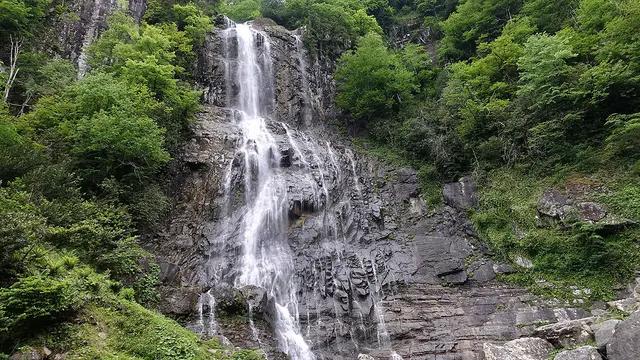
Mençuna Waterfall
Location | Ortacalar Village Artvin Arhavi | ||||||||
|---|---|---|---|---|---|---|---|---|---|
Coordinate(s) | 41.353 41.254 | ||||||||
Height(s) | 630 m | ||||||||
Nutrition | Snow and rainwater | ||||||||
Type(s) | Waterfall | ||||||||
Mençuna Waterfall is located in the Ortacalar Village, Arhavi District, Artvin Province, Türkiye, within the Kamilet Valley. The waterfall is characterized by an 82-meter drop and is a surface water feature that reflects the hydrogeological and geomorphological characteristics of the Eastern Black Sea Region.

Mençuna Waterfall (
Mençuna Waterfall, accessible from Arhavi district in the direction of Ortacalar Village, is approximately a 1-kilometer hike along a footpath that follows the river after leaving the village road. A suspension bridge and a dirt road limit access to the area, and pedestrian access may be difficult during certain seasons.

The Trail Leading to Mençuna Waterfall (Prof. Dr. Hayati Doğanay)
The waterfall is located at an elevation of 630 meters and covers an area of 195 hectares. The slope is zero, and the water flow on the vertical surfaces is fed by snow and rainwater. The geological structure consists of andesite and basalt volcanic rocks. The water level of the waterfall is at its highest between April and May.

Mençuna Waterfall (
The region offers a variety of accommodation facilities. Built using traditional stone and wood materials in harmony with the local architecture, these facilities are popular among both local and international tourists.
The region offers ideal physical conditions for recreational activities such as nature walks, sightseeing, and camping. Annual walking events and highland festivals increase visitor numbers around the waterfall.
The roads leading to the waterfall require asphalting and structural improvements. The poor condition of the trails may occasionally pose a safety risk to visitors. Infrastructure elements such as viewing areas, wooden stairs, and information signs are found to be lacking.
It has been observed that the local community derives indirect income from tourism activities through the sale of local products (honey, molasses, cheese, etc.) along the road. However, the lack of knowledge and experience among the local community regarding ecotourism limits their active participation.
Anadolu Agency (AA). “Artvin's Magnificent Waterfalls Enchant Visitors to Mençuna.” Anadolu Agency. Accessed May 12, 2025. https://www.aa.com.tr/tr/yasam/artvinin-ihtisamli-selalelerinden-mencuna-ziyaretcilerini-buyuluyor/2282622.
Kaymaz, Çağlar. “Mençuna Şelalesi’nin Sürdürülebilir Ekoturizm Planlaması Açısından Değerlendirilmesi.” Coğrafya’ya Adanmış Bir Ömür Prof. Dr. Hayati Doğanay içinde. Yayın tarihi 15 Ocak 2015. ISBN 978-975-442-643-4. Erişim 13 Mayıs 2025. https://www.researchgate.net/publication/275645427_Mencuna_Selalesi'nin_Surdurulebilir_Ekoturizm_Planlamasi_Acisindan_Degerlendirilmesi.
Republic of Türkiye Arhavi District Governor's Office. “Mençuna Waterfall.” T.C. Arhavi District Governor's Office. Accessed May 12, 2025. http://arhavi.gov.tr/mencuna-selalesi.
Republic of Türkiye Ministry of Culture and Tourism. “Mençuna Waterfall.” Culture Portal. Accessed May 12, 2025. https://www.kulturportali.gov.tr/turkiye/artvin/gezilecekyer/mencuna-selalesi.
Republic of Türkiye Ministry of Environment and Urbanization. “Mençuna Waterfall.” Black Sea Basin Project. Accessed May 12, 2025. https://karadeniz.gov.tr/mencuna-selalesi/#prettyPhoto.

Mençuna Waterfall
Location | Ortacalar Village Artvin Arhavi | ||||||||
|---|---|---|---|---|---|---|---|---|---|
Coordinate(s) | 41.353 41.254 | ||||||||
Height(s) | 630 m | ||||||||
Nutrition | Snow and rainwater | ||||||||
Type(s) | Waterfall | ||||||||
Transportation and Physical Conditions
Natural Features
Tourism and Accommodation
Recreational and Cultural Activities
Infrastructure and Maintenance Status
Local Economic Contribution
This article was created with the support of artificial intelligence.

