

This article was automatically translated from the original Turkish version.
Type of Geographical İndication | Mahreç Sign | ||||||||
|---|---|---|---|---|---|---|---|---|---|
Registration Number | 1168 | ||||||||
Registration Date | 19.07.2022 | ||||||||
Product / Product Group(s) | Meals and soups | ||||||||
Province(s) | Bolu | ||||||||
Applicant/Registrant(s) | Mengen Municipality | ||||||||
Mengen Kedibatmaz is a traditional dish unique to the Mengen district of Bolu Province, officially registered with a geographical indication mark. It has been protected since 10 June 2021 under Law No. 6769 on Industrial Property and was officially registered as a geographical indication on 19 July 2022. The registration process was carried out by the Mengen Municipality.
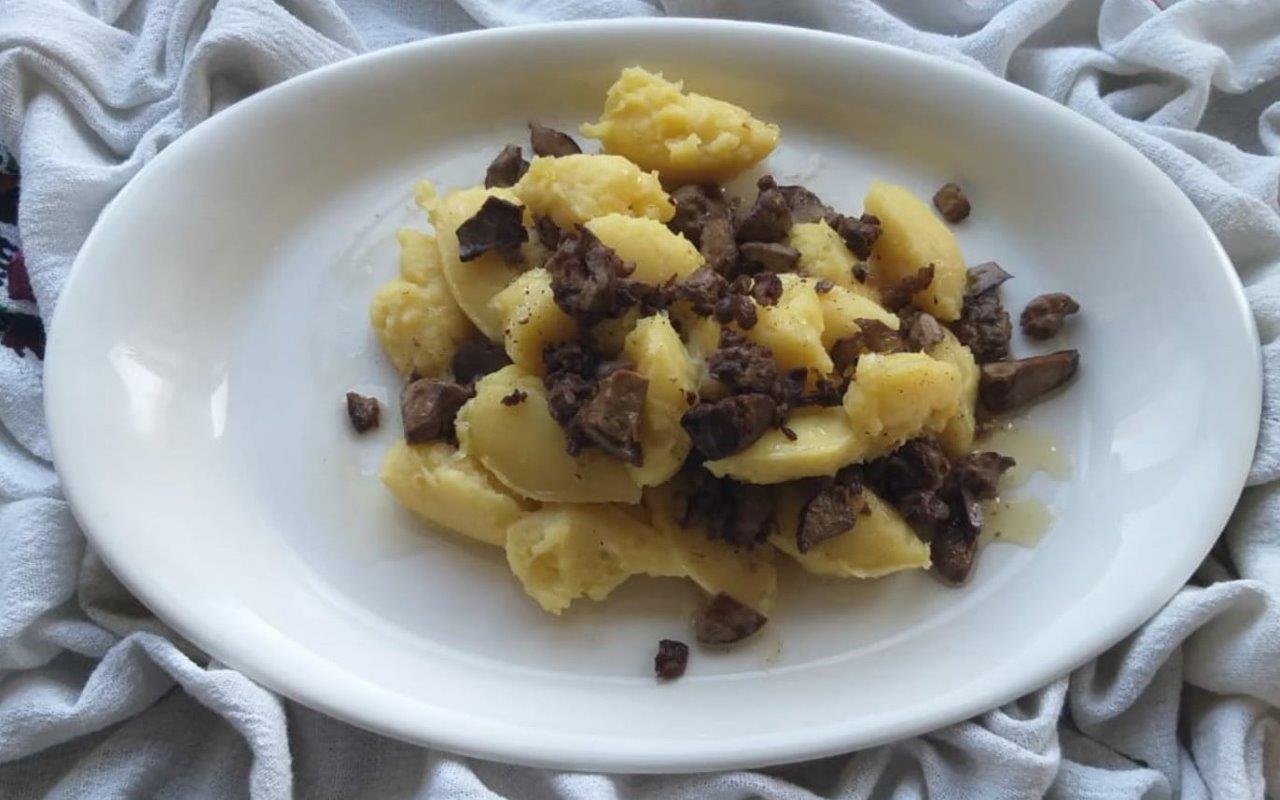
Mengen Kedibatmaz is prepared by cooking a soft dough made from corn flour, wheat flour and salt mixed with boiling water, then topping it with fried goose liver, chicken liver, grated keş or crushed walnut kernels sautéed in butter. Due to its very soft consistency, it can be swallowed without chewing. This dish holds a special place in Mengen’s culinary culture and is frequently prepared during holidays and special occasions.
The ingredients required for six servings of Mengen Kedibatmaz are as follows:
Corn flour and wheat flour are mixed together. The flour mixture and salt are gradually added to boiling water while stirring continuously to prevent lumps. The dough, which reaches a purée-like consistency, is cooked for approximately 8 to 10 minutes.
Butter is melted and, according to preference, chopped liver, grated keş or crushed walnut kernels are added and sautéed.
Half of the cooked dough is placed on a serving dish and shaped with a spoon. The prepared topping is poured over it. The remaining dough is then added on top and the same procedure is repeated to complete the serving.
The production method of Mengen Kedibatmaz is unique to the Mengen district and has become intrinsically linked to this locality. Therefore, all stages of production must be carried out exclusively within the boundaries of the Mengen district of Bolu Province.
The production and use of the indication are monitored by a control body of at least four members coordinated by the Mengen Municipality. This body consists of one expert representative each from the Mengen Municipality, the Mengen District Directorate of Agriculture and Forestry, the Mengen Vocational School of Abant Izzet Baysal University in Bolu, and the Bolu Regional Office of the Chamber of Food Engineers. Monitoring is conducted at least once a year regularly, and additionally whenever necessary or upon complaint.
The monitoring criteria are as follows:
The geographical indication emblem appears on the product itself or its packaging; if this is not feasible, it must be displayed in a clearly visible location within the production facility.
Turk Patent and Trademark Office. "Mengen Kedibatmaz." *Geographical Indications Portal*. Accessed October 24, 2025. https://ci.turkpatent.gov.tr/cografi-isaretler/detay/4442.
Turkish Patent and Trademark Office. "Mengen Kedibatmaz Geographical Indication Registration Certificate (No: 1168)." Turkish Patent and Trademark Office. Accessed October 24, 2025. https://ci.turkpatent.gov.tr/Files/GeographicalSigns/3d92ed6a-84ce-4920-8282-4574d419dc2f.pdf.

Type of Geographical İndication | Mahreç Sign | ||||||||
|---|---|---|---|---|---|---|---|---|---|
Registration Number | 1168 | ||||||||
Registration Date | 19.07.2022 | ||||||||
Product / Product Group(s) | Meals and soups | ||||||||
Province(s) | Bolu | ||||||||
Applicant/Registrant(s) | Mengen Municipality | ||||||||
Definition and Distinctive Characteristics
Production Method
Preparation
Preparation of the Topping
Serving
Geographical Link and Production Conditions
Monitoring