badge icon

This article was automatically translated from the original Turkish version.

Article

Merzifon Weaving

merziffonn.png
Merzifon Weaving
Type of geographical indication
Mahreç Sign
File Number
C2021/000389
Application Date
September 30, 2021
Registration Number
1623
Registration Date
August 5, 2024
Product Group
Textiles
Province
Amasya
Applicant/Registrant
Merzifon Chamber of Commerce and Industry
Status
Registered

Merzifon Weaving is a handwoven textile unique to the Merzifon district of Amasya Province. It is one of the important cultural symbols of Merzifon and historically served as a primary source of livelihood for the local population, with production continuing for over a century.


Merzifon Weave (AA)

Characteristics and Production

  • Production Area: Merzifon Weaving is produced exclusively within the geographical boundaries of the Merzifon district of Amasya Province. All stages of production must take place within this defined geographical limit.
  • Materials: Cotton yarn is used. Colors are vibrant, primarily red, along with turquoise blue green orange yellow purple and pink. The background is typically white. Yarn counts vary depending on the motif pattern and technique. For colored stripes 60/2 yarn is used for the warp and 30/2 20/2 or similar counts for the weft.
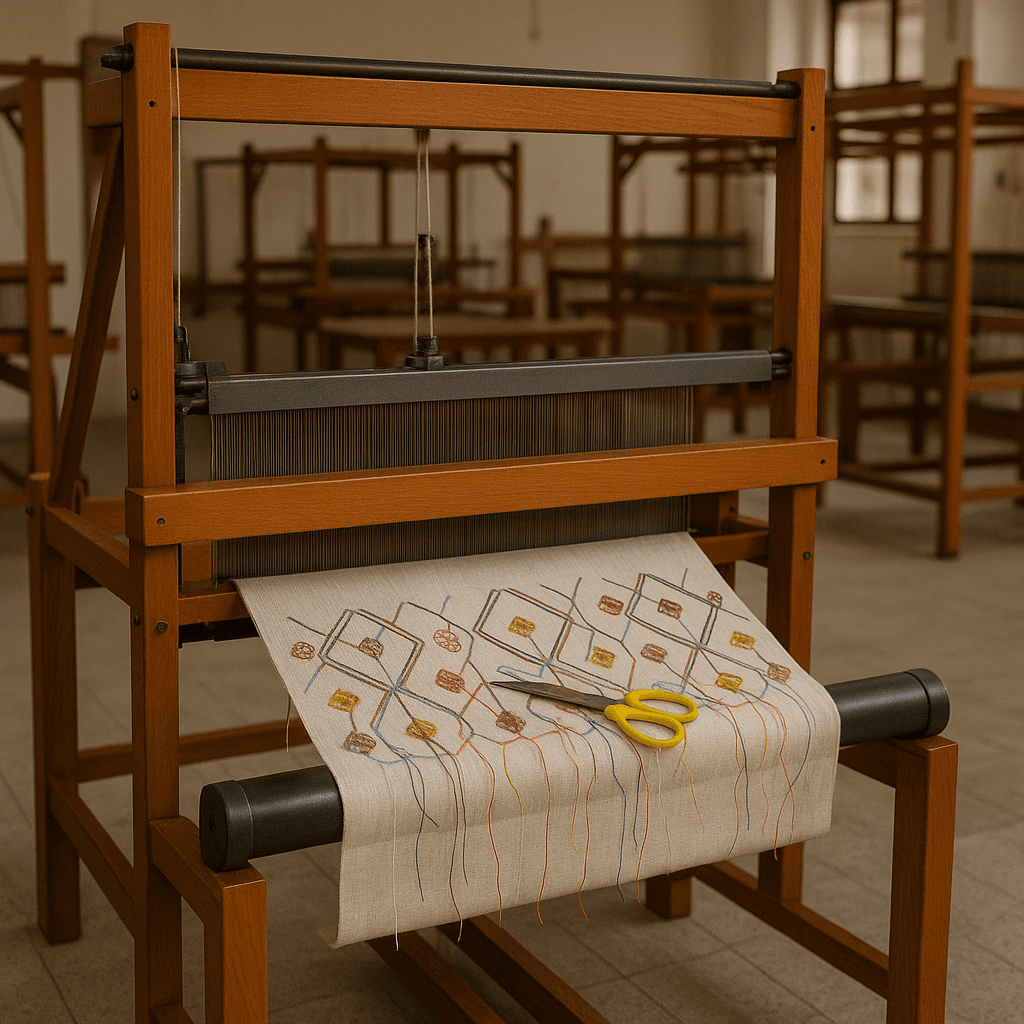
  • Technique: The weaving is done by hand using a two-legged wooden loom with shuttles. The process begins with warp preparation followed by the application of tahar and armür techniques. The weft and warp threads are then interlaced in plain weave. The loom width is typically 60 cm 120 cm or 150 cm. Some of the loom components used include levend toka tarak ayak kamçı oklava gucü and selvindir.

Merzifon Weaving (generated by artificial intelligence)
Weaving Patterns

  • Potlu weaving: Preferred for high-density products such as sheets towels and bath towels. Height is created by spacing the weft and warp threads at intervals of 1–2 cm or 2–3 cm.
  • Plain weaving: A single-color or multicolored weave in which weft and warp threads intersect at a 90° angle.
  • Bürük weaving: Produced by combining plain and potlu techniques. Used for women’s outerwear and household textiles but produced less frequently.
  • Alaca weaving: Created by interweaving two colors in potlu and plain patterns to produce a reflective effect. Used in products such as towels bath towels and outerwear but produced in very limited quantities.
  • Kıvratma weaving: A plain weave made with elastic or rubberized yarn used in the production of inner and outer garments.
  • Çarşaf weaving: Produced using the bez ayağı weaving technique.
  • Potlu çarşaf weaving: Produced by using weft and warp threads at intervals of 1–2 cm or 2–3 cm and at a 90° angle.
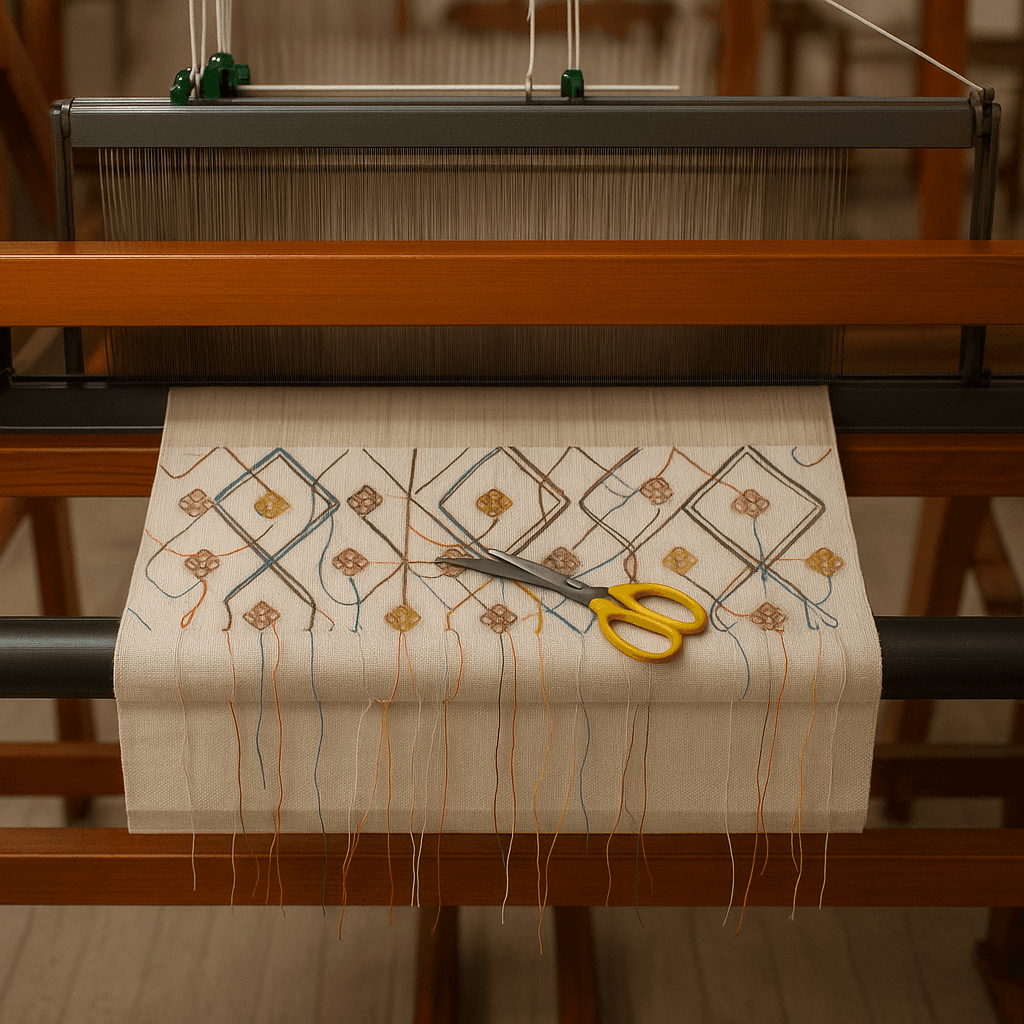
  • Motifs: Weavers express emotions and ideas through motifs. Motifs are applied using Turkish embroidery tel kırma and kanaviçe techniques. The most commonly used motifs include geometric patterns rose branches bride’s veil bird cherry blossom and daisy.
  • Tassels: The ends of Merzifon Weaving are typically finished with tassels measuring between 7 and 25 cm made using macramé techniques. Various tassel tying methods are employed including narrow and wide striped radiator pipe bead twist cin knot butterfly knot plain twist sheet knot heart knot baklava drunk alley spider knot and super knot.
  • Products: Merzifon Weaving is used to produce many items and souvenirs including shirts underwear sheets towels bath towels covers tablecloths dresses ties and bags. Within the geographical boundary the textile is also referred to as bez. It is generally marketed as bolted fabric but can also be produced in custom sizes upon order.


Merzifon Weaving (generated by artificial intelligence)

Preservation Efforts

As mass-produced goods have become widespread and this craft has faced the risk of being forgotten efforts are being made to sustain it through weaving courses offered by the Merzifon Community Education Center. Participants in these courses create products using contemporary designs and patterns.

Author Information

Avatar
AuthorYahya B. KeskinDecember 8, 2025 at 8:40 AM

Tags

Discussions

No Discussion Added Yet

Start discussion for "Merzifon Weaving" article

View Discussions

Contents

  • Characteristics and Production

  • Weaving Patterns

  • Preservation Efforts

Ask to Küre