



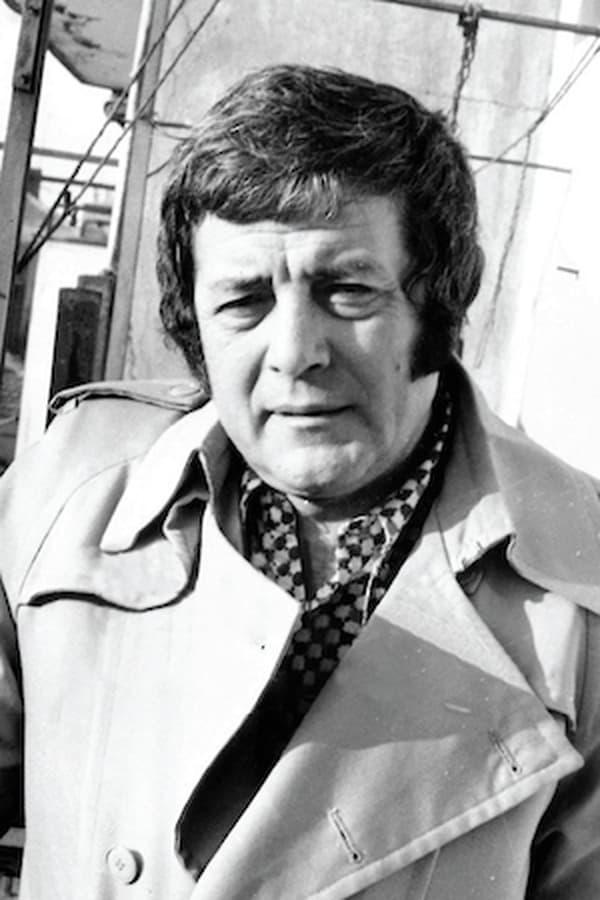
Metin Erksan (1929–2012) is recognized as one of the most innovative directors of Turkish cinema and a pioneering director screenwriter and academic associated with the social realism movement. He addressed bold themes such as class inequality, land ownership, social injustice, impossible loves and human psychology, shaping the direction of Turkish cinema. With “Susuz Yaz” (1963), he brought Türkiye its first international award, demonstrating that cinema is not merely an entertainment medium but also a tool for reflection and critique.
Metin Erksan was born on 1 January 1929 in Çanakkale. His interest in cinema developed from an early age. He graduated from the Department of History at Istanbul University Faculty of Letters. In the University years he began writing film criticism, focusing during this period on the artistic dimensions of cinema.

Metin Erksan behind the camera –Fikrisinema
In the early 1950s he entered the film industry and directed the film “Aşık Veysel’in Hayatı – Darkness World” in 1952. This work is considered one of the first biographical films in Turkish cinema history. However, his true breakthrough came in the 1960s through films that moved away from traditional Yeşilçam melodramas and placed social realism at the forefront.
Metin Erksan treated cinema as an art form and sought to innovate within its language. Thanks to his aesthetic concerns and distinctive narrative style, he generated significant acclaim both in Türkiye and internationally.
Metin Erksan’s cinema is distinguished by elements such as social realism, psychological depth and visual aesthetics. His films foreground social themes like rural life, land ownership, feudal structures, class inequality and economic hardship. He portrays the inner conflicts of his characters with great detail, reflecting psychological complexity.
Visual aesthetics and symbolic storytelling are integral to Erksan’s cinema. His striking visual compositions, use of light and shadow, and symbolic narratives lend his films a unique artistic dimension. Moreover, he delves deeply into the inner struggles of individuals trapped within traditional social structures and their impossible loves.
Erksan faced censorship during his time due to his bold social critiques, and his films often sparked controversy. Yet this stance only strengthened and deepened the impact of his work. Erksan, who courageously confronted social issues and employed an artistic language, is regarded as one of the most important directors in Turkish cinema history.
• It is the first Turkish film to win the Golden Bear at the Berlin Film Festival.
• Adapted from Necati Cumalı’s novel of the same name.
• Addresses injustice in land and water ownership, human greed and class inequality.
• Generated major international反响 and, despite censorship, became a landmark film in Turkish cinema history.
• Adapted from Fakir Baykurt’s novel.
• Depicts land disputes in village life, the oppressive structure of feudalism and class struggle.
• Censored due to its social critique but later gained widespread acclaim.
• One of the most original romantic films in Turkish cinema history.
• The protagonist’s love for a woman’s portrait raises philosophical questions about the relationship between love, reality and image.
• Has earned a unique place in Turkish cinema through its minimalist narrative and surreal elements.
• Centers on the love between a construction worker and a wealthy woman.
• Explores the rich-poor divide, class differences in urban life and economic injustice.
• A courageous portrayal of women’s lives under social oppression.
• Examines societal gender norms and male-female relationships.
Metin Erksan received numerous awards at Turkish and international festivals:
• 1964 Golden Bear, Berlin Film Festival (Susuz Yaz)
• 1965 Antalya Golden Orange Film Festival Best Director (Sevmek Zamanı)
• 1962 Turkish Film Festival Best Film (Yılanların Öcü)
• Turkish Film Writers Association (SİYAD) Lifetime Achievement Award
His films were screened and received significant attention at international film festivals including Berlin, Cannes, Moscow and Venice.

Metin Erksan’s funeral ceremony –Anadolu Agency
• He is regarded as one of the pioneers of the social realism movement.
• He achieved Türkiye’s first major international cinematic success.
• His visual storytelling language and cinematic aesthetics are still studied in film schools today.
• He inspired directors such as Yılmaz Güney and Zeki Demirkubuz.
• After the 1980s he withdrew from filmmaking and turned to writing and academic work.
Anadolu Ajansı. Ünlü Yönetmen Metin Erksan Vefat Etti. Accessed March 18, 2025. Link
DergiPark. "Metin Erksan ve Toplumsal Gerçekçilik." Accessed March 18, 2025. Link
DergiPark. "Metin Erksan’ın Sinema Anlayışı ve Gerçekçilik." Accessed March 18, 2025. Link
IMDb. Metin Erksan Filmografisi. Accessed March 18, 2025. Link
Sinematurk. "Metin Erksan Profili." Accessed March 18, 2025. Link
The Magger. "Metin Erksan Kimdir?" Accessed March 18, 2025. Link
Turkish Cinema Studies (TSA). Metin Erksan. Accessed March 18, 2025. Link
İstanbul Üniversitesi. Buradan Bir Usta Geçti. Accessed March 18, 2025. Link

Life and Career Beginnings
Cinematic Style and Themes
Notable Films
1. Susuz Yaz (1963) – Türkiye’s First International Award
2. Yılanların Öcü (1962) – Cinema Critiquing the Feudal Order
3. Sevmek Zamanı (1965) – A Film Redefining Love
4. Acı Hayat (1962) – A Drama on Class Struggle
5. Kuyu (1968) – The Woman’s Place in Society
Awards and Achievements
Legacy and Influence