


This article was automatically translated from the original Turkish version.
+1 More
Microfilm is a type of microform in which documents and printed materials are reduced in size and recorded sequentially as frames on photographic film, wound onto a reel. This recording method is integrated into institutional archives and libraries through various workflows, aiming to facilitate storage and reproduction by reducing physical volume while establishing controlled access systems; production, classification, indexing, storage, and access stages are addressed together.
The development of microfilm is considered part of the broader process of diversifying information recording media in response to increasing volumes of documentation. In the mid-nineteenth century, the emergence of microphotography techniques demonstrated that written and visual materials could be reduced and recorded; however, these applications remained limited and experimental in their early stages. It was during the first half of the twentieth century that microfilm became a systematic solution for archives and libraries.
At the beginning of the twentieth century, the rapid increase in document volumes within public institutions, scientific research, and technical reporting elevated microfilm to the status of a practical recording medium.
Particularly government agencies, military structures, and major research centers began adopting this method to streamline document circulation and reproduction. During this period, microfilm entered institutional practices as a tool accompanying the planned management of documentation processes.
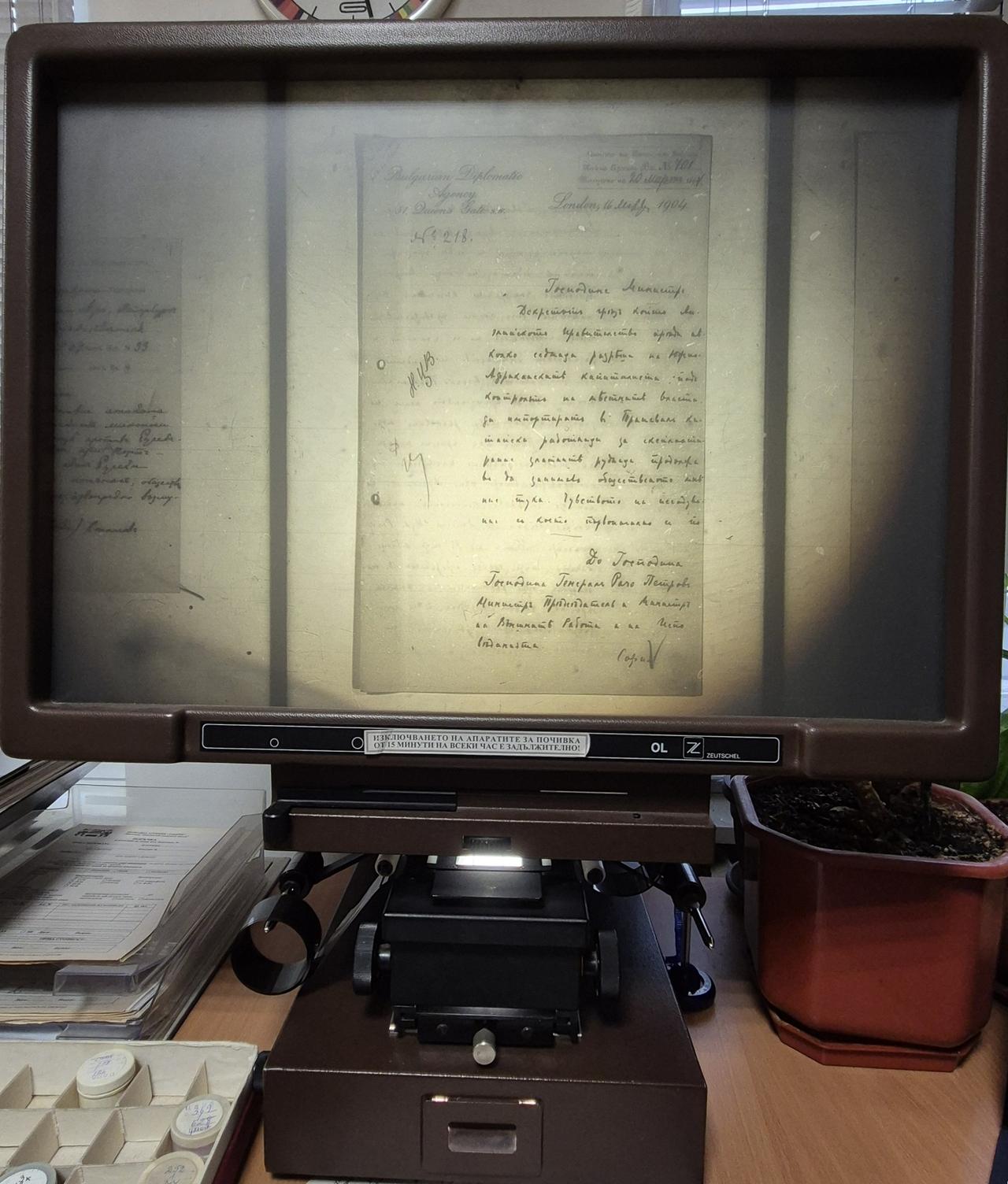
Zeutschel Brand Microfilm Reader (Photograph: Mehmet Salih Çoban)
The Second World War constituted a decisive phase in the international spread of microfilm. War conditions heightened the need to securely preserve documents and transfer them between different centers; microfilm was widely adopted as a recording medium that met this need. After the war, these practices continued, and microfilm became one of the standard methods in archiving and librarianship during peacetime. From the 1950s onward, microfilm was implemented through planned programs, especially in major libraries and national archives. Newspaper collections, serial publications, and documents requiring long-term preservation formed the core of microfilm programs. During this period, microfilm also became an essential component of international document exchange and interlibrary cooperation practices.
Although the development of digital technologies transformed microfilm’s role in information access, microfilm applications have not been entirely discontinued due to the institutional accumulation acquired over time. In many countries, major libraries and archives continue to preserve microfilm as an inseparable part of historically accumulated collections. This situation demonstrates that the historical development of microfilm is not merely a technical evolution but also a process linked to the formation of institutional memory.
Microfilm is defined as the reel-based recording medium within the broader family of microforms and is based on microphotographic techniques. This technique relies on the photographic reduction of documents onto film. Within the microform family, besides microfilm, there are microfiche—designed to facilitate page-based access—ultrafiche, which reduces the number of cards according to document or fond volume, and card-based applications developed for large-format drawings, maps, and visual materials. In institutional applications, the preference between microfilm and microfiche is linked to the usage intensity of the collection and whether the document is active or passive. Microfilm is preferred for archival documents that require no further processing, involve no additions or deletions, and are infrequently accessed; microfiche is preferred for documents requiring frequent consultation and rapid access. Microfilm establishes a recording system of sequential frames on a reel of film. Each frame contains a reduced image of a single page or multiple pages arranged within a specific system within the same frame. Recording multiple pages per frame is motivated by the principles of exposure economy and achieving visibility through magnification on reading devices. The type of film used is determined according to the technical specifications of the camera and loading system; reel length, perforation structure, and film format are evaluated in conjunction with the filming equipment.
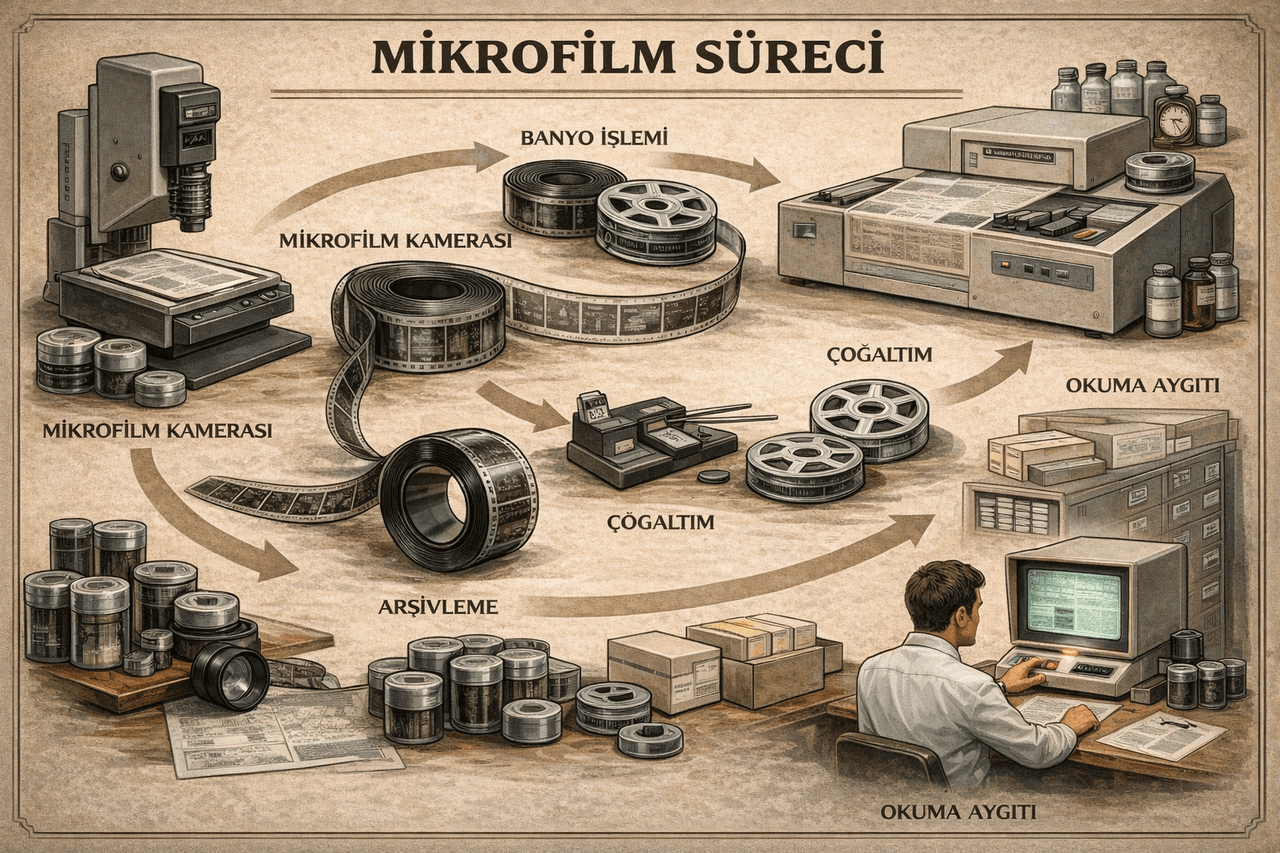
Microfilm Production and Usage Process (Generated by Artificial Intelligence)
The microfilming process is based on a technical workflow beginning with preparatory steps prior to filming. It is considered a fundamental condition for a regular microfilm sequence that the documents to be microfilmed have been classified and inventoried. Adjustments such as identifying missing items in the document sequence, allocating space on the film for fond and access information, leaving blank sections at the beginning and end of the reel, and avoiding filming multiple fonds on a single reel ensure both the integrity of the recording and future accessibility. During filming, the parallel alignment of the document with the camera is critical to achieving uniform sharpness across the entire image. Fixing the camera position, holding the document on a flat surface, and using glass when necessary are practices aimed at enhancing image clarity. Lighting must be carefully planned due to microfilm’s narrow exposure tolerance. Harsh shadows caused by direct sunlight are avoided; balanced two-sided artificial lighting is provided. Exposure and aperture settings are determined by light measurement; the stability of both the camera and the document is maintained throughout the exposure. After filming, the film enters the developing and processing stage. In microfilm applications, a technical distinction is made between the master negative and service copies. The master negative is preserved and used sparingly; separate copies are produced for service and reproduction purposes. Reading and reproduction are carried out using microfilm readers and reader-printers. These devices magnify the image on the film and project it onto a screen, and can also produce paper outputs when needed. Regular filming sequences and indexing systems are regarded as complementary elements that ensure the technical accessibility of microfilm collections.
Microfilm and other microform types are associated with diverse uses in archives and libraries. These institutions primarily employ microfilm to produce preservation copies safeguarding documents against risks such as fire, flooding, physical wear, or loss. Additionally, microfilm can provide supplementary copies to complete missing documents or publications in collections. In disposal processes, microforms also function as a “substitution” tool, enabling preservation of document content in case of erroneous weeding. Microforms are used to produce working copies for documents prone to wear due to heavy usage, thereby contributing to the preservation of original materials. Moreover, microform copies may be prepared for purposes such as publication, reproduction, sale, or inter-institutional document sharing. Microfilm is widely used in academic research, genealogical studies, preservation of newspaper and serial collections, and providing access to rare books and manuscripts. Consequently, microfilm has become a standard component of collections in many major national libraries, university libraries, and government archives. In institutional applications, microfilm is primarily associated with long-term storage and preservation, while microfiche is viewed as a tool designed to meet researchers’ needs for rapid access. This distinction is shaped according to the usage intensity and service priorities of the collections.
Microfilm storage relies on the organized preservation of reel units in specialized cabinets and drawers. In storage planning, reel capacity, modular layout designs, and access areas are evaluated together. In libraries and archives, microfilm is preferred for storing collections that are infrequently used or classified as “static.” Within this context, measurement models have been developed to correlate reel length with page count, enabling comparisons between the physical space occupied on shelves and the recording capacity of microfilm. This allows for space-efficient comparisons between traditional storage methods and microfilm storage.
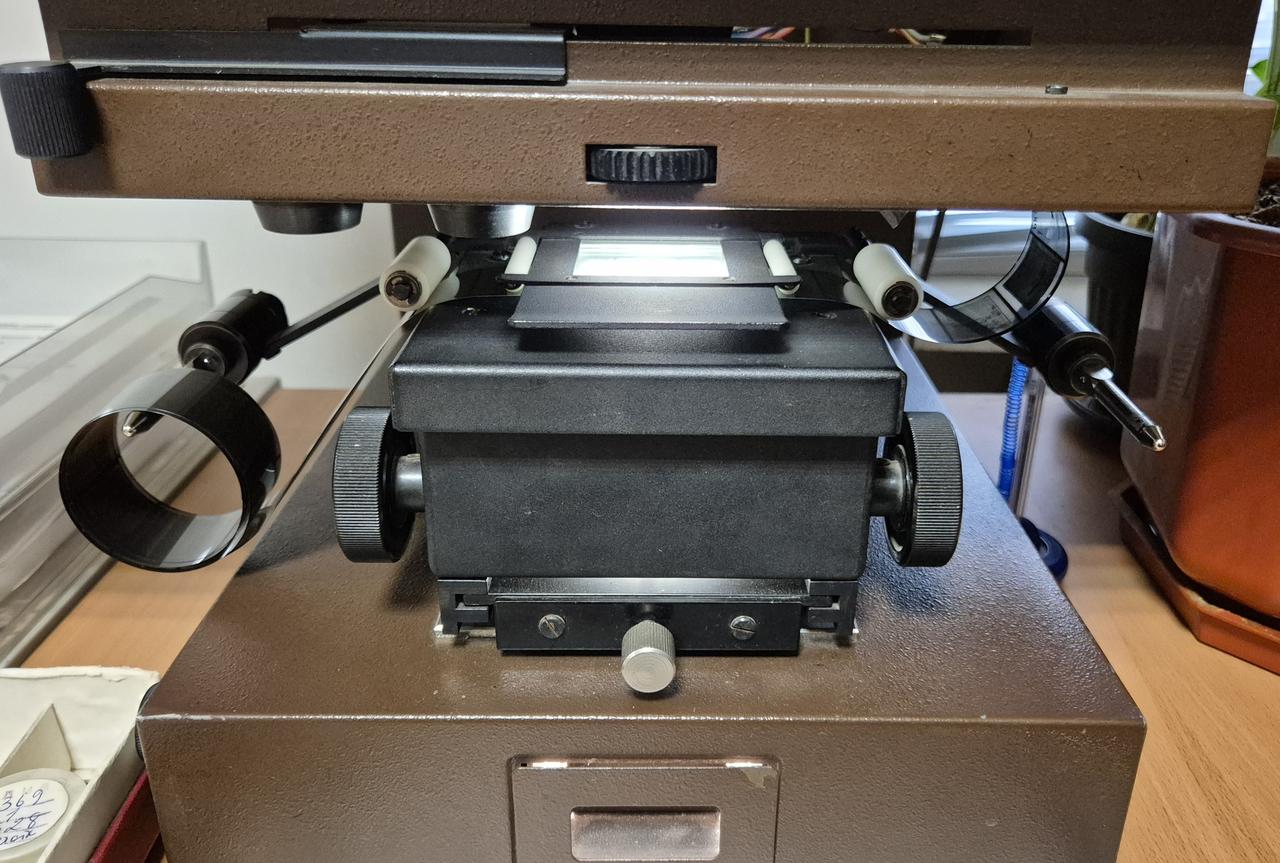
Microfilm Loading Area of the Reader (Photograph: Mehmet Salih Çoban)
The legal status of microfilmed documents may vary by country and institution. In some practices, microforms are recognized as equivalent to the original document; in others, they are considered substitute documents only when the original has been lost or damaged. Ownership of microform copies and the rights to reproduce, publish, or transfer such copies are determined within the framework of relevant legislation and institutional regulations. In this regard, microfilm is not merely a technical recording medium but also a tool that can generate legal and administrative consequences within document management and access regimes.
Microfilm also plays a significant role in international archival relations. When documents relating to a country’s history are held in the archives of other countries, physical transfer of originals is not always feasible; microfilm copies are therefore used for access and sharing. Inter-institutional microfilm requests are fulfilled either by producing new negative copies from the original documents or by generating positive copies from existing negatives. Reproduction from existing microforms is regarded as a faster and lower-cost process compared to new filming. These practices enable microfilm to serve as a continuous instrument for document circulation and access at both national and international levels.
Kurbanoğlu, S. Serap. “Arşivler ve Mikroformlar.” *Türk Kütüphaneciliği* 2, no. 1 (1988): 36–41. Accessed January 1, 2026. https://www.academia.edu/74666085/Ar%C5%9Fivler_ve_mikroformlar.
Means, Gordon P. “Veri Toplama ve Saha Araştırmaları İçin Mikrofilm Teknikleri.” *Canadian Journal of Political Science / Revue canadienne de science politique* 3, no. 3 (September 1970): 475–482. Accessed January 1, 2026. https://www.jstor.org/stable/3231874.
Pritsker, Alan B., and J. William Sadler. “Kitap Depolama Yöntemi Olarak Mikrofilmin Değerlendirilmesi.” *College & Research Libraries* 18, no. 4 (July 1957): 290–295. Accessed January 1, 2026. https://crl.acrl.org/index.php/crl/article/viewFile/11097/12543.
Salisbury, John T. *A Study on the Application of Microfilm for the Production, Distribution, Use, and Access of Technical Reports*. Technical Information Series, document no. 65SD249. General Electric Ordnance Systems Department, April 30, 1965. Accessed January 1, 2026. https://apps.dtic.mil/sti/html/tr/AD0615800/.


Historical Development and Popularization
Technical Characteristics and Functioning
Institutional Applications and Management Dimensions
Storage, Space Economy, and Legal-Administrative Framework