This article was automatically translated from the original Turkish version.
+2 More
Registration Number | 954 | ||||||||
|---|---|---|---|---|---|---|---|---|---|
Registration Date | 23.11.2021 | ||||||||
Application Number | C2019/160 | ||||||||
Application Date | 04.11.2019 | ||||||||
Name of the Geographical Indication | Midyat Kavunu | ||||||||
Product / Product Group(s) | Melon / Processed and unprocessed fruits and vegetables and mushrooms | ||||||||
Type of Geographical Indication | Certification mark | ||||||||
Applicant/Registrant(s) | Midyat Municipality | ||||||||
Address of the Registrant | Yeni Mah. Cumhuriyet Bulvarı No:21 Midyat MARDİN | ||||||||
Geographical Boundary | Midyat district of Mardin province | ||||||||
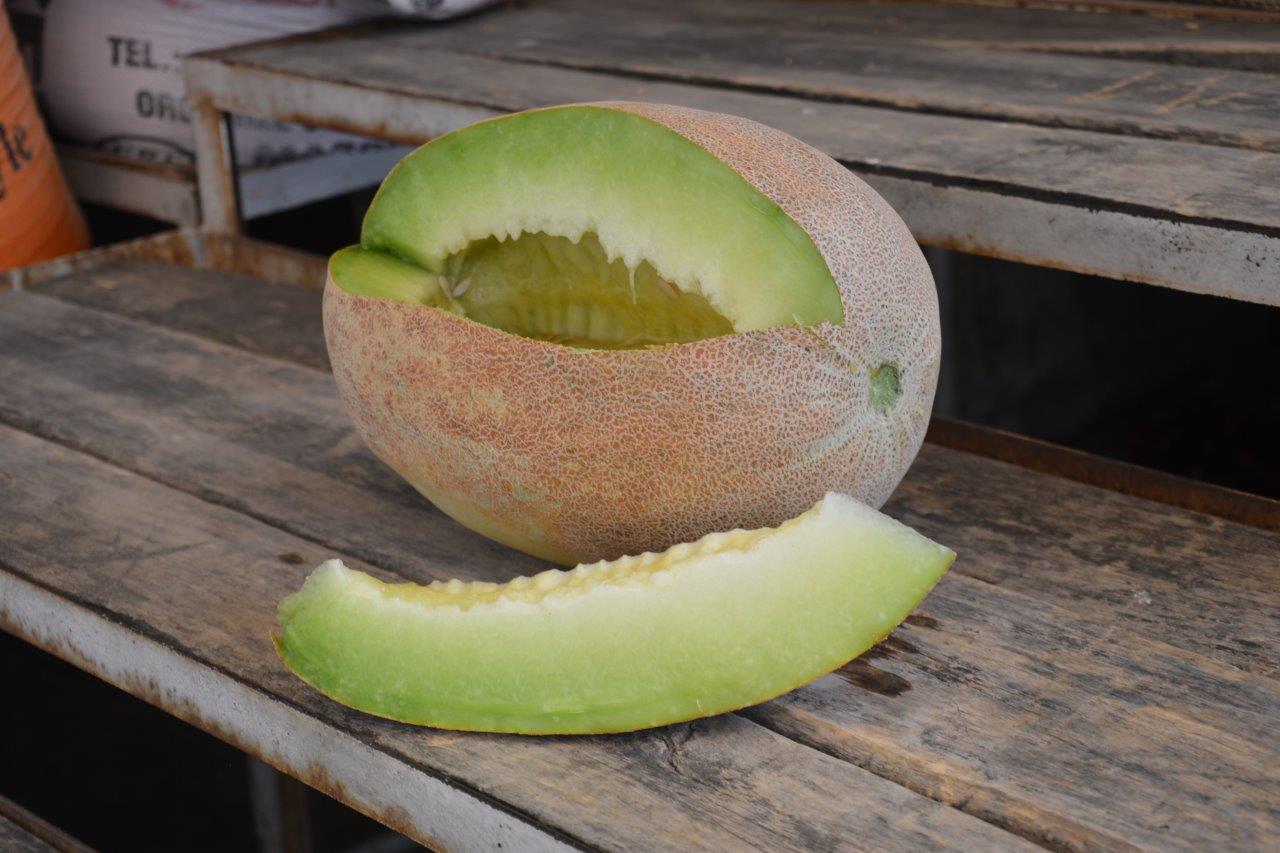
Midyat melon is a variety of Cucumis melo native to the Midyat district of Mardin Province in Türkiye. It has a cylindrical shape, light yellow rind with brown spots, and star-shaped fissures at its base. Grown under arid farming conditions, it has low sugar content and a mild, slightly sweet flavor. No chemical substances or hormones are used in its production; traditional methods are employed, and seeds sourced locally are preferred. The melon reaches harvest maturity when its rind becomes shiny and the stem dries out, and it can be stored for 4–6 months in cold storage facilities.
The Midyat melon is cylindrical in form and light yellow in color. Its rind surface is characterized by brown spots, which give the rind a rough texture. Star-shaped fissures are present at the base of the fruit. As the fruit reaches full maturity, the rind color becomes distinctly lighter and develops a glossy appearance. An important indicator of harvest readiness is the complete drying of the stem connecting the melon to the plant.
A key distinguishing feature of the Midyat melon is its low sugar content and mild, slightly sweet taste, resulting from cultivation under arid conditions. No hormones or chemical substances are used during production. This preserves both the natural character of the product and its strong connection to the region.
Midyat melon production is based on traditional local practices. Seed material is obtained from healthy plants grown in the previous season. Seeds, extracted together with the watery pulp from the seed cavity, are dried naturally and stored in cool, dry, and shaded environments. Maintaining the seeds with the pulp during drying is essential for their natural desiccation.
The melon prefers soils rich in organic matter. Therefore, before planting, 3–4 tons of farmyard manure or 2–3 tons of green manure are applied per hectare. Fertilization is carried out in autumn, one month before planting, and the fertilizer is mixed into the soil using a plow or disk harrow. This ensures the decomposition of organic matter and the availability of plant nutrients in the soil.
The Midyat melon is cultivated using two methods:
Planting occurs during September–November using the “ocak” method. Holes are dug 5 cm deep with a row spacing of 200 cm and a plant spacing of 75 cm. Four to six seeds are placed in each hole, covered with soil, and lightly pressed. After the plants develop true leaves, the first thinning is performed, leaving three plants per hole. Two to three weeks later, when the plants have developed four to six true leaves, a second thinning is carried out to reduce plant density to one or two plants per hole. During thinning, plants are removed by snapping them off at the base to avoid root damage.
The seedling method is used to achieve early maturity and avoid late spring frosts. Seedlings with three to four leaves are grown under cover using seeds from the previous season. Seedlings are transplanted into the field in early March after the risk of frost has passed, with a row spacing of 200 cm and a plant spacing of 75 cm. The roots must be fully covered with soil during planting.
The Midyat melon is grown under arid conditions using dry farming methods. Therefore, weeding and hilling are critical for field management. Weeding promotes the development of lateral and fibrous roots, enhancing the plant’s drought resistance. Inter-row areas are cultivated to control weeds and break up the surface crusting. Weeding and hilling are performed:
A second round of weeding and hilling is carried out when the plants begin to vine and before the field is fully covered by foliage.
Harvesting of the Midyat melon takes place from the first week of August to the last week of September. Maturity indicators include the lightening and glossiness of the rind and the complete drying of the stem. Harvested melons are stored in cold storage facilities at 4–14 °C, stacked without excessive pressure, and can be preserved for 4–6 months.
The Midyat melon is strongly associated with the Midyat district. Arid melon cultivation has been practiced in the district for many years, and this production method is a defining element of the product’s identity. Seed material is sourced exclusively from plants grown in the region, and production is limited to within the defined geographical boundaries. All production, processing, and storage activities must occur within the administrative limits of Midyat district.
The production and marketing of the Midyat melon are subject to regular inspections. Inspections are conducted by a minimum three-member inspection body composed of personnel from the Midyat Municipality, the Midyat District Directorate of Agriculture and Forestry, and the Midyat Chamber of Agriculture, all knowledgeable about the product.
Inspections are carried out at least once annually as routine procedures, but may also be conducted at any time in response to complaints or as deemed necessary. The inspection scope includes:
The inspection body may obtain technical support or services from public or private institutions or experts as needed. The registering authority is responsible for pursuing legal measures to protect the product’s rights.
Turk Patent and Trademark Office. "Midyat Kavunu Coğrafi İşareti Detay Sayfası." Accessed July 15, 2025. https://ci.turkpatent.gov.tr/cografi-isaretler/detay/1124.
Turk Patent and Trademark Office. "Midyat Kavunu." Accessed July 15, 2025. https://ci.turkpatent.gov.tr/Files/GeographicalSigns/a5f86f0c-e38a-420d-b8b1-3c6664d71a9c.pdf.

Registration Number | 954 | ||||||||
|---|---|---|---|---|---|---|---|---|---|
Registration Date | 23.11.2021 | ||||||||
Application Number | C2019/160 | ||||||||
Application Date | 04.11.2019 | ||||||||
Name of the Geographical Indication | Midyat Kavunu | ||||||||
Product / Product Group(s) | Melon / Processed and unprocessed fruits and vegetables and mushrooms | ||||||||
Type of Geographical Indication | Certification mark | ||||||||
Applicant/Registrant(s) | Midyat Municipality | ||||||||
Address of the Registrant | Yeni Mah. Cumhuriyet Bulvarı No:21 Midyat MARDİN | ||||||||
Geographical Boundary | Midyat district of Mardin province | ||||||||
Morphological Characteristics
Taste Profile and Internal Characteristics
Production Method
Seed Production and Storage
Soil Preparation and Fertilization
Planting Methods
Direct Seeding:
Transplanting Seedlings:
Irrigation, Weeding, and Maintenance
Harvest and Storage
Geographical Boundaries and Appellation
Control Procedures