

This article was automatically translated from the original Turkish version.
+2 More
Period(s) | Early Ottoman Period | ||||||||
|---|---|---|---|---|---|---|---|---|---|
Construction Date(s) | Approximately 1415–1418 | ||||||||
Repairs / Restoration | 1969: Partial restoration attempt, 2007: Restoration plans prepared, 2009: Comprehensive restoration carried out | ||||||||
Wall Technique | Alternating courses of one row of brick and one row of stone; bricks placed vertically between them | ||||||||
Construction Material | Cut stone, rubble stone, brick | ||||||||
Sections | Entrance section, intermediate space, stable / camel section | ||||||||
Architectural Plan | Rectangular plan, approximately 19 × 13 metres, single-storey, entrance from the west facade, interior vaulted spatial arrangement | ||||||||
Building Type | Menzil hanı / accommodation hanı / small-scale caravanserai | ||||||||
Founder / Patron | Mihal Bey | ||||||||
Location | Gölpazarı Türkiye Bilecik | ||||||||
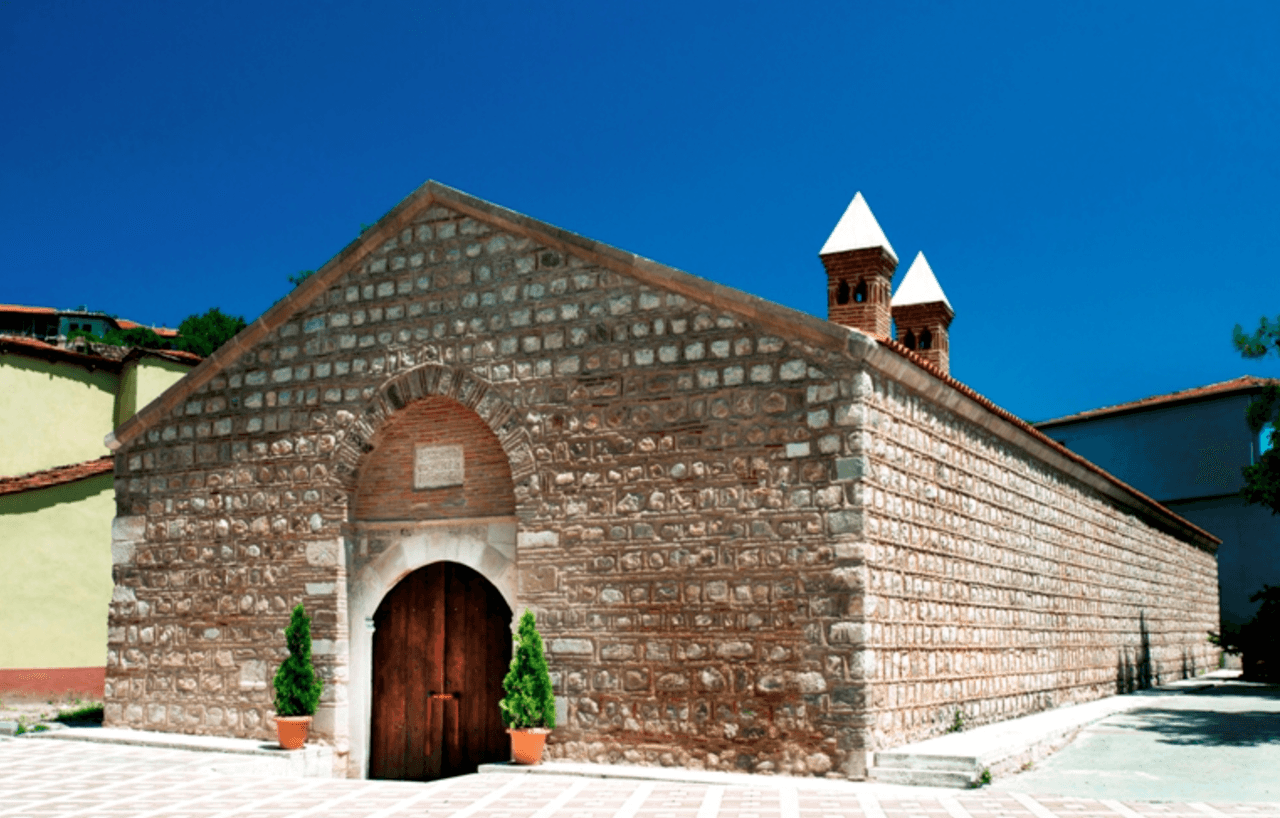
Mihal Bey Hanı, located in the Gölpazarı district of Bilecik Province, is a caravanserai dating to the early period of the Ottoman Beylik. The structure is single-story, rectangular in plan, and features walls constructed of alternating stone and brick masonry. The han consists of three main sections: the entrance, the intermediate space, and the stable/camel area. Its dimensions are approximately 19 by 13 meters.

Mihal Bey Hanı Front View from Above (Anadolu Ajansı)
The han is situated in the Orta Mahalle neighborhood of Gölpazarı town center, along Ankara Street. It is registered in cultural inventories under number 73. Sources indicate that the structure was built in 1418 by Mihal Bey, who is recorded as a descendant of Köse Mihal and served during the formative period of the Ottoman state.
Mihal Bey Hanı was constructed to serve as a caravanserai, providing lodging for travelers, caravans, and animals. Due to its location along historical trade and transit routes, the han played a significant role in regional commerce and movement.
The building exhibits both a four-part arrangement along an east-west axis and a three-functional layout comprising entrance, intermediate space, and stable/camel area.
The walls incorporate cut stone, rubble stone, and brick in alternating courses. Brick is used for vaults and arches. The structure is undecorated and designed for functional use.

Mihal Bey Hanı Surrounding View from Above (Anadolu Ajansı)
The han is located in the center of Gölpazarı district, integrated within the existing urban fabric. It forms part of the same urban ensemble as nearby structures such as the mosque and bazaar. Locally, the building is also known as “Taşhan.”
Over time, the structure has suffered material loss on its exterior facades, deterioration of stone masonry, and erosion of vault surfaces. In 1969, restoration efforts were planned to address damage particularly on the eastern and northeast facades, but these were not fully implemented.
In 2007, the General Directorate of Foundations developed renewal plans, and implementation was carried out in 2009 by the Bursa Regional Directorate of Foundations. As part of the restoration, the structure was reinforced while preserving its existing architectural features. Mihal Bey Hanı is registered as a protected cultural heritage site.

Bilecik Mihal Bey Hanı Current Usage Example (Bilecik Provincial Directorate of Culture and Tourism)
Although not used as an active commercial enterprise, Mihal Bey Hanı is recognized as a historic structure reflecting the region’s cultural heritage. It is managed and monitored by local authorities and relevant institutions, which host various cultural and artistic events within its premises. Restoration efforts are undertaken as needed. The current usage aims to preserve the building’s historical integrity and ensure its transmission to future generations.
Anadolu Ajansı. “Bilecik’teki Taşhan İhtişamını 6 Asırdır Koruyor.” Accessed April 21, 2026. https://www.aa.com.tr/tr/turkiye/bilecikteki-tashan-ihtisamini-6-asirdir-koruyor/1653426
Bilecik İl Kültür ve Turizm Müdürlüğü. “Mihal Bey Hanı (Taşhan).” bilecik.ktb.gov.tr. Accessed April 21, 2026. https://bilecik.ktb.gov.tr/TR-69110/mihal-bey-hani-tashan.html
Culture Portal. "Mihal Bey Hanı (Taşhan) -Kültür Envanteri." T.C. Kültür ve Turizm Bakanlığı. Accessed April 21, 2026. https://www.kulturportali.gov.tr/turkiye/bilecik/kulturenvanteri/mihal-bey-hani-tashan
Dikmen, Emine. “Mihal Bey Hanı (Taş Han).” *Türkiye Turizm Ansiklopedisi.* Accessed April 21, 2026. https://turkiyeturizmansiklopedisi.com/mihal-bey-hani-tas-han
Gölpazarı Kaymakamlığı. “Mihal Bey Hanı (Taşhan).” golpazari.gov.tr. Accessed April 21, 2026. https://www.golpazari.gov.tr/mihal-bey-hani-tashan
Türkiye Kültür Portalı. “Mihal Bey Hanı (Taşhan) - Bilecik.” T.C. Kültür ve Turizm Bakanlığı. Accessed April 21, 2026. https://www.kulturportali.gov.tr/turkiye/bilecik/gezilecekyer/mhalbey-hani-tashan

Period(s) | Early Ottoman Period | ||||||||
|---|---|---|---|---|---|---|---|---|---|
Construction Date(s) | Approximately 1415–1418 | ||||||||
Repairs / Restoration | 1969: Partial restoration attempt, 2007: Restoration plans prepared, 2009: Comprehensive restoration carried out | ||||||||
Wall Technique | Alternating courses of one row of brick and one row of stone; bricks placed vertically between them | ||||||||
Construction Material | Cut stone, rubble stone, brick | ||||||||
Sections | Entrance section, intermediate space, stable / camel section | ||||||||
Architectural Plan | Rectangular plan, approximately 19 × 13 metres, single-storey, entrance from the west facade, interior vaulted spatial arrangement | ||||||||
Building Type | Menzil hanı / accommodation hanı / small-scale caravanserai | ||||||||
Founder / Patron | Mihal Bey | ||||||||
Location | Gölpazarı Türkiye Bilecik | ||||||||
No Discussion Added Yet
Start discussion for "Mihal Bey Han (Stone Caravanserai)" article
Historical Background and Foundation
Architectural Features and Plan Organization
Plan Organization
Urban Location and Environmental Context
Historical Damage and Restoration Processes
Current Usage