This article was automatically translated from the original Turkish version.
+2 More
Location | Ayvacık District Türkiye Çanakkale Province | ||||||||
|---|---|---|---|---|---|---|---|---|---|
Buildings | Roman bridge, Başdeğirmen (water mill) | ||||||||
Vegetation | Olive, pine, oak, maquis, ferns | ||||||||
Fauna | Small mammals, bird species, amphibians | ||||||||
Activities | Hiking, picnicking, photography | ||||||||
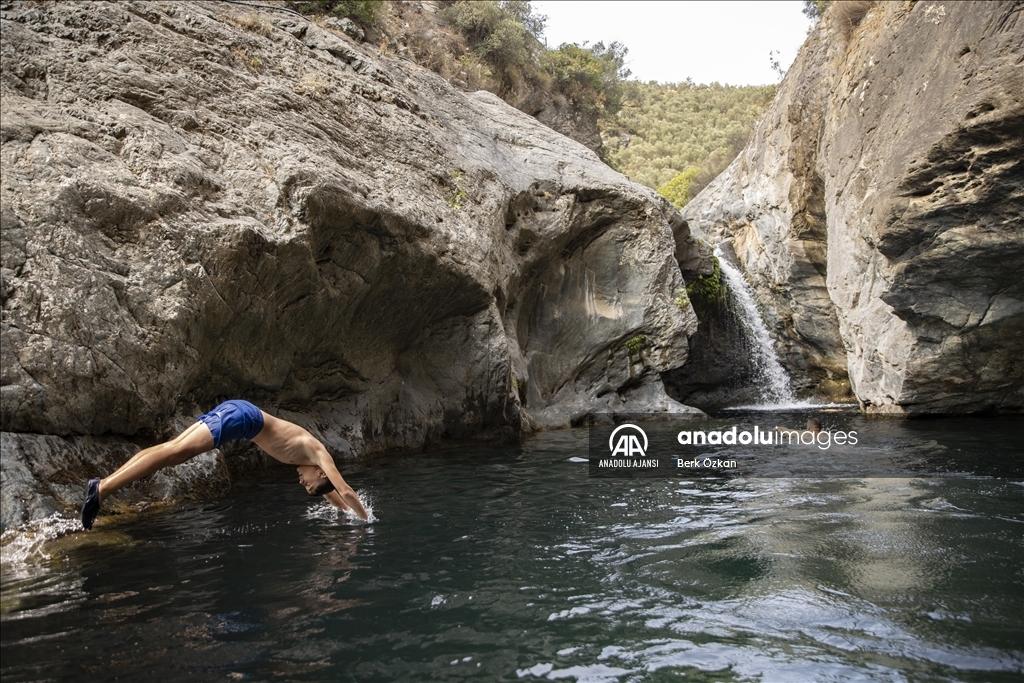
Mıhlı Waterfall is a river waterfall located within the boundaries of Küçükkuyu village, in the Ayvacık district of Çanakkale province, in northwestern Türkiye. The waterfall derives its name from the Mıhlı Creek, over which it flows, and is situated on the western slopes of the Kazdağı Mountains. Mıhlı Waterfall, which lies within an area combining natural features with historical structures, attracts attention due to both its ecological value and historical continuity.
Mıhlı Waterfall is a cascade formed by the fall of a small tributary of the Mıhlı Creek, which originates in the Kazdağı Mountains, from a height of approximately 4 to 5 meters. Along the stream bed through which the water flows, natural potholes and small ponds have formed over time. The rocky substrate over which the water moves consists of granite and limestone formations characteristic of the region. This geology restricts the direction of water flow and gives rise to various micro-topographic features. The stream maintains its discharge throughout the year; although reduced during summer months, it never dries up completely.

Image of Mıhlı Waterfall. (Anadolu Agency)
Mıhlı Waterfall and its surroundings feature a typical vegetation type shaped by the Mediterranean climate. The region is densely covered with olive trees, Turkish pine (Pinus brutia), various oak species (Quercus spp.), and maquis communities. Due to its microclimatic conditions, the area immediately around the waterfall is partially covered by moisture-loving understory plants. Ferns and moss species are also found on the rocky outcrops.
The natural environment provides habitat for a variety of bird species and small mammals. Particularly, finches, woodpeckers, small rodents, and various amphibians dependent on water have been identified in the area. Additionally, certain sections of the Mıhlı Creek host small fish species and aquatic invertebrates.
The historic stone water mill located near the waterfall, known as Başdeğirmen, reflects the region’s historical significance in agricultural activities. This structure, powered by the waters of the Mıhlı Creek, was used by the local population for grinding grain. Built using traditional stonemasonry techniques, the mill has lost its original function but retains much of its structural integrity.

Image of Başdeğirmen near Mıhlı Waterfall. (Küçükkuyu Municipality)
Another historical feature in the vicinity of the waterfall is a stone arch bridge believed to date from the Roman period. Constructed from cut stone blocks, the bridge connects the two banks of the Mıhlı Creek. Still standing today, this structure reveals both the region’s engineering heritage and its historical ties to the ancient world.

Image of the Roman Bridge near Mıhlı Waterfall. (Ayvacık Municipality)
The waterfall and its surroundings are frequently visited during summer months by local and regional tourists for day trips, hiking, picnicking, and nature photography. The majority of visitors originate from Küçükkuyu and neighboring villages. Additionally, the site is included in the itineraries of nature hiking groups visiting the Kazdağı Mountains. However, the area lacks official status as a nature park or protected zone. This absence poses certain risks to environmental sustainability.
Although Mıhlı Waterfall does not hold any special environmental protection status, it is regarded as a natural element within the ecological integrity of the Kazdağı Mountains. The region offers an important microhabitat in terms of both flora and fauna diversity. Uncontrolled visitor activities, such as environmental pollution and unregulated construction, have the potential to threaten the waterfall’s natural structure. Therefore, educational and planning initiatives aimed at raising awareness of conservation are essential.
Mıhlı Waterfall is one of the prominent natural heritage sites in the Ayvacık district of Çanakkale, distinguished by its natural features, ecosystem diversity, and historical structures. Historical remnants such as the Roman bridge and the traditional water mill demonstrate the integration of this natural landscape with a rich cultural past. Situated at the foot of the Kazdağı Mountains, the waterfall presents a landscape where nature and history are intricately intertwined. However, due to increasing human impact and insufficient conservation measures, a careful and sustainable management approach is required. The preservation of Mıhlı Waterfall as both a natural and cultural entity is vital for maintaining the ecological integrity of the region.
Anadolu Ajansı. “Çanakkale'nin Saklı Güzelliği: Mıhlı Şelalesi.” Accessed July 6, 2025. https://www.aa.com.tr/tr/pg/foto-galeri/canakkale-nin-sakli-guzelligi-mihli-selalesi.
Ayvacık Belediyesi. “Mıhlı Şelalesi.” (n.d.). Accessed July 6, 2025. https://www.canakkaleayvacik.bel.tr/Turizm/TurizmDetay/8.
Küçükkuyu Belediyesi. "Başdeğirmen - Mıhlı Şelalesi." (n.d.). Accessed July 6, 2025. https://www.kucukkuyu.bel.tr/gezilecek-yerler/basdegirmen-mihli-selalesi/.

Location | Ayvacık District Türkiye Çanakkale Province | ||||||||
|---|---|---|---|---|---|---|---|---|---|
Buildings | Roman bridge, Başdeğirmen (water mill) | ||||||||
Vegetation | Olive, pine, oak, maquis, ferns | ||||||||
Fauna | Small mammals, bird species, amphibians | ||||||||
Activities | Hiking, picnicking, photography | ||||||||
Hydrographic and Geomorphological Characteristics
Ecological Characteristics
Vegetation
Animal Life
Historical Structures and Cultural Fabric
Başdeğirmen (Historic Water Mill)
Roman Bridge
Usage Patterns and Visitor Profile
Protection Status and Environmental Sensitivity