


This article was automatically translated from the original Turkish version.
+1 More
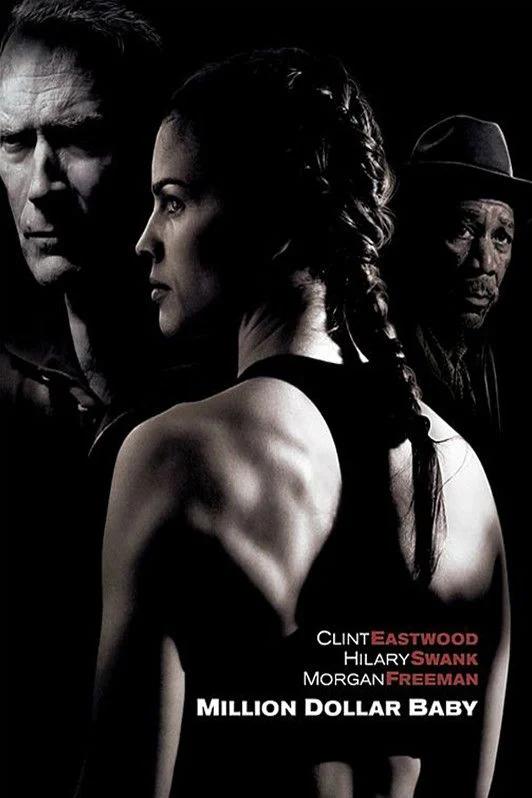
Million Dollar Baby
Director(s) | Clint Eastwood | ||||||||
|---|---|---|---|---|---|---|---|---|---|
Screenplay(s) | Adapted from a short story by F.X. Toole | ||||||||
Producer(s) | Paul Haggis Tom Rosenberg Albert S. Ruddy Clint Eastwood | ||||||||
Production Year | 2004 | ||||||||
Actors | Mike Colter (Big Willie Little) Jay Baruchel (Danger Barch) Morgan Freeman (Eddie "Scrap-Iron" Dupris) Hilary Swank (Maggie Fitzgerald) Clint Eastwood (Frankie Dunn) | ||||||||
Duration | 132 minutes | ||||||||
Budget(s) | Approximately 30 million dollars | ||||||||
Box Office(s) | Approximately 216.8 million dollars | ||||||||
Made in 2004, Million Dollar Baby is one of the standout works of contemporary American cinema both cinematically and narratively. Directed by Clint Eastwood, the film has generated widespread resonance through its dramatic structure and character-driven story, earning positive reviews from critics and audiences alike. The film does not merely present a dramatic sports narrative but constructs a broader story around themes such as human will, disappointment and sacrifice.
Million Dollar Baby centers on the ascent of Maggie Fitzgerald, a poor and determined young woman, in the world of boxing. Despite all the hardships she faces, Maggie manages to reach Frankie Dunn, an experienced boxing trainer, and asks him to train her. Initially reluctant, Frankie eventually decides to help her after being moved by her determination. The film unfolds as a drama that traces the professional progression of Maggie’s boxing career alongside the personal histories and emotional burdens of both main characters. The story is not only a tale of athletic achievement but also offers a profound character study within the framework of hope, loss and moral dilemmas.
Clint Eastwood not only directed Million Dollar Baby but also starred in the lead role. The film was shot in a low-light, shadowy atmosphere, chosen to complement its overall dramatic tone. Eastwood opted for natural lighting and minimal set design. These technical choices were made to emphasize the characters’ internal conflicts and emotional states.
The camera work is largely static and observational. In the fight scenes, rapid editing and close-up shots are preferred, effectively conveying the physical intensity of the boxing matches. The narrative style remains restrained, avoiding unnecessary visual embellishment. Tom Stern was responsible for the film’s cinematography; the use of gray tones throughout supports the weight and dramatic structure of the story. Scenes are structured to prioritize a character-driven narrative.
The film explores central themes such as perseverance, human will, family bonds, forgiveness and ethical dilemmas. Maggie’s personal struggle is presented as a representation of individual determination and resolve, while Frankie’s confrontation with his past and the difficult decisions he makes at the end carry profound moral and emotional dimensions.
Critics particularly praised the film’s emotional depth and character development. However, some viewers found the dramatic shift in the second half surprising and jarring. Additionally, the film has sparked various ethical debates due to its treatment of sensitive topics such as disability and euthanasia.
Million Dollar Baby achieved significant success both commercially and critically. The film earned approximately $216 million worldwide. At the 77th Academy Awards (Oscars), it achieved major recognition by winning four awards:
The film also received numerous nominations and awards at other major festivals, including the Golden Globe Awards. This success has secured Million Dollar Baby an important place in the history of modern cinema, both artistically and industrially.
Beyazperde. "Million Dollar Baby - Fotoğraflar." Accessed April 28, 2025. https://www.beyazperde.com/filmler/film-56714/fotolar/
Beyazperde. "Million Dollar Baby." Accessed April 28, 2025. https://www.beyazperde.com/filmler/film-56714/
IMDb. "Million Dollar Baby (2004)." Accessed April 28, 2025. https://www.imdb.com/title/tt0405159/

Million Dollar Baby
Director(s) | Clint Eastwood | ||||||||
|---|---|---|---|---|---|---|---|---|---|
Screenplay(s) | Adapted from a short story by F.X. Toole | ||||||||
Producer(s) | Paul Haggis Tom Rosenberg Albert S. Ruddy Clint Eastwood | ||||||||
Production Year | 2004 | ||||||||
Actors | Mike Colter (Big Willie Little) Jay Baruchel (Danger Barch) Morgan Freeman (Eddie "Scrap-Iron" Dupris) Hilary Swank (Maggie Fitzgerald) Clint Eastwood (Frankie Dunn) | ||||||||
Duration | 132 minutes | ||||||||
Budget(s) | Approximately 30 million dollars | ||||||||
Box Office(s) | Approximately 216.8 million dollars | ||||||||
No Discussion Added Yet
Start discussion for "Million Dollar Baby (Film)" article
Plot
Cast
Direction and Cinematography
Themes and Criticism
Commercial Success and Awards