


This article was automatically translated from the original Turkish version.
A mishtar is a tool consisting of threads stretched at equal intervals on a thin cardboard, placed beneath the paper to be written on, and pressed by hand to produce evenly spaced lines on the paper, ensuring neat handwriting.【1】 The word’s etymology derives from the Arabic roots “satr” or “satar,” meaning “to write” and “line.” In the Ottoman period, the tool was known as “mistar,” while in the Arab world it is called “mistara.” Its Persian equivalent is “hat-keş.”
The history of the mishtar is rooted in the period when the organization and aesthetics of writing gained importance across the Islamic world. Ottoman calligraphers recognized the role of the mishtar in achieving regular script and used it frequently, especially in Qur’an manuscript production. The origin of the mishtar dates back to very early periods, likely as far as the early 6th/12th century. Numerous examples of mishtars have survived to the present day, preserved in various collections.
The mishtar is primarily used to create guidelines for text to be written on paper, ensuring a consistent layout. Lines are formed using pinpricks or thread arrangements, providing structural order especially in calligraphic works. Some mishtars also feature slanted thread patterns designed to regulate page margins, enabling various compositional arrangements. Moreover, the mishtar has been used not only in calligraphy but also in architectural design.
In the Ottoman period, this tool, known as the “mishtar tahtası,” facilitated a unified approach to both architectural design and graphical representation of writing. The mishtar attracted attention for developing a similar aesthetic understanding in spatial planning and drawings. It was also employed in the drafting of construction plans during the pre-Ottoman Anatolian Seljuk period. Ottoman architects typically prepared building plans based on drawings known as “resm,” ensuring the spatial organization and aesthetic harmony of structures.
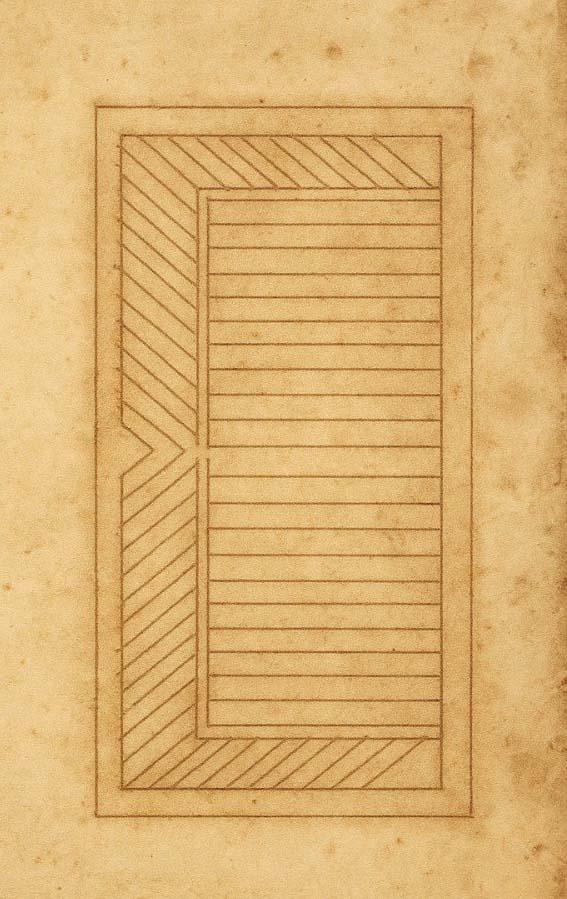
Example of a Mishtar (Generated by Artificial Intelligence.)
Mishtars are categorized according to their intended use:
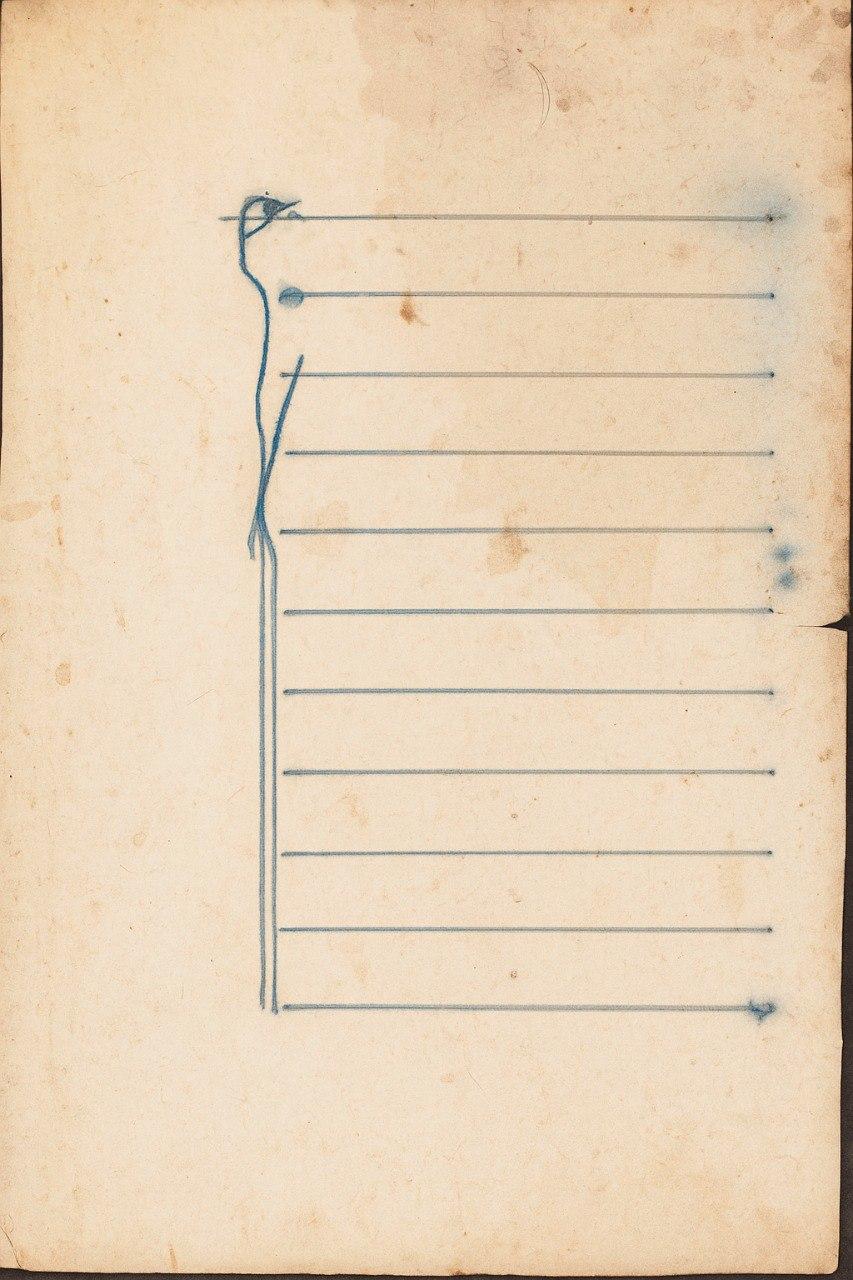
An Incomplete Example of a Mishtar (Generated by Artificial Intelligence.)
The production of a mishtar follows these steps:
The mishtar does not merely assist calligraphers technically; it also determines the visual harmony of the script. If the writing fails to align properly with the lines, it may be criticized as “letters dancing out of line.” Therefore, calligraphers used the mishtar with great precision to ensure their script “sat” correctly on the lines. However, the artistic value of the writing is determined by the intrinsic conformity of the letterforms to their own linear structure. Thus, the mishtar is regarded only as a supportive tool, not as a determinant of artistic merit.
Originally made from cardboard, mishtars have, with technological advances, begun to be manufactured from plastic or formica. These materials improve thread tension and increase durability. In modern times, the use of threads and cardboards in various colors has provided calligraphers with greater freedom and flexibility.
Dündar, Abdülkadir. “Osmanlı Mimarisinde Yapıların İnşa Süreci Üzerine Bir Araştırma.” *KÖK Sosyal ve Stratejik Araştırmalar Dergisi Osmanlı Özel Sayısı*, (2000): 155-184. Accessed June 25, 2025. Accessed adresi
Gacek, Adem. Arapça Elyazmaları İçin Rehber. Çev. M. Cüneyt Kaya, Ali Benli. İstanbul: Türkiye Klasik Yayınları, 2017.
Yazır, Mahmud Bedreddin. Medeniyet Aleminde Yazı ve İslam Medeniyetinde Kalem Güzeli, Cilt 2, Ankara: Ayyıldız Matbaası, 1974.
Yılmaz, Abdulkadir. "Hat Sanatında Satır Sistemi: (Sülüs, Nesih, Ta'lik, Rik'a)." PhD thesis, Atatürk Üniversitesi, 1996.
Şenyurt, Oya. Osmanlı Mimarisinin Temel İlkeleri: Resim ve İnşâ Üzerinden Geliştirilen Farklı Bir Yaklaşım. İstanbul: Doğu Kitabevi, 2015.
“MISTAR-MİSTAR.” Kubbealtı Lugatı. Accessed June 25, 2025. https://lugatim.com/s/m%C4%B1star
[1]
“MISTAR-MİSTAR”, Kubbealtı Lugatı, Erişim tarihi: 25 Haziran 2025,

Historical Background
Purposes of Use
Types of Mishtars
Manufacture
Aesthetic and Technical Value
Technical Developments