


This article was automatically translated from the original Turkish version.
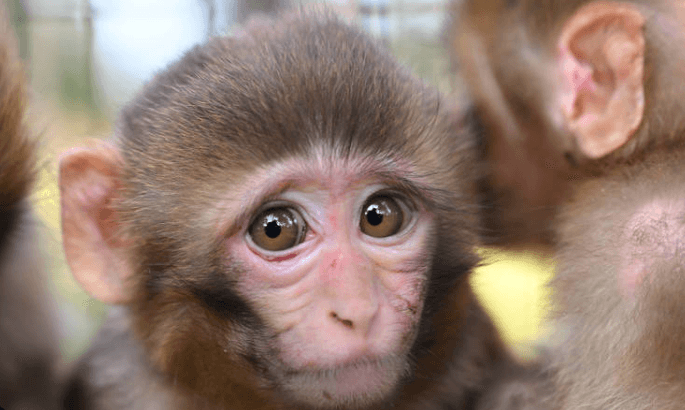
Monkeys (Primates)
Subteam | Simiiformes (Monkeys) | ||||||||
|---|---|---|---|---|---|---|---|---|---|
Subgroups | Old World Monkeys (Cercopithecoidea), New World Monkeys (Platyrrhini) | ||||||||
Important Species | Orangutan (Pongo pygmaeus and Pongo abelii), Gorilla (Gorilla spp.), Chimpanzee (Pan troglodytes), Macaque (Macaca spp.) | ||||||||
Morphological Features | Body Structure: Features adapted for arboreal life such as flexible joints and prehensile (grasping) tails. Brain Development: Brain size has increased through evolutionary processes, with observed enhancements in cognitive abilities. | ||||||||
Monkeys are living organisms that constitute a branch of the order Primates, distinguished by their genetic diversity, evolutionary significance, behavioral complexity, and ecological functionality.
Monkeys are classified within the suborder Simiiformes of primates. This suborder is divided into two main groups: Old World monkeys (Cercopithecoidea) and New World monkeys (Platyrrhini). It is well established that Old World monkeys evolved in Africa and Asia, while New World monkeys evolved in South America. Taxonomic classification is continuously updated based on genetic, morphological, and molecular analyses (Fleagle, 2013; as noted in References section).
The evolutionary journey of monkeys can be traced back approximately 40 to 50 million years. Paleontological data and molecular phylogenetic analyses reveal critical turning points in primate evolution and a diversification of adaptive mechanisms. Within this evolutionary framework, increases in brain volume have become prominent alongside developments in social interaction complexity and environmental adaptation (Fleagle, 2013; Begun et al., 1997).

Generated with AI assistance.
The anatomy of monkeys exhibits adaptations suited for both arboreal and terrestrial lifestyles. Particularly flexible joints, advanced visual systems, and prehensile features supporting manual dexterity are outcomes of these adaptive processes. Among New World monkeys, specific morphological adaptations such as prehensile tails for grasping are notable examples (Byrne, 2002).
The brain structure of monkeys has rapidly complexified during evolution, facilitating the development of cognitive abilities. This process is linked to the emergence of critical capacities such as modulation of social behavior, theory of mind, and emotional recognition. Neurodevelopmental studies demonstrate that expansion in specific brain regions is directly correlated with social coordination and communication skills (Rilling & Insel, 1999).
Monkeys stand out due to their complex social structures. Examples such as kinship bonds, cooperation, dominance hierarchies, and social learning are characteristic traits observed among primates. Social organization is typically classified according to group size, leadership relationships, and patterns of intra-group communication. The evolutionary advantages of this structure play a significant role in resource sharing and defense strategies (Sapolsky, 2001).
Monkey communication spans a broad spectrum from vocalizations to facial expressions. These communication channels play a critical role in maintaining group cohesion and in developing responses to environmental threats. Furthermore, cognitive abilities such as problem solving and tool use are evolutionary outcomes of their adaptive mechanisms to the environment (De Waal, 2008).
Monkeys inhabit tropical rainforests, wooded areas, savannas, and even some temperate regions. Habitat selection is closely related to species-specific adaptability and dietary habits. The ecological niche exerts strong influence on factors such as access to food resources, shelter, and distribution of breeding sites (Chapman & Wrangham, 2005).
Monkeys play critical ecological roles in their ecosystems, including seed dispersal, plant community diversification, and regulation of energy flow. These functions are vital components for the sustainability of ecosystems. Ecological studies emphasize the positive impact of monkeys on biological diversity (Blake, 2008).
Monkey species face numerous threats including habitat destruction, illegal hunting, climate change, and human impacts. Research has shown that deforestation and urban expansion exert significant pressure on primate populations. In response, international conservation laws, protected areas, and sustainable land-use policies are being developed (Nijman, 2010).
Conservation efforts rely on scientific approaches such as data collection, population dynamics monitoring, and ecological modeling. In the political arena, education of local communities, sustainable development programs, and international cooperation play critical roles. Research in this field demonstrates that interdisciplinary studies can yield effective outcomes in monkey conservation projects (Hockings, 2015).
Monkeys hold a central position in primate science due to their evolutionary history, morphological and neurological adaptations, and rich social structures and behavioral patterns. Their ecological roles and conservation status reveal that they are not only determinants of biological diversity but also essential for the healthy functioning of ecosystems. Future research aims to contribute to their sustainability through the integration of scientific and practical approaches.
Begun, David R., Jon H. Kaas, and Michael L. Chalmers. "Evolutionary Processes in Primate Brains: A Comparative Perspective." Journal of Human Evolution 33, no. 3 (1997): 285–308.
Blake, Stephen. "Ecological Roles of Primates in Tropical Forests." Biotropica 40, no. 4 (2008): 380–388.
Byrne, Richard W. "Primate Social Learning, Culture, and Tradition." Advances in the Study of Behavior 31 (2002): 47–67.
Chapman, Colin A., and Richard W. Wrangham. "The Evolution of Primate Societies." Evolutionary Anthropology 14, no. 4 (2005): 145–157.
Fleagle, John G. Primate Adaptation and Evolution. 3rd ed. London: Academic Press, 2013.
Hockings, Kimberley. "Conservation Strategies for Primates in a Changing World." International Journal of Primatology 36, no. 1 (2015): 1–22.
Nijman, Vincent. "The Effects of Habitat Loss on Primate Populations." Oryx 44, no. 2 (2010): 271–278.
Rilling, James K., and Thomas R. Insel. "The Primacy of Sociality: The Neuroscience of Social Relationships." Trends in Cognitive Sciences 3, no. 8 (1999): 303–310.
Sapolsky, Robert M. Behave: The Biology of Humans at Our Best and Worst. New York: Penguin Press, 2017.

Monkeys (Primates)
Subteam | Simiiformes (Monkeys) | ||||||||
|---|---|---|---|---|---|---|---|---|---|
Subgroups | Old World Monkeys (Cercopithecoidea), New World Monkeys (Platyrrhini) | ||||||||
Important Species | Orangutan (Pongo pygmaeus and Pongo abelii), Gorilla (Gorilla spp.), Chimpanzee (Pan troglodytes), Macaque (Macaca spp.) | ||||||||
Morphological Features | Body Structure: Features adapted for arboreal life such as flexible joints and prehensile (grasping) tails. Brain Development: Brain size has increased through evolutionary processes, with observed enhancements in cognitive abilities. | ||||||||
Taxonomy and Evolutionary History
Taxonomic Classification
Evolutionary Process and Adaptations
Morphology and Physiology
Anatomical Features
Brain Development and Neurological Adaptations
Behavior and Social Structure
Social Organization
Communication and Advanced Cognitive Abilities
Ecology and Habitats
Ecosystem Services and Role
Conservation Status and Future Perspectives
Threats and Conservation Strategies
Scientific and Policy Approaches